

Lilac in Perfumery: The Elusive Spring Bloom and Its Powdery Floral Magic
Syringa vulgaris reached Vienna in the 16th century through the Ottoman ambassador, but the flower yields no absolute, so every lilac note is rebuilt from terpineol and indolic synthetics.
By Julia Moretti 9 min read
The Flower of Nostalgia and New Beginnings
There are few experiences in the natural world as olfactorily powerful as walking past a lilac bush in full bloom on a warm May afternoon. The fragrance rolls toward you like a wave: sweet, powdery, floral, slightly cool — a scent that seems to carry the entire emotional register of spring within it. Lilac is one of those flowers that does not merely smell beautiful; it conjures entire landscapes, memories, and emotions. For many people, the scent of lilac is inseparable from the concept of spring itself.
Lilac (Syringa vulgaris and related species) belongs to the Oleaceae family — the same family as olive trees and jasmine. Native to the Balkan Peninsula in southeastern Europe, lilac was introduced to Western European gardens in the 16th century by the Ottoman ambassador to Vienna, and spread rapidly across the continent and, later, to North America, where it became deeply embedded in the cultural landscape. Henry David Thoreau wrote about lilacs. Emily Dickinson grew them in her garden. Walt Whitman's elegy for Abraham Lincoln, "When Lilacs Last in the Dooryard Bloom'd," made the flower a symbol of mourning and memorial that resonates to this day in American culture.
The plant itself is a deciduous shrub or small tree that can live for centuries — some lilac bushes in New England are known to be over 300 years old, having outlasted the houses beside which they were planted, the people who tended them, and generations of springs come and gone. The flowers bloom for only a few weeks in spring, forming large, pyramidal clusters of tiny individual florets. The most common color is the mauve-purple associated with the name (which gives us the color "lilac"), but cultivated varieties range from pure white to deep purple, through every shade of pink and lavender.
Lilac carries different symbolic meanings across different cultures. In England, white lilac is associated with youth and purity. In parts of Eastern Europe, lilac is a flower of remembrance and is planted on graves. In the United States, it is deeply associated with Memorial Day and the coming of summer. This richness of association — the flower means something, and something different, to almost everyone who encounters it — is part of what makes lilac so interesting as a fragrance material. When you wear a great lilac perfume, you are not just smelling a flower; you are accessing a web of memories and meanings that reach back centuries.
The Scent of Lilac: Sweet, Powdery, and Ineffably Spring-Like
Describing lilac's scent requires reaching for a vocabulary of sensation as much as description. The initial impression is of sweetness — not the heavy, cloying sweetness of tropical flowers or vanilla, but a lighter, cooler sweetness that feels like spring air rather than summer heat. Beneath that sweetness is a powdery quality, softer and lighter than iris or violet, that gives lilac a dreamy, almost impressionistic quality.
Closer examination reveals additional layers:
- A faint green quality from the stems and leaves that adds naturalistic freshness and connects the scent to the living plant
- A very subtle floral spiciness — distant clove or pepper — that prevents the sweetness from becoming monotonous
- A clean, slightly soapy character that connects lilac to the "clean" floral family and gives it broad wearability
- An almost honeyed facet that becomes more apparent in warm weather or on warm skin
- A curious coolness — lilac, despite its sweetness, always smells slightly cool, like the early May air in which it blooms
This combination is at once complex and immediately legible — there is nothing quite like lilac in the fragrant world, and most people recognize it instantly even if they cannot name it. Yet the specific aromatic compounds that create this unmistakable scent have proven extraordinarily difficult to capture and reproduce. Lilac is, in this sense, a ghost that perfumers spend their careers trying to catch — always recognizable, never quite fully present in synthetic form.
The Extraction Paradox: Why Lilac Remains a Synthetic Art
Lilac presents one of perfumery's most frustrating paradoxes: a flower with an extraordinary, beloved scent that cannot meaningfully be extracted. The aromatic compounds in lilac flowers are too volatile and too fragile — they break down almost immediately under the heat required for steam distillation, and cold solvent extraction produces material that captures very little of the living flower's true character. Headspace technology — which captures volatile molecules from around an intact flower — gets closer, but the resulting information is difficult to translate into a stable, workable fragrance material at commercial scale.
This means that essentially every "lilac" fragrance on the market is a synthetic construction. There is no natural lilac extract, no lilac absolute worthy of the name, no steam-distilled lilac essential oil. The lilac in a bottle is entirely the perfumer's invention — a re-creation built from other materials, guided by memory, chemistry, and an intimate knowledge of what the real flower smells like. It is, in a very real sense, a portrait rather than a photograph.
The key molecules used in lilac accord construction include:
- Terpineol: A naturally occurring terpene alcohol with a lilac-like floral-woody quality that serves as the backbone of most synthetic lilac accords
- Benzyl alcohol: Contributing a gentle, slightly sweet floral quality that adds body without weight
- Anisic aldehyde: Adding the sweet, slightly anise-like facet of lilac's aroma — the quality that gives it its characteristic "sweetness beyond flowers"
- Hydroxycitronellal: For the clean, slightly muguet-adjacent freshness that keeps the accord from becoming heavy or opaque
- Indole: In tiny quantities, adding the faintly animalic depth that prevents lilac from seeming too flat or synthetic
- Various musks: Providing longevity and skin warmth beneath the floral construction
How Perfumers Use Lilac
In fragrance construction, lilac most often appears as a heart note, where its sweet-powdery character can add volume and warmth to a floral composition without the weight of richer materials like tuberose or ylang-ylang. Its powdery quality connects it naturally to materials like iris and violet, and it sits comfortably alongside virtually all the major floral notes used in feminine perfumery.
Lilac is particularly valuable in the construction of "spring" or "fresh floral" fragrances — seasonal compositions that aim to capture the spirit of the season. Alongside materials like lily of the valley, freesia, and green notes, lilac contributes the powdery warmth that prevents these compositions from reading as too cold or too watery. It is the element that makes a spring fragrance feel fully seasonal rather than merely fresh.
In more complex chypre or oriental structures, lilac can serve as a civilizing influence — its powdery sweetness mediating between citrus top notes and heavier resinous or woody bases, creating a bridge that feels natural and comfortable. Some perfumers have used lilac in unexpected contexts — against leather, against oud, against smoky vetiver — to striking effect, the flower's softness creating fascinating contrast with harder materials and revealing unexpected dimensions in both.
Lilac's inherent nostalgia is also a creative tool in the hands of a skilled perfumer. A fragrance that uses lilac consciously invites associations of springtime, childhood gardens, the past, and renewal. These associations can be amplified or subverted, used to create comfort or to create tension with darker or more contemporary elements. The note is never neutral — it always carries its history with it, and a perfumer who understands that can use it to remarkable effect.
Famous Fragrances Featuring Lilac
Lilac has never achieved the central status in perfumery that rose or jasmine enjoy — partly because of its unavailability as a natural extract, and partly because its scent, while beautiful, can seem limited in range compared to more versatile florals. Nevertheless, some extraordinary fragrances have made lilac a central character.
Yardley's classic English lavender-and-lilac traditions and various English cologne constructions have incorporated lilac-adjacent materials that evoke the classic cottage garden in ways that feel both historical and deeply contemporary. Annick Goutal's Ce Soir ou Jamais builds a memorable composition around lilac-like white florals with remarkable sensitivity — a fragrance that captures the specifically French relationship to spring blooms.
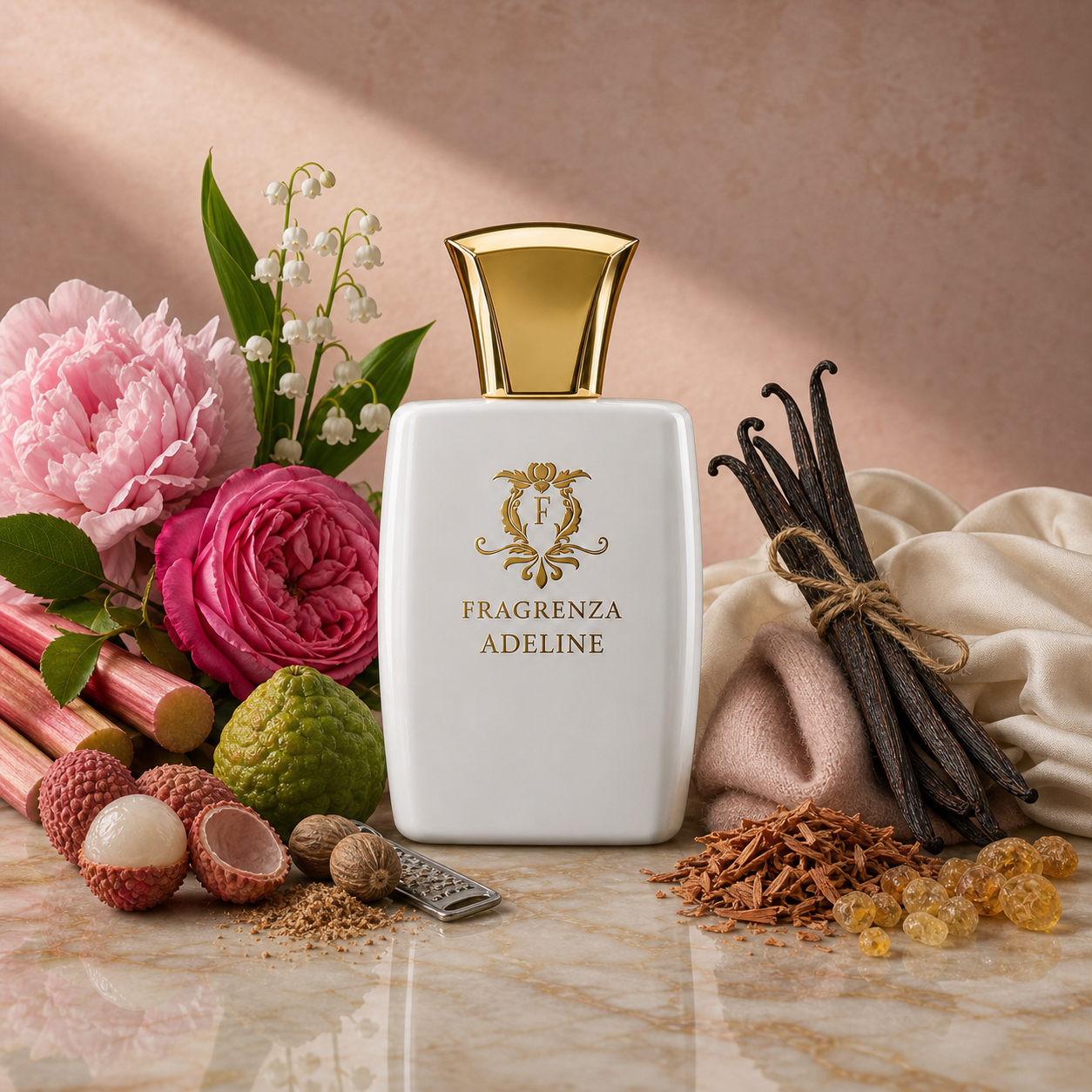
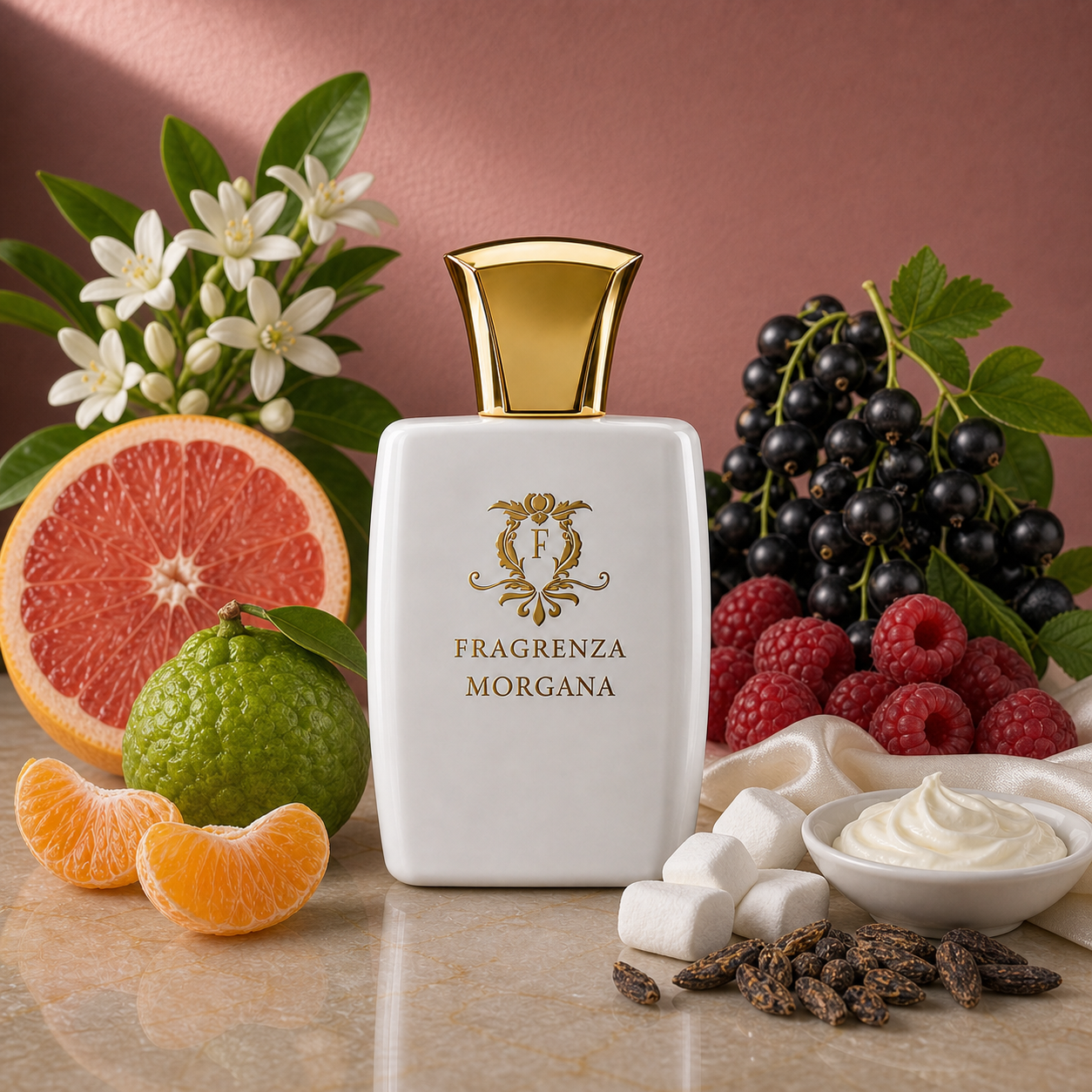
In the niche world, L'Artisan Parfumeur's La Chasse aux Papillons uses lilac as part of a multi-floral spring bouquet that captures the season with extraordinary fidelity. The composition feels genuinely like a specific moment in time — early May, a garden in full bloom, the light lasting longer each evening — and lilac is central to that feeling. Penhaligon's Ostara builds an entire spring-garden atmosphere in which lilac is a key note, demonstrating the material's ability to anchor a seasonal concept. For a contemporary floral that channels the same sweet, feminine spirit as lilac, Fragrenza's Delina-inspired fragrance offers a lush, powdery-floral experience of remarkable quality.
Many soft, romantic feminine fragrances from the 1980s and early 1990s used lilac as a supporting note in complex floral hearts — contributing warmth and powder without necessarily announcing themselves as "lilac fragrances." The note's greatest power may be exactly this: its ability to add beauty to a composition without demanding recognition.
Natural Affinities: What Pairs Well with Lilac
- Lily of the valley: Two dewy spring florals that together create an impression of extraordinary freshness and naturalistic beauty that is hard to achieve by any other means.
- Iris: Iris's cool, powdery carrot-like depth beneath lilac's warmer powder creates a sophisticated floral construction of great staying power.
- Rose: Lilac adds a sweet, airy dimension that refreshes and lifts a classical rose note, giving it a springtime quality.
- Vanilla: The combination of lilac's cool-sweet floral with vanilla's warm sweetness creates something comforting and romantic with broad seasonal appeal.
- Bergamot and citrus: Citrus brightness opens a lilac heart beautifully, adding luminosity and preventing it from reading as too heavy or retrospective.
- Green notes: Violet leaf, galbanum, or fresh grass add a naturalistic quality that enhances lilac's "cut branches" character and keeps it feeling alive.
Lilac: The Perfumer's Challenge and the Wearer's Gift
Lilac is, in many ways, a love letter to what is most difficult and most rewarding about perfumery. It is a flower that exists in the bottle only through the artistry of the perfumer — no extraction can capture it, no natural material can substitute for it. What the wearer receives is therefore pure craft: the result of a chemist's ingenuity, a perfumer's memory, and an industry's commitment to making the impossible possible.
When a lilac accord succeeds — when it truly evokes those brief May weeks when the world smells sweet and purple and alive — it is one of perfumery's most complete achievements. For the fragrance enthusiast, seeking out the best lilac constructions is a rewarding pursuit and a reminder of why this art form matters: because some moments of beauty are too precious not to try to hold onto. Lilac reminds us that the point of perfumery is not just to smell pleasant, but to preserve something true about the world — to carry spring with you, wherever you go, for as long as you like. Browse our women's fragrance collection to find spring-inspired compositions that bring that same sense of seasonal magic.