

Gardenia in Perfumery: The Opulent White Flower and Its Enduring Mystique
Gardenia reads as a heady, dew-thick floral, velvet-warm and powder-soft, with a quiet drawn-out trail close to the skin.
By Julia Moretti 8 min read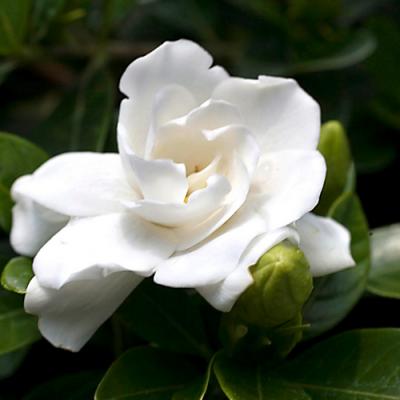
The Flower of Mystery and Elegance
There are flowers that merely smell pleasant, and then there are flowers that create an atmosphere. Gardenia belongs unmistakably to the second category. Its scent — rich, creamy, white-floral, with a sweetness that veers into the narcotic — has inspired poets, novelists, and parfumeurs for centuries. To wear gardenia is to make a statement: here is a fragrance of unabashed opulence, of the dressed-up and the deliberate, of the South and the night and the warm air heavy with botanical perfume.
Gardenia (Gardenia jasminoides, also known as Gardenia augusta) is a flowering plant in the Rubiaceae family, native to tropical and subtropical regions of Africa, Asia, Madagascar, and the Pacific Islands. The genus was named by Carl Linnaeus in honor of Alexander Garden, an 18th-century Scottish-American botanist and physician who corresponded extensively with Linnaeus from his post in colonial South Carolina. There are approximately 140 species within the genus, though the varieties cultivated for fragrance and ornamental use are largely derived from G. jasminoides, native to China and Japan.
The gardenia's flowers are among the most striking in the plant kingdom: large, waxy, intensely white, and arranged against a backdrop of glossy, deep-green leaves that look almost artificially perfect. The blooms can reach 5–12 cm in diameter and are typically single or double in form, with spiraling petals that unfurl slowly over several days. As the flowers age, they turn from pure white to a rich ivory or pale yellow — and, interestingly, their scent intensity peaks just as this color shift begins, in the early stages of the aging process.
In Western culture, gardenia has accumulated rich symbolic associations. In the United States, the white gardenia became linked with jazz and blues musicians of the 1930s and 40s — most famously Billie Holiday, who wore gardenias in her hair as a signature. In the American South, gardenia bushes are a staple of front-porch gardens, their scent drifting through warm summer nights. In East Asia, gardenia flowers have been used in traditional medicine for millennia, and their history of cultivation stretches back thousands of years.
The Scent: Cream, White Flowers, and a Touch of the Tropical
Gardenia's fragrance is one of the most complex and luxurious in the floral kingdom. It is classified as a white floral, but that categorization barely scratches the surface. A fully open gardenia bloom in warm humidity exhales a multi-layered scent that includes:
- A creamy, almost milky sweetness that recalls coconut or vanilla
- A brightness reminiscent of jasmine, though softer and less indolic
- A green, slightly waxy quality from the petals themselves
- Faint traces of spice — something between white pepper and cinnamon — in the background
- An overall effect that is simultaneously fresh and opulent, light and dense
The key distinction between gardenia and other white florals like jasmine or tuberose is its creaminess. Where jasmine has an animalic, slightly indolic edge, and tuberose can become almost rubbery in its intensity, gardenia stays creamy and graceful. It is the most refined member of the white floral family — luxurious without being overwhelming, complex without being difficult.
Context matters enormously with gardenia. In the warmth of a summer evening, a gardenia plant can fill an entire garden with its fragrance. In a cooler, drier environment, the scent is more restrained and intimate. This variability — the way gardenia's intensity shifts with temperature and humidity — is part of what makes it so captivating and so challenging to work with in a perfumery context, where consistency and predictability are essential to a successful formulation.
The Problem of Extraction: Why Gardenia Is Largely Synthetic
Here lies one of perfumery's great paradoxes: despite being one of the most beloved and recognizable flower scents in the world, gardenia cannot be meaningfully extracted for use in perfumery. The flower's aromatic compounds are too volatile and unstable — they break down quickly under the heat of distillation, and even cold solvent extraction produces material that bears little resemblance to the living flower's scent.
This means that virtually every "gardenia" fragrance in the commercial market is a synthetic construction — a re-creation built from other materials. The skill required to build a convincing gardenia accord is considerable, and the differences between a mediocre and an exceptional gardenia perfume are enormous. Consumers who have grown up around living gardenia plants will immediately identify a poorly constructed accord; the challenge of meeting that standard is what separates great gardenia fragrances from merely passable ones.
The primary molecules and materials used to construct gardenia accords include:
- Tiare (Gardenia tahitensis) extract: One of the few gardenia-related materials that can actually be extracted, tiare absolute provides a creamy, tropical-floral quality that serves as a foundation for gardenia constructions.
- Methyl benzoate and related esters: Contributing the characteristic "white flower" sweetness common to gardenia and jasmine.
- Linalool and linalyl acetate: For the fresh, slightly floral-citrus brightness of the opening.
- Lactones: Particularly gamma-decalactone, contributing the creamy, peach-adjacent sweetness that gives gardenia its characteristic richness.
- Indole: Used in very small quantities — just enough to add the faintly animalic depth that keeps gardenia from seeming too clean or candied.
- Benzyl acetate and other jasmine-related materials: Contributing floral brightness and helping to anchor the overall structure.
How Perfumers Use Gardenia
Gardenia occupies a specific register in the perfumer's palette: it is a heart note with the presence and authority of a base. Its creaminess and richness mean that it grounds a composition even while operating in the middle register, providing warmth and depth that other white florals — lighter, more volatile freesia or lily of the valley, for instance — cannot deliver.
In floral soliflore constructions (fragrances built around a single flower note), gardenia is both the easiest and the hardest material to work with. Easy, because its character is so distinctive and beloved that a well-executed gardenia soliflore essentially sells itself. Hard, because the expectations are so high — consumers who love gardenia know exactly what they want, and a gardenia perfume that misses the mark is noticed immediately. The note demands a level of craft that keeps mediocre perfumers away from it.
In complex multi-note constructions, gardenia is most often used to add creamy depth to a floral heart. It sits naturally alongside rose (where it softens rose's sharper edges), tuberose (where it adds elegance to the latter's intensity), and jasmine (where it provides creaminess that balances jasmine's animalic depth). Against woody or oriental bases, gardenia creates a classic luxury pairing — the warmth of the base amplifying the flower's richness while the flower's elegance prevents the base from becoming too heavy or opaque.
One of gardenia's most interesting qualities is its skin-like warmth. More than most florals, gardenia feels as though it belongs on skin — as though it is part of the wearer rather than something applied. This intimacy is part of what makes gardenia fragrances feel so personal and so deeply satisfying to wear. For a modern interpretation of this creamy white-floral richness, Fragrenza's Flora Gorgeous Gardenia-inspired fragrance captures that same lush, sun-drenched character beautifully.
Iconic Gardenia Fragrances
Chanel Gardénia, originally created in 1925 and relaunched as part of the Les Exclusifs collection, is the benchmark against which gardenia fragrances are often measured. Its interpretation is sophisticated and restrained — gardenia as a study in elegant understatement rather than tropical exuberance. It is a Chanel gardenia: cool, precise, and utterly confident.
Tom Ford's Velvet Gardenia took the opposite approach: lush, dark, and intensely sensual, with a gardenia note amplified by dark woods and musks into something almost skin-like in its intimacy. Donna Karan's original DKNY Be Delicious used gardenia as part of a fresh, apple-adjacent floral accord that became one of the defining commercial fragrances of the 2000s.
In the niche world, Serge Lutens' Sarrasins uses jasmine in a way that often evokes gardenia's creaminess — a reminder of how closely related these white florals are at a molecular level. Jo Malone's Gardenia and Oud pairs the flower's creamy luxury against the dark intensity of oud, creating a pairing that feels simultaneously modern and deeply traditional, contemporary and ancient. Those drawn to this opulent floral direction will also appreciate Fragrenza's Good Girl-inspired fragrance, whose lush floral heart shares gardenia's quality of deep, enveloping femininity.
What Pairs Beautifully with Gardenia
- Jasmine: The most natural companion — two white florals that amplify each other's richness without competing.
- Rose: Rose's freshness balances gardenia's creaminess, creating an elegantly complex floral heart.
- Sandalwood: Warm, creamy sandalwood beneath gardenia creates the ultimate "luxury skin" effect.
- Vanilla: Deepens gardenia's sweetness and adds a warmth that makes the combination feel comfortable and intimate.
- Bergamot: A citrus note atop gardenia provides freshness and brightness that prevents the flower from feeling heavy or static.
- Oud: The contrast of gardenia's white-floral elegance against oud's dark, smoky resinousness creates genuinely arresting compositions of great complexity.
- Musk: Soft musks extend gardenia's skin-warmth quality and create a luminous, long-lasting drydown.
Gardenia: The Fragrant Icon of White-Floral Perfumery
Gardenia represents something important in the history of perfumery: the triumph of synthetic artistry over natural limitation. Because the flower cannot be extracted, the gardenia note exists only through the skill and creativity of perfumers who must build something as complex and evocative as the living bloom using only the tools of chemistry. That they succeed — often magnificently — is a testament to the extraordinary level of craft within the fragrance industry.
For the fragrance lover, gardenia is a note that rewards exploration. From its restrained elegance in classic formulations to its operatic richness in modern niche compositions, there is a gardenia for every taste and every occasion. It is one of those rare notes that feels simultaneously timeless and entirely of the moment — always sophisticated, always appropriate, and always, when it is done well, utterly unforgettable. When a great gardenia fragrance meets the right skin at the right moment, the result is a kind of olfactory perfection: the flower at its height, captured forever, worn as though it had always belonged there. Browse our full floral fragrance collection to discover gardenia-adjacent compositions of exceptional quality.