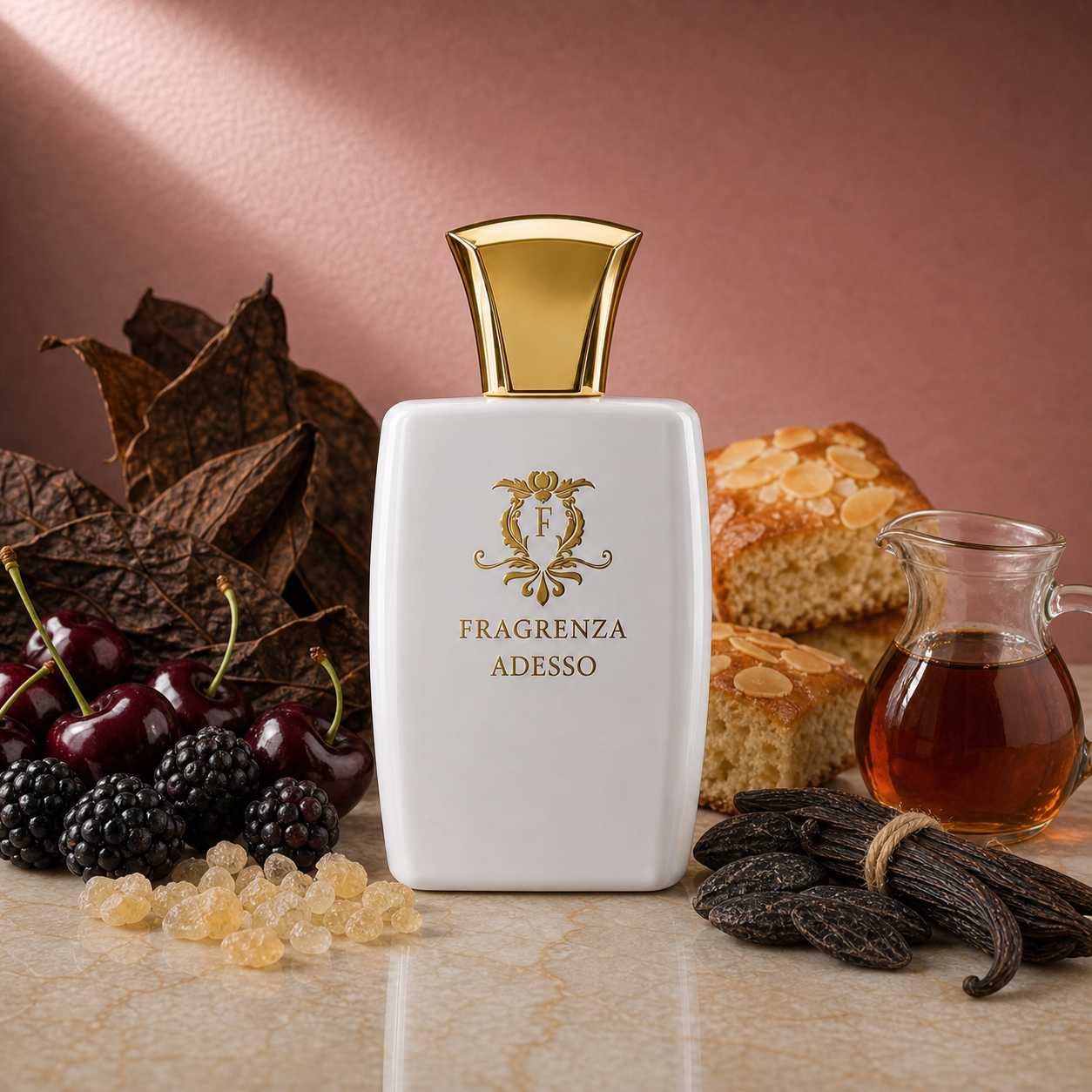
What Does Patchouli Smell Like? The Dark, Earthy Note Behind Modern Perfumery
Patchouli is a distinctive perfumery raw material with a personality all its own, a note every fragrance lover should learn to recognise on skin.
By The Fragrenza Team 15 min read
Patchouli smells like rich, dark earth — damp forest floor after rain, aged wood, dark chocolate, and worn leather, edged with a faintly sweet, camphor-like sharpness. It reads as earthy, woody, and softly sweet rather than floral, fresh, or fruity. Freshly distilled patchouli is sharper and more camphoraceous; aged patchouli turns smooth, deep, and almost chocolatey — which is why people most often describe it as “earthy,” “musky,” and “warm.”
Patchouli is the most misunderstood note in modern perfumery. Its reputation runs in two directions, and neither is accurate. To one camp, patchouli is the defining smell of 1960s counterculture — heavy, hippie, dated, vaguely unwashed. To another, it is one of the most sophisticated and versatile materials in the perfumer’s palette — the dark, earthy backbone behind a remarkable percentage of the most successful fragrances ever made. Both camps see something true. Neither sees the whole picture.
This is the explainer. What patchouli actually smells like, where it came from and how it traveled, the chemistry that gives it its character, the famous fragrances that demonstrate its full range, how it interacts with other notes, and how to wear it well in a contemporary wardrobe. By the end you will recognize patchouli on yourself and on other people, and you will understand why this single dried-and-fermented leaf is so structurally important to perfumery that almost nothing in the modern canon would smell the same without it.
What patchouli actually smells like
Patchouli essential oil is distilled from the dried, fermented leaves of Pogostemon cablin, a small bushy plant native to Southeast Asia. The fresh, undried leaves smell green and herbal, almost mint-adjacent — quite different from what most people think of as patchouli. The transformation happens during drying and fermentation, when enzymatic processes break down cell walls in the leaf and develop the dark, complex aromatic compounds the finished oil is prized for. Patchouli as a fragrance material is genuinely a product of human craft; the herb on its own does not smell like the perfume.
The processed oil smells of rich, dark earth — the forest floor after rain, the inside of a teak chest, a well-worn leather boot, the rich sediment at the bottom of a wine barrel. There is a camphoraceous sharpness in the top notes that can read as slightly harsh or medicinal in fresh oil; this dissipates as the deeper character emerges. Underneath the camphor sits dark chocolate, fresh garden soil, dried fruit, aged wood, and a sweetness that is earthy rather than sugary. The overall impression is simultaneously primitive and sophisticated — deeply grounded, powerfully projecting, slightly animalic in a way that the trained nose reads as almost carnal.
The most important practical fact about patchouli is that it improves with age. Freshly distilled patchouli is sharper and more camphoraceous; aged patchouli — matured in vessels for months or years — develops extraordinary depth and smoothness as the volatile camphor compounds dissipate and the deeper, chocolatey, incense-like facets come forward. Aged patchouli is one of the most prized materials in high-end perfumery, comparable in its complexity to a fine aged spirit. Most contemporary perfumers specify aged oil for serious work.
The cultural journey of patchouli
Patchouli’s entry into Western perfumery is a story that begins with the nineteenth-century textile trade. Kashmiri shawls, fashionable in Victorian Britain and France, were traditionally packed with dried patchouli leaves to repel moths during the long sea voyage from India. The shawls arrived permeated with the scent, and European consumers came to associate the exotic earthy aroma with the luxurious authenticity of the genuine article. So strong was the association that European manufacturers of counterfeit shawls began spraying their products with patchouli oil to make them smell “right.” Patchouli entered the Western fragrance consciousness as a marker of oriental luxury.
By the latter half of the nineteenth century, patchouli had moved from textiles into perfumery proper. Belle Epoque French houses incorporated it into oriental compositions where its fixative power and earthy depth were quickly recognized as structural assets. The Great Exhibition of 1851 in London featured patchouli-scented goods, and the note became fashionable among the bourgeoisie as a marker of sophisticated exoticism. The Victorian and Edwardian periods saw heavy use of patchouli in oriental compositions alongside vetiver, labdanum, and sandalwood.
The most culturally consequential chapter came in the 1960s and 1970s. The counterculture movement adopted patchouli — along with Indian fabrics, incense, and Eastern spirituality — as an olfactory symbol of its values. Its association with cannabis culture, with the rejection of synthetic Western perfumery, and with the broader hippie aesthetic gave it a cultural weight that was both an asset (recognition) and a liability (stigma). For most of the 1980s, as power-dressing and bold mainstream fragrances dominated, patchouli receded into the structural background, its associations still tinged by the previous decade.
The rehabilitation began in 1992 with Thierry Mugler’s Angel. Olivier Cresp’s composition paired patchouli with ethyl maltol, chocolate, and berry notes to create the first major gourmand fragrance and demonstrate that patchouli could be sweet, transgressive, and commercially enormous. Angel reset patchouli’s cultural associations, and the niche perfumery movement of the 1990s, which embraced naturalistic ingredients and rejected mainstream conventions, completed the rehabilitation. Today patchouli is universally recognized as one of perfumery’s great base notes — as essential to the modern perfumer’s palette as sandalwood or oakmoss.
The chemistry of patchouli
Patchouli oil is unusually complex. Over 150 distinct aromatic compounds have been identified in the finished material, and their ratios vary by origin and production method — which is why Indonesian patchouli can smell distinctly different from Indian or Chinese patchouli even though all three are Pogostemon cablin.
The dominant molecule is patchoulol (also called patchouli alcohol), a tricyclic sesquiterpene alcohol that constitutes roughly 30 to 40 percent of the oil and is responsible for the characteristic earthy, slightly camphoraceous, woody-sweet core. Norpatchoulenol, present in tiny quantities, contributes a powerful refined character that is disproportionate to its concentration; some perfumers describe it as the molecule that separates a good patchouli from a great one. Alpha-bulnesene adds woody character. Seychellene, guaiol, and bulnesol contribute additional facets. The full oil’s complexity is what makes it so technically valuable: it is an aromatic ingredient and a structural fixative simultaneously, slowing the evaporation of more volatile materials while contributing its own deep aromatic signature.
Synthetic patchouli molecules have transformed the ingredient’s use in modern perfumery. Clearwood (a patchouli-derived molecule produced by Firmenich) gives a cleaner, more transparent patchouli character used widely in compositions where the natural oil would feel too earthy or too heavy. Various patchouli fractions allow perfumers to isolate specific facets — just the earthy, just the chocolatey, just the camphoraceous — and use them with surgical precision. These innovations have made patchouli more compositionally flexible than ever, capable of contributing depth without overwhelming intensity.
Famous patchouli fragrances
Patchouli’s presence in celebrated fragrances is often more pervasive than its billing suggests. Many wearers of the great chypres — Chanel No. 19, Guerlain Mitsouko, Rochas Femme — would be surprised to learn that patchouli is a load-bearing structural element in each, providing the dark, earthy depth that grounds the lighter floral and citrus elements. In the chypre tradition, built on oakmoss, labdanum, and bergamot, patchouli is essential rather than optional.
In the modern oriental tradition, patchouli is often the headline. Tom Ford Black Orchid is a masterclass in patchouli at its most unapologetic — truffle, dark orchid, chocolate, and a heavy patchouli base producing one of the most distinctive compositions of the last twenty years. The Fragrenza interpretation in this register,
, holds the same dark-floral-patchouli architecture at the value-luxury price point.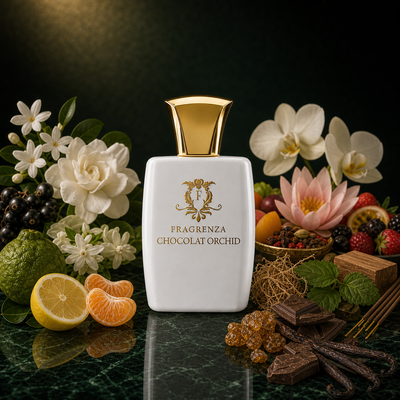
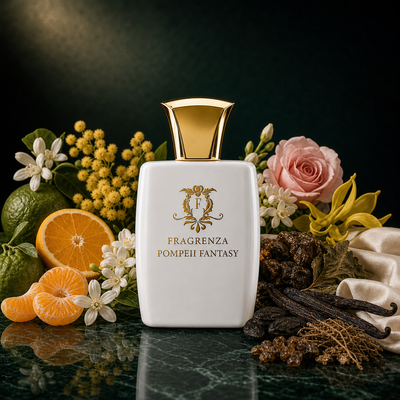
The classic mainstream feminine often uses patchouli as a discreet structural element rather than a featured note. Coco Mademoiselle is the most-cited example: the warm, slightly earthy quality that distinguishes it from lighter floral compositions is largely patchouli’s contribution, even though most wearers would not identify the note by name. The Fragrenza version,
The gourmand tradition that Angel opened up has produced some of the most commercially successful patchouli compositions in history. La Vie Est Belle pairs patchouli with iris, praline, and vanilla in a way that prevents the gourmand from collapsing into pure sweetness. The Fragrenza interpretation,

And in the niche-luxury space, patchouli has found some of its most refined recent expressions. Delina by Parfums de Marly uses patchouli in a lighter register, where it adds subtle earthiness to an elegant rose-lychee-musky floral structure without ever threatening to dominate. The Fragrenza version,
, holds the same delicate-patchouli-floral territory.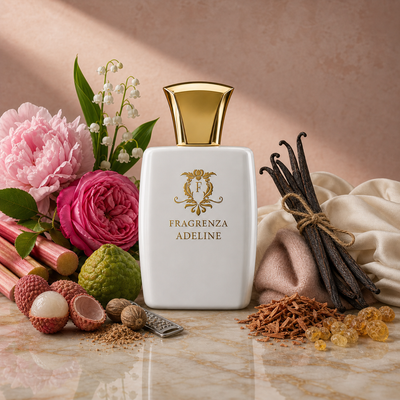
Patchouli at the heart of the Fragrenza line
Beyond the dupes that interpret patchouli’s mainstream lineage, two clean-handle Fragrenza compositions place patchouli at the center of their architecture.
is the most patchouli-explicit pick in the line: smoky woods, incense, oud, and patchouli over a dark tropical base, with patchouli providing the earthy depth that ties the smoke and the wood together. It is a fragrance for cooler weather and longer evenings, and it shows what a patchouli composition can do when the note is allowed to be fully present.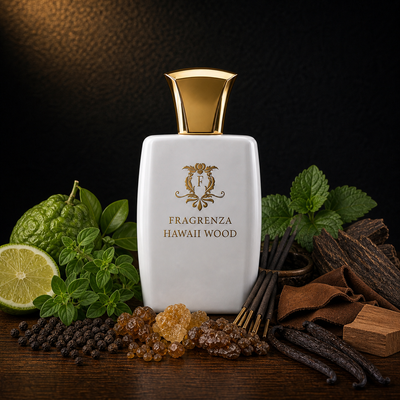
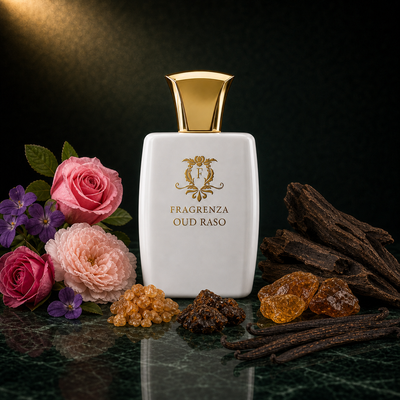
uses patchouli more structurally, in the rose-oud register that has dominated luxury perfumery for fifteen years. The patchouli is in the base, not the spotlight — but it is doing what patchouli always does in this tradition: anchoring the rose and oud, lengthening the wear, and providing the earthy depth that prevents the composition from reading as merely floral. Together, hawaii-wood and oud-satin-mood demonstrate the two registers patchouli occupies in modern perfumery: featured star and structural backbone.
How patchouli interacts with other notes
Patchouli is one of perfumery’s supreme fixative and modifier notes. Its ability to deepen and extend the character of other ingredients is why it appears in so many successful compositions across so many fragrance families. Its most productive relationships are with rose, vanilla, sandalwood, oakmoss, and amber.
With rose, patchouli creates the dark, modern floral that defines so many contemporary feminines — the rose’s sweetness balanced and deepened by patchouli’s earthy complexity. The accord is simultaneously refined and earthy, feminine and grounded, and it appears throughout the chypre tradition as a defining structural element.
With vanilla, patchouli becomes the gourmand-oriental that Angel opened up. The earthiness of patchouli prevents vanilla from collapsing into saccharine territory; vanilla’s sweetness softens patchouli’s potentially challenging facets. The result is one of the most commercially successful accords in modern perfumery.
With sandalwood, patchouli’s darker facets are softened and rounded into a creamy-earthy woody base of considerable warmth. The pairing anchors many of the great oriental compositions.
With oakmoss and bergamot, patchouli forms the classical chypre structure that has been one of perfumery’s most enduring compositional strategies for over a century. Bright top notes contrasting dramatically with dark earthy base, connected by florals and musks in between.
With labdanum and amber, patchouli builds the deep, balsamic-earthy foundation of the great oriental tradition. The melding of patchouli’s earthiness with amber’s balsamic sweetness produces a depth and warmth that no other accord quite matches.
With oud, patchouli forms perhaps the most powerful double act in contemporary oriental perfumery — two dark, complex base notes that together create compositions of extraordinary density and persistence. The pairing is the structural backbone of much of the rose-oud niche tradition. Our oud note pillar covers the wood that frequently rides shotgun with patchouli in this register.
Patchouli in the modern wardrobe
Patchouli is most at home in autumn and winter, when its warmth, depth, and earthiness feel appropriate to the season. Heavy patchouli-forward compositions can feel overwhelming in summer heat, though lighter patchouli treatments and fragrances where patchouli is a discreet base note rather than the featured star can be worn year-round. The key is concentration: a large patchouli presence demands cool weather and the right occasion, while subtle patchouli in the base notes is essentially invisible to the observer and entirely season-agnostic.
For those new to the note or returning after a long absence, the best approach is graduated exposure rather than immediate immersion. Start with fragrances where patchouli is a supporting note — a chypre or gourmand where the note grounds the composition without dominating it — and develop familiarity with the note in modulated context. The full layering framework lives in our layering pillar. As your nose adjusts and you begin to appreciate what patchouli contributes, move toward compositions where it is more prominently featured.
For the broader picture of how patchouli-forward fragrances fit into a wardrobe, our complete guide to building a fragrance wardrobe in 2026 places patchouli alongside the other major base-note categories. For the mood register that patchouli compositions occupy — confident, sensual, evening — our guide to choosing perfume by mood covers the territory in detail. And for the value-luxury question that runs through patchouli’s mainstream history — chypres at every price point, gourmand-orientals at every price point — our smell-expensive on a budget guide is the practical companion.
Frequently asked questions
What does patchouli smell like?
Rich, dark, earthy — like the forest floor after rain, the inside of a teak chest, a worn leather boot, the sediment at the bottom of a wine barrel. Underneath the earth sits dark chocolate, fresh garden soil, dried fruit, aged wood, and a sweetness that is earthy rather than sugary. There is a faint camphoraceous sharpness at the top of fresh patchouli that dissipates with aging. Aged patchouli has extraordinary depth and smoothness; fresh patchouli is sharper and more camphor-forward.
Does patchouli smell like weed (cannabis)?
Not exactly — but the association is real. Patchouli and cannabis share an earthy, green, slightly herbal-skunky quality, and in the 1960s and 70s patchouli oil was famously used to mask the smell of marijuana smoke, which cemented the link in popular memory. Side by side, though, they diverge: patchouli is sweeter, woodier, and more chocolatey, without the sharp green-skunk pungency of burning cannabis. So patchouli doesn’t really smell like weed — it simply lives in the same earthy family, and history did the rest.
Does patchouli smell good or bad?
It depends almost entirely on the patchouli. Cheap, freshly distilled, or heavily concentrated patchouli can smell harsh, sharp, and “hippie” — which is where the bad reputation comes from. Well-aged patchouli used skillfully in a composition smells sophisticated, warm, and sensual, which is exactly why it anchors so many luxury and niche fragrances. If you think you dislike patchouli, you have probably only met the cheap, raw version.
Does patchouli smell like mint?
The living plant does, a little — fresh, undried Pogostemon cablin leaves have a green, herbal, faintly mint-adjacent smell. But the patchouli used in perfume is the dried and fermented oil, and that process transforms it completely into the dark, earthy, woody scent everyone recognizes. So the herb leans minty-green; the perfume note does not.
Is patchouli still considered a hippie scent?
Not in any serious sense. The 1960s counterculture association faded as soon as Thierry Mugler’s Angel (1992) reset the note’s cultural associations, and three decades of luxury and niche perfumery have rehabilitated it completely. Patchouli now appears as a structural element in many of the most commercially successful and critically respected fragrances of the modern era. The hippie association persists in popular memory but not in serious fragrance literacy.
Why does patchouli last so long on skin?
Patchouli’s longevity comes from the molecular weight of its dominant compounds. Patchoulol and the other major sesquiterpenes are heavy molecules with very low volatility, which means they evaporate from skin slowly. A patchouli-forward composition can persist for ten to twelve hours; even a small amount in the base of a fragrance can extend the wear of lighter top and heart notes substantially. This is part of why patchouli is treated as a fixative material: it anchors the entire composition.
How is aged patchouli different from fresh patchouli?
Aging transforms patchouli oil considerably. Fresh patchouli has a sharper, more camphoraceous, somewhat raw character; aged patchouli — matured in barrels for months or years — develops smoothness and depth as the volatile camphor compounds dissipate and the deeper chocolatey-resinous facets dominate. The transformation is comparable to the aging of fine spirits. Most premium perfumers specify aged oil for serious work, and the difference is detectable on skin.
Can men wear patchouli fragrances?
Yes — patchouli is one of the most genuinely unisex notes in modern perfumery, and a meaningful portion of contemporary masculine fragrance uses patchouli as a structural element. The note’s earthy depth and slight animalic warmth fit comfortably into masculine compositions, and the modern unisex direction has made patchouli-forward compositions a popular choice for men interested in characterful evening or cool-weather wear.
What perfumes layer well with patchouli?
Vanilla is the universal partner — the classic gourmand pairing. Rose is the second great pairing, producing the chypre register that has defined luxury feminines for over a century. Sandalwood softens patchouli’s earthiness into a creamy-woody base. Oud creates the most powerful base-note duo in modern oriental perfumery. Avoid layering patchouli with sharp citrus or bright aquatic notes — the contrast tends to feel jarring rather than harmonious.
What is the best season to wear patchouli?
Autumn and winter for patchouli-forward compositions, where the note’s warmth, depth, and earthiness fit the cooler weather. Lighter patchouli treatments — where the note functions as a discreet structural element rather than the headline — can be worn year-round, including in spring and summer evenings, without difficulty. The constraint is concentration, not category: a big patchouli wear demands cool air; a small patchouli touch wears beautifully across all seasons.
The bigger picture
Patchouli has been declared dead more than once, and it persists. It persists because it does something no other ingredient does in quite the same way — adding genuine earthiness, sensual weight, and structural depth to compositions that would otherwise float untethered. In a perfumery moment dominated by transparent, clean, synthetic brightness, patchouli provides the contrast that makes the brightness legible. It is the dark backbone of fine fragrance, and learning to recognize it is most of what you need to read the modern canon accurately.