How to Smell Expensive on a Budget: The 2026 Value-Luxury Guide
Bottle, packaging, licensing fees and campaign imagery account for the lion's share of designer pricing while the actual aromatic oil sits between five and fifteen percent of the retail tag.
By Julia MorettiFragrenza makes several of the alternatives featured in our guides — here’s how we test.
13 min read
The best fragrance you wear this year does not need to be the most expensive one in your collection. It needs to be the most intelligently constructed. Those are not the same thing — and the gap between them, in 2026, is wider than at any point in the last twenty years of perfumery. Knowing how to read that gap is how you build a wardrobe that smells expensive without spending what expensive normally asks for.
This is a guide to that knowledge. What “smelling expensive” actually means in technical terms, why the price tag has so little to do with it, the five compositional tells that mark a luxury fragrance regardless of cost, the four strategies that produce the illusion of niche-level luxury at designer prices or below, and how to assemble a budget-luxury wardrobe that holds its own in any room you walk into.
Why fragrance pricing has so little to do with quality
Start with a fact that almost nobody outside the industry says out loud. The actual liquid — the fragrance oil diluted in alcohol — typically accounts for somewhere between five and fifteen percent of a designer fragrance’s retail price. The rest is bottle, packaging, marketing, retail margin, distribution, brand licensing fees, and the premium attached to a fashion-house or designer name. None of that lives in what you smell. All of it lives in what you pay.
This isn’t a scandal so much as it is the structure of the luxury goods market. The campaign imagery, the bottle as art object, the celebrity face, the in-store experience — these are real things people pay for, often with their eyes open. But the implication for the informed buyer is significant. When you strip out the brand premium, the underlying liquid is often replicable at a fraction of the cost. Sometimes it is surpassable. The right perfumer working with the right materials at the right concentration produces something the nose cannot tell apart from a flagship priced six times higher.
The brands consistently delivering this kind of value share a common shape. They have invested in formula rather than packaging. Their bottles are functional. Their distribution is direct or near-direct, eliminating retail markup. Their campaigns are minimal. Every dollar that doesn’t go into the marketing apparatus flows into the bottle. The math is simple, and the result is that a value-focused fragrance often outperforms a heritage brand priced six to ten times higher on the only metric that ultimately matters — what happens when the bottle is opened and the fragrance touches skin.
The five tells of an expensive-smelling fragrance
“Smelling expensive” is not a vibe; it is a set of measurable compositional qualities. The nose, even an untrained one, picks them up reliably. Five tells matter most.
1. Smooth transitions between stages
Cheap fragrances reveal their architecture all at once and then collapse. Expensive ones unfold. The opening notes flow into the heart, the heart settles into the base, and the listener hears a continuous arc rather than three separate songs. Smoothness comes from a perfumer thinking carefully about how each stage hands off to the next — usually by sharing one or two molecules across both stages so the nose doesn’t register a hard cut. When you put on a fragrance and an hour in it still feels like the same composition rather than a different one, that is a signal of considered work.
2. A clean, generous drydown
The base notes are where craftsmanship hides. Cheap fragrances often go sour, plastic, or thin in the final hours; expensive ones get richer and more skin-integrated. The tell is generosity — the impression that the perfumer was not rationing the materials in the base. Quality musks, well-handled woods, and a properly built amber or vanilla base do this work. The drydown should feel like the fragrance is finishing the conversation, not running out of things to say.
3. Compositional restraint
Counterintuitively, the most expensive-smelling fragrances are usually the simpler ones. A composition that does three things beautifully reads as more luxurious than a composition trying to do nine things at once. The mark of a confident perfumer is what they leave out. When a fragrance is built around a clear central idea and the supporting notes serve it rather than competing with it, the wear feels deliberate. When everything is fighting for attention, the wear feels like a perfume sample pack.
4. A density that sits with the skin, not on top of it
Expensive fragrances integrate. The composition behaves as if it had been part of the skin all along. Cheap fragrances broadcast — you can tell they’re a fragrance from the doorway, but you can’t tell they’re you. Density-with-skin comes partly from concentration (eau de parfum and extrait formats handle this better than eau de toilette), partly from base-note quality, and partly from the perfumer’s instinct for how a fragrance should evolve in body heat. The wear should feel three-dimensional rather than two.
5. Recognizable architecture, not just notes
Most fragrance reviews talk about notes — pistachio, oud, jasmine. Expensive fragrances are usually recognizable not by their notes but by their architecture: the saffron-amber luxury accord, the rose-oud structure, the woody-incense temple build, the modern ambroxan-skin-musk. When you can identify a fragrance’s structure within thirty seconds of putting it on, you are smelling something built with intent rather than assembled from a brief.
The four expense-illusion strategies
If those are the qualities, here are the four strategies for finding them at honest prices. Each maps to a different mood and a different cost, and each has at least one Fragrenza fragrance built around it.
The recognizable luxury archetype
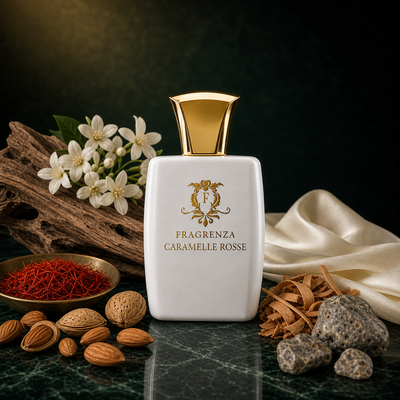
The fastest route to smelling expensive is to wear something that uses one of the architectures the luxury market has spent twenty years training people to read as luxury. The clearest example: the saffron-amber accord pioneered by a handful of niche houses in the 2010s and now globally synonymous with high-end perfumery. Anyone with a passing fragrance literacy recognizes the structure immediately.
The polished foundation
For everyday wear, the strategy is different. You don’t need a luxury archetype; you need a clean, well-built fragrance that reads as the kind of thing serious people wear without thinking about. Polished masculine compositions, in particular, occupy this space — clean fougeres and woody aromatics that sit comfortably in board rooms, restaurants, and ordinary professional life.
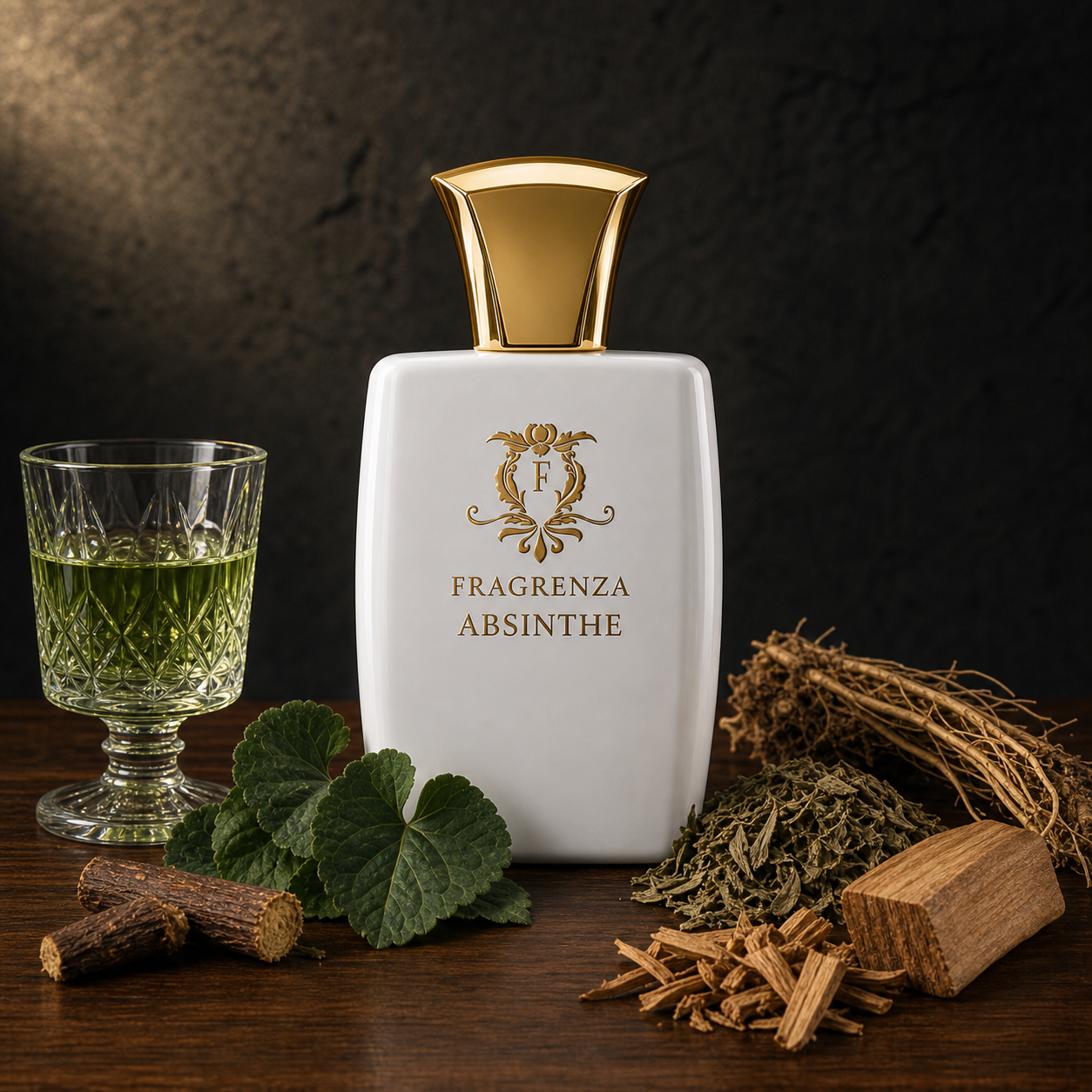
is the polished foundation pick: a fragrance that telegraphs “competent adult” the moment it arrives in a room. It is the wear for interviews, work travel, and any context where you want the impression to be quiet authority rather than overt charisma. More on this category in our piece on the smellmaxxing wave that has redefined men’s fragrance in 2026.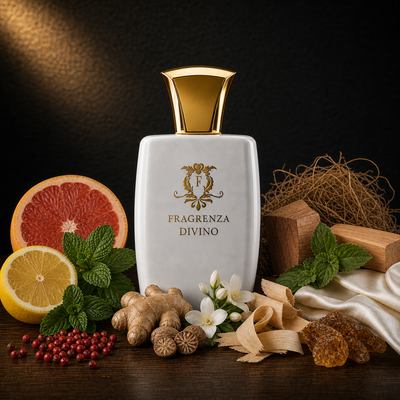
The unexpected sweetness
Gourmand fragrances are the category most likely to read as cheap if poorly made. Done right, they are the most addictive wear in any wardrobe. The trick is restraint — sweetness that is balanced by something dry, dark, or aromatic so the fragrance feels grown-up rather than juvenile.
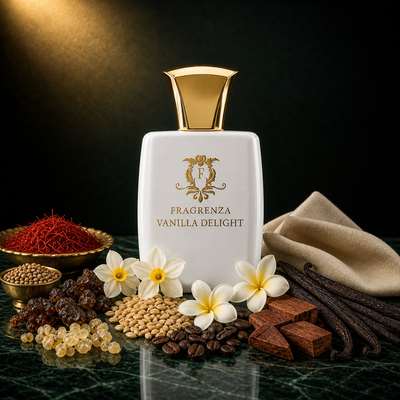
The dark glamour move
The fourth strategy is the richness move. When you want a fragrance to read as evening, as luxury, as something that costs money to wear, the architecture that does this most legibly is rose-oud. It has been the dominant luxury structure of the last decade and remains so in 2026.
holds this territory in the Fragrenza line: dark glamour, rich evening, the kind of fragrance designed to be noticed when noticed and ignored when ignored. The full picture of why oud anchors this part of the wardrobe lives in our oud note pillar.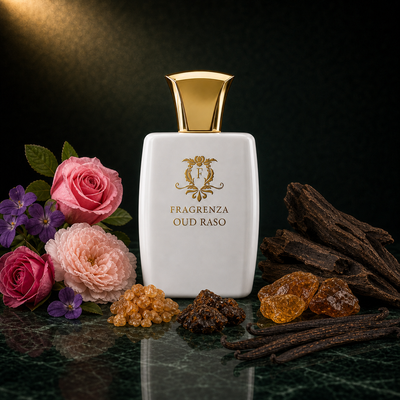
Two more value-luxury picks worth knowing
Beyond the four primary strategies, two specific Fragrenza compositions deserve their own callouts because they handle situations the others don’t.
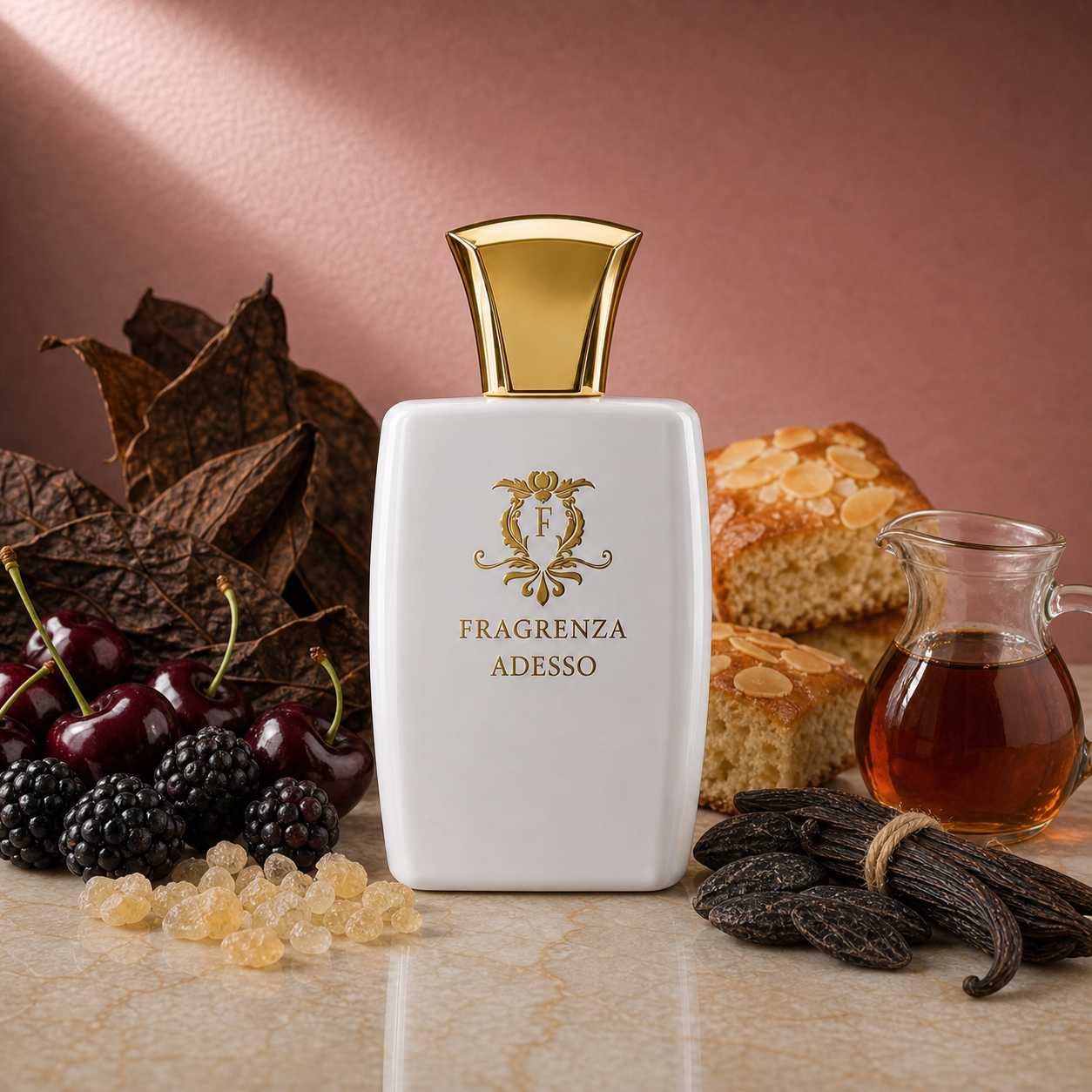
occupies the dark-fruit-gourmand territory that has been one of the defining 2020s niche directions — a lush, almost edible cherry handled with enough oud and almond restraint that it doesn’t cross into syrupy. The luxury version of this composition runs three times the price for what reads, in blind tests, as the same wear. And is the easy-to-wear fresh masculine: the bergamot-and-ambroxan structure that has been one of the world’s most recognizable men’s fragrances for most of a decade, available without the designer markup. Both belong in any wardrobe built around the smell-expensive principle.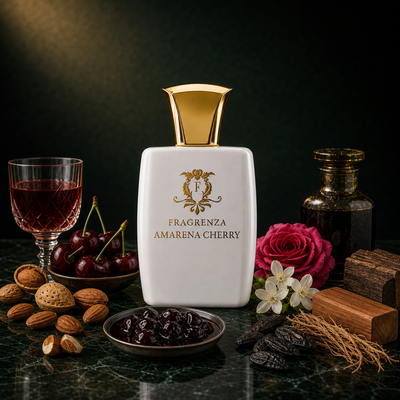
How to recognize a cheap fragrance
The inverse signals are useful too. A fragrance is probably cheap-smelling, regardless of what it costs, if it has a few specific qualities. The opening hits with a sharp alcohol burn that doesn’t fade quickly. The notes feel soapy or detergent-adjacent rather than perfume-adjacent. The development jumps from one stage to another with no transition; the heart and base sound like different fragrances stitched together. The drydown thins out within an hour and disappears entirely within three. The composition smells the same on every person, because the materials are too synthetic to interact meaningfully with skin chemistry.
None of this is about price. A high-end designer can fail every one of these tests. A value pick can pass all of them. The price tag is not a quality scanner; the nose is. Train it on enough wear and the gap between cost and quality becomes obvious within the first ten minutes of any fragrance.
Building a smell-expensive wardrobe
The practical version of all this is a four-bottle starter wardrobe that covers most situations a normal life throws at you. One luxury archetype for impact (saffron-amber or rose-oud). One polished daily wear (a clean masculine or skin-scent musk). One gourmand for cozy and evening contexts. One easy fresh for warm weather. Four bottles, total cost roughly equivalent to a single mid-tier designer flagship, full coverage of what fragrance is realistically asked to do across a year.
The architecture for assembling this kind of wardrobe lives in our complete guide to building a fragrance wardrobe in 2026. The mood-mapping side of the same question lives in our guide to choosing perfume by mood. Together they answer most of what a value-focused wardrobe needs to figure out.
The mistake most people make is thinking the wardrobe is built one trophy purchase at a time. It isn’t. The wardrobe is built around mood, occasion, and rotation, and the price-per-bottle should fit the size of the wardrobe rather than the prestige of any single fragrance. Four good bottles you actually wear are worth more than two flagship bottles that sit on a shelf.
Related reads
For deeper reading on the technical questions around value: our extrait trend explainer covers why concentration matters to longevity and why higher concentrations are usually a value play; extrait vs eau de parfum goes deeper on the format question; how to make your perfume last all day handles the application side; and the biggest perfume trends of 2026 gives you the broader market context for where the value opportunities currently live.
Frequently asked questions
What does it mean for a perfume to smell expensive?
It means the composition has the technical qualities luxury fragrances tend to share: smooth transitions between top, heart, and base; a clean and generous drydown; restraint in the number of notes; a density that integrates with skin rather than projecting from above it; and a recognizable architecture that the trained nose reads as deliberate rather than assembled. These qualities are achievable at any price point if the formula prioritizes them.
Are inexpensive perfumes really as good as expensive ones?
Some are; many are not. The question is which ones. The brands that consistently deliver luxury-equivalent quality at value prices tend to share a structural choice: they invest in formula rather than packaging and marketing, and they sell direct rather than through retail. The savings flow into the bottle. A value-focused fragrance from this kind of house often outperforms a designer flagship priced six to ten times higher in blind tests on every metric that matters.
How can I tell if a perfume will smell cheap before I buy it?
You usually cannot before sampling. The signals only become clear once the fragrance has been on skin for at least an hour. Cheap fragrances tend to share specific tells: sharp alcohol opening, soapy or detergent-like notes, hard transitions between stages, thin or sour drydowns, and a sameness across different wearers because the materials don’t interact with skin chemistry. Sample programs are how value-focused houses let you test before committing to a full bottle.
What makes a fragrance long-lasting on a budget?
Concentration and base-note quality. A budget eau de parfum or extrait built around heavy base notes — oud, amber, vanilla, sandalwood — will outlast a designer eau de toilette built around top notes that vanish in an hour. The format matters more than the brand for longevity. Apply to moisturized skin and target heat-emitting points (wrists, neck, behind the ears) for further extension.
Do I need a niche fragrance to smell expensive?
No. The architectures that read as luxury to most noses — saffron-amber, rose-oud, polished clean musks, well-made gourmands — are not patented. Any house with skilled perfumers and quality materials can produce them, and several do at honest prices. The luxury impression comes from compositional craft, not from the brand on the bottle. The nose is not a price scanner.
How many fragrances do I need for a smell-expensive wardrobe?
Four is the practical minimum: one luxury archetype for impact, one polished daily wear, one gourmand for cozy and evening contexts, and one easy fresh for warm weather. That covers most situations a normal life requires across a full year. Six covers the full mood and seasonal spread without becoming a project. More than seven and you start losing the rotation discipline that makes any wardrobe work.
What is the best inexpensive perfume for everyday wear?
For unisex everyday wear, look for a clean musk or a polished oud composition — something that integrates with skin and reads as competent rather than performative. For men’s everyday wear, a polished fougere or a clean fresh-aromatic does the work. For women’s everyday wear, a soft floral-musk or a balanced gourmand-skin-scent works most settings. The Fragrenza catalog has clean handles in each of these categories at prices that don’t require a justification.
Are samples worth buying before committing to a full bottle?
Almost always, yes. Even at value prices, a full bottle is a commitment, and skin chemistry varies enough that a fragrance that smells stunning on a paper strip may not work on you specifically. Sample programs let you test the wear over a full day, in different conditions, at honest cost. For expensive fragrances, sampling is mandatory; for value picks, it is still smart practice.
The shift in what luxury actually means
The biggest move in fragrance over the last decade has been the slow recognition that luxury is a quality of the wear, not a quality of the price tag. The houses that understood this early have built their entire identity around the gap between cost and quality — investing in formula, holding the line on price, and letting the nose be the only judge that matters. The smartest fragrance buying you do this year will not be the most expensive. It will be the most informed.