How to Choose a Perfume Based on Your Mood
Smell hits the amygdala raw, which is the physiological reason lavender drops cortisol and vanilla measurably softens an anxious morning.
By Julia MorettiFragrenza makes several of the alternatives featured in our guides — here’s how we test.
13 min read
Most fragrance advice starts in the wrong place. It asks what notes you like, what season it is, what your skin type is — useful questions, but not the deepest one. The deepest question is what you want to feel. Confident. Calm. Wanted. Awake. Held. Unbothered. Once you answer that, the fragrance choice almost makes itself, because perfume is one of the few tools available that actually moves the needle on emotional state in real time.
This is a guide for choosing perfume by mood — not by trend, not by price, not by what someone reviewed well. Six mood archetypes, the scent characters that match each one, and the Fragrenza fragrances built around them. Use it to build a wardrobe that does emotional work for you, not just olfactory work.
Why mood-based fragrance choice actually works
Smell is the only sense wired directly to the limbic system — the part of the brain that handles emotion and memory. Where sound and sight pass through the thalamus first and get processed before they reach feeling, scent skips that step. The signal arrives at the amygdala and hippocampus essentially raw. This is why a particular note can transport you to a specific summer when you were nine, and why putting on the right fragrance in the morning genuinely changes how the day feels — not as placebo, as physiology.
The implication is practical. Fragrance can be deliberately deployed to shift state. Aromatherapy has known this for centuries; the modern psychophysiology research has caught up in the last two decades. The trick is matching scent character to the emotional state you want, and learning to do this fluently across enough categories that you have a tool for every part of your day. For the deeper science behind why it works, see our explainer on the psychology of scent and emotion. The piece you’re reading now is the practical companion: how to actually choose.
The other thing worth saying upfront is that mood-based fragrance choice is the opposite of the trend-chasing approach. Trend choice asks what the algorithm is rewarding this season; mood choice asks what your nervous system needs this morning. The first is a marketing question, the second is a wellbeing question. The answers occasionally overlap, but they’re working from different premises. This guide picks the second premise on purpose — choose by what you want to feel, not by what the feed is telling you to want.
The six mood archetypes
Six mood states cover most of what fragrance is realistically asked to do in a wardrobe. They aren’t mutually exclusive — you might want two of them in a single day, or pair two as a layering choice — but each has a clear scent character that matches it, and each has a Fragrenza fragrance built around that character. Read in order, or skip to the mood you’re trying to dress for.
1. Confident — when you need to occupy more space
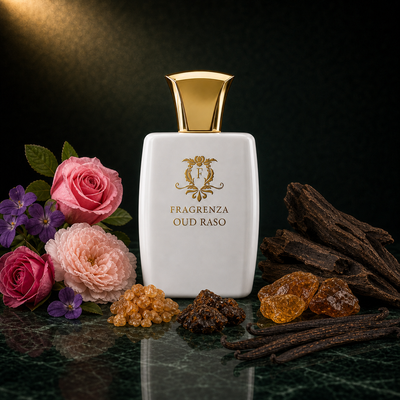
Confidence is the most directly fragrance-influenced emotional state. The right composition gives you a quiet certainty that comes from knowing you’re leaving an impression you control. The notes that produce this sensation share a profile: depth in the base, warmth that projects outward without shouting, a slight darkness that reads as adult rather than aggressive. Rose-oud is the classical structure here. Saffron-amber is the contemporary one. Both work because they sit lower in the composition than your voice does — you arrive in a room, the room registers you, and you haven’t had to introduce yourself.
is the house’s direct expression of this mood. Rose-oud, dark glamour, evening confidence at full saturation. Wear it for the meetings that matter, the dinners where the table is reading you the moment you sit down, the events where you want to be remembered specifically. It is not subtle, and it shouldn’t be — confident wear isn’t a daytime mode and shouldn’t apologize for taking up its space.
2. Sensual — when the night is the point
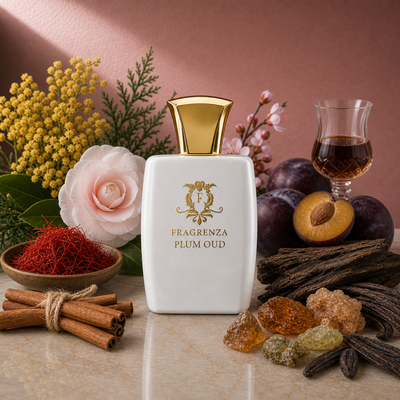
Sensuality in fragrance is its own register. It is darker than confidence and softer than romance — less about being seen and more about being felt. The notes that produce it lean into ripe-fruit, into balsamic warmth, into a low-resin sweetness that reads as desire without reading as dessert. Plum, fig, dark cherry, blackberry, and oud do this work better than almost anything else. The fragrance should be close-skin enough to invite proximity, but rich enough that proximity rewards.
holds this exact territory in the Fragrenza line. Plum and oud over a sensual woody-fruit base — the dark-fruit modernization of an oud composition that has defined the sensuality category since the 2010s. It is the choice for dates, for nights you’ve been waiting on, for the wear where you want the fragrance to be doing more work than the conversation. Pair with low light. The rest is on you. For more along this axis, our date night guide goes deeper.
3. Cozy — when the world is too loud
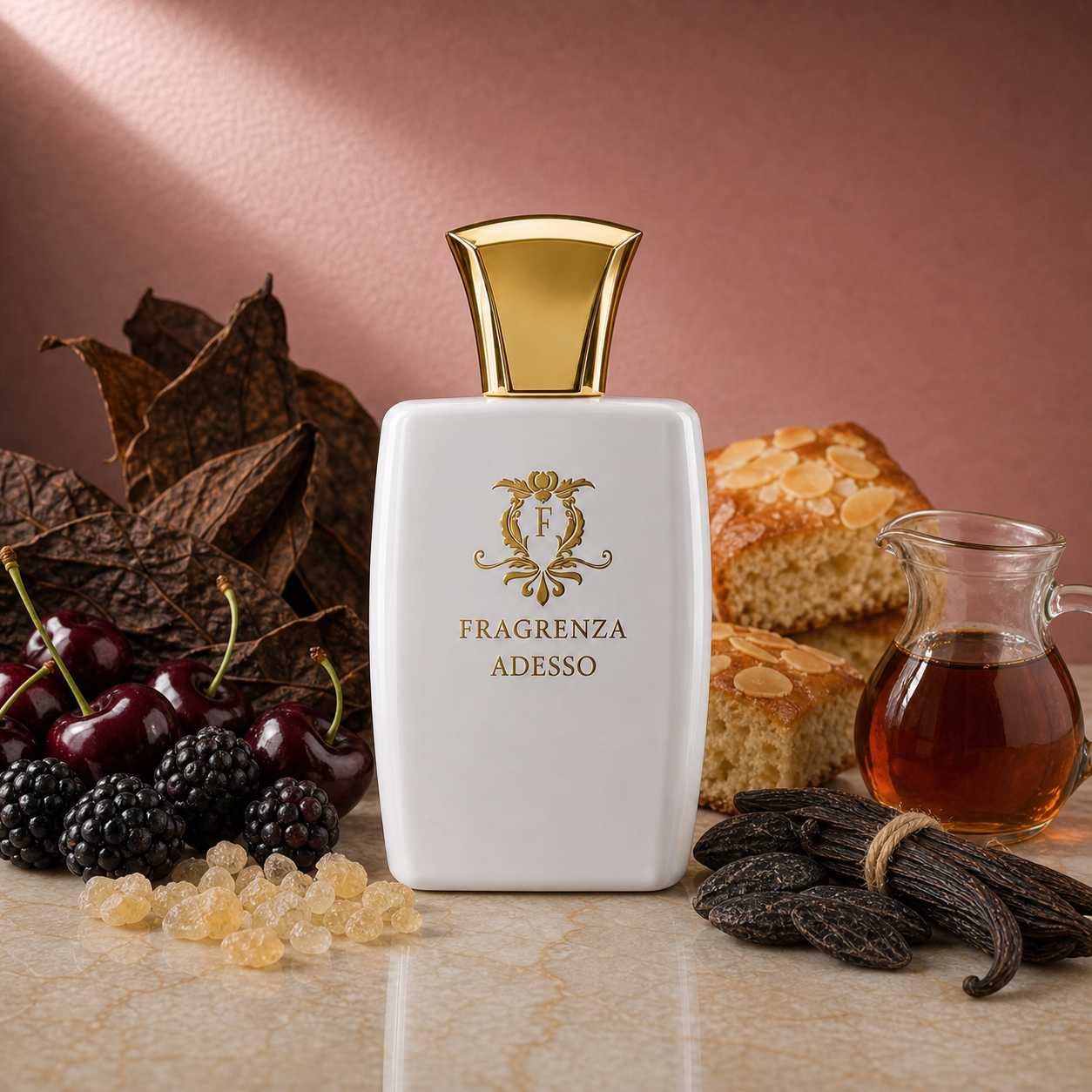
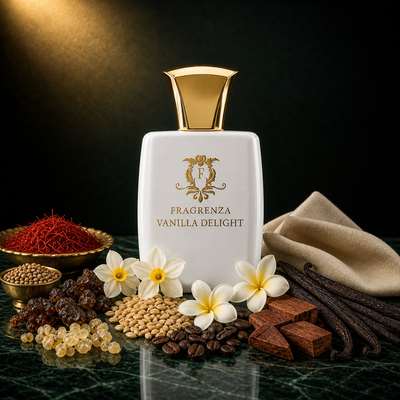
Cozy is the emotional state perfume probably handles best of all the moods. Warm vanilla, soft suede, milky musk, caramel, a dusting of spice — these compositions produce an immediate physiological softening response. Anxiety markers measurably drop in research settings when subjects are exposed to vanilla over even short windows. Cozy fragrance is genuinely therapeutic, the olfactory equivalent of a weighted blanket. It belongs in any wardrobe that has to deal with hard days.
4. Polished — when you want to be taken seriously
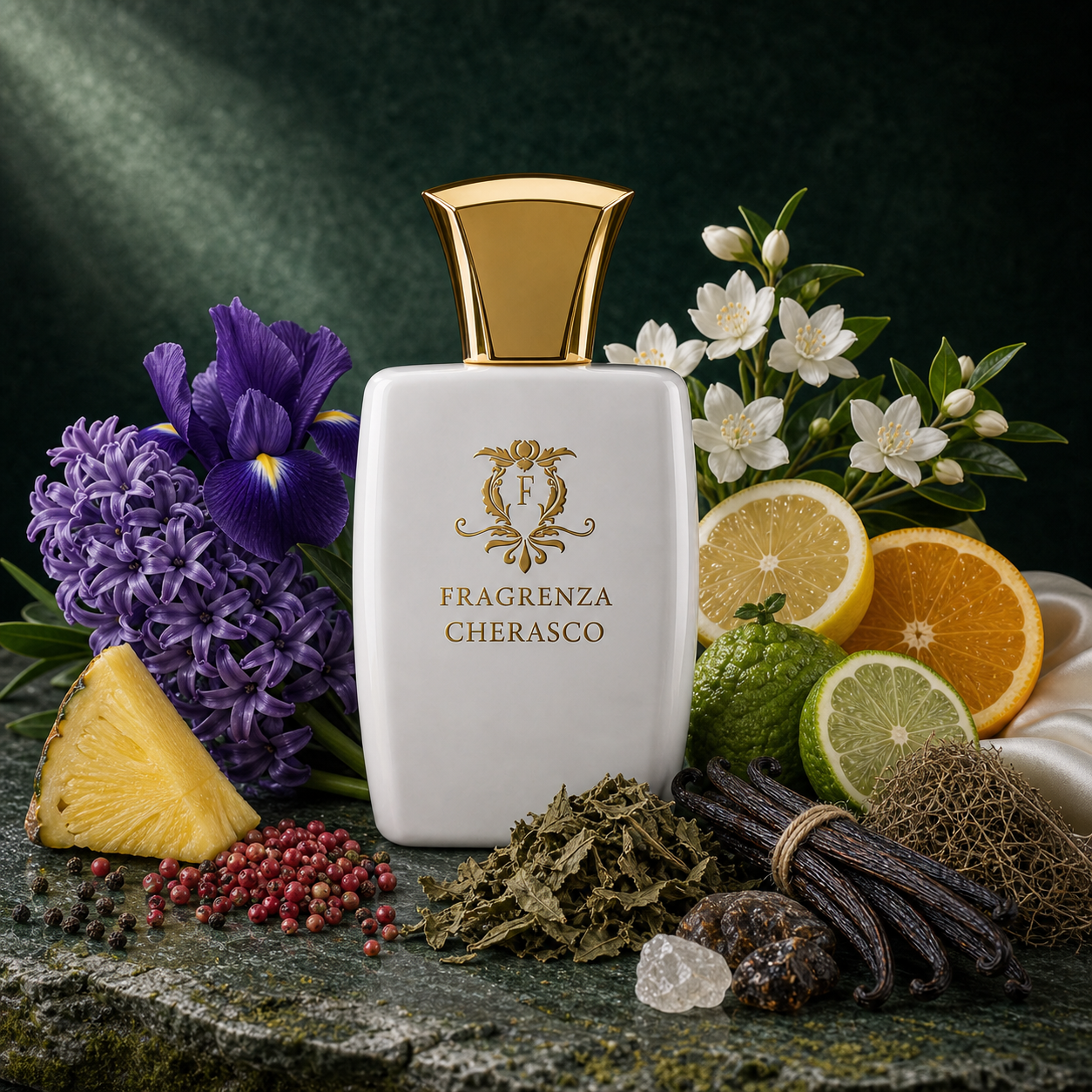
Polished is the professional mood. It’s the fragrance you wear when the wear should be invisible enough that you’re not the room’s topic, but present enough that what people remember about meeting you includes a faint sense of refinement. The notes that build this mood are clean musks, subtle iris, controlled woods, and a refined oud that doesn’t announce itself. The structure is restraint. The wear should sit close to skin and reveal itself only in the second-act conversation.

5. Grounded — when you need to come back to yourself
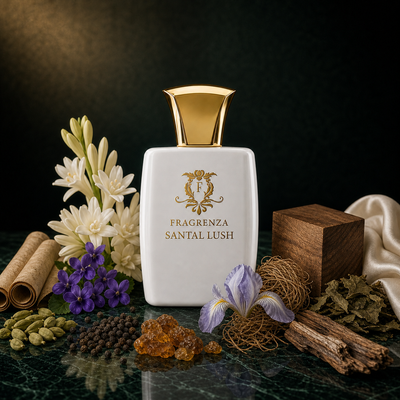
Grounded is the introspective mood. It’s what you wear on long writing days, before difficult conversations, on Sundays when the rest of the week is asking too much. The notes are creamy sandalwood, soft cedar, a whisper of incense, and the woody resins that have anchored meditation traditions for thousands of years. Grounded fragrance is for solitude rather than presence — the wear is for you, not the room, and the goal is internal rather than external attention.
is the grounded pick. Creamy sandalwood at its most enveloping — soft, woody, quietly milky, with the meditative center that has made sandalwood a temple material across cultures since antiquity. Wear it for yoga, for the kind of work that requires you to think rather than perform, for the early hour before anyone else is awake. It pairs beautifully with stillness.
6. Fresh — when the day needs to start over
Fresh is the energizing mood. It’s morning fragrance, post-workout fragrance, the wear that announces a clean break from whatever was happening before. The notes are clean musks, soft citrus, white florals, the cool molecules (Iso E Super, ambroxan) that read as “just-showered air.” Where cozy fragrance enfolds, fresh fragrance opens windows. The right composition produces an immediate alertness response — the same kind of thing peppermint and citrus produce in clinical settings, but in a wearable form that lasts past the first hour.
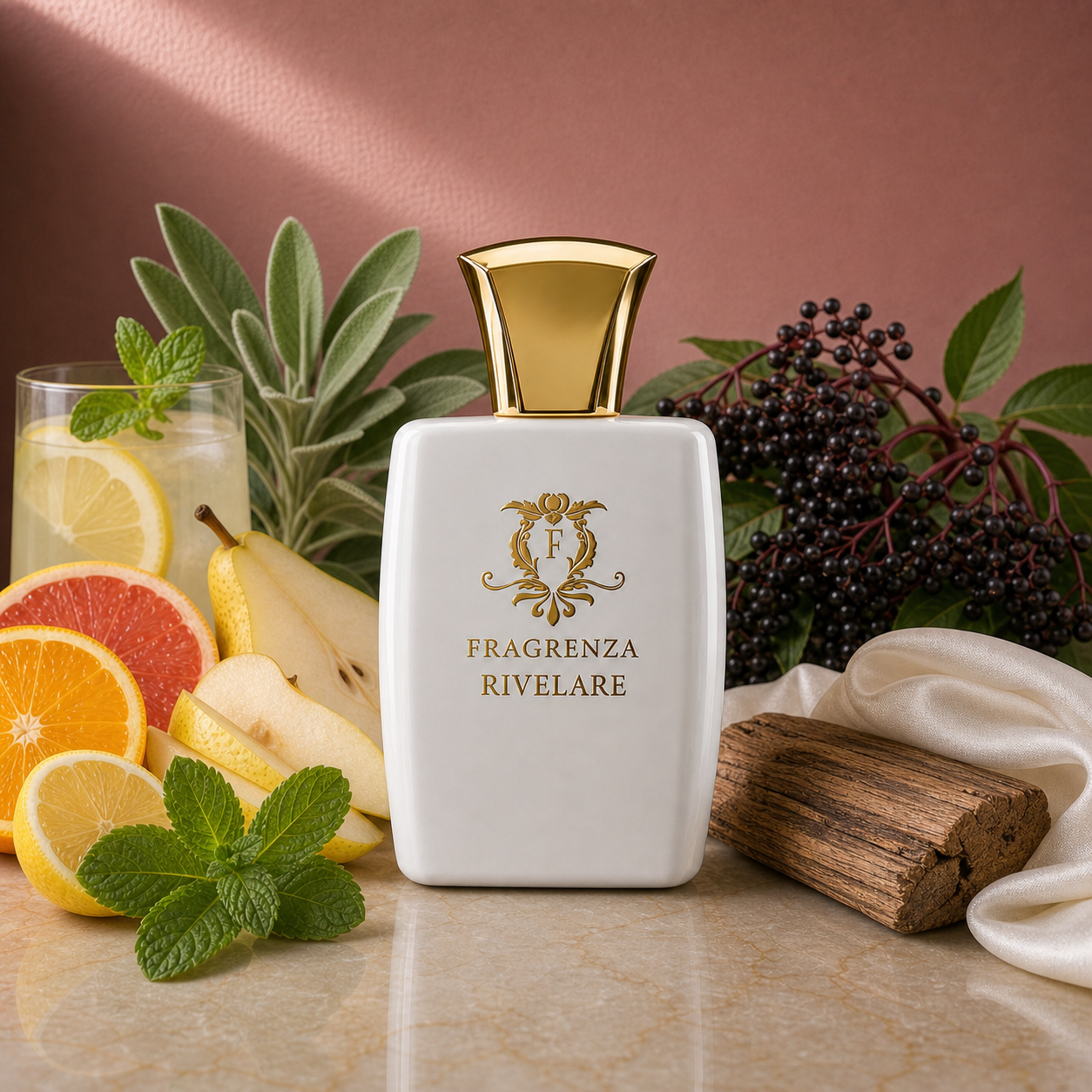
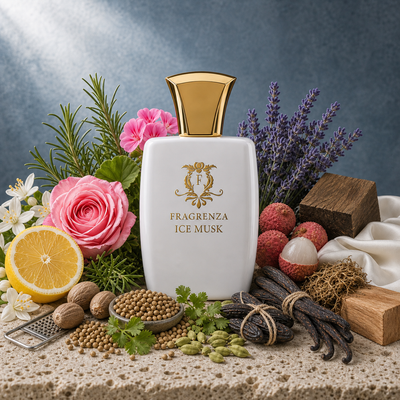
is the fresh pick. Clean, soft, second-skin musk — the modern interpretation of the “clean girl” aesthetic and the broader 2026 skin scent moment. Wear it for mornings that require a reset, for summer wear when anything heavier reads as wrong-room, for the days where you want the fragrance to feel like a low-stakes upgrade rather than a statement. It is the easiest fragrance to wear without thought.
Building a mood-based wardrobe
The point of organizing fragrance by mood is that you’re building a tool, not a collection. Six bottles cover six emotional registers; with even three you can handle most of what a normal week throws at you. The architecture matters more than the inventory.
The minimum mood wardrobe is three: one warm (cozy or sensual), one clean (fresh or polished), one with weight (confident or grounded). That covers the basic emotional spread of a normal week — the day you need comfort, the day you need to feel awake, and the day you need to feel powerful. Adding two more bottles fills out the emotional palette: a sensual evening wear and a meditative grounded wear give you the registers that the basic three don’t cover. Six is the upper end before the wardrobe starts feeling like a project.
What matters is that you actually map fragrance to mood when you’re assembling the wardrobe, rather than buying based on review scores or trend velocity. The full architectural framework lives in our complete guide to building a fragrance wardrobe in 2026; this article is the mood-mapping side of it.
The practical version of this looks like a labelled shelf. Front row: the three you reach for most often, mapped to the three moods you live in most often. Back row: the specialty fragrances for the moods that don’t come up as frequently — the sensual evening, the meditative morning, the confident high-stakes wear. The labelling matters more than it sounds. The whole point of mood-based wear is that you’re choosing fast and intentionally; if it takes you five minutes to remember which bottle is the cozy one, the system is broken. Two minutes from waking up to spraying is the cadence that works.
Layering for mood transitions
Most days don’t hold a single mood from morning to night. The cozy you put on at 8 a.m. doesn’t fit the dinner at 7 p.m. Layering is how you bridge the gap without going home to change.
The technique: apply the morning mood to skin in normal volume, and at the transition point apply the evening mood lightly to fabric — collar, scarf, hair. The base of the morning fragrance is still on your skin; the new fragrance lives above it on cloth. The two compositions read in sequence rather than as a fight. A common version: cozy vanilla in the morning, confident rose-oud sprayed onto the collar before dinner. Or polished daytime, sensual evening — same pattern. The deeper framework lives in our pillar on layering fragrances like a perfumer.
Related reads
If you want to go deeper into the mood-and-fragrance question: our piece on the psychology of scent covers the underlying neuroscience in detail; the wardrobe guide gives you the architectural side; the date night guide drills down on the sensual mood; and the oud pillar covers the note that powers the confident-and-sensual end of the mood spectrum.
Frequently asked questions
Can fragrance really change your mood?
Yes. Smell is wired directly to the limbic system, which handles emotion and memory before conscious processing. The effect is measurable in clinical research: lavender reduces anxiety markers, citrus and peppermint increase alertness and reduce cortisol, vanilla produces a measurable calming response. The experience of wearing a fragrance you associate with a specific emotional state can also re-trigger that state through memory, which compounds the direct neurological effect.
How do I know which scent matches which mood?
Start with the structural rule: warm-and-deep notes (vanilla, oud, amber, suede) tend to comfort and calm; clean-and-bright notes (musk, citrus, white florals) tend to energize and freshen; rich-and-resinous notes (rose-oud, saffron, dark amber) tend to project confidence and sensuality. Test by wearing a candidate fragrance through the mood you’re trying to dress for — if the wear feels right, the match is right.
How many fragrances do I need for a mood-based wardrobe?
Three is the minimum: one warm, one clean, one with weight. That handles most emotional registers a normal week requires. Five or six covers the full mood spread without the wardrobe becoming unmanageable. More than seven and you start losing the rotation discipline that makes mood-fragrance pairing work in the first place.
Should I wear different perfumes for work and personal life?
Not necessarily by setting, but yes by mood. The work-personal split tends to map to polished-and-clean for the workday and warmer-or-richer for evenings and weekends, but the cleaner organizing principle is mood. A weekend morning of long writing wants a grounded sandalwood; a weekday client meeting wants a polished oud. Both are personal; they’re just different moods.
Can the same fragrance work across multiple moods?
Some can — particularly the more complex compositions that read as confident in low light and polished in office light, or as cozy at home and sensual close-up. But trying to extract too many moods from a single fragrance usually flattens the wardrobe. Better to assign each fragrance to a primary mood and let it do that one job extraordinarily well.
What if I want to feel a different mood than the day requires?
That’s when fragrance is most useful. If the morning is hard and the day is heavy, you don’t want a fragrance that mirrors the heaviness — you want one that counter-programs it. Wear cozy on a stressed day, fresh on a sluggish one, confident on a day you’re second-guessing yourself. Fragrance as state-shifter works best as deliberate counter-mood, not as accompaniment.
How long does the mood effect of a fragrance last?
The strongest psychological response is in the first thirty minutes after application, when the topnotes and the conscious recognition of the wear are at peak. The effect tapers as the fragrance settles into base notes, but a learned association with a scent — e.g., always wearing a particular vanilla on travel days — can re-trigger the emotional state every time the fragrance is worn, indefinitely.
Should I switch fragrances mid-day if my mood changes?
Usually no. Switching mid-day creates an olfactory clash — the morning fragrance is still on your skin, and adding a contradictory composition over it muddies both. The cleaner move is to layer onto fabric (collar, scarf) at the transition point so the new mood reads on the outer layer while the original wear stays on skin. Or skip the switch and lean into the wear you started the day with. Most days are easier with one fragrance, even when the mood drifts.
The shift to intentional wear
The biggest move in fragrance over the last decade hasn’t been any single trend. It’s been the recognition that perfume is functional — that the right fragrance, worn at the right moment, does psychological work that nothing else does as cleanly or as quickly. Choose by mood, build the wardrobe around emotional registers rather than note categories or trend cycles, and the fragrance shelf becomes a tool you actually use every day.