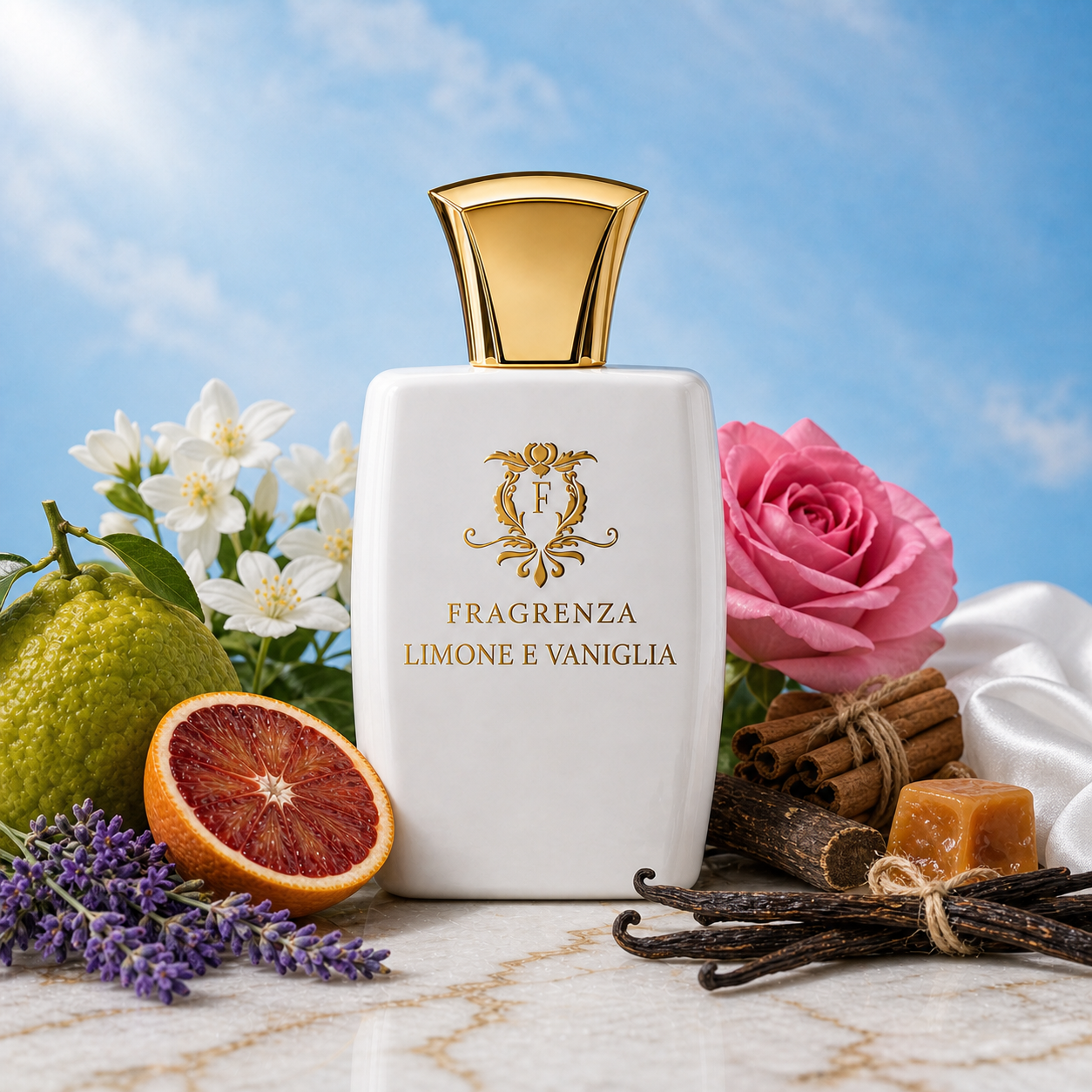


Bright Gourmand: The 2026 Guide to Sweet, Edible Perfumery and Its Six Archetypes
Mugler's 1992 Angel codified gourmand as a legitimate category, and the bright wing inherited cotton-candy ethyl maltol while the savory wing inherited tobacco, oud and labdanum shadow.
By Julia MorettiFragrenza makes several of the alternatives featured in our guides — here’s how we test.
17 min read
Bright gourmand is the friendliest register in fine fragrance. It smells like the things we are taught early to love (vanilla custard, warm caramel, ripe peach, dark cherry liqueur, fresh-baked pastry) and translates them into compositions that wear close to the skin, project moderately, and trigger the pleasure centers that food itself activates. Where most fragrance categories take effort to appreciate, bright gourmand meets the wearer halfway. It is comforting by design, deliberately approachable, and one of the most consistently rewarding directions in contemporary perfumery.
This is the complete guide to the bright gourmand register: its history, its material palette, the six archetypes that organize the contemporary landscape, and how to wear each one well. For the darker, more savory counterpart that anchors the opposite end of the gourmand spectrum, see the savory gourmand and burnt sweet 2026 pillar. Together, the bright and savory pillars bracket the contemporary gourmand taxonomy.
What bright gourmand actually means
Bright gourmand is the family of fragrances built around sweet, edible, food-coded materials handled in a register that emphasizes pleasure, comfort, and accessibility. The category foregrounds vanilla, tonka bean, caramel, praline, fruit accords (peach, cherry, raspberry, blackcurrant), lactonic milk-and-cream materials, and the softer end of the chocolate and patchouli spectrum. The wear leans warm, soft, slightly powdery, and emotionally welcoming.
The distinction from savory gourmand is structural. Bright gourmand uses the sweet materials at their most foregrounded; savory gourmand introduces smoke, tobacco, oud, labdanum, or birch tar to shadow the sweetness and pull it into more emotionally ambivalent territory. The bright register sings in major key; the savory register sings in minor. Both are legitimate, both have produced extraordinary contemporary work, and serious gourmand wearers often build small wardrobes across both registers for occasion and mood variation.
What bright gourmand is not: simply a category for beginners or for less serious wearers. The most successful bright gourmand compositions are technically demanding to compose. Building a perfume that reads as comforting and accessible without crossing into the saccharine or one-dimensional requires the same compositional discipline as building any other register; the apparent simplicity of a great bright gourmand is the result of considerable craft.
The three waves of gourmand fragrance
The bright gourmand category, like the savory, organizes around three historical waves.
The first wave (1992 to early 2000s) began with Thierry Mugler's Angel. The first commercially successful gourmand worked by treating sweet, foodlike materials (chocolate, caramel, patchouli, honey) as legitimate perfumery raw materials. Angel established a register that was abundant, theatrical, and unmistakable; it did not whisper. The wave inspired a generation of dessert-adjacent feminines (Lolita Lempicka 1997, Britney Spears Curious 2004, Prada Candy 2011) that codified the bright gourmand aesthetic at the prestige and accessible tiers.
The second wave (2000s through mid-2010s) refined Angel's vocabulary into something more wearable but also more generic. Soft vanilla, light praline, transparent musks, accessible sweetness. The lingua franca of mass-market perfumery for a decade and a half: pleasant, comforting, universally approachable, and increasingly difficult to distinguish from one bottle to the next. Releases like Viktor & Rolf Flowerbomb (2005), Lancome La Vie Est Belle (2012), Yves Saint Laurent Black Opium (2014), and a wave of celebrity and prestige gourmands defined the era.
The third wave (2020 onward) has split into two directions. The bright gourmand wing has refined its materials and added structural ambition (better naturals, more sophisticated lactonic effects, more nuanced fruity-gourmand work), staying within the comforting register but lifting the craft. The savory gourmand wing (covered in the savory pillar) has taken the same edible vocabulary and pulled it into darker, smoky, more emotionally ambivalent territory. The two wings together represent the contemporary gourmand landscape.
The bright gourmand material palette
The materials that define bright gourmand are specific and worth knowing.
Vanilla is the structural anchor of nearly every bright gourmand composition. The fragrance industry uses vanilla absolute (from Madagascar, Tahiti, or Comoros bourbon vanilla beans), synthetic vanillin (the primary aroma compound, isolated since 1858), and ethyl vanillin (a more potent, slightly more piercing synthetic vanilla note). Most contemporary compositions use a blend of two or three vanilla materials to produce the depth and longevity that any single source cannot deliver alone.
Tonka bean contributes the coumarinic almond-hay-vanilla warmth that supports vanilla in nearly every bright gourmand. Tonka and vanilla share chemistry (both are rich in coumarin and its derivatives) and consequently pair naturally in compositions across the entire bright gourmand range.
Caramel and burnt-sugar accords contribute the toasted, slightly bitter warmth that prevents bright gourmand from collapsing into pure vanilla sweetness. Caramel materials are usually synthetic blends calibrated for specific positions on the sweet-to-bitter spectrum.
Praline is a nutty-sweet accord (almond, hazelnut, caramelized sugar) that bridges the gap between confection and dessert. The accord defines the floral-gourmand subcategory and appears in nearly every release in that direction.
Ethyl maltol is the synthetic cotton-candy molecule responsible for the unmistakable spun-sugar character of many first-wave gourmands. It is the single most polarizing material in bright gourmand perfumery; used well it adds joyful sweetness, used badly it pushes compositions into one-note candy territory.
Fruity esters and natural fruit accords (peach, pear, raspberry, blackcurrant, cherry, apple) extend the bright register into the fruity-gourmand subcategory. These materials are often paired with vanilla and tonka to produce the fruity-vanilla-tonka triangle that anchors much of the contemporary bright work.
Lactones (gamma-decalactone, gamma-undecalactone, delta-decalactone) contribute the milky-creamy character of the lactonic gourmand subcategory. Lactones bridge bright gourmand into the contemporary skin scent territory and produce some of the most distinctive recent work in the category.
Chocolate and cacao accords add depth to bright gourmand without (in most cases) tipping the composition into the savory register. Most contemporary chocolate accords lean toward milk chocolate rather than dark; the dark-cocoa direction is where bright meets savory.
The six bright gourmand archetypes
Contemporary bright gourmand perfumery organizes around six distinct archetypes. The Fragrenza line covers all six with three clean-handle picks and three §6.2-flagged cultural-benchmark picks.
1. Vanilla-tonka comfort (the foundational archetype)
The most accessible bright gourmand register. Vanilla and tonka used as the dominant anchors, often paired with soft fruits, light citrus, and cashmere musks. The wear is comforting, slightly powdery, intimately warm, and universally appropriate across daytime and evening contexts. The natural starting point for wearers exploring the gourmand register for the first time, and one of the most rewarding directions to live with over years.
The Fragrenza pick:
opens with the velvety sweetness of ripe peach, luminous mandarin and orange, and the aromatic warmth of cardamom; the heart unfolds white flowers and rose petals laced with cinnamon and clove; the base resolves on velvety sandalwood, powdery tonka bean, and cashmere musks. The composition demonstrates how the vanilla-tonka archetype can carry florals and fruit without tipping into either floral or fruity-gourmand territory; the wear remains squarely bright gourmand in its emotional center.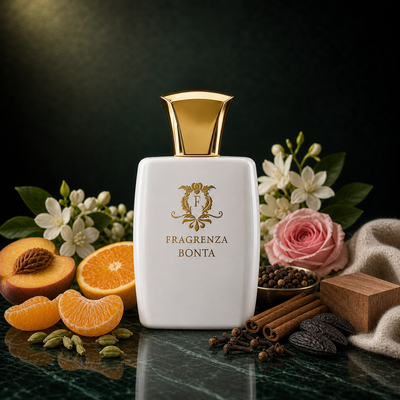
2. Fruity-floral gourmand (the modern luminous register)
An archetype that has dominated the contemporary bright gourmand commercial landscape. Fruit notes (often peach, pear, nectarine, or blackcurrant) paired with white florals (tuberose, ylang-ylang, orange blossom) on a vanilla-tonka or patchouli-vanilla base. The wear reads as luminous, festive, and slightly hedonistic; the natural choice for wearers who want a bright gourmand that registers as joyful without becoming juvenile.
The Fragrenza pick:
opens with bergamot, ripe nectarine, and apple blossom; the heart works pink pepper, tuberose, ylang-ylang, and cyclamen into a luminous floral chord; the base resolves on patchouli, benzoin, castoreum, tonka bean, vanilla, vetiver, and musk. The animalic castoreum thread in the base prevents the composition from reading as straightforwardly festive; the wear holds a slight emotional complexity underneath the bright opening that rewards extended wear.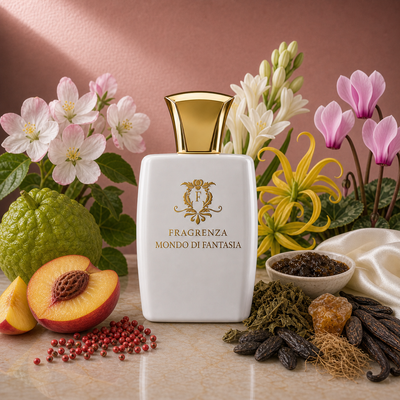
3. Cherry / dark-fruit gourmand (the indulgent register)
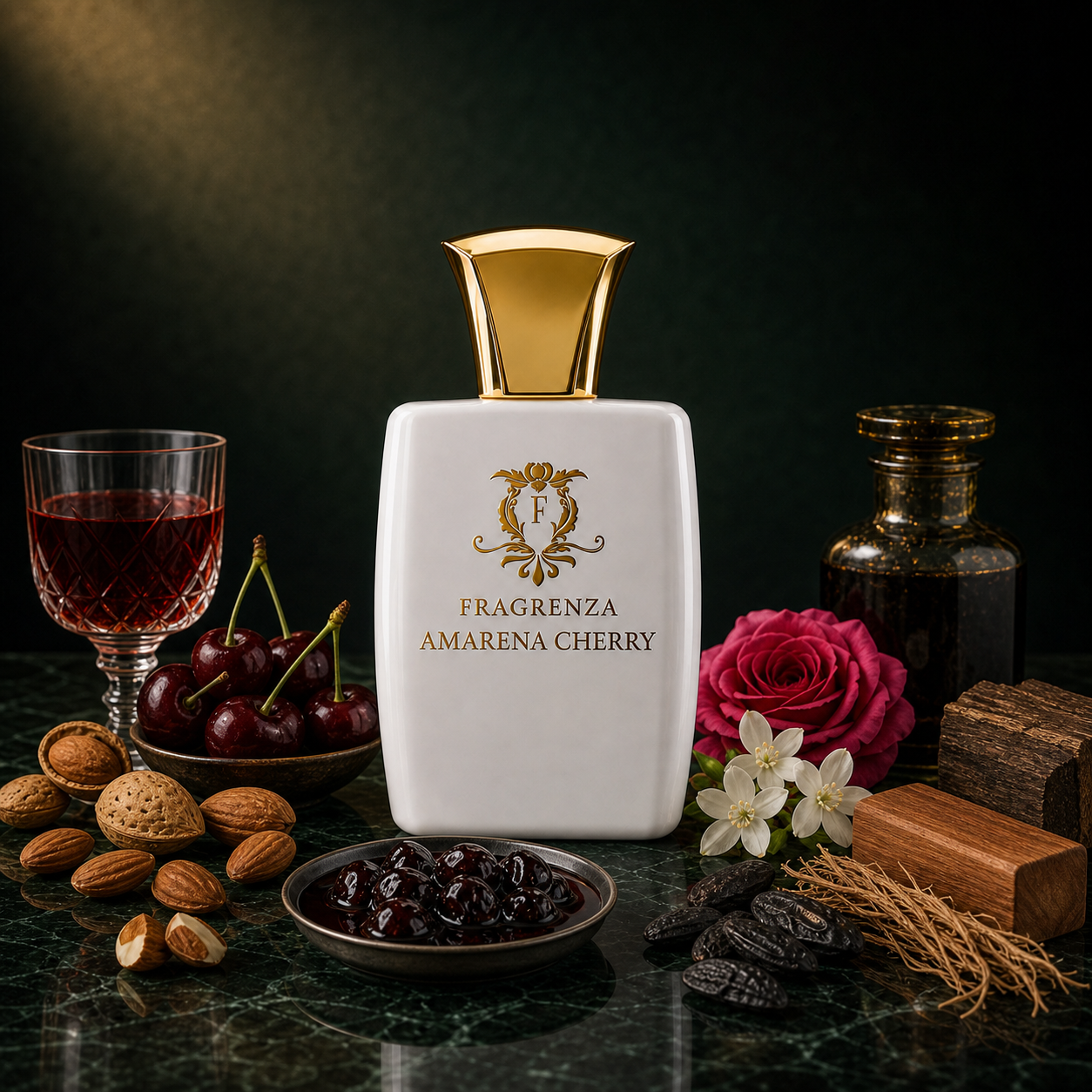
The archetype that brought bright gourmand into prestige niche territory. Cherry liqueur, black cherry, or other dark-fruit accords paired with almond, tonka, sandalwood, and an animalic or balsamic base. The wear is unmistakably bright (cherry is sweet, indulgent, immediately legible) but holds a sophisticated almond-and-balsam structure that prevents the composition from reading as candy. Among the most distinctive directions in contemporary bright gourmand.
The Fragrenza pick:
opens with black cherry, cherry liqueur, and bitter almond; the heart unfolds griotte syrup, Turkish rose, and jasmine sambac; the base resolves on Peru balsam, tonka bean, sandalwood, vetiver, and cedar. The wear is the canonical cherry-almond gourmand register handled with prestige-tier polish. Among the most culturally recognized contemporary bright gourmand directions.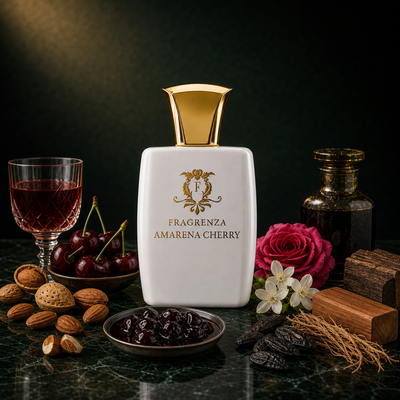
4. Caramel-floral-honey (the indulgent floral register)
An archetype where caramel and honey carry the sweet center alongside narcotic florals (jasmine, tuberose, ylang-ylang) and a vanilla-oud base. The wear sits between pure bright gourmand and the savory caramel-oud territory; the honey and caramel carry the bright register while the oud and milky notes in the base add complexity that prevents the composition from reading as one-note sweet.
The Fragrenza pick:
opens with bergamot and pink pepper, builds through ylang-ylang, jasmine, tuberose, lily of the valley, honey, and paradisone, and resolves on a base of smoky oud, luscious caramel, creamy vanilla, and milky notes. The composition demonstrates the indulgent-floral end of the bright gourmand register handled with the structural ambition that distinguishes the best contemporary work.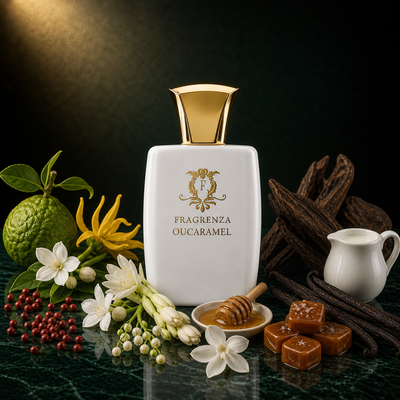
5. Praline-floral-vanilla (the second-wave cultural benchmark)
The archetype that defined the 2010s bright gourmand commercial landscape. Praline (almond-caramelized-nutty) paired with iris, jasmine, orange blossom, vanilla, tonka, and patchouli. The wear is universally legible, deeply comforting, and culturally familiar; it sits as the most commercially successful direction in bright gourmand history. Almost every wearer has encountered this register at least once, and many of the most-worn gourmands in the world fit this archetype.
The Fragrenza pick:

6. Floral-vanilla chypre (the polished sophisticated register)
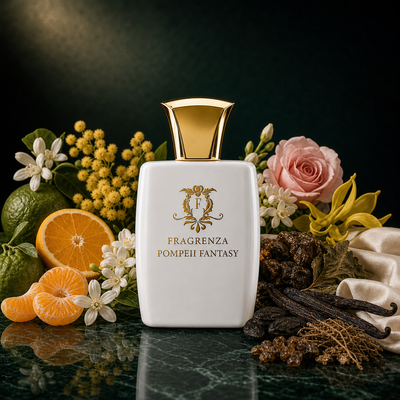
An archetype that bridges bright gourmand into the broader floral-oriental territory. White and rose florals carried on a vanilla-tonka-patchouli-musk base, often with a brighter citrus opening that distinguishes the composition from heavier orientals. The wear reads as bright gourmand at the emotional center but registers as sophisticated and slightly aged-up; the natural choice for wearers who want the comfort of the register without the youth-coded associations of the praline-floral archetype.
The Fragrenza pick:
How bright gourmand fragrances wear on skin
The wear pattern of the bright gourmand family is specific and worth understanding before committing to a bottle.
The opening declares the bright register early. Unlike savory gourmand (which often opens with darker top notes before sweetening at the heart), bright gourmand typically opens with its sweet materials directly. Vanilla, fruit, caramel, and ethyl maltol are most chemically present in the first thirty to ninety minutes. The wear's bright character is most pronounced in this window and progressively integrates with base materials as the dry-down develops.
Skin chemistry amplifies the sweet facets. Wearers with warmer or oilier skin amplify the sweet-honeyed materials. The same bright gourmand can read as luminous-festive on a wearer with cooler skin and dessert-coded on one with warmer skin. This is structural to the register; the materials interact with body warmth in ways that exaggerate their natural character. See the skin chemistry deep-dive.
Projection is moderate to high; longevity is consistently high. Bright gourmand compositions tend to project at a moderate-to-strong level for the first two to three hours and then settle into a close-skin wear pattern for the remainder of the day. The dense base materials (vanilla, tonka, patchouli, musks) are tenacious; eight to twelve hours is typical on most skin.
When to wear bright gourmand
The register is more occasion-flexible than savory gourmand. Bright gourmand works in most contexts where the wear should register as warm, friendly, and accessible: daytime social occasions, evening informal events, cool-weather casual contexts, and the entire range of personal-comfort wear (working from home, weekend mornings, intimate social settings with close friends or family).
The register is less appropriate in two contexts. Formal professional environments often read bright gourmand as too casual or too sweet; the comfort-coded character can register as out of place in conservative workplaces. Hot weather outdoors challenges the register because the dense materials project more aggressively in heat; the sweetness can read as cloying when warm air does not let the base anchors develop properly.
The natural seasonal home for bright gourmand is fall and winter, with the cooler shoulder weeks of spring also supportive. The register's emotional warmth pairs naturally with the seasons where physical warmth is welcome.
How to layer bright gourmand
Bright gourmand layers well with a wider range of partners than savory gourmand does. Four patterns work consistently.
Bright gourmand over a clean musk skin scent. Apply a transparent clean musk broadly; add a single spray of the bright gourmand to one pulse point. The musk softens the projection and extends the wear into intimate range; the gourmand reads as a characterful focal voice. Excellent for daytime contexts where the bright gourmand alone might project too strongly. For the full technique, see how to layer skin scents with vanilla, oud, or florals.
Bright gourmand paired with a single bright citrus top. Apply the gourmand broadly and add a single spray of bergamot, neroli, or orange-blossom cologne to one pulse point. The bright top extends the opening's luminous character and prevents the wear from reading as immediately sweet; the gourmand carries the wear through the rest of the day.
Bright gourmand layered with a contrasting floral. A vanilla-tonka gourmand on the chest with a jasmine or rose-forward composition on a single pulse point produces a layered effect that adds floral depth without breaking the gourmand emotional center. The combination is particularly successful for fruity-floral gourmand bases (Bontà, Mondo di Fantasia) where the floral materials reinforce the existing chord.
Bright gourmand on top of a soft woody base. A sandalwood or soft amber composition broadly across the body, with a single spray of bright gourmand to a pulse point, produces the rare layered effect that reads as both bright and aged-up at once. The technique works particularly well with the praline-floral and floral-vanilla chypre archetypes.
Building a bright gourmand wardrobe
A minimum viable bright gourmand wardrobe needs two pieces from contrasting archetypes. One vanilla-tonka comfort or praline-floral piece as the universally-appropriate everyday wear; one fruity-floral, cherry, or caramel-floral piece for occasions where the wear should declare a brighter, more festive character. Add a third bottle from the floral-vanilla chypre or modern lactonic direction and you have a bright gourmand presence that covers daytime, evening, and intimate contexts across the cool-weather year.
Many wearers find the bright gourmand register is the family they wear most consistently across the year. Unlike savory gourmand (which is genuinely occasion-coded) or sharper categories (like aldehydic florals or aquatic compositions, which carry stronger seasonal restrictions), bright gourmand works in enough contexts to anchor a daily-wear position in the broader fragrance wardrobe.
Bright vs savory gourmand: how to choose
The two pillars represent legitimately different emotional and occasion registers. Choose between them based on what you want the wear to communicate.
Choose bright gourmand if you want the wear to register as warm, friendly, accessible, and immediately legible. The register is the right choice for daytime contexts, casual evenings, intimate social settings with people who do not specialize in fragrance, and any occasion where you want the wear to put others at ease rather than make a statement. Bright gourmand is the comfort food of contemporary perfumery.
Choose savory gourmand if you want the wear to register as deliberate, slightly ambivalent, occasion-specific, and emotionally complex. The register rewards wearers who want their fragrance to do interpretive work; it is best in evening contexts and cooler weather, and it requires the wearing-pattern discipline covered in the how to wear savory gourmand guide.
Many serious gourmand wearers build small wardrobes across both pillars and switch based on context. The two registers complement rather than compete; owning one bright and one savory pick gives you the full gourmand expressive range across the cooler half of the year.
Related reads
- Savory Gourmand and Burnt Sweet: The 2026 Pillar
- How to Wear Savory Gourmand Without Smelling Like Dessert
- Best Tobacco Fragrances 2026
- Best Saffron Fragrances 2026
- Coffee Perfumes 2026
- Honey Perfumes: The Golden Gourmand Trend
- How to Build a Fragrance Wardrobe
- How to Make Your Perfume Last All Day
FAQ
What is the difference between bright and savory gourmand?
Bright gourmand foregrounds sweet materials (vanilla, tonka, praline, fruit, caramel) without introducing significant smoke, tobacco, oud, or birch tar. The wear reads as warm and emotionally welcoming. Savory gourmand uses the same sweet vocabulary but adds smoky, animalic, or resinous anchors that shadow the sweetness and pull the composition into more emotionally ambivalent territory. Both registers share the gourmand emotional center; they differ in whether the wear declares its sweetness directly or holds it in productive tension with darker materials.
Are bright gourmand fragrances too sweet?
Poorly constructed bright gourmands can indeed read as cloying or one-dimensional. Well-built compositions balance sweetness with structural materials (musks, woods, soft incense, controlled florals) that prevent saturation. The key is finding compositions where sweetness complements rather than overwhelms; the best bright gourmands smell edible without smelling like actual food.
Are bright gourmand fragrances only for women?
No. The marketing of first-wave bright gourmand (Angel and successors) skewed feminine, and the cultural associations persist, but the register itself is genre-fluid. The vanilla-tonka comfort archetype is essentially unisex, and the floral-vanilla chypre archetype works on any wearer. Men who like the bright gourmand register do not need to ignore the marketing; they need to recognize that the comfort-coded emotional center the register delivers has no inherent gender.
What is ethyl maltol and why do people debate it?
Ethyl maltol is the synthetic molecule responsible for the cotton-candy character of many first-wave gourmands. The compound was introduced into perfumery in the 1990s and remains polarizing because it is simultaneously the most recognizable single material in the category and the most-criticized for pushing compositions into one-dimensional candy territory. Used well (at controlled dosing alongside structural materials), ethyl maltol contributes a distinctive bright sweetness that nothing else fully replicates; used badly it produces the "smells like cotton candy" wear that defines bright gourmand at its commercial worst.
How long do bright gourmand fragrances last on skin?
Eight to twelve hours is typical for well-built compositions in the register. The dense base materials (vanilla absolute, tonka, patchouli, soft musks) are tenacious, and the wear extends naturally as body heat develops over the course of the day. The opening's bright sweetness fades over the first one to two hours; the base materials carry the wear through the rest of the day in a softer, slightly more powdery register.
Can bright gourmand be worn in summer?
More easily than savory gourmand, though still with caveats. The lighter fruity-floral and vanilla-tonka archetypes work in warm-weather evening contexts; the praline-floral and cherry archetypes are happier in cooler weather; the floral-vanilla chypre archetype can work year-round in moderate climates. Apply less in heat (one spray instead of two), choose lighter-leaning compositions for warm-weather wear, and switch to fully transparent skin scents (musk, ambroxan-driven) for outdoor summer occasions.
What is the easiest bright gourmand to start with?
The vanilla-tonka comfort archetype is the most accessible entry point. The materials are universally legible, the wear is welcoming rather than declarative, and the composition style works across the widest range of contexts. Wear a vanilla-tonka comfort pick through a season, learn how your skin amplifies the sweet materials, and decide whether to explore deeper into fruity-floral, cherry, or floral-vanilla chypre territory from there.
The bottom line
Bright gourmand is the friendliest, most accessible, and most consistently rewarding register in contemporary fine fragrance. The six archetypes give you the full commercial landscape; the Fragrenza picks within each give you concrete starting points; the wearing patterns and layering techniques give you the technical vocabulary to wear the register well.
Whether you want the foundational vanilla-tonka comfort of Bontà, the modern luminous fruity-floral of Mondo di Fantasia, the indulgent caramel-floral of Oucaramel, the iconic cherry-almond of Amarena Cherry, the second-wave praline-floral benchmark of Belle di Verona, or the polished floral-vanilla chypre of Pompeii Fantasy, the contemporary bright gourmand family has the depth to reward years of exploration. The register is comfort food rendered as fine art, and the most-worn gourmands in the world live here for a reason.