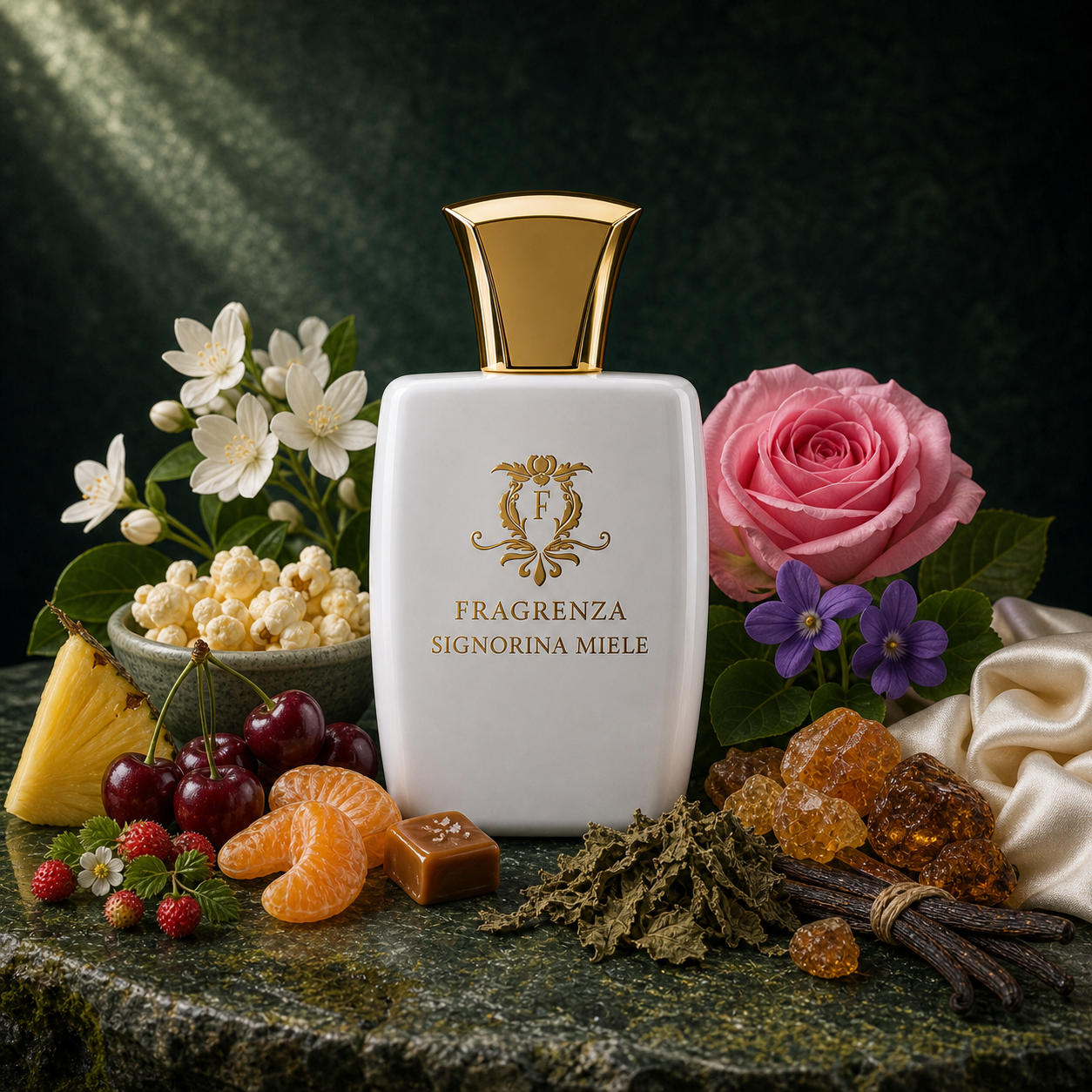


Best Tuberose Fragrances 2026: The Five Archetypes from Narcotic Bloom to Lactonic Cream
Methyl salicylate, butyric esters and indole give the night-blooming Polianthes tuberosa a rubbery-medicinal opening that softens into cream over 90 minutes; first impressions mislead.
By Julia MorettiFragrenza makes several of the alternatives featured in our guides — here’s how we test.
14 min read
Tuberose is the most architecturally extreme white floral in fine perfumery. Where jasmine reads as honeyed-classical and gardenia reads as dewy-fresh, tuberose reads as narcotic-creamy with a faintly animalic indolic undertow — the night-blooming Mexican Polianthes tuberosa distilled into a composition that demands to be worn. The category has produced some of perfumery's most legendary fragrances since 1948 Fracas and is having a contemporary revival inside the broader lactonic-floral wave of 2024-2026. This is the commercial buyer's edit organized around the five archetypal directions tuberose perfumery has settled into.
For the conceptual deep-dive on tuberose chemistry and history, our Tuberose in Perfumery educational pillar covers the territory. For the broader lactonic-floral context that tuberose anchors, our iter-22 Best Lactonic Fragrances 2026 pillar is the companion piece — tuberose absolute is one of the canonical naturally-lactonic florals. This article is the dedicated tuberose buyer's edit.
What tuberose actually is in fine perfumery
Tuberose comes from Polianthes tuberosa, a night-blooming Mexican native now cultivated principally in India, Egypt, and Morocco. The flower is among the most labor-intensive raw materials in commercial perfumery — too delicate for steam distillation, requiring traditional enfleurage or modern solvent extraction to capture its full aromatic range. Tuberose absolute remains one of the most expensive natural materials in fine fragrance.
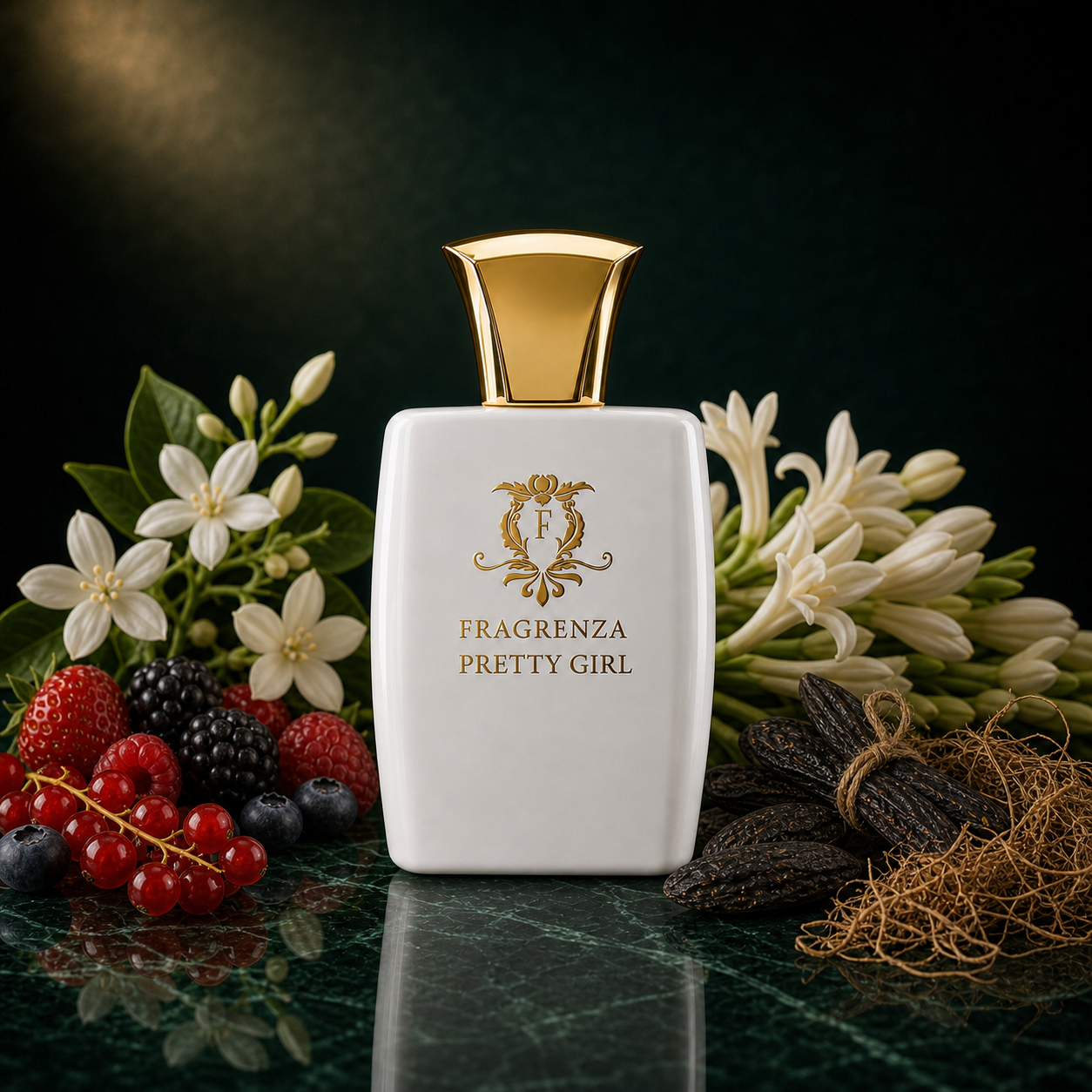
The aromatic complexity of tuberose comes from a specific set of chemical compounds that no other floral material replicates. Methyl benzoate contributes the sweet, slightly balsamic character that gives tuberose its honeyed warmth. Methyl salicylate — the same molecule responsible for wintergreen's character — adds a fresh, slightly minty-herbal counterpoint that prevents tuberose from collapsing into pure sweetness. Indole (also found in jasmine) contributes the faintly animalic, narcotic undertow that defines tuberose's most polarizing facet. Butyric acid esters give tuberose its characteristic creamy-rubbery quality — the "lactonic" face that connects it to the broader lactonic-floral register. Farnesol provides the rose-warm bridge between top and base.
This compound complexity is why tuberose simultaneously reads as floral, creamy, rubbery, slightly animalic, and faintly menthol-fresh — all at once. Quality tuberose perfumery captures the multi-faceted character; weak compositions reduce tuberose to a single dimension (usually the cream) and lose what makes the material distinctive.
The cultural arc — from Fracas to contemporary lactonic revival
Tuberose has one of the most legendary commercial histories of any single floral note. Five moments matter most for the contemporary commercial space.
1948: Robert Piguet Fracas. Germaine Cellier's groundbreaking composition is the genre benchmark for tuberose maximalism. Tuberose at full headline volume with jasmine, gardenia, iris, sandalwood, and musk produced a composition of unprecedented intensity that radical-modernised feminine perfumery in the post-war period. Every subsequent tuberose composition is measured against Fracas; the architecture remains influential nearly eighty years later.
1981: Giorgio Beverly Hills. The composition that brought tuberose to mass-market commercial scale in the United States. Giorgio established that tuberose could carry a global commercial release rather than remain a niche prestige material; its enormous success defined the 1980s tuberose-feminine register and shaped department-store fragrance commerce for the decade.
1985: Dior Poison. Edouard Fléchier's masterpiece paired tuberose with plum, coriander, wild berries, honey, and a deep oriental-resinous base — the tuberose-oriental hybrid that defined a new commercial direction. Poison remains the canonical tuberose-oriental composition and the cultural reference point for every dark-floral tuberose that followed.
2002: Serge Lutens Tubéreuse Criminelle. Christopher Sheldrake's niche masterpiece took tuberose to its most extreme expression — emphasizing the rubber-camphor-menthol facet that most commercial tuberose compositions soften. Tubéreuse Criminelle established that niche perfumery could push tuberose in directions mass-market commerce never would, opening the contemporary niche tuberose renaissance.
2005-2026: the lactonic-floral revival. Frédéric Malle Carnal Flower (2005, Dominique Ropion) demonstrated that tuberose could carry serious twenty-first-century niche prestige compositions. Diptyque Do Son (2005) brought tuberose-and-orange-blossom into accessible artisan territory. The 2020-2026 lactonic wave (see our Best Lactonic Fragrances pillar) reincorporated tuberose absolute as one of the canonical lactonic florals — naturally rich in butyric esters that give the lactonic register its creamy-floral signature.
Famous tuberose fragrances worth knowing
Several compositions deserve study because they show what tuberose can do at the headline of a fine fragrance. Robert Piguet Fracas (1948) remains the genre benchmark and is still the reference point for the most architecturally serious tuberose compositions. Giorgio Beverly Hills (1981) is the mass-market cultural reference — the most influential commercial tuberose ever produced. Dior Poison (1985) is the canonical tuberose-oriental hybrid. Frédéric Malle Carnal Flower (2005) is the contemporary niche-prestige reference and an extraordinary technical achievement. Serge Lutens Tubéreuse Criminelle (2002) demonstrates the rubbery-mentholated extreme of the category. Diptyque Do Son (2005) shows tuberose-and-orange-blossom at accessible artisan tier. The Fragrenza catalog interpretations — covered in the archetype sections below — span five contemporary tuberose directions through three clean handles and two §6.2 flagged compositions.
Five archetypal tuberose directions in 2026
Each direction has its own typical use case, its own seasonal register, and its own Fragrenza pick distributed inline.
1. Heady-narcotic tuberose (the Fracas register)
The most architecturally extreme of the five archetypes. Tuberose at full headline volume, supplemented by Indian tuberose and tuberose absolute, paired with patchouli, saffron, tobacco, and oriental spice — the contemporary niche register that traces back to 1948 Fracas. Reads as dramatic, evening-only, intensely feminine but unisex-flexible on confident wearers. Best for evening wear, cool weather, and anyone drawn to the most maximalist tuberose direction. The closest Fragrenza match:
— built on cardamom, dried fruits, saffron flower, and Indian tuberose opening; Indonesian patchouli, Sumatra patchouli, and night-blooming tuberose at the heart; tobacco blossom, tobacco flower, tuberose absolute, and patchouli leaves at the base. The most tuberose-dense composition in the Fragrenza catalog, with three distinct tuberose materials (Indian Tuberose, Night Blooming Tuberose, Tuberose Absolute) layered across the wear.
2. Tuberose oriental (the Poison register)
The genre-defining hybrid archetype. Tuberose paired with plum, wild berries, aniseed, coriander, orange honey, a dense floral heart, and a deep amber-vanilla-resinous base — the canonical Dior Poison architecture from 1985. Reads as dramatic, evening-only, intensely feminine. Best for evening wear, cool weather, and anyone drawn to architecturally maximal tuberose-oriental compositions. The closest Fragrenza match:
(Catania Crush) — ripe plum and wild berries opening with aniseed, coriander, orange honey, pimento, and rosewood; rose, jasmine, tuberose, carnation, neroli, cinnamon, frankincense, and opoponax at the heart; settling into amber, vanilla, heliotrope, sandalwood, cedar, vetiver, and musk. The most architecturally dense tuberose-oriental composition in the Fragrenza catalog.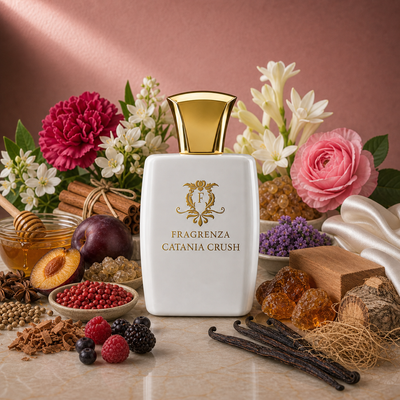
3. Tuberose lactonic-gourmand (the modern crossover register)
The contemporary lactonic-floral archetype. Tuberose paired with caramel, oud, honey, jasmine, lily of the valley, milky notes, and vanilla — the lactonic-tuberose crossover that the 2020-2026 lactonic wave produced. Reads as comforting, creamy, romantic-evening. Best for cool-weather evening wear and anyone who wants tuberose's floral character integrated into a lactonic-gourmand register rather than declared at full Fracas volume. The closest Fragrenza match:
— caramel, oud, vanilla, milky notes, jasmine, tuberose, lily of the valley, honey, and paradisone with pink pepper and bergamot opening. The tuberose carries the lactonic-floral character through the heart; the caramel-oud-milky base ties the tuberose into the broader lactonic-gourmand register that the iter-22 lactonic pillar covers.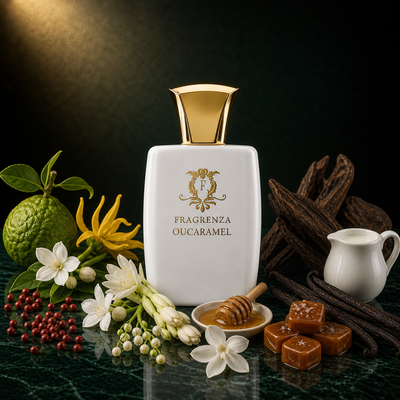
4. Tuberose-fruity-floral (the bright commercial register)
The accessible-modern archetype. Tuberose paired with apple blossom, nectarine, pink pepper, and a tonka-vanilla-musk base — the bright fruity-floral direction that contemporary commercial perfumery has refined. Reads as luminous, daytime-friendly, broadly wearable. Best for daily wear, spring, and anyone who wants tuberose softened by fruity-floral lightness rather than oriental density. The closest Fragrenza match:
— apple blossom and bergamot opening lifted by pink pepper and red pepper; cyclamen, nectarine, ylang-ylang, and tuberose at the heart; tonka bean, vanilla, musk, patchouli, vetiver musk, benzoin, and castoreum at the base. The tuberose reads as warmth and floral depth rather than as Fracas-style narcotic intensity — the bright fruity-floral entry point to the tuberose register.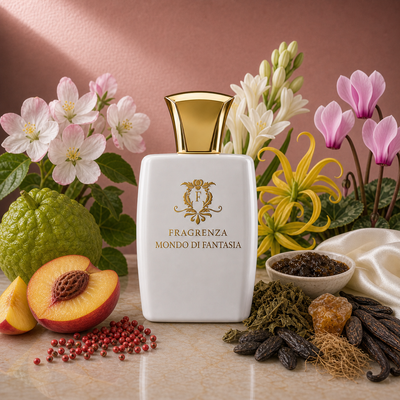
5. Tuberose oriental-woody (the niche-opulent register)
The contemporary niche-prestige archetype. Tuberose paired with jasmine sambac absolute, orange blossom, ylang-ylang, pink pepper, sage, and a cashmere wood-amber-vanilla base — the niche oriental-woody register that pushed tuberose into Armani Privé territory. Reads as opulent, evening-only, sophisticated. Best for special-occasion evening wear and anyone drawn to dense floral-oriental compositions at niche-prestige depth. The closest Fragrenza match:
— an Armani Privé Rouge Malachite-inspired composition with pink pepper and sage opening; jasmine sambac absolute, orange blossom, tuberose, and ylang-ylang at the heart; cashmere wood, cashmeran, amber xtreme, benzoin, and vanilla at the base. The most niche-prestige tuberose composition in the catalog.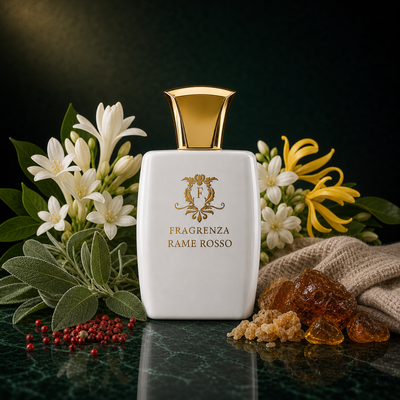
How tuberose fragrances wear on skin
Tuberose compositions wear specifically. Three patterns worth knowing.
Tuberose amplifies in warmth and projection is high. The lactonic and indolic chemistry interacts powerfully with body heat — tuberose compositions project significantly further than equivalent jasmine or rose compositions, and they can carry across rooms even at one-spray application. Apply with restraint; two sprays is the upper limit for most tuberose compositions, with three reserved only for confident-projection contexts. For a composition like Venice Seduction or Catania Crush, one spray is often sufficient.
The opening can mislead. Quality tuberose compositions go through a noticeable transition between the first hour (which can read as harsh, medicinal, or rubbery — the indolic and methyl salicylate facets) and the second-to-fourth hour (which is when the cream and farnesol-warmth integrate). Many wearers reject tuberose on the opening alone and miss the heart-to-base register where the magic lives. Give tuberose compositions at least 90 minutes on skin before judging.
Skin chemistry shapes the wear meaningfully. The indolic chemistry interacts variably with skin pH and natural fatty acids. Warmer or oilier skin amplifies the cream and animalic facets; cooler or drier skin amplifies the green-mentholated and floral-fresh facets. The same tuberose composition can read as creamy-narcotic on one wearer and bright-floral on another. See the skin chemistry deep-dive for the full mechanism.
When and how to wear tuberose
The tuberose register is fundamentally evening-coded and cool-weather-friendly, with one partial exception. The Fracas-register heady-narcotic, the Poison-register oriental, the lactonic-gourmand, and the niche-opulent archetypes are all emphatically evening and autumn-winter territory; the dense materials project too aggressively in heat and the indolic character can read as overwhelming. The tuberose-fruity-floral archetype (Mondo di Fantasia register) is the partial exception — light enough to handle spring and even mild summer daytime wear without overwhelming.
For application, tuberose rewards restraint. The note carries on skin without requiring volume; one to two sprays is sufficient for the heaviest archetypes, with two as the standard for most. Apply to pulse points and let the composition develop for at least 90 minutes before judging. For the broader wardrobe framework, our wardrobe pillar covers how tuberose fits alongside other floral and oriental families.
How to layer tuberose fragrances
Three reliable layering patterns work within the tuberose register.
Pattern 1: tuberose over a clean musk base. Spray a clean musk on pulse points first, then apply the tuberose composition over it. The musk softens the projection of the heaviest tuberose compositions and lifts the floral character without competing — particularly useful for the Fracas-register and Poison-register archetypes when daytime wear is required.
Pattern 2: tuberose + vanilla pulse points. Apply the tuberose composition to chest and wrists, then a small amount of pure vanilla to inner elbows. The vanilla blooms into the tuberose dry-down and amplifies the lactonic-creamy character — particularly effective for the lactonic-gourmand and tuberose-fruity-floral archetypes.
Pattern 3: tuberose + oud for the dark direction. For the heady-narcotic and oriental archetypes, layering with a separate oud composition deepens the resinous character and produces a dark-luxury wear that bridges tuberose into the broader oriental register. Apply the oud composition first, let it settle for ten minutes, then tuberose over.
Anti-pattern: do not layer two tuberose compositions. Two compositions built on the same indolic-narcotic chemistry tend to muddy each other rather than amplify. Better to alternate them across different wears. For the broader layering framework, our layering pillar covers the principles.
Building a tuberose rotation
A two-bottle tuberose setup covers most use cases — one heady-narcotic or oriental pick for evening (Venice Seduction for the maximalist Fracas register, or Catania Crush for the Poison-register oriental) and one fruity-floral pick for daytime and warm weather (Mondo di Fantasia). A three-bottle rotation adds the lactonic-gourmand crossover (Oucaramel) for cool-weather evening variety. A five-bottle rotation covers all five archetypes including the niche-opulent register (Rame Rosso).
The tuberose register pairs naturally with the iter-22 Best Lactonic Fragrances pillar (tuberose is one of the canonical naturally-lactonic florals), the Best Jasmine Fragrances guide (the most natural white-floral companion), and the White Florals 2026 hub for the broader cluster context. A well-built white-floral wardrobe typically includes one tuberose pick alongside one jasmine pick and one gardenia or orange-blossom-absolute pick.
Who each pick is for
If you want the most architecturally extreme Fracas-style tuberose maximalism: Venice Seduction.
If you love the 1985 Dior Poison tuberose-oriental architecture: Catania Crush.
If you want tuberose integrated into a lactonic-gourmand register: Oucaramel.
If you want bright, fruity-floral tuberose for daytime and spring: Mondo di Fantasia.
If you want niche-prestige opulent tuberose with cashmere wood depth: Rame Rosso.
If you're not sure where you sit: The Fragrenza sample pack covers the full range — three-day testing on skin is the only way to discover which tuberose register your chemistry amplifies.
Frequently asked questions
What does tuberose smell like in perfume?
Simultaneously creamy, narcotic, rubbery, faintly animalic, and slightly mentholated — tuberose carries more chemical complexity than any other single floral material in fine perfumery. The cream and rubber come from methyl benzoate and butyric acid esters; the mentholated freshness comes from methyl salicylate; the animalic undertow comes from indole. Quality tuberose compositions capture all these facets simultaneously. The character reads as polarizing on first wear and rewards confidence in the heart-to-base transition.
Why does tuberose smell slightly rubbery or medicinal?
That's the methyl salicylate (the same molecule responsible for wintergreen) interacting with the indole and butyric esters in the opening. Quality tuberose compositions deliberately preserve this character because it's part of what makes tuberose distinctive. The rubbery-medicinal facet typically peaks in the first 30-60 minutes and softens as the cream and farnesol-warmth integrate. Weak tuberose compositions soften the chemistry too aggressively and lose what makes the material compelling.
Are tuberose fragrances feminine?
Historically marketed as feminine because the canonical compositions (Fracas, Giorgio, Poison, Carnal Flower) had feminine launches, but the modern tuberose register increasingly accommodates unisex and masculine wear. The Fracas-register and Poison-register archetypes skew feminine; the lactonic-gourmand archetype is essentially unisex; the tuberose-fruity-floral leans feminine but works on any wearer; the niche-opulent archetype is unisex-coded in the Armani Privé tradition. Treat tuberose gender marketing as a starting point rather than a constraint.
How long do tuberose fragrances last on skin?
Ten to fourteen hours is typical for full tuberose compositions on average skin. The dense base materials (patchouli, vanilla, amber, sandalwood, soft musks, cashmere wood) carry the wear, and the lactonic-floral character is among the longest-lasting facets. The fruity-floral archetype wears slightly shorter (8-10 hours) because its base is less dense. Layering with a clean musk base extends most tuberose compositions by an additional 1-2 hours.
Can tuberose fragrances be worn in summer?
The tuberose-fruity-floral archetype (Mondo di Fantasia register) is the most summer-flexible — bright and accessible enough to handle warm weather without overwhelming. The Fracas-register, Poison-register, lactonic-gourmand, and niche-opulent archetypes are cool-weather compositions; the dense materials project too aggressively in heat and the indolic character can read overwhelming. Save those four for autumn, winter, and cool spring evenings.
What perfumes layer well with tuberose?
Three reliable directions: clean musk (softens projection of dense tuberose compositions), vanilla (amplifies the lactonic-creamy character), and oud (deepens the resinous character for the heady-narcotic and oriental archetypes). Avoid layering tuberose with bright citrus or sharply aquatic fragrances — the contrast between dense-narcotic wear and cool-sharp top tends to read awkwardly. The tuberose register is dense enough on its own that most layering should be subtractive (musk base extends) rather than additive (more florals compound).
What is the best tuberose fragrance for beginners?
The tuberose-fruity-floral archetype (Mondo di Fantasia register) is the most universally-wearable entry point. The tuberose character is present and recognizable but never declarative; the fruity-floral architecture softens what can read as harsh in Fracas-register maximalism; the wear is daytime-friendly and seasonally flexible across spring and autumn. Start there, learn how your skin amplifies the indolic and lactonic materials over a season, and decide whether to explore the heady-narcotic Fracas direction (Venice Seduction), the canonical Poison oriental (Catania Crush), the lactonic-gourmand crossover (Oucaramel), or the niche-opulent register (Rame Rosso).
The bottom line
Tuberose is one of the most architecturally distinctive note families in fine perfumery and one of the most rewarding to learn deeply. The five archetypes give you the full commercial landscape — heady-narcotic Fracas, tuberose-oriental Poison, lactonic-gourmand crossover, fruity-floral accessible, and niche-opulent — and the Fragrenza picks within each give you concrete starting points across the range. All five picks contain verified tuberose materials per their official product descriptions; §16.2 compliance is direct rather than via disclaimer.
Whether you want the maximalist Fracas-register intensity of Venice Seduction, the canonical Dior Poison-era oriental opulence of Catania Crush, the lactonic-gourmand bridge of Oucaramel, the bright fruity-floral accessibility of Mondo di Fantasia, or the niche-opulent depth of Rame Rosso, the contemporary tuberose family has the depth to reward years of exploration. Three-day skin testing on your own chemistry reveals which archetype your skin amplifies and which becomes a long-term part of your rotation.
For the broader lactonic-floral context, the Best Lactonic Fragrances 2026 pillar is the companion piece — tuberose absolute is one of the canonical naturally-lactonic florals and bridges directly into the lactonic register the pillar covers.