

How to Make Your Perfume Last All Day: The 2026 Longevity Guide
Most fade complaints are 50 percent application error: dry skin without moisturiser, wrong concentration tier, wrist rubbing or storage above a hot shower will halve any fragrance you own.
By Julia MorettiFragrenza makes several of the alternatives featured in our guides — here’s how we test.
15 min read
Few things in fragrance are more frustrating than spraying something beautiful in the morning and discovering, by lunch, that it's gone. Most people respond to this by buying more — more sprays, more bottles, more reapplications during the day. Almost none of that is the actual fix.
Longevity is rarely a defect of the fragrance. It's the product of four variables — what's in the bottle, what's on your skin, where you put it, and how you take care of it — and three of those four are entirely under your control. This guide covers all of them: the science of why some perfumes last and others don't, the seven reasons your fragrance is fading, the application technique that doubles wear time, and the bottles built to last when none of the techniques are enough.
Why some perfumes last and others don't (the actual science)
Every fragrance is built around three layers of molecules: the top notes you smell first, the heart notes that emerge over the next hour, and the base notes that carry the dry-down. Those layers aren't a marketing convention — they describe a real chemical reality. Top notes are tiny, light, volatile molecules; they evaporate within fifteen to thirty minutes. Heart notes are mid-weight molecules that linger for two to four hours. Base notes are heavy, low-vapour-pressure molecules that can persist on skin for eight to twelve hours or longer.
A perfume "fades fast" when the base notes are insufficient, absent, or prevented from developing properly. A perfume that "lasts all day" is one with a high proportion of heavy base material — typically musks, amber and resins, patchouli, oud, vanilla, sandalwood — that anchors the lighter notes above it.
This is also why fresh, citrusy, light floral compositions are inherently shorter-wearing than orientals or woody fragrances. A cologne built mostly on bergamot and green tea has nothing heavy underneath to hold the structure together. That's not a flaw — it's the design — but it explains why a brilliant aquatic might disappear in three hours while a humble vanilla amber persists into the next morning.
Concentration: the variable most buyers ignore
The percentage of aromatic material in the bottle determines how much fragrance is actually on your skin per spray. The four standard tiers, with the ranges that genuinely matter:
- Eau de Cologne (EdC): 2–5% aromatic compounds. Wear time: 1–2 hours. Built for short, refreshing wear; not designed for longevity.
- Eau de Toilette (EdT): 5–15%. Wear time: 2–4 hours. The most common designer concentration; lighter, brighter, more wearable in summer.
- Eau de Parfum (EdP): 15–20%. Wear time: 4–6+ hours. The default for serious-wear modern fragrance.
- Parfum / Extrait: 20–40%. Wear time: 8 hours to all day. Less projection than EdP at first, but persists far longer because the heavier oil base dominates.
Most people who complain about poor longevity are wearing EdT and expecting EdP performance. The single most reliable upgrade — before any application technique, before any storage tip — is moving up a concentration tier. (For the full breakdown, read our guide to extrait vs eau de parfum.)
One important caveat: molecular composition matters as much as concentration percentage. A moderate-EdP built on heavy musks and resins can outlast a high-concentration light formula. Concentration is a strong rule of thumb, not a guarantee.
Skin chemistry: the four ways your skin changes a perfume
Skin is not a passive surface. It's warm, faintly acidic, lipid-rich (or not), and alive with its own chemistry. Four mechanisms account for most of the variation in how long a fragrance lasts on different people. (For the full account of how individual skin chemistry shapes fragrance development, see our guide to skin chemistry and fragrance.)
1. Sebum (skin oil)
Sebum is the natural oil your skin produces. Fragrance molecules bind to oils — that's a chemical fact, not a metaphor. Oily skin holds fragrance dramatically longer than dry skin because there's more lipid surface for the molecules to cling to. People with dry skin can lose 30–50% of a fragrance's stated longevity simply because they don't have the substrate it needs.
2. Moisture
Hydrated skin holds fragrance better than dehydrated skin. The fix is not subtle: a thin layer of unscented moisturiser before fragrance application can extend wear time by hours. The cheapest version is a tiny amount of petroleum jelly on the pulse points before spraying — it creates a substrate the molecules cling to.
3. Body heat
Pulse points project fragrance because blood vessels sit closer to the skin's surface there, warming the molecules and lifting them into the air around you. Cold extremities — fingers, ankles in winter — produce a single short burst of fragrance and then nothing. Warm zones produce gradual hours-long release.
4. pH
Skin pH varies from about 4.5 to 5.5 in healthy adults, and individual differences within that range affect how fragrance develops. More acidic skin tends to amplify and sometimes shorten top notes while altering how base notes unfold. This is the variable you can't control — it's why a perfume can wear differently on you than on the friend who recommended it.
Seven reasons your perfume is fading
Diagnose before you change anything. Most fade complaints trace back to one of these.
1. Dry skin. The single most common cause. Apply moisturiser before fragrance. (Pick: unscented body lotion, body oil, or a tiny smear of petroleum jelly.)
2. Wrong concentration. An EdT in summer afternoon heat is not designed to last 10 hours. Move up a tier or accept what the formula is doing.
3. Wrong application zones. Cold extremities (back of the hand, exposed fingers) burn fragrance off fast. Warm pulse points hold it for hours.
4. Top-note-heavy composition. A fragrance built mostly on citrus and green herbs will always wear shorter than one built on amber and musk. Match the bottle to the wear time you need.
5. Bad storage. Heat, light, and humidity degrade fragrance over time. A bottle on a sunlit bathroom shelf can lose months of life and noticeably shift in scent.
6. Wrist-rubbing. Almost universal, almost universally wrong. Friction breaks down the top-note molecules and pushes the dry-down forward. Spray and let dry.
7. Skin-chemistry mismatch. Sometimes the perfume just doesn't agree with you. After exhausting the other six, switch the fragrance, not the technique.
Where to apply: the five pulse points
Pulse points concentrate fragrance because they run warmer than the surrounding skin. Five reliable zones, in order of impact:
- Inner wrists. The default. Spray, don't rub.
- Base of the throat (or sides of the neck). Projects scent outward as you move, talk, gesture. The most "noticed" zone.
- Behind the ears. Close to the surface, naturally warm, and at conversational height.
- Inner elbows. Excellent longevity, frequently overlooked. Useful when sleeves cover them — the scent releases as you move.
- Behind the knees. Particularly good in warm weather; fragrance diffuses upward with body heat throughout the day.
For most everyday wear, two or three of these are plenty: inner wrists plus the throat, or wrists plus inner elbows. For evening wear or longer events, add one or two more.
One specific technique for warm weather: apply to the lower body — backs of knees, inner ankles — and let the rising heat from your body diffuse the fragrance upward as a soft cloud. It's a different way of wearing scent than the "spray on the wrists" default, and it works particularly well in summer.
When to apply: the post-shower window
Timing matters almost as much as technique. The optimal moment to apply fragrance is within two minutes of stepping out of a warm shower. Pores are slightly open from the heat, skin is at peak moisture, and the warm-skin temperature aids absorption.
The ideal full sequence:
- Shower.
- Towel off, but leave skin slightly damp.
- Apply unscented (or matching-line) moisturiser to pulse points. Wait 30–60 seconds.
- Spray fragrance.
- Then get dressed.
The "spray before dressing" rule isn't only about avoiding fabric stains — it's about maximising skin contact, which is where the fragrance actually develops over the day.
Time of day matters too
Fresh and citrus families perform best with morning application — the bright top notes match daylight wear and the lighter formulas don't need eight hours of presence. Orientals, ambers, and rich musks suit evening application; they take time to bloom into their full character, and a heavy oriental sprayed an hour before a dinner reservation is at its most flattering by the time you arrive. Spray a heavy oriental at 8am and you'll be tired of it by lunch.
How to apply: technique that doubles your wear time
Distance and dosage
Hold the bottle three to five inches from your skin and use two to four sprays for most fragrances. Closer than that produces wet patches; further produces atomized waste. More than four sprays of an EdP can be genuinely overwhelming — fragrance should complement your presence, not announce it across the room.
Don't rub
Wrist-rubbing is the most universally taught and most universally wrong technique in the fragrance world. The friction breaks the delicate top-note molecules and pushes the dry-down forward. The correct technique is spray, hold the wrist away from anything, and let it air-dry for 10–15 seconds before doing anything else. If you want fragrance on the second wrist, spray it directly — don't transfer.
Hair
Hair holds fragrance better than skin because the keratin fibres are cooler than warm skin and don't have enzymes that break down aromatic molecules. The complication is that the alcohol in fragrance dries hair over time. Two safer methods:
- Spray a tiny amount onto your hairbrush, then run the brush through dry hair. Distributes fragrance evenly, alcohol evaporates off the brush.
- Mist the air a few inches above your head and walk through the cloud. Light deposit, no concentrated alcohol contact with the scalp.
If you wear fragrance daily, a dedicated alcohol-free hair mist is worth considering.
Fabric
Fabric — particularly cotton and wool — holds fragrance for days. A light spritz inside a collar, on a scarf, or on the cuff of a coat can extend the experience well beyond what skin alone provides. Two cautions: woody and resinous fragrances can leave faint stains on light-colored silk and synthetics, so test on an inconspicuous area first; and the fragrance on fabric tends to read as a flatter, single-note version (you lose the development of the heart and base notes), so don't use fabric as your only application surface.
Layering for longevity
The most effective single technique for stretching wear time: layer the same fragrance across multiple formats. A matching scented body wash in the shower, a body lotion or oil after toweling off, then the fragrance over the top — three deposits of the same scent family build a presence that persists hours longer than any single spray.
If your fragrance line doesn't offer matching body care, a clean unscented body lotion or oil works almost as well. The point is the moisturised skin substrate, not the matching scent.
You can also layer with a complementary fragrance built on a heavier base. Spraying a clean musk anchor first, then your statement fragrance over the top, gives the lighter scent something to bind to. (For the full system, read our guide on how to layer fragrances.)
Storage: the silent killer
Fragrances oxidize. Light degrades them. Heat accelerates the breakdown of the aromatic compounds. A bottle stored on a sunny bathroom shelf can lose months of useful life and noticeably shift in scent within a year — the top notes go first, then the heart starts to flatten.
The fix is straightforward:
- Cool, dark, stable. A drawer or wardrobe is ideal. The original box adds another layer of light protection.
- Avoid bathrooms. Humidity cycling — hot showers followed by cold air — accelerates degradation more than constant warmth would.
- Avoid the fridge. Counterintuitive but true: condensation cycling each time you take the bottle out introduces tiny amounts of water that can change the formula.
- Keep the bottle full. Air in the bottle oxidises whatever's left. A half-full bottle of EdP three years old is not the same fragrance it was on day one.
Environmental factors you can't control (but should know about)
Humidity helps longevity. Counterintuitive, but moisture in the air slows evaporation. A fragrance that wears 4 hours in a dry, air-conditioned office can wear 6 hours on a humid summer evening.
Heat boosts projection but burns through faster. Hot weather makes fragrance more noticeable in the first two hours and shorter overall. Adjust by dropping a spray or two in summer.
Cold reduces projection but extends longevity. A cold winter day produces less sillage but the fragrance can persist hours longer than the same scent worn on a warm one.
Wind accelerates evaporation. Outdoor wear in wind drops longevity meaningfully. Anchor with body lotion if you'll be outside all day.
Reapplication, done right
If you genuinely need a refresh during the day, do it once and do it properly. A single, well-placed touch-up on clean skin (or hair) is more effective than three hasty sprays stacked on top of dried fragrance.
Carry a small atomiser of your daily scent. When you reapply, blot the previous application zone first if it's been a long day, then spray fresh. Spraying over hours-old residue produces a muddy, oxidized version of the original fragrance — not a refreshed one.
Longevity is sometimes a design choice, not a defect
This is worth saying explicitly because most "why doesn't my perfume last" complaints assume the fragrance is broken. It often isn't. A beautifully constructed transparent floral, a soliflore, an aquatic — these are sometimes designed to wear for only three or four hours. The lightness is the point. They're meant to be reapplied; they're meant to feel like skin and air rather than projection.
If you need all-day wear, choose fragrances built for that — orientals, deep musks, ouds, vanilla-amber compositions, gourmand woods. Don't expect a citrus cologne to perform like an extrait. Match the bottle to the job, and longevity becomes a lot less mysterious.
Fragrenza picks: bottles built to last
These are the Fragrenza scents anchored in heavy base materials — the ones that genuinely persist on skin without intervention.
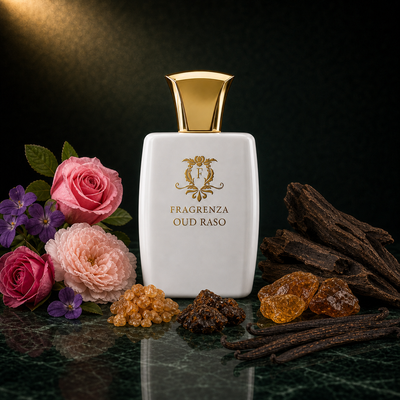
— rose-oud with dark glamour. Oud is one of perfumery's slowest-evaporating molecules; this builds a wardrobe of evening wear around it.
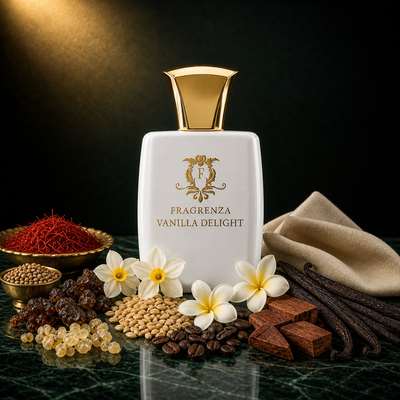
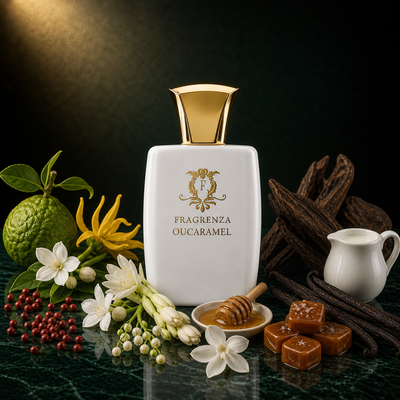
— caramel, oud, vanilla, milky undercurrent. Heavy throughout — the kind of formula that genuinely persists into the next morning.
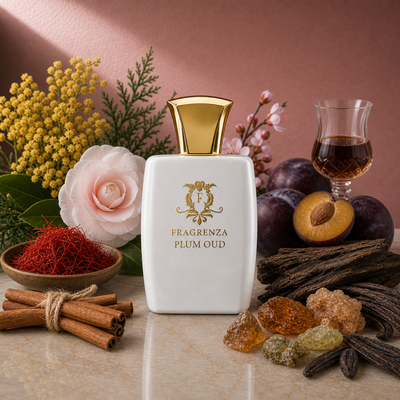
— dark fruit and oud. The fruit gives it character; the oud gives it longevity.

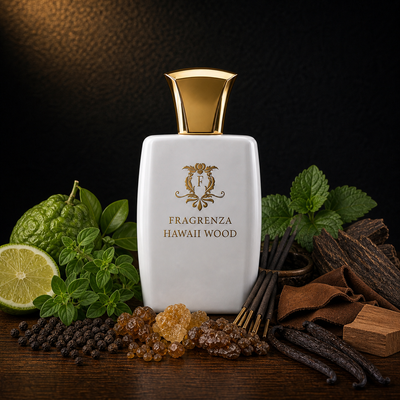
— smoky woods, incense, oud. The kind of dense composition where you can apply less and still wear it all day.
If you're not sure which to start with, the Fragrenza sample pack lets you wear each one for a full day on your own skin before committing to a bottle — which is the only honest way to know how a fragrance will perform on you.
The short version (what to do right now)
- Apply moisturiser to pulse points before fragrance.
- Spray on warm zones — wrists, throat, behind ears, inner elbows. Don't rub.
- Use 2–4 sprays from 3–5 inches.
- Apply within two minutes of showering, before getting dressed.
- If your fragrance is EdT, try the EdP version of something similar.
- Move your bottle out of the bathroom into a cool dark drawer.
- For all-day wear, choose fragrances built on amber, musk, oud, or vanilla.
That's most of the guide compressed to seven lines. The detail above explains why each one works.
Frequently asked questions
Why does my perfume disappear after an hour?
Usually one of three causes: dry skin (no lipid surface for the molecules to bind to), a low-concentration formula (EdC or light EdT), or a fragrance built mostly on light top-note materials. Moisturise first, move up a concentration tier, or choose a fragrance with heavier base notes.
How long should a good perfume last on skin?
EdT: 2–4 hours. EdP: 4–6+ hours. Parfum/Extrait: 8 hours to all day. These are realistic ranges on average skin with proper application — individual results vary by skin chemistry. Anything below the bottom of these ranges is either application error, skin-chemistry mismatch, or a formula that wasn't built for longevity.
Does moisturising before perfume actually work?
Yes — measurably. Moisturised skin can extend longevity by 30–50% compared to dry skin because fragrance molecules bind to lipids. Use unscented moisturiser, or a thin layer of petroleum jelly, on the pulse points before spraying.
Should I spray on clothes or skin?
Both, ideally. Skin is where the fragrance develops through its full pyramid (top → heart → base). Fabric extends the projection and holds the scent longer. The combination outperforms either alone. Test fabric application on an inconspicuous spot first — woody and resinous fragrances can stain light fabrics.
Why shouldn't I rub my wrists together?
Friction breaks down the delicate top-note molecules and accelerates the dry-down. The fragrance is supposed to evolve over hours; rubbing collapses that evolution into the first ten minutes. Spray, hold still, let air-dry.
Does spraying perfume in my hair damage it?
Direct application of alcohol-based fragrance to hair, repeated daily, can dry and weaken it over time. Two safer approaches: spray onto a hairbrush and brush through, or mist the air above your head and walk through the cloud. If you wear fragrance daily, a dedicated alcohol-free hair mist is worth considering.
How should I store perfume to make it last longer?
Cool, dark, stable, and ideally in the original box. A drawer or wardrobe is ideal. Avoid bathrooms (humidity cycling), windowsills (sunlight), and refrigerators (condensation). A well-stored bottle can stay close to its original character for 3–5 years; a poorly stored one can shift in months.
Do extrait perfumes actually last longer than EdP?
On average, yes — extrait/parfum concentrations (20–40% aromatic material) carry more base material than EdP (15–20%). The longevity difference is real but typically 2–4 hours rather than dramatic. The bigger difference is character: extrait projects less aggressively at first but has a richer, denser dry-down.
A final note
Most people who think their perfume "doesn't last" are losing about half its potential to dry skin, wrong application zones, and habits like wrist-rubbing. The fragrance in the bottle hasn't changed. The experience you get from it absolutely can.