

Ambergris in Perfumery: The Ocean's Most Precious Fragrance Treasure
Ambergris reads as a feral-soft, heat-close note, warming the whole composition from the inside, never loud, always present.
By Julia Moretti 6 min read
What Is Ambergris? The Sea's Most Extraordinary Gift to Perfumery
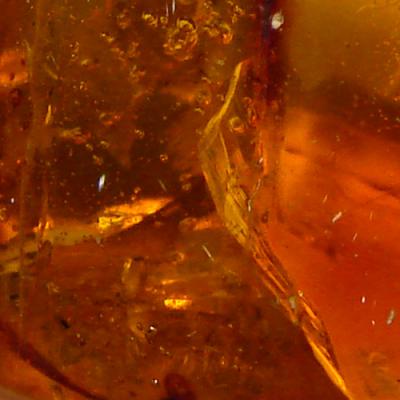
Few substances in the history of human culture are simultaneously as rare, as mysterious, as biologically peculiar and as olfactorily transcendent as ambergris. Produced in the intestines of sperm whales (Physeter macrocephalus) as a protective response to the sharp, indigestible beaks of squid — the whale's primary food — ambergris is a waxy, solid material that either passes from the whale naturally or, historically, was retrieved from the carcasses of deceased animals. Once in the ocean, it undergoes years or decades of transformation: sun and salt bleach it from a dark, bilious grey to a pale golden or ash-white, the complex biochemical processes of photo-oxidation and microbial action converting its unpleasant initial smell into something of almost incomprehensible beauty.
Fresh ambergris smells, by most accounts, terrible — fecal, intensely animalic, the smell of biological processes at their most visceral. Aged ambergris, however, is one of the most coveted materials in all of perfumery: sweet, warm, radiant, oceanic, with a quality that defies easy description but that experienced noses consistently reach for superlatives to express. It amplifies everything around it, acting simultaneously as fixative, radiance-enhancer and note in its own right. A small piece of exceptional aged ambergris is literally worth more than its weight in gold, and its rarity means that genuine ambergris plays no significant role in commercial fragrance today — yet its influence, mediated through synthetic equivalents, is felt in nearly every significant fragrance on the market.
The Smell of Ambergris: Oceanic, Sweet, Radiant, Alive
Describing the smell of genuine aged ambergris is one of the more delightful challenges in fragrance writing. Most accounts converge on certain qualities: an initial impression of warm salt water and the sea, but cleaner and more abstract than actual ocean water; a sweetness that is not sugary but ambery and slightly animalic; a radiant quality that makes everything in the vicinity seem to smell better; and a depth that seems to go deeper the more closely you attend to it. The tobacco facet is frequently noted: a dry, slightly sweet smokiness that recalls the finest aged tobacco but without any harshness. There is also an earthy quality in the finest specimens, and — in some — a faint marine-animalic note that reminds the nose of its extraordinary provenance.
What makes ambergris unique among fragrance materials is its property as what perfumers call a “radiance amplifier” or “voluminizer.” When genuine ambergris (or its primary synthetic equivalent, Ambroxan) is added to a composition, the other ingredients seem to project further, last longer and smell more vivid. This amplification effect, whose molecular basis involves interaction with the olfactory receptor OR51E2, means that ambergris is not just a note in a fragrance but an enhancer of the entire structure around it. This property is why Ambroxan — the synthetic version of the principal active compound — has become one of the most widely used materials in contemporary fine fragrance.
Chemistry: Ambroxide, Ambroxan and Related Compounds
The olfactory activity of ambergris is primarily attributed to ambroxide (also known as ambra oxide or dihydroambroxide), a tricyclic ether derived from ambrein, the main constituent of the waxy ambergris material. During the long oceanic weathering process, ambrein undergoes photo-oxidation and other transformations that produce ambroxide and related compounds including gamma-dihydroionone and other sesquiterpene derivatives. The sweet, radiant, slightly earthy character of these compounds is responsible for the distinctive ambergris smell.
Ambroxan (trade name; chemical name: dodecahydro-3a,6,6,9a-tetramethylnaphtho[2,1-b]furan) is the synthetic version of ambroxide, produced commercially from either natural sclareol (from clary sage) or through fully synthetic routes. It has become one of the most commercially important aroma chemicals of the twenty-first century, appearing as a major component in fragrances ranging from Baccarat Rouge 540 — which uses it in such high concentration that it has become almost synonymous with a certain type of radiant, skin-warm modern oriental — to subtler deployments where its amplifying properties are exploited without any obvious ambergris identity. Iso E Super and Javanol, while not ambroxan, share similar woody-ambergris-amplifying properties and are frequently used alongside it in contemporary formulations.
History: From Whale Paths to Royal Courts
The history of ambergris in human culture is one of the most extraordinary in any material. Ancient Chinese texts describe finding “dragon spittle incense” — ambergris — on beaches. Arab traders were using it in incense, medicine and perfume by the early mediaeval period, and it appears in texts from al-Kindi's ninth-century treatise on perfumery through to the writings of Ibn Sina. The mediaeval European trade in ambergris was significant: it was among the most expensive commodities of the pre-modern world, used by royal courts as a perfume fixative, a medicine and a flavouring for food and drink (Charles II of England reportedly ate ambergris with eggs).
In the era of classical European fine fragrance, ambergris was a standard ingredient in the finest compositions. The great fixative power and the radiance-amplifying quality of genuine ambergris made it irreplaceable in the eyes of the master perfumers who had access to high-quality specimens. With the commercial development of Ambroxan and related compounds from the mid-twentieth century onward, the industry gradually transitioned to synthetic equivalents that offered consistent quality, reliable supply and freedom from the ethical complications of a whale-derived product. Today, the use of genuine ambergris in commercial fragrance is essentially non-existent, though a small trade in legally obtained, naturally beached specimens continues among specialist perfumers and collectors.
Ambergris in the Canon: Fragrances Built on Ambroxan
The influence of ambergris and its synthetic equivalents on the contemporary fragrance landscape is simply pervasive. Among the most commercially prominent demonstrations of Ambroxan's power, Baccarat Rouge 540 by Maison Francis Kurkdjian deserves particular mention: its extraordinary projection, skin-warmth and addictive quality derive substantially from the very high concentration of Ambroxan in its formula. Equally, Dior Sauvage — one of the best-selling fragrances in the world — uses Ambroxan as a cornerstone of its structure, providing the smooth, clean, radiant signature that has made it so universally appealing. Among niche fragrances, Ambroxan-heavy compositions have become almost a sub-genre of their own: warm, skin-close, radiant and highly linear in development.
Note Interactions: What Amplifies What
Ambergris and Ambroxan interact productively with almost every category of fragrance material, which is precisely what makes them so valuable. With musks, they create a warm, radiant skin accord of great intimacy. With florals — particularly rose and jasmine — they add warmth and depth while amplifying the floral's own projection. With woods and resins, they soften while extending. With citrus, they provide the base warmth that prevents fresh compositions from evaporating within minutes. The unique radiance-amplifying property means that virtually any composition benefits from a judicious addition of ambroxan — which is why, if you were to analyse the formulae of virtually any commercially successful fragrance of the past twenty years, you would almost certainly find it present.
Understanding ambergris — real and synthetic — is fundamental to understanding contemporary fine fragrance. For those building a collection of oriental and woody fragrances, the ability to recognise the ambergris-Ambroxan signature is one of the most useful analytical tools available. Once trained, the nose can pick it out in dozens of compositions, tracing a throughline from the historical sperm whale to the modern perfumer's formula sheet: one of the most remarkable journeys in the entire story of human ingenuity and sensory pleasure.