

Frangipani in Perfumery: Tropical, Creamy, and Intensely Beautiful
Frangipani is one of perfumery's most beloved floral notes, a note every fragrance lover should learn to recognise on skin.
By Julia Moretti 6 min read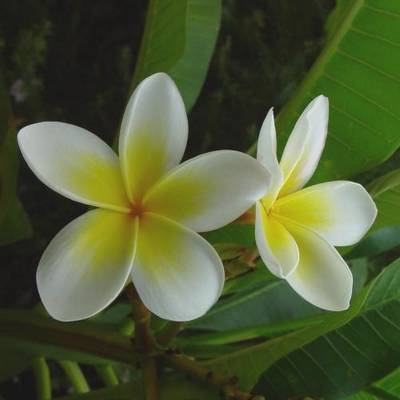
The Scent of the Tropics: Understanding Frangipani
If there is one fragrance that encapsulates the sensory extravagance of the tropics, it is frangipani. The waxy, star-shaped blooms of the Plumeria genus — known interchangeably as frangipani in most of the world — produce a scent of such startling beauty and intensity that it has been used in garlands, religious offerings, and personal adornment across Southeast Asia, the Pacific, and Mesoamerica for centuries. To smell a frangipani flower in full bloom is an almost overwhelming experience: sweet, rich, creamy, with a complex interplay of jasmine-like floralcy, soft fruitiness, and an almost coconut-adjacent warmth that is entirely its own.
In perfumery, frangipani is both one of the most evocative natural materials and one of the most technically challenging to reproduce faithfully. Genuine frangipani absolute, produced by solvent extraction of the flowers, is a precious and expensive material with a short shelf life and inconsistent composition. Most frangipani accords in commercial fragrance are therefore reconstructions — artfully assembled combinations of molecules that approximate the flower's beauty — but the best of these can be remarkably convincing, capturing not just the scent but the emotional experience of the flower.
Botanical Origins: Plumeria Across the Tropics
The Plumeria genus encompasses seven or more species native to tropical America, from Mexico and Central America through the Caribbean and into Venezuela and Brazil. The most commonly cultivated species are Plumeria rubra (which produces flowers ranging from white to deep pink and red, with varying scent profiles) and Plumeria obtusa (the Singapore or white frangipani, with pure white flowers and an intensely sweet scent). The genus is named after the seventeenth-century French botanist Charles Plumier, who described it after encountering it in the Caribbean.
The origin of the name "frangipani" is attributed, with varying degrees of reliability, to the Marquis Frangipani, an Italian nobleman of the sixteenth century who supposedly created a synthetic perfume based on the scent of what were then called "red jasmine" flowers brought from the New World. Whether or not the etymology is accurate, the name has stuck across much of the world while "plumeria" dominates botanical usage.
Today, frangipani is cultivated across the tropical and subtropical world. In Bali, it is planted around temples and used in offerings, its white flowers symbolising purity and the presence of the divine. In Hawaii, it is woven into leis. In much of South and Southeast Asia, it is planted in cemeteries — leading to a funereal association in some cultures — and also worn as a hair ornament and used in religious garlands. This dual symbolism of beauty and spiritual significance gives the flower a cultural depth that transfers to its fragrance use.
Key Molecules in Frangipani's Scent
The aromatic complexity of frangipani is built on a foundation of molecules that place it squarely within the white floral family while giving it its own distinctly tropical, creamy character. Geraniol and nerol — also central to rose — contribute the rosy-floral backbone. Linalool, shared with lavender, bergamot, and orange blossom, provides sweetness and soft floralcy. Benzyl alcohol and benzyl benzoate add a balsamic warmth and sweet, slightly fruity character.
Phenylethyl alcohol — the primary alcohol of rose — appears in frangipani and contributes a sweet, rosy freshness. Farnesol adds a soft, musky-floral depth and functions as a natural fixative. Methyl salicylate — the wintergreen-like molecule also found in various tree barks — appears in some Plumeria species and contributes a slightly medicinal, almost minty facet that adds complexity and prevents the composition from being simply sweet.
The creamy, coconut-adjacent character that is particularly distinctive in frangipani is partly attributable to lactones — cyclic ester molecules also found in peach, jasmine, and gardenia that contribute that characteristic smoothness and softness. Gamma-decalactone and related compounds round out the profile, explaining why frangipani often reads as simultaneously floral, fruity, and creamy rather than purely floral in the conventional sense.
Frangipani in Perfumery History
Frangipani's recorded use in perfumery begins in the Renaissance period, when it was brought to Europe from the New World and became a fashionable ingredient in the Italian and French perfumery industries. The sixteenth-century legend of Frangipani scented gloves — in which the flower-derived scent was used to perfume leather gloves for the French court — may be apocryphal, but it speaks to the flower's early and rapid adoption by European perfumery culture.
In the nineteenth and early twentieth century, frangipani appeared in various soliflore and oriental compositions, its tropical warmth and sweetness fitting naturally within the rich, opulent aesthetic of the fin de siècle. But it was the mid-to-late twentieth century's growing interest in exotic and global materials that truly brought frangipani into its own in Western perfumery, as travel became more accessible and the fragrance industry's gaze shifted toward the aromatic traditions of the East and the tropics.
Contemporary perfumery has embraced frangipani enthusiastically, particularly within the floral-gourmand and tropical-floral categories that have grown significantly in the twenty-first century. The flower's combination of beauty, cultural resonance, and technical interest makes it an attractive choice for perfumers working to create fragrances that feel simultaneously luxurious and genuinely connected to the natural world.
Famous Fragrances Featuring Frangipani
Several significant fragrances have placed frangipani at their heart or used it as a key supporting note. Annick Goutal's Passion (and various compositions from this house's tropical-floral range) has explored frangipani's warmth and creaminess in compositions of great beauty. Various Pacific-inspired and Hawaiian-themed fragrances from both niche and mainstream houses have used frangipani as their defining floral.
La Vie Est Belle by Lancome achieves a warm, honeyed floral richness to which frangipani-adjacent notes contribute alongside iris and jasmine. Olympéa by Paco Rabanne uses salted vanilla, cashmere, and white floral notes that echo frangipani's creamy tropical character. Among the broader floral fragrance landscape, tropical florals featuring frangipani have consistently found a devoted audience.
Note Interactions: Frangipani in Combination
Frangipani's creamy, tropical character gives it natural affinities with several fragrance families. Its relationship with jasmine is particularly close: the two white florals share molecular territory and character, with jasmine providing a more complex, slightly animalic depth and frangipani contributing its distinctive creamy warmth. Together they form an accord of extraordinary tropical opulence.
With ylang ylang, frangipani creates an intensely tropical, heady combination that requires careful handling — both notes are assertive and sweet, and together they can overwhelm a composition if not balanced carefully by fresher, drier elements. Used judiciously, however, this pairing is among the most evocative in all of perfumery. With sandalwood, frangipani finds a creamy, smooth harmony that extends its presence beautifully and gives it a warm, skin-close intimacy.
With vanilla, frangipani becomes almost confectionery in its sweetness — a combination that works well in gourmand-floral compositions targeting the warmth and comfort end of the fragrance spectrum. With lighter materials like bergamot and neroli, frangipani can be lifted and freshened, producing tropical-floral compositions that are bright and accessible rather than heavy and enveloping.
Wardrobe Context: Frangipani as a Summer Essential
Frangipani fragrances are quintessentially warm-weather compositions. Their tropical, creamy, intensely floral character feels perfectly calibrated to heat and sunlight — they perform beautifully on warm skin, where the gentle warmth accelerates the diffusion of the lighter top-note molecules and allows the fuller complexity of the floral to develop. Wearing a well-made frangipani fragrance on a warm summer day is one of the simple pleasures of fragrance appreciation.
Within a fragrance wardrobe, frangipani occupies the role of the joyful, unabashedly beautiful summer scent. It is not austere or challenging; it does not ask for intellectual engagement. It delivers straightforward olfactory pleasure in a concentrated form, and there is real value in that. It works across women's and men's wear, in both casual and formal contexts — its cultural associations are broad and positive enough to make it genuinely versatile. For anyone who loves the sensory experience of tropical flowers, a frangipani composition is a fragrance wardrobe essential.