

Geranium in Perfumery: The Rose Surrogate That Stands Entirely Alone
Geranium is one of perfumery's most beloved floral notes, a note every fragrance lover should learn to recognise on skin.
By Julia Moretti 7 min read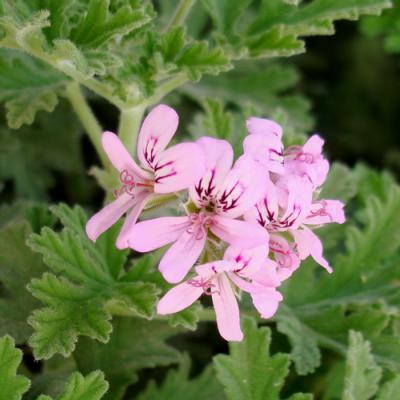
The Rose's Closest Relative: What Geranium Brings to Perfumery
Geranium occupies a fascinating position in the perfumer's vocabulary: it is often described as a rose surrogate, a less expensive and more readily available alternative to the exorbitantly priced rose absolute, yet this description, while containing truth, significantly undersells what geranium actually is and what it can do. Yes, geranium shares many of the key aromatic molecules found in rose — geraniol, citronellol, linalool — and yes, in some compositions it can stand in for rose convincingly. But geranium has its own character, distinct from rose and in many ways more interesting: slightly greener, more herbaceous, with a mint-like freshness that gives it a cool, alive quality that rose, for all its beauty, does not possess.
The essential oil of Pelargonium graveolens and related species — what perfumers call geranium or rose geranium — is one of the most important natural materials in the entire perfumery industry. It appears in an enormous range of compositions across all fragrance families, sometimes as a featured floral note, sometimes as an almost invisible modifier that adds an elusive quality of freshness or naturalness to the composition without being identifiable as geranium. It is, in the truest sense, an indispensable workhorse of the perfumer's palette.
Botanical Origins: Pelargonium and the Geranium Confusion
A botanical clarification is necessary: the plants used in perfumery are Pelargoniums, not true geraniums (genus Geranium), despite the common name. This confusion dates from the early days of botanical classification, and the name geranium has stuck in perfumery regardless of the taxonomic correction. The primary species used are Pelargonium graveolens and the Pelargonium x asperum hybrid, both native to Southern Africa but now cultivated extensively in warm climates worldwide.
The most important producing region for geranium essential oil is the island of Reunion (formerly Bourbon), east of Madagascar in the Indian Ocean, which produces what is widely considered the finest geranium oil in the world: Bourbon geranium, or Pelargonium bourbon. This oil is prized for its exceptional quality — richer, more complex, and more nuanced than oils from Morocco, Egypt, China, or other producing regions. The specific combination of Reunion's volcanic soil, climate, and cultivation tradition creates an oil of remarkable character that commands a significant premium in the perfumery market.
Morocco is now the largest volume producer of geranium oil, primarily from Pelargonium graveolens cultivated in the Meknes region. Egyptian and Chinese production is also significant. Each origin produces oils with slightly different compositional profiles, and perfumers often specify the origin of geranium they require for a particular composition, the choice making a real difference to the final character of the fragrance.
Key Molecules: Geraniol, Citronellol, and the Chemistry of Freshness
The aromatic character of geranium essential oil is dominated by two closely related monoterpene alcohols: citronellol and geraniol. Citronellol, which typically accounts for 20–40% of geranium oil depending on origin, has a sweet, rosy-citrus character with a slightly waxy quality. Geraniol, typically present at 10–20%, is the classic rose molecule — sweet, delicate, floral-rosy. Together, these two molecules create the rose-like backbone of geranium's character.
Linalool, shared with lavender and orange blossom, contributes a soft, floral-fresh sweetness and helps explain geranium's easy compatibility with both floral and aromatic compositions. Isomenthone and menthone — relatives of the molecule responsible for peppermint's cooling effect — appear in significant quantities in geranium oil (5–10%) and are primarily responsible for the characteristic slightly minty, cooling quality that distinguishes geranium from rose and gives it its alive, green freshness.
Rose oxide, the molecule primarily responsible for the distinctive damascene character in Bulgarian and Turkish rose oils, appears in small quantities in geranium oil and contributes a delicate fruity-floral facet. Eugenol, shared with cloves and various spices, adds a quiet spicy warmth. The overall molecular profile of geranium oil is one of considerable complexity and beautiful internal balance, which explains its exceptional versatility in composition.
Geranium in Perfumery History
Geranium essential oil was first produced in significant quantities in the nineteenth century, when French colonists established Pelargonium cultivation on the island of Reunion as a commercial enterprise. By the mid-nineteenth century, Bourbon geranium oil was being exported to Grasse and Paris, where its rose-like but distinctive character quickly found application in fine fragrance. Its relatively lower cost compared to genuine rose absolute made it an attractive ingredient for perfumers working within commercial constraints, and its quality — particularly the Bourbon material — ensured that it was valued in its own right rather than merely as an adulterant.
The twentieth century saw geranium become one of the most widely used natural materials in all of perfumery. Its presence in mainstream commercial fragrance is pervasive: it appears in classical masculines, complex florals, oriental compositions, chypres, and countless other genres, often invisible to the nose but contributing an essential quality of freshness, naturalness, and rosy complexity that synthetic materials cannot fully replicate.
Contemporary perfumery has, if anything, deepened its reliance on geranium. As IFRA restrictions have limited or eliminated various traditional materials including oakmoss and eugenol-containing ingredients, geranium has become even more important as a natural, relatively well-tolerated material that can contribute complexity and floralcy to formulations needing to maintain both safety compliance and olfactory quality.
Famous Fragrances That Showcase Geranium
Geranium's most celebrated explicit use in fine fragrance is in the great masculine classics that feature it as a top or heart note. Guerlain's Vetiver, Chanel Pour Monsieur, and numerous other classical masculines use geranium to provide fresh, rosy-herbal complexity in their aromatic structures. In women's fragrance, geranium appears frequently in the chypre and floral-chypre families, where its rosy-green quality complements oakmoss, labdanum, and bergamot in the characteristic chypre accord.
Bleu de Chanel achieves its sophisticated freshness partly through the careful use of aromatic materials including geranium, which contributes to the composition's clean, slightly rosy depth. Dior Sauvage, one of the best-selling men's fragrances in the world, uses geranium as part of its complex aromatic-spicy-woody accord, the ingredient contributing to the composition's distinctive quality of fresh, bracing masculinity. Many of the finest designer fragrances of the past century have geranium quietly working at their heart.
Note Interactions: Geranium as a Team Player
Geranium's most important relationship in perfumery is with rose. The two share key molecules and a family character, but their differences are as important as their similarities: rose's warmth and depth complement geranium's green freshness, and the two together produce a rose accord of greater complexity and naturalness than either achieves alone. This pairing is foundational to the construction of convincing rose fragrances at all price points.
With lavender, geranium creates a classic aromatic-herbal accord with a fresh, rosy dimension that is among the most universally appealing in all of perfumery. Both notes are cool and herbal, but their slightly different characters — lavender's medicinal-floral quality versus geranium's minty-rosy freshness — create a combination that is more interesting than either alone.
With patchouli, geranium achieves a modern floral-oriental accord with considerable appeal: the earthy, dark complexity of patchouli softened and brightened by geranium's rosy freshness. This combination appears in various highly successful contemporary fragrances and represents one of the more versatile building blocks in the modern perfumery toolkit. With bergamot and oakmoss, geranium contributes to the classic chypre structure — the fresh, rosy, slightly green heart note that connects the citrus top to the earthy, resinous base.
Wardrobe Context: Geranium Across the Seasons
Geranium's outstanding characteristic as a fragrance ingredient is its year-round wearability. Its fresh, rosy-green quality works in warm weather without feeling heavy; its rosy warmth and herbal depth provide enough substance for cooler seasons. This makes compositions built around geranium among the most genuinely versatile in any wardrobe — the choice for the person who wants a fragrance that is reliably appropriate without being generic.
For both men and women, geranium-forward fragrances occupy the register of the classically refined: fresh without being merely clean, floral without being sweet, complex without being challenging. They are the fragrances that work in professional contexts, on casual weekends, in formal occasions, and in the quiet moments of personal grooming — performing consistently across all these registers without calling attention to themselves. In a landscape full of statement fragrances and fleeting trends, a well-made geranium composition is a reliable, beautiful constant. Whether encountered in a classic fougère, a modern chypre, or a contemporary aromatic-woody, geranium is the note that makes everything around it smell more alive and more real.