

Iris in Perfumery: The Powdery Flower With a Mineral Soul
Iris is one of perfumery's most beloved floral notes. Learn how perfumers use it, what it smells like on skin, and the fragrances that wear it best.
By Julia Moretti 6 min read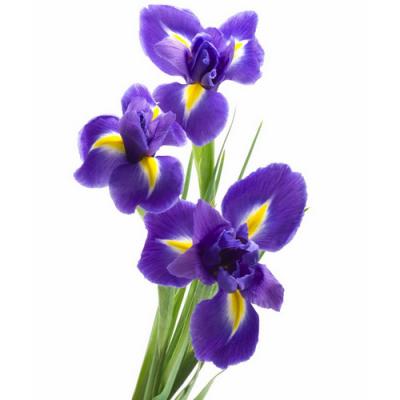
If you were to ask a group of experienced perfumers which single natural material best demonstrates the extraordinary lengths to which the industry will go in pursuit of beauty, the answer might well be iris. Specifically orris root — the dried, aged rhizome of the iris plant, from which the most exquisite and expensive raw material in the classical perfumer's palette is derived. The process is baroque in its demands: iris rhizomes must be grown for three to five years, harvested, dried for a further two to three years, and then either steam-distilled to produce orris butter or solvent-extracted to produce orris absolute. The result justifies every year of waiting.
Iris is one of those notes that seems to crystallize everything sophisticated about perfumery. It is not immediately beautiful in the way that rose or jasmine is beautiful. It is cool, powdery, slightly austere, with a carrot-root earthiness at its base and a violet-like floral quality that is more suggestion than declaration. It is a note that rewards educated attention, and in the hands of great perfumers it has produced some of the most complex, most distinctive, and most enduring fragrances in the canon.
The Smell of Iris: Powder, Violet, and Carrot
The scent of iris in perfumery is not the scent of the iris flower itself. The living flower has a light, sweet, somewhat grape-like fragrance that is pleasant but not particularly complex. It is the rhizome — the underground root structure — that contains the extraordinary aromatic materials that perfumers prize.
Freshly harvested iris rhizomes smell of little more than wet earth. The transformation happens during drying: as the rhizome desiccates over years of careful aging, enzymatic processes convert iridals — relatively odorless compounds — into irones, the class of molecules responsible for iris's signature scent. The fully aged, dried rhizome smells of a complex interplay of violet flowers, cool powder, fresh carrots, and something metallic and slightly earthy that perfumers describe as stony or mineral.
This cold, mineral quality is perhaps iris's most distinctive attribute. Unlike almost every other floral material in perfumery — which tend toward warmth and softness — iris carries a character of cool hauteur that reads as simultaneously aristocratic and slightly intimidating. It is the note of glacial elegance, of white-gloved restraint.
The powder dimension is generated by the interaction of irones with other orris compounds, and it gives iris fragrances their characteristic soft-focus quality. This powder is not the heavy, dated powder of old-fashioned beauty preparations — it is lighter and more refined than that. Contemporary perfumers have worked hard to modernize iris's powder character, and the best modern iris compositions maintain the powdery warmth without the fusty quality that some wearers associate with older fragrance styles.
The Orris Trade and Its History
Orris root has been used in perfumery and cosmetics since antiquity. Ancient Egyptians used powdered orris in cosmetic preparations; Roman women used it to scent their hair and clothing. In Florence during the Renaissance, the cultivation of Iris pallida — the pale blue iris from which the finest orris is derived — became an important industry, and the city became so closely associated with the material that the Florentine coat of arms features the iris flower (often mistaken for a lily).
Florentine orris cultivation and trade, centered particularly around Greve in Chianti and other communities in the surrounding hills, persisted as a specialized industry through the early modern period and into the industrial era. The slow, labor-intensive nature of orris production — impossible to meaningfully accelerate without sacrificing quality — has always made it one of the most expensive materials in perfumery. Even today, genuine orris butter commands prices that place it in the same category as the most expensive naturals available.
This cost has been a driving force behind the development of synthetic iris molecules. Alpha-isomethyl ionone, methyl ionone, and other synthetic ionone derivatives replicate aspects of orris's character at a tiny fraction of the cost, and they appear throughout commercial perfumery in contexts where genuine orris butter would make the formulation prohibitively expensive.
Key Molecules: Irones, Ionones, and the Orris Family
The primary aromatic compounds in orris butter are the irones: alpha-irone, beta-irone, and gamma-irone. Of these, alpha-irone is considered the most characteristic, carrying the cool, violet-floral, slightly fruity character that is the heart of the iris smell. These molecules are present in orris butter in relatively small quantities — often just two to five percent of the total — but their impact on the overall scent is enormous, as they are among the most powerful aroma compounds known.
The related ionone family — particularly alpha-ionone, beta-ionone, and iso-E super (which has some ionone character) — provides the synthetic bridge between expensive natural orris and commercially viable iris compositions. Beta-ionone has a powerful, diffusive violet-fruit character that anchors many iris accords. Alpha-ionone is softer and more floral. Together, they allow perfumers to construct convincing iris effects without the cost and supply variability of natural orris.
Orris concrete — produced by steam distillation of the aged rhizome — is a solid waxy material whose primary aromatic constituent is myristic acid, which has a fatty, slightly soapy character that adds to iris's clean, refined quality. The waxy components of orris concrete contribute to the note's renowned tenacity and its characteristic skin-warming evolution over hours of wear.
Famous Iris Fragrances
Iris's legacy in fragrance is traced through some of the most celebrated compositions ever created. The powdery iris-violet axis is central to the Dior aesthetic, and it runs through the house's fragrances in various guises. Miss Dior carries iris's powdery refinement as a through-line beneath its floral freshness. J'adore uses the note as part of its opulent floral framework, where iris's cool powder provides elegant contrast to the warmer jasmine and rose at the composition's heart.
In the niche world, iris has inspired entire fragrance houses and dedicated collections. The Iris Poudre tradition — the classic pairing of iris with soft musks and light florals — produced some of the twentieth century's most admired compositions, and contemporary niche perfumers continue to explore iris in every register from the most delicately powdery to the starkly mineral and cold.
For those drawn to the powdery, elegant end of the fragrance spectrum, exploring floral fragrances featuring iris is one of the most rewarding journeys in the hobby. The range of moods available within the iris family is extraordinary: from warm and comforting to icy and remote, from classically feminine to sharply unisex.
Note Interactions
Iris is one of perfumery's great team players. Its cool powder makes it an ideal moderator in compositions that risk becoming too warm or too sweet. With heavy oriental materials — resins, oud, amber — iris introduces an aristocratic coolness that elevates the composition above the merely sensual. This is why iris appears in so many of the great oriental-chypre hybrids of the twentieth century.
With roses, iris is a natural and deeply historical partnership. The carrot-violet character of iris and the dewy sweetness of rose create a combination of incomparable elegance. When patchouli is added to this rose-iris accord, the result is the classic rose-patchouli-iris chypre that has been one of the most sophisticated fragrance templates for over a century.
With sandalwood, iris develops a creamy, woody warmth that is among its most wearable presentations. The dryness of the sandalwood grounds iris's airy powder, and the two materials share a quality of refined, skin-close comfort that makes this combination a natural choice for intimate-wear fragrances.
Iris in the Contemporary Fragrance Wardrobe
In an era that often prizes loudness and projection above all else, iris stands as a quiet rebuke — a reminder that the most sophisticated fragrances are not always the most immediately obvious ones. Iris fragrances are typically skin-close and intimate, revealing their complexity to those who come near rather than broadcasting it to a room.
This makes iris an ideal choice for professional contexts, where subtlety and refinement are valued over presence. It also makes iris fragrances ideal evening companions in intimate settings — the fragrance that someone wearing reads as impeccably considered precisely because it rewards close attention.
For those building a serious fragrance wardrobe, an iris-forward composition should be considered essential. It represents a tradition of quality and refinement going back centuries, and it occupies a sensory space — cool, powdery, mineral, quietly floral — that no other note can replicate.