

Melon in Perfumery: Fresh, Aqueous, and Deceptively Complex
Cantaloupe brings dense honeyed muskiness, honeydew brings cool aqueous green, and the small muskmelons of southern France and Italy still draw real headspace research from perfumers.
By Julia Moretti 6 min read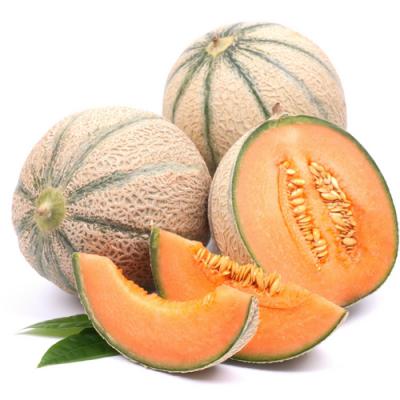
The Smell of Melon: Water, Sweetness, and Green Freshness
Melon occupies a curious position in the perfumer's palette: it is simultaneously one of the most familiar and most technically interesting of the fruit notes used in contemporary fragrance. At first encounter, melon smells deceptively simple — fresh, watery, slightly sweet, and with a clean, almost aqueous greenness that feels immediately summery and refreshing. But the melon family encompasses a remarkably wide range of aromatic characters. The cantaloupe's dense, honeyed muskiness bears almost no resemblance to the cool, green wateriness of honeydew, while the small, intensely fragrant muskmelon varieties cultivated in southern France and Italy for their perfumery value offer yet another dimension entirely — richer, more complex, with a pronounced musky-floral undertone that has made them subjects of genuine scientific interest.
In perfumery practice, melon notes most commonly serve as elements of fresh, watery, or green accords. The watery facet of melon is its most commercially deployed characteristic — the slightly dewy, cucumber-adjacent freshness that the cantaloupe and honeydew varieties share contributes to the marine and aquatic fragrance families that dominated the 1990s market. The sweeter, more honeyed aspects of cantaloupe and muskmelon move melon into the fruity floral territory where its warmth and slight roundness complement floral heart notes. The green facet of certain melon varieties — particularly watermelon rind and unripe melon — places melon in the vicinity of cut green tomato vine, fresh grass, and other naturalistic green notes.
History of Melon in Perfumery
Melon cultivation has been documented for at least five thousand years in Africa and Asia, and the fruit has been associated with luxury, sweetness, and summer pleasures throughout recorded history. Roman emperors were passionate melon enthusiasts, and the fruit was considered precious enough to appear as offerings at religious ceremonies and aristocratic banquets. In early modern Europe, the cultivation of fine melons in heated glasshouses was a mark of extraordinary horticultural refinement, with certain varieties — particularly the Charentais cantaloupe — acquiring the status of luxury food products comparable to truffles or fine wine.
In perfumery, melon notes did not become widely used until the advent of the marine and aquatic fragrance revolution of the early 1990s. The development of new synthetic materials capable of reproducing melon's characteristic watery, fresh character — particularly the class of molecules known as melonal (2,6-nonadienal derivatives) — gave perfumers the technical tools to incorporate convincing melon accords into their compositions. The 1992 launch of Issey Miyake's L'Eau d'Issey, with its extraordinary watery freshness, helped define a new aesthetic for which melon-type materials were essential, and the subsequent decade saw an explosion of aquatic and fresh fragrances drawing heavily on the melon palette.
The contemporary niche fragrance scene has approached melon with greater variety and ambition, exploring not just the watery freshness but also the honeyed depth of ripe cantaloupe and the complex musky character of the muskmelon varieties that inspired the historical use of musk in perfumery. Some perfumers have argued that the plant-derived musk quality of ripe muskmelons represents an olfactory bridge between the fruit world and the animal world of traditional musk notes — an intriguing connection explored further in our guide to musk in perfumery.
Key Molecules and Extraction
Natural melon aromatic materials are rarely used in fine perfumery in their pure form — the fresh fruit does not yield its characteristic aroma readily to conventional extraction methods, and the resulting materials often smell more of the dried, concentrated fruit than the fresh watery impression that perfumers seek. The melon note in contemporary fragrance is therefore almost always a synthetic construction, built from a palette of specific aromatic chemicals selected to reproduce different facets of the fresh fruit's aroma.
The most important synthetic molecule for melon accords is melonal (2,6-nonadienal), which provides a watery, slightly green-melon note of great freshness and naturalness. This compound is also found naturally in cucumber peel, which explains the close relationship between cucumber and melon in the aquatic and fresh fragrance families. Hydroxycitronellal contributes a muguet-like freshness that aligns well with melon's lighter facets. Para-methyl acetophenone provides a sweet, slightly floral warmth that reproduces the honeyed quality of ripe cantaloupe. Various lactone compounds — including gamma-decalactone, which is also central to peach accords — contribute creamy, sweet fruitiness. The precise combination of these materials determines whether the resulting melon accord reads as watery and fresh, sweet and honeyed, or green and slightly unripe.
Famous Fragrances Featuring Melon
Melon has appeared in numerous landmark fragrances, most prominently in the great aquatics and fresh fragrances that defined a generation of perfumery. Kenzo's Eau par Kenzo, launched in 1996, used melon-adjacent watery materials as central elements of its extraordinarily fresh, waterfall-like composition. Davidoff's Cool Water for Women incorporated honeydew melon in its opening accord. The entire Christian Dior Dune family drew on watery, slightly melon-adjacent freshness for its distinctive coastal character.
In the fruity floral category, melon has been used to add lightness and freshness to otherwise heavier compositions. Viktor & Rolf Flowerbomb uses melon-adjacent materials in its opening to provide a fresh, watery entry before the heavy floral-oriental base is revealed. Several of the most successful contemporary women's fragrances incorporate melon as part of their fresh-fruity opening accord. Paco Rabanne Olympea uses watery, slightly melon-adjacent fresh facets in its opening to create the particular sensation of sunlit freshness before the vanilla-ambergris base establishes the fragrance's characteristic warmth.
Note Interactions: Melon's Aromatic Partnerships
Melon's capacity to function as a bridge note between fresh-aquatic and fruity-floral territories makes it one of the more versatile building blocks in contemporary perfumery. Its watery facets integrate naturally with other aquatic and green materials: cucumber, violet leaf, and water lily all share melon's quality of watery freshness, and their combination creates the sort of immersive aquatic accord that defined the 1990s fragrance aesthetic. Our guide to water lily in perfumery explores this related territory in detail.
On the sweeter side, melon pairs naturally with other tropical and stone fruits — peach, apricot, and mango all share with melon a combination of juicy sweetness and soft fruitiness that creates convincingly lush tropical accords. White floral notes, particularly jasmine and lily, align well with melon's sweet freshness: the flowers add depth and floral complexity while melon prevents them from becoming too heavy.
Musk notes are melon's natural base note companions, amplifying the note's inherent freshness and skin-like quality while providing longevity and diffusion. The combination of melon with clean musks produces a particularly fresh, skin-adjacent quality that has been commercially very successful. Sandalwood adds creaminess and warmth that softens melon's potentially one-dimensional wateriness. Vanilla brings a sweet warmth that draws out the honeyed aspects of richer melon varieties while making the whole composition considerably more enveloping and lasting on skin.
Melon in the Fragrance Wardrobe
Melon-forward fragrances are quintessentially summer companions. Their watery freshness and clean sweetness make them ideal for warm weather, beach vacations, active daytime wear, and any context where you want to smell effortlessly fresh and pleasant without making a heavy olfactory statement. They are the fragrance equivalent of a light linen shirt on a hot day — appropriate, comfortable, and never overdone.
For those building a comprehensive fragrance wardrobe, a melon or aquatic-melon composition fills the role of the warm-weather everyday option — easy to wear, broadly appealing, and sufficiently inoffensive for professional environments where strong fragrance would be unwelcome. More interesting melon compositions, particularly those that explore the honeyed or musky dimensions of the note, can provide the pleasure of genuine aromatic complexity while retaining the freshness that makes the note so universally accessible. Those new to perfumery often find melon-based fragrances an excellent entry point precisely because the note communicates so immediately and pleasurably with virtually any wearer.