

Neroli in Perfumery: The Citrus Blossom That Perfumery Couldn't Live Without
Neroli is one of perfumery's brightest top notes. Learn how perfumers use it, what it smells like on skin, and the fragrances that wear it best.
By Julia Moretti 11 min read
The flower behind one of perfumery's greatest ingredients
Few ingredients in the perfumer’s palette carry the same weight of history, poetry, and technical precision as neroli. Distilled from the blossoms of the bitter orange tree (Citrus aurantium var. amara), neroli is simultaneously one of the oldest and most modern-feeling materials in fine fragrance. It smells fresh yet floral, citrusy yet deep, bright yet strangely melancholic — a paradox that has kept perfumers returning to it for over three hundred years.
To understand what neroli smells like, you have to first appreciate that it is not simply orange blossom. Though both come from the same tree, they are processed differently and smell markedly distinct. Neroli is obtained through steam distillation of the fresh flowers, which produces a lighter, more ethereal, slightly metallic quality. Orange blossom absolute — extracted via solvent — is richer, warmer, more indolic and honeyed. Neroli sits closer to the citrus family in its initial impression; orange blossom absolute sits in the floral-oriental register. Understanding that distinction is the first key to understanding neroli.
The scent profile: what neroli actually smells like
Neroli opens with a bright, sparkling citrus note — clean and fizzing, reminiscent of fresh orange peel but softer and more aromatic. Almost immediately, a floral heart emerges: white, luminous, and faintly honeyed. There is a characteristic slight bitterness running through neroli’s profile that prevents it from reading as sugary or cloying. Some describe it as faintly medicinal or green, and that impression comes from specific aromatic compounds including linalool, linalyl acetate, and a group of terpenes that give it its distinctive freshness.
What makes neroli so compelling is that it possesses a subtle depth beneath its light surface. At its base, after the top notes dissipate, neroli reveals a soft, woody-musky warmth that anchors the whole composition. This base note quality — often attributed to the presence of nerolidol, a sesquiterpene alcohol — is what allows neroli to function not merely as a top note brightener but as a genuine structural element in a fragrance. In a well-made cologne or eau de toilette built around neroli, this base note can last for hours on warm skin.
The overall impression is of something both natural and refined — like standing in an orange grove in bloom at dusk, where the sweetness of the flowers mingles with the faintly cool breeze coming off the Mediterranean. No synthetic reconstruction quite replicates this experience, which is why natural neroli remains one of the most prized and expensive ingredients in fine perfumery.
The history of neroli: a royal fragrance with a romantic name
Neroli takes its name from Anne Marie Orsini, Princess of Nerola — an Italian noblewoman of the seventeenth century who reportedly adored the scent and wore it as her signature. She is said to have used it to scent her gloves, her bath, and the interiors of her carriages, turning neroli into a fashion statement among the Roman aristocracy. Whether the legend is entirely accurate or embellished over centuries of retelling, the name stuck, and neroli has carried its aristocratic connotations ever since.
Long before the Princess of Nerola appropriated it, bitter orange blossom water was used across the Arab world and Persia as a culinary and cosmetic ingredient. The Moorish influence on perfumery brought these ingredients to southern Europe, where they found fertile ground in the gardens of the Mediterranean coast. By the eighteenth century, neroli had become a foundational ingredient in Eau de Cologne — the famous formula credited to Johann Maria Farina in Cologne, which combined neroli with bergamot, lemon, lavender, rosemary, and other aromatics in a light, refreshing composition that would define an entire genre of fragrance. That tradition continues today, and any serious cologne worthy of the name contains neroli in some form.
Neroli vs petitgrain vs orange blossom: understanding the orange tree family
The bitter orange tree (Citrus aurantium) is remarkable for yielding three entirely different perfumery ingredients from three different parts of the same plant. Neroli comes from the blossoms. Petitgrain is distilled from the leaves and small twigs, producing a greener, woodier, more aromatic oil that is sharper and less floral than neroli. And from the fruit rind, bitter orange oil is pressed, giving a sharp, zesty citrus top note entirely distinct from both. Each ingredient tells a different story about the same tree, and skilled perfumers often use all three together to build complex, multi-dimensional citrus accords that feel genuinely alive rather than synthetic.
The difference between neroli and orange blossom absolute is worth dwelling on further. In practical terms, the absolute form of orange blossom is far richer in indoles — compounds responsible for the slightly animalic, almost narcotic quality that white flowers share with jasmine and tuberose. Neroli, distilled rather than solvent-extracted, retains less of this indolic quality and more of the bright, airy freshness that makes it feel lighter and more universally wearable. A perfume built primarily around neroli will generally feel more citrus-forward and daytime-appropriate; one built around orange blossom absolute will feel lusher, more sensual, and more overtly floral.
Neroli in classic and contemporary fragrance
The list of significant fragrances that rely on neroli as a central note is essentially a history of Western fine perfumery. The great colognes of the eighteenth and nineteenth centuries all used neroli as a cornerstone. In the twentieth century, neroli featured prominently in chypres, florals, and fougères alike — it has a unique ability to act as a connector between citrus top notes and floral or woody hearts, smoothing transitions and adding luminosity without imposing a strong identity of its own.
Among the most celebrated neroli-centric fragrances, Dior’s Eau Sauvage (1966) stands as a defining example — a masterpiece of the genre in which neroli and bergamot are woven around hedione (a synthetic jasmine molecule) in a formula that reads as fresh, floral, and masculine simultaneously. More recently, niche houses have explored neroli’s more complex dimensions: its potential for ethereal lightness, its connection to solar compositions, and its intriguing compatibility with woody and resinous materials. The Atelier Cologne neroli range and Acqua di Parma Colonia represent the contemporary mainstream of the tradition; Tom Ford Neroli Portofino and the Maison Francis Kurkdjian neroli compositions represent the contemporary luxury end.
The chemistry of neroli: why it smells the way it does
Neroli’s distinctive scent comes from a complex mixture of aromatic compounds. Linalool — also found abundantly in lavender and many other florals — provides the clean, slightly floral backbone. Linalyl acetate adds a light, slightly fruity-floral quality. Alpha-terpineol contributes a lilac-like, slightly earthy dimension. Geraniol brings a soft rosy warmth. And nerolidol, named after neroli itself, provides the dry, woody, gently musky base note that gives the oil its remarkable tenacity for something so apparently light.
The presence of indoles — the same compounds responsible for the rich, animalic undertone of jasmine — in relatively small but meaningful quantities is what allows neroli to connect with the body’s natural chemistry. Like all white flowers, neroli has a slight warmth when worn on skin, intensifying and deepening slightly with body heat in a way that feels intimate and personal rather than perfumey or synthetic.
Natural neroli is obtained primarily from the Moroccan and Tunisian regions, where the bitter orange tree thrives in the coastal climate. Tunisia in particular has long been considered one of the finest sources of neroli, with the region around Nabeul famous for its orange blossom harvest. The distillation is carried out in spring, when the flowers are at their peak, and the yield is extraordinarily low — it takes approximately a thousand kilograms of flowers to produce a single kilogram of neroli oil, which explains why genuine natural neroli commands a price rivalling some of the world’s most precious aromatic materials.
How perfumers use neroli
In formulation, neroli functions primarily as a top-to-middle note connector. Its opening brightness provides the initial sparkle that draws a wearer into a fragrance, while its persistent floral-musky quality carries the composition through the transition into the heart. Perfumers frequently pair neroli with jasmine, rose, or other white florals in the heart, using neroli’s relative lightness to prevent the composition from becoming heavy or overpowering.
In citrus-forward compositions — colognes, aquatics, and fresh florals — neroli often plays a structural role, adding longevity and floral depth to what might otherwise be purely ephemeral citrus accords. A cologne with neroli in its formula will last significantly longer on skin than one relying solely on expressed citrus oils, precisely because neroli’s middle and base note components have much greater tenacity than simple limonene-based citrus materials.
In more complex oriental or chypre constructions, neroli can appear in smaller doses as a brightening element — a dash of luminosity in a darker, richer composition that prevents it from feeling oppressive or dated. This versatility is one of the primary reasons neroli has survived as a relevant, in-demand ingredient through every stylistic shift in modern perfumery.
Neroli at the heart of the Fragrenza line
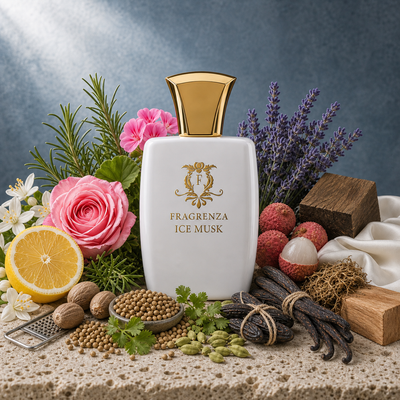
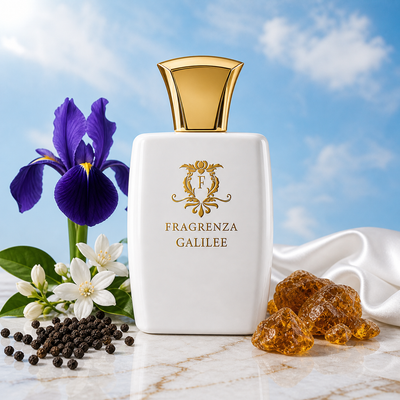
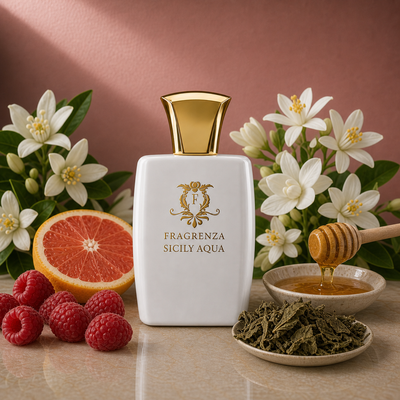
Several Fragrenza compositions place neroli at the structural center of the wear.
is the most direct expression of neroli at its cleanest and most contemporary — a bright, transparent citrus-floral that gradually settles into clean musks and soft woods. uses neroli as a transparent accent over a clean musk core; the wear reads as freshly clean skin with the faintest suggestion of orange blossom warmth. takes neroli into a Mediterranean composition with citrus relatives and warm-resinous undertones — the neroli pick that bridges the cleaner modern compositions and the heavier oriental-citrus traditions. And (Sicily Aqua) places neroli inside a sun-drenched Mediterranean composition with bright citrus and slightly honeyed floral character.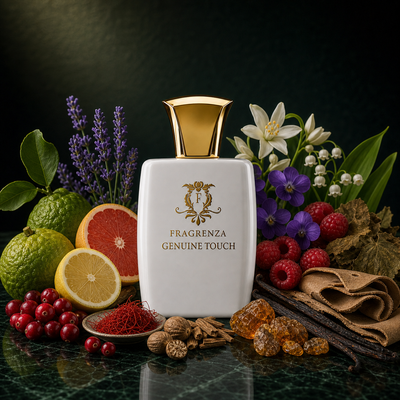
For the broader best-of context, our guide to the best neroli fragrances covers the full Fragrenza neroli range across registers.
The enduring appeal of neroli
What makes neroli genuinely irreplaceable — and this cannot be said of many natural perfumery ingredients — is that no single synthetic molecule fully captures its complexity. Perfumers have access to many of neroli’s individual components in synthetic form, and they use them constantly. But the interaction between these compounds in the natural oil, including trace materials present in vanishingly small quantities, creates something that the sum of parts cannot replicate. Experienced noses can almost always identify natural neroli in a composition — it has a roundness, a slight irregularity, and a depth that marks it as something grown rather than assembled.
For fragrance lovers, neroli is one of the great gateways into appreciating the complexity of natural materials. It is approachable enough that almost anyone finds it pleasant on first encounter, yet nuanced enough to reward deeper exploration. It connects history, botany, chemistry, and artistry in a single drop — which is, in essence, what fine perfumery has always aspired to do.
Frequently asked questions
What does neroli actually smell like?
Bright, sparkling citrus on opening, with a luminous floral heart and a faintly bitter-green edge that prevents the sweetness from reading as cloying. Underneath the brightness sits a soft, woody-musky warmth that anchors the wear. The overall impression is of something both natural and refined — like an orange grove in bloom at dusk, where the flower’s sweetness mingles with cool Mediterranean air.
How is neroli different from orange blossom absolute?
Both come from the bitter orange tree’s blossoms but are processed differently. Neroli is steam-distilled, producing a lighter, brighter, more citrus-forward oil. Orange blossom absolute is solvent-extracted, capturing heavier compounds (including more indole) and producing a richer, more honeyed, more pronouncedly floral material. Neroli reads as daytime-fresh; orange blossom absolute reads as evening-sensual.
What is petitgrain and how does it relate to neroli?
Petitgrain comes from the leaves and twigs of the same bitter orange tree that produces neroli. It is greener, woodier, more aromatic, and less floral than neroli — the orange-tree-leaf rather than the orange-tree-blossom. Most classical eau de cologne formulas use neroli, petitgrain, and bitter orange oil together, building a multi-dimensional bitter-orange-tree accord from three parts of the same plant.
Why is natural neroli so expensive?
The yield is extraordinarily low. It takes approximately a thousand kilograms of flowers to produce a single kilogram of neroli essential oil. The flowers must be hand-picked at dawn, before heat causes the volatile aromatic compounds to evaporate, and the harvest window is short (a few weeks each spring). Combined with the Mediterranean-only growing conditions, the labor and limited geography drive the price to luxury levels.
Is neroli unisex?
Genuinely. Neroli has anchored masculine eau de cologne for three centuries and feminine luminous-floral compositions for as long. The note itself is structural rather than gendered, and contemporary unisex compositions treat it as a neutral element. The Italian and French eau de cologne traditions have always been unisex by design.
Are neroli fragrances long-lasting?
Moderate to good. Pure neroli sits between top notes (which evaporate quickly) and base notes (which last hours), with substantivity coming from the nerolidol and other heavier compounds in the oil. A well-built neroli fragrance typically wears for five to seven hours, with longer wear when paired with warm bases (musk, sandalwood, amber).
What perfumes layer well with neroli?
Bergamot and other citrus oils for the eau de cologne register. Jasmine and white florals for the luminous-floral structure. Petitgrain for the full bitter-orange-tree accord. Clean musks for the modern skin-scent register. Sandalwood and warm woods for the warm-floral oriental register. Avoid layering neroli under heavy gourmand or dark oud compositions where the bright citrus contrast tends to feel awkward.