

Solar Notes in Perfumery: The Sun-Warmed Register of Summer Fragrance
Benzyl salicylate carries the slightly powdery, suntan-lotion cue that defines the Coppertone direction, and tiare with monoi-coconut warmth completes the sun-warmed-skin register of the solar family.
By Julia Moretti 9 min read
The sun-warmed register of summer perfumery
Solar notes are perfumery’s warmest fresh category. Sun-warmed, slightly creamy, faintly suntan-lotion, with a luminous golden character that smells like skin in summer light, salty hair after the beach, and the warm aromatic glow of late afternoon, solar notes are the perfumery answer to the smell of summer itself. The category emerged in the contemporary niche space and has anchored a meaningful share of luxury summer perfumery over the past two decades. Where marine notes evoke the open sea and aqueous notes evoke the still pond, solar notes evoke the sun-warmed body in the open air.
This is the guide to solar notes as a perfumery category. The materials that build the family, the chemistry of suntan-and-skin character, the cultural moment that brought solar notes into the mainstream, the famous fragrances that put solar character to work, the Fragrenza compositions that use the sun register, and how to think about solar perfumery in your own wardrobe.
What solar notes are in perfumery
Solar notes are built from a small set of synthetic and natural materials that together evoke the warm-skin character of summer.
Coconut and benzyl salicylate are foundational solar materials. Benzyl salicylate is the molecule most closely associated with classical Coppertone-direction sunscreen scent — faintly sweet, slightly powdery, distinctly suntan-lotion in profile. The material is used heavily in summer perfumery and tropical-floral compositions.
Ylang ylang and tiare flower contribute the tropical-floral character that anchors classical solar perfumery. Tiare (the Polynesian gardenia) is particularly associated with monoi oil and solar-floral compositions.
Coconut absolute and coconut-direction synthetic captives deliver the creamy-tropical character that defines a meaningful share of solar perfumery. Real coconut is rarely used (the natural material is too heavy and has limited stability); synthetic captives like Coconut Aldehyde and Gamma-Octalactone deliver the desired effect.
Iso E Super, Cetalox, and other warm-woody synthetic captives contribute the warm-skin character that distinguishes serious solar perfumery from purely tropical-floral compositions. The molecules deliver the warm-radiant facet that makes solar fragrances read as sun-warmed-body rather than just tropical-pretty.
Salt and beach-direction materials (often Calone at trace levels, Ambroxan, sometimes literal salt-direction captives) contribute the sea-air facet that completes the solar register. The combination of sun-warmed-skin and salt-air is the structural backbone of contemporary luxury solar perfumery.
What solar notes actually smell like
Solar notes in fine fragrance read as the smell of sun-warmed skin transformed into perfumery aromatic profile. Warm without being heavy, sweet without being gourmand, faintly tropical, faintly powdery, with the distinctive suntan-lotion-and-summer-floral character that defines the category. The aromatic profile is among the most evocative in fine perfumery because the smell triggers immediate sensory associations — warmth, leisure, beach, summer afternoon.
The wear on skin reads warm, golden, slightly creamy, with a luminous quality that distinguishes solar compositions from cool-aquatic or fresh-citrus perfumery. Solar fragrances tend to project moderately and develop slowly through the wear. The full solar character usually arrives thirty to ninety minutes into the wear and persists through the dry-down. Most solar compositions rely on warm musks, light woods, and amber bases to extend the wear and warm the volatile floral and salt molecules.
Solar notes have natural compositional affinities with tropical florals (tiare, frangipani, gardenia, ylang ylang), creamy materials (coconut, vanilla, sandalwood), light citrus (bergamot, mandarin), and warm musk-amber bases. The category sits at the warm-fresh end of the perfumery spectrum and bridges between traditional summer compositions and contemporary luxury perfumery.
Cultural and compositional history
Solar perfumery has roots in classical tropical perfumery (the monoi-and-tiare register that has anchored Polynesian and tropical fragrance for centuries) but emerged as a distinct fine-fragrance category in the late 1990s and early 2000s. The contemporary solar register is largely a creation of niche perfumery and luxury Mediterranean compositions that combined tropical-floral materials with the salt-and-skin captives developed in the marine perfumery wave of the 1990s.
Estee Lauder Bronze Goddess (2005) is sometimes credited as the founding modern solar composition for the mainstream market — the fragrance places coconut, tiare, vanilla, and amber alongside salt-and-bergamot character in a structure that has anchored Lauder’s summer line for two decades. The same year saw several niche solar compositions emerge, and the contemporary niche space has refined the register significantly through houses like Maison Francis Kurkdjian, Tom Ford, Diptyque, and various independent perfumers.
The contemporary moment has seen solar perfumery extend significantly. The category now includes pure tropical-floral compositions, classical Mediterranean structures, contemporary niche luxury solar compositions, and various unisex sun-warmed-skin works. The register is closely associated with summer wear, beach holidays, and luxury seasonal perfumery.
Famous solar fragrances
Several compositions deserve study because they show what solar notes can do at the structural center. Estee Lauder Bronze Goddess (2005) is the canonical mainstream solar reference. Tom Ford Soleil Blanc (2016) places coconut, tuberose, and warm musks in a luxury solar register. Maison Francis Kurkdjian Aqua Vitae uses solar-citrus character in a contemporary cologne structure.
In the niche space, Profumum Roma Acqua e Sale uses kelp and salt alongside solar-floral materials. Dior Bronze and several Dior summer flankers use solar character in mainstream luxury structures. Various Atelier Cologne, Le Labo, and Diptyque summer compositions place solar notes at the heart of contemporary luxury perfumery. The category is among the fastest-growing in contemporary fine fragrance, with new solar compositions launching each summer.
Solar notes in the Fragrenza line
Several Fragrenza compositions place solar character at the structural center of the wear.
is among the most directly relevant — the warm-tropical structure with sandalwood, oud, leather, and patchouli alongside vanilla, with crystallized sugar, labdanum, opoponax, and incense in the heart, places solar warmth at the structural foundation. The composition reads as sun-on-wood rather than sun-on-skin but inhabits the same warm-luxe register.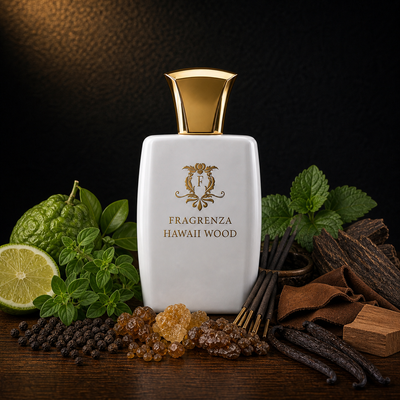

In the warm-floral solar direction,
places jasmine sambac and ylang ylang in the heart alongside white lily, vanilla, and benzoin — the sun-warmed-floral register adjacent to classical solar perfumery. And uses tropical character (pineapple, hyacinth) in the opening with iris, jasmine, and pink pepper in the heart, supported by a base of vetiver, patchouli, musk, amber, and vanilla — the contemporary tropical-luxury register that solar perfumery inhabits.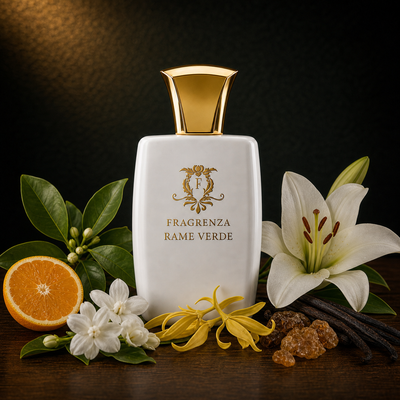
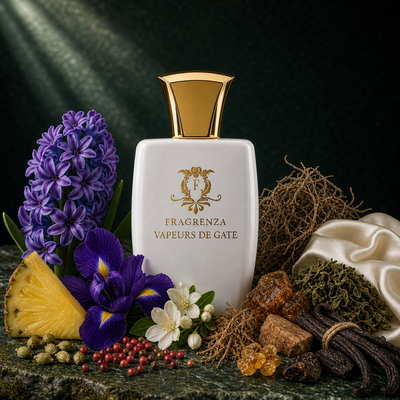
For more on related warm and tropical perfumery, see our entries on jasmine, tuberose, and vanilla — each part of the broader warm-summer vocabulary modern perfumery draws on.
How solar notes interact with other materials
Solar notes are compositionally generous. Their warm-fresh-skin character bridges across many other aromatic families.
With tropical florals (tiare, frangipani, gardenia, ylang ylang), solar notes create the classical tropical-solar register that has anchored Polynesian and luxury summer perfumery for decades.
With vanilla and gourmand-creamy materials, solar notes create the dessert-summer register that Bronze Goddess defined — warm, creamy, slightly edible.
With clean musks and Ambroxan, solar notes extend into the contemporary skin-scent solar register where warm-skin character meets clean-musk transparency.
With light citrus (bergamot, mandarin, lemon), solar notes create the Mediterranean-luxury structure that anchors several contemporary niche compositions.
With salt and marine materials, solar notes deepen into the beach-and-skin register that several luxury niche works have refined.
With sandalwood and creamy woods, solar notes create the warm-tropical-woody register that bridges between classical solar and contemporary woody perfumery.
Solar notes in the modern wardrobe
Solar compositions wear best in summer, by a wide margin. The category is the perfumery answer to the smell of summer itself, and the warm-skin character settles into hot weather and casual environments with effortless appropriateness. The category extends into late spring and early autumn for Mediterranean and tropical-luxury compositions but generally feels out of register in winter.
Solar notes carry no inherent gender coding, despite tropical-floral materials being conventionally associated with feminine perfumery. Contemporary unisex solar compositions are common, and many masculine summer fragrances use solar character as a structural element. The category is functionally gender-neutral in modern niche perfumery.
Application is conventional and generous: pulse points, light spray. Solar compositions tend to develop most clearly in the heart and base over the course of the wear. Layering with body lotion or a tan-oil base extends the solar character significantly. The category is especially associated with daytime wear, beach and pool environments, and warm-weather casual contexts.
Frequently asked questions
What does a solar note smell like in perfume?
Warm, slightly creamy, faintly suntan-lotion, with a luminous golden character that reads as sun-warmed skin in summer light. The category includes coconut, tiare, ylang ylang, vanilla, salt-direction materials, and warm-skin synthetic captives. The aromatic profile is among the most evocative in fine perfumery for triggering immediate sensory associations of warmth, leisure, and summer.
Are solar notes natural?
Mixed. Tropical-floral materials (tiare, ylang ylang) are natural; coconut absolute exists but is rarely used in modern fine fragrance because of stability issues. Most contemporary solar compositions combine natural florals with synthetic captives (Iso E Super, Coconut Aldehyde, Gamma-Octalactone, Calone at trace levels, Ambroxan) to deliver the full solar register at scale.
What is the difference between solar and marine notes?
Register and emotional association. Marine notes emphasize cool salt-water-ocean character; solar notes emphasize warm sun-on-skin character. The two often appear together in luxury summer compositions but inhabit distinct aromatic spaces. Marine reads as cool-fresh-ocean; solar reads as warm-summer-body.
Are solar fragrances feminine?
The conventional association is feminine through the tropical-floral lineage, but the note family has no inherent gender coding. Contemporary unisex solar compositions are common, and several masculine summer fragrances use solar character as a structural element. The category is functionally gender-neutral.
What season are solar fragrances best for?
Summer, by a wide margin. The warm-skin character of solar compositions is at its best in hot weather and casual environments. The category extends into late spring and early autumn for Mediterranean and lighter solar-floral compositions but generally feels out of register in winter, when the warm summer aromatic profile fights with cold air.
What perfumes use solar notes well?
Estee Lauder Bronze Goddess (2005) is the canonical mainstream solar reference. Tom Ford Soleil Blanc places coconut and tuberose in a luxury solar register. Profumum Roma Acqua e Sale uses kelp and salt alongside solar-floral materials. Various contemporary niche compositions (Atelier Cologne, Le Labo, Diptyque) use solar notes structurally in luxury summer perfumery.
Why do solar fragrances smell like sunscreen?
Because benzyl salicylate — the foundational solar molecule — is also the molecule most closely associated with classical Coppertone-direction sunscreen. The aromatic profile is faintly sweet, slightly powdery, distinctly suntan-lotion in character. Modern solar compositions use the molecule in moderation alongside other materials to deliver solar character without reading as literal sunscreen.
The structural place of solar notes
Solar notes brought the warm sun-on-skin register into fine perfumery in the early twenty-first century and have anchored a meaningful share of contemporary luxury summer fragrance ever since. The category’s combination of warmth, tropical-floral character, and skin-evocative power makes it among the most emotionally resonant registers in modern fine perfumery. Whether you are wearing a Bronze Goddess descendant, a tropical-luxury solar floral, a Mediterranean-citrus solar composition, or a contemporary niche skin-scent with solar character, the solar materials are doing the structural work that delivers the immediate sensory pleasure of summer itself in a bottle.