Best Bergamot Fragrances 2026: The Five Archetypes from Classical Cologne to Smellmaxxing Fresh-Woody
Linalyl acetate, limonene and a tea-like floral undertone give Citrus bergamia what lemon and orange cannot, which is why Farina's 1709 cologne and Sauvage still share the same opening material.
By Julia MorettiFragrenza makes several of the alternatives featured in our guides — here’s how we test.
18 min read
Bergamot is the most consequential citrus in fine perfumery, and arguably the most consequential top note of any kind. It opens an extraordinary share of the world's great fragrances — the bright, slightly bitter, faintly floral citrus that gives a composition its first impression and sets up everything that follows. Earl Grey tea, classical eau de cologne, and a meaningful percentage of every contemporary luxury fragrance you have ever loved all share the same source: a small, barely-edible Italian fruit grown almost exclusively in Calabria.
This is the complete v1.3 guide. What bergamot actually is, the chemistry that makes it more than a simple citrus, the cultural arc from Eau de Cologne (1709) to Houbigant Fougère Royale (1882) to the modern smellmaxxing-era fresh-woody register, the five archetypes that organize the contemporary bergamot landscape, and one Fragrenza pick per archetype, all §16.2-verified bergamot-tagged. For deeper material context, see the bergamot in perfumery educational pillar.
What bergamot actually is
Bergamot is the fruit of Citrus bergamia, a small evergreen tree grown almost entirely in the Calabria region of southern Italy. Roughly 90 percent of the world's commercial bergamot oil comes from a narrow stretch of the Reggio Calabria coast where the climate, soil, and centuries of agricultural tradition combine to produce fruit with the exact aromatic profile fine perfumery requires. Smaller production exists in Ivory Coast, Brazil, Argentina, and Turkey, but Calabrian bergamot remains the genre standard and the source most luxury houses specify.
The fruit itself is barely edible. The pulp is bitter and sour beyond easy use; the rind is what matters. Bergamot oil is produced by cold-pressing the rind — the same mechanical extraction used for lemon and orange oils — which preserves the volatile aromatic compounds that distillation would partially destroy. The yield is small (roughly one liter of oil per hundred kilograms of fruit), and harvest happens in a narrow autumn-and-winter window when the rind is at peak aromatic density. The labor and the limited geography combine to keep bergamot oil among the more expensive citrus materials in commercial fine fragrance, though far less expensive than the floral absolutes.
What bergamot actually smells like: the chemistry
Bergamot is brighter than orange, softer than lemon, more complex than either. The character combines a clean citrus brightness with a slightly bitter, almost spicy edge and a faint floral undertone that no other citrus possesses. There is something tea-like in the dry-down, and a refined elegance that distinguishes bergamot from the simpler citrus materials that dominate cheap mass-market fragrance.
The character is built from a small set of dominant aromatic molecules. Linalyl acetate (around 30-45 percent of the oil) contributes the floral-fruity quality that gives bergamot its tea-like elegance and bridges between citrus brightness and herbal warmth. Limonene (around 25-40 percent) provides the clean citrus brightness common to most cold-pressed citrus oils. Linalool (around 5-15 percent) adds a soft, slightly woody-floral dimension that connects bergamot to lavender and aromatic herbs. Bergaptene — the compound that historically made bergamot oil photosensitizing — has been largely removed from modern commercial bergamot to prevent skin reactions, though the resulting bergaptene-free oil retains the full aromatic profile of the natural material.
The interplay of citrus, floral, and slightly spicy facets is what makes bergamot useful in compositions that simpler citrus oils cannot serve. Lemon is bright but flat; orange is sweet but limited. Bergamot connects to the heart of a fragrance, bridging citrus to floral to aromatic to warm-spicy without forcing transitions. This is why it appears so widely.
Bergamot in modern perfumery: the cultural arc
Bergamot is the most historically important citrus in fine perfumery. The classical eau de cologne tradition — founded by Italian perfumer Giovanni Maria Farina in Cologne, Germany, in 1709 — was built around bergamot, neroli, lemon, and a handful of aromatic herbs. 4711 Eau de Cologne (1792) codified the structure at mass-market scale and remains in continuous production today. Houbigant Fougère Royale (1882) placed bergamot above lavender and coumarin in the fougère structure that has defined masculine perfumery for nearly 150 years. Guerlain Jicky (1889) followed with bergamot-lavender-vanillin in one of the first synthetic-aided compositions. Coty Chypre (1917) and Guerlain Mitsouko (1919) codified the bergamot-rose-jasmine-oakmoss-labdanum chypre architecture that dominated luxury feminine perfumery for the next half-century.
Through the late twentieth century, bergamot remained the universal top note of fine fragrance. Chanel No. 19 (1971) brought a green-bergamot chypre into modern prestige territory. Azzaro Pour Homme (1978) and Davidoff Cool Water (1988) updated the fougère structure for the contemporary masculine register, both anchored in bergamot openings. Tom Ford Tobacco Vanille (2007) used bergamot to freshen an otherwise dense oriental and demonstrated the note's universal compatibility. Dior Sauvage (2015) became the smellmaxxing-era cultural reference point for bergamot-ambroxan modern fresh-woody, and remains one of the best-selling men's fragrances of the 2020s. Maison Francis Kurkdjian 724 (2022) brought bergamot back into the contemporary niche conversation as a featured headline material rather than a structural top note. Bergamot is not a trend; it is the single material most consistently present across every major commercial era of modern fine fragrance.
Famous bergamot fragrances in the cultural canon
Six compositions explain why bergamot has remained essential across three hundred years of fine perfumery. Eau de Cologne de Farina (1709) is the foundational bergamot composition; every cologne-style fragrance produced since shares its DNA. 4711 Eau de Cologne (1792) is the longest continuously-produced fragrance in the world and the populist canonical form of the bergamot-cologne archetype. Houbigant Fougère Royale (1882) codified the bergamot-lavender-coumarin fougère structure that anchors masculine perfumery to this day. Guerlain Mitsouko (1919) is the canonical bergamot chypre and remains a touchstone for luxury feminine perfumery a century after release. Tom Ford Tobacco Vanille (2007) demonstrated bergamot's universal compatibility with the densest oriental compositions and reset the prestige tier's expectations for what citrus could do above a heavy base. Dior Sauvage (2015) is the smellmaxxing-era cultural-canon entry, the bergamot-ambroxan composition that defined modern masculine fresh-woody for the late 2010s and early 2020s.
The five bergamot archetypes
Contemporary bergamot perfumery organizes around five distinct archetypes, each delivering a different wearing experience. The Fragrenza line covers all five with one clean-handle Fragrenza pick per archetype, all §16.2-verified bergamot-tagged.
1. Bergamot-cologne (the Mediterranean citrus tradition)
The oldest and most foundational bergamot archetype, anchored in the classical eau de cologne structure: bergamot, neroli, petitgrain, lemon, and a handful of aromatic herbs in a bright, transparent, refreshing composition built for warm-weather wear and clean-skin morning rituals. The structure has remained essentially unchanged since 1709 and remains one of the most useful styles in any wardrobe. The wear is short by modern standards (the classical cologne fades within two hours by design) but the cultural register it occupies is universal.
The Fragrenza pick:
2. Bergamot-fougère (the classical aromatic masculine archetype)
The fougère structure has defined masculine perfumery for nearly 150 years and remains the second most commercially important fragrance family after orientals. The architecture places bergamot above lavender, geranium, and coumarin in a structure that bridges bright citrus to herbal warmth and powdered base. Houbigant Fougère Royale (1882) codified the template; every fougère composition produced since shares its structural DNA. The contemporary version updates the original through ambroxan, modern musks, and refined synthetic woody anchors, but the bergamot-lavender bridge remains the architectural spine.
The Fragrenza pick:
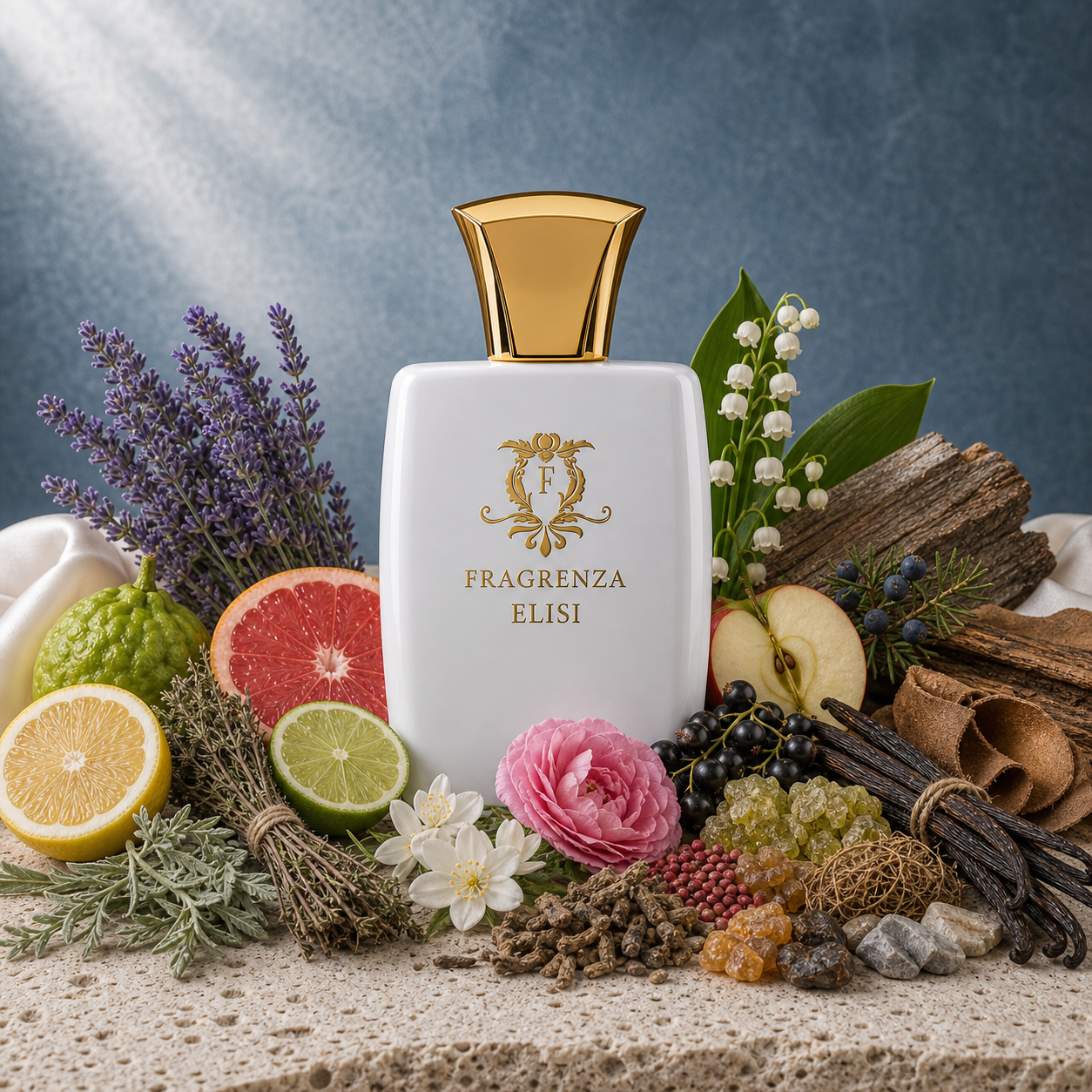
opens with bergamot, grapefruit, and lemon in a bright contemporary citrus-aromatic register; the heart works lavender, jasmine, and saffron into the fougère foundation alongside a slightly leathery accent; the base resolves on patchouli, vanilla, lily-of-the-valley amber, and woody notes. The wear demonstrates how a modern fougère keeps bergamot at the structural center while broadening the cultural reach of the classical template.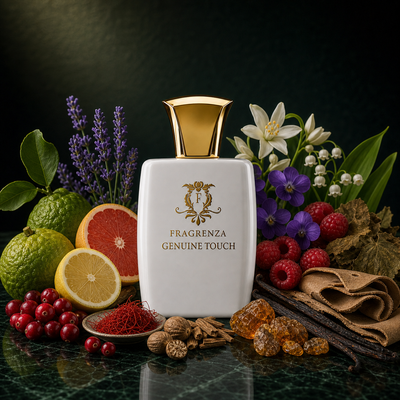
3. Bergamot-chypre (the classical luxury feminine archetype)
The chypre structure is bergamot's most architecturally distinctive deployment. The architecture pairs a bright bergamot top with a dark base of oakmoss, labdanum, and patchouli, connected through a floral heart of rose and jasmine. Coty Chypre (1917) codified the template; Guerlain Mitsouko (1919) made it canonical. The structure has anchored luxury feminine perfumery for over a century and remains the most enduring opposition-driven composition in fine fragrance. The contemporary chypre still works the bergamot-oakmoss contrast but typically uses modern oakmoss substitutes (evernyl, IFRA-compliant accords) rather than the natural moss that was largely restricted in the 2000s.
The Fragrenza pick:

4. Bergamot in modern fresh-woody (the smellmaxxing-era statement archetype)
The most commercially dominant bergamot archetype of the 2010s and 2020s, anchored in bergamot above a base of synthetic woody materials (ambroxan, iso e super, vetiver, cedarwood) with minimal floral content. The architecture became the defining masculine register of the smellmaxxing era through Dior Sauvage (2015) and the wave of fresh-woody compositions that followed. The structure works because bergamot's bright clarity contrasts beautifully with the deep architectural anchor of modern synthetic woods, and the wear extends naturally through the day as the woods carry the composition past the citrus phase.
The Fragrenza pick:
opens with bergamot, blackcurrant, grapefruit, and mandarin; the heart unfolds iris, rose, and patchouli into the woody chypre foundation; the base resolves on sandalwood, musk, and a dense woody dry-down that anchors the wear through hours of projection. The composition is the modern fresh-woody bergamot in its most architecturally refined form. For the molecule that anchors much of this register, see our Iso E Super pillar.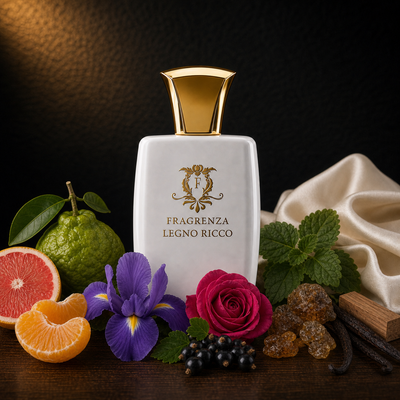
5. Bergamot in floral compositions (the universal bridge archetype)
The most versatile bergamot deployment, in which the note lifts and brightens a floral or oriental heart without dominating it. The architecture is the most universally compatible move in the perfumer's palette: bergamot opens, the floral or oriental heart blooms, and the composition reads as the heart material with the bergamot brightness providing diffusion and accessibility. The structure powers an enormous range of contemporary fragrances, from accessible-luxury florals to prestige-tier orientals.
The Fragrenza pick:
opens with bergamot, nectarine, apple blossom, and pink pepper; the heart unfolds tuberose, ylang-ylang, and a creamy musky floral chorus; the base resolves on patchouli, tonka bean, vanilla, vetiver musk, benzoin, and castoreum. The wear demonstrates how bergamot brightens and frames a complex floral-fruity heart without competing with it. Among the most distinctive Fragrenza-originals in the catalog and the natural choice for wearers who want their bergamot in service of a fuller composition rather than as the headline note.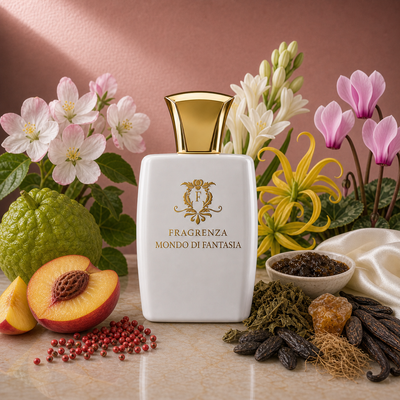
How bergamot fragrances wear on skin
The wear pattern of bergamot is specific and worth understanding before committing to a bottle.
The bergamot moment is the opening. Bergamot is a top note by chemistry — volatile, small-molecule, designed to evaporate from skin within the first thirty to forty-five minutes of wear. If you are buying a fragrance specifically for the bergamot character, judge the opening; the bergamot you smell at the spray is what the composition has to offer of the material. After the first hour, the bergamot has integrated into the heart materials and is no longer chemically present in significant quantity on skin.
The dry-down is the test of bergamot's compositional value. A well-built bergamot fragrance develops gracefully past the citrus phase into a heart and base that retain some of the bergamot character — through aromatic herbs, neroli, lavender, or other materials that share its aromatic profile. A bergamot fragrance that collapses after the citrus burns off has a structural problem in the heart and base, not in the bergamot itself. Judge a bergamot composition at four hours, not at thirty minutes.
Projection and longevity vary by archetype. Classical cologne (archetype 1) wears for two to four hours by design. Fougère (archetype 2) and chypre (archetype 3) extend to six to eight hours through the powdered or oakmoss base. Modern fresh-woody (archetype 4) wears for eight to twelve hours through the synthetic wood anchor. Floral bergamot (archetype 5) varies widely depending on the heart material but generally extends to six to ten hours. Apply more generously for the lighter archetypes and more sparingly for the dense fresh-woody and floral-oriental compositions.
When to wear bergamot fragrances
Bergamot is the most occasion-flexible material in fine perfumery — the note works across essentially every context. The specific occasion depends on the archetype.
Bergamot-cologne (archetype 1) is the warm-weather morning fragrance, ideal for spring and summer wear, daytime contexts, and any situation where the wear should be transparent and refreshing rather than declarative. The natural seasonal home is May through September.
Bergamot-fougère (archetype 2) is the all-season masculine workhorse, suitable for professional contexts, daytime social wear, and casual evening occasions where a clean masculine register is appropriate. The fougère is the most universally appropriate masculine archetype and works across all four seasons.
Bergamot-chypre (archetype 3) is the formal feminine evening fragrance, ideal for dinner and theater contexts, formal occasions, and the cooler months where the dense base materials can develop properly. Cool weather is the natural home; the wear is happier from October through April.
Bergamot in modern fresh-woody (archetype 4) is the contemporary masculine all-day register, appropriate for professional contexts, evening wear, and the daytime contexts where the wearer wants projection. The architecture is most flattering in cool-to-temperate weather; very hot summer days can amplify the wood materials uncomfortably.
Bergamot in floral compositions (archetype 5) is the universally appropriate spring-to-fall daytime fragrance, suitable for daytime social events, professional contexts, and evening wear in the warmer months. The wear is the most context-flexible of the five archetypes.
How to layer bergamot fragrances
Bergamot layers more easily than any other material in fine perfumery. Three patterns work particularly well.
Bergamot over a clean musk skin scent. Apply a transparent clean musk broadly; add a single spray of the bergamot fragrance to one pulse point. The musk extends the wear of the bergamot's brightness past the natural top-note volatility and integrates the citrus into a softer skin-radius register. The technique is particularly useful for the cologne (archetype 1) and floral-bergamot (archetype 5) registers, which benefit from the longevity extension. For the full technique, see how to layer skin scents with vanilla, oud, or florals.
Bergamot-chypre over an oakmoss-base composition. The chypre architecture rewards layering with materials that reinforce the oakmoss-labdanum base. Apply a small amount of a moss-anchored woody composition (vetiver, oakmoss-substitute, patchouli) on a single pulse point; layer the bergamot-chypre over it broadly. The technique deepens the chypre architecture and extends the wear curve.
Bergamot-cologne under a light floral. Apply the cologne broadly; add a single spray of a transparent floral (rose, orange blossom, neroli) to one pulse point. The cologne's bergamot brightness lifts the floral and the wear reads as a sophisticated citrus-floral composition for the warmer months.
Bergamot in a fragrance wardrobe
Bergamot is the most universally compatible material in fine fragrance, which means a minimum viable bergamot presence in a broader fragrance wardrobe is essentially mandatory. Most well-built wardrobes contain at least three bergamot-anchored compositions: one cologne (archetype 1) for warm-weather mornings, one fougère or modern fresh-woody (archetype 2 or 4) for daily professional wear, and one chypre or floral-bergamot (archetype 3 or 5) for occasion-coded contexts.
Unlike specialty notes (saffron, oud, tuberose), bergamot does not suffer from diminishing returns in a wardrobe; the material is universal enough that multiple bergamot-anchored compositions can coexist without crowding the rotation. Most serious fragrance wearers have somewhere between three and seven bergamot-forward compositions in active rotation at any time, distributed across the five archetypes.
Who each pick is for
Le Prince Frenchie is for the wearer who wants the classical cologne tradition updated for contemporary longevity: bergamot in the opening, neroli-petitgrain-sage through the heart, soft tonka-vetiver-ambergris extending the wear past the traditional cologne curve. The natural choice for warm-weather mornings and any context where the wear should read as fresh, refined, and Mediterranean.
Genuine Touch is for the wearer who wants the modern fougère anchored in bergamot with broader cultural reach: the structural bergamot-lavender architecture is fully present and the saffron-leather accent gives the composition more distinctive character than a strict classical fougère. The natural choice for daily professional wear and as a daily masculine workhorse.
Lullincense Woman is for the wearer who wants the canonical bergamot chypre architecture in a contemporary-wearable form: bergamot-oakmoss opposition fully present, floral heart of jasmine-rose-orange-blossom-incense, formal occasion-coded from opening to dry-down. The natural choice for formal feminine evening wear and as a serious-occasion anchor.
Legno Ricco is for the wearer who wants the contemporary masculine fresh-woody bergamot in its most architecturally refined form: bergamot-citrus opening above a dense woody-chypre base, sustained projection through hours of wear, contemporary cultural register. The natural choice for the wearer who wants their bergamot in the smellmaxxing-era idiom.
Mondo di Fantasia is for the wearer who wants bergamot in service of a complex floral-fruity heart rather than as the headline note: bergamot opening, tuberose-ylang-jasmine chorus through the heart, vanilla-tonka-musk through the dry-down. A Fragrenza original rather than a dupe, and the most distinctive use of bergamot in the catalog. The natural choice for daytime-to-evening transitional wear and for wearers who want bergamot to brighten without dominating.
Related reads
- Bergamot in Perfumery (Educational Pillar)
- Iso E Super in Perfumery
- Best Rose Fragrances
- Best Vetiver Fragrances
- Best Sandalwood Fragrances
- How to Layer Skin Scents With Vanilla, Oud, or Florals
- How to Build a Fragrance Wardrobe
FAQ
What does bergamot actually smell like?
Bright, slightly bitter, faintly floral, with a tea-like elegance and a soft warmth in the dry-down. The character combines clean citrus brightness with an aromatic-spicy edge and a refined floral undertone that distinguishes bergamot from simpler citrus oils. It is the citrus that connects to the heart of a fragrance rather than just sitting on top — bridging fresh, floral, and warm-spicy elements in ways that lemon and orange cannot.
Why is bergamot in so many fragrances?
Three reasons. First, the note's aromatic complexity allows it to bridge between disparate fragrance categories — it works equally well above florals, woods, resins, and aromatic herbs. Second, its bright character gives compositions an energetic opening that draws the wearer's attention immediately. Third, the cultural and culinary associations (Earl Grey, classical cologne, southern Italy) give bergamot a refined sophistication that a simpler citrus cannot match. Most great fragrances use bergamot for one or all of these reasons.
Why does bergamot fade so fast on skin?
Chemistry. Bergamot, like all citrus oils, is composed of small, volatile molecules that evaporate quickly from skin. This is true of every top note in fine perfumery and is not a flaw in any specific composition. A well-built bergamot fragrance develops into its heart and base after the citrus has burned off — ideally with a heart that retains some of the bergamot character through aromatic herbs, neroli, or florals that share its profile. If a fragrance feels empty after the bergamot fades, the heart was the problem, not the bergamot.
Is bergamot safe to wear in sunlight?
Modern bergamot oil used in fine fragrance is typically bergaptene-free or low-bergaptene. Bergaptene is the photosensitizing compound that historically caused skin reactions when bergamot-treated skin was exposed to sunlight. Industry-standard bergaptene-free oil retains the full aromatic profile while removing the photosensitizing component. If you are sensitive to citrus on skin, a bergaptene-free bergamot composition is generally well tolerated; older or non-commercial bergamot-treated products may still carry some photosensitizing risk.
What is the connection between bergamot and Earl Grey tea?
Earl Grey tea is black tea flavored with bergamot oil. The tradition began in nineteenth-century Britain (probably as a marketing-led innovation rather than the genuine product of an Earl named Grey, despite the name). The flavoring tradition has, in turn, shaped how people perceive bergamot in fragrance: many bergamot compositions either explicitly reference the tea-bergamot connection or amplify the tea-like aromatic quality that the natural oil possesses. The connection runs both ways in modern fragrance and tea culture.
Is bergamot unisex?
Genuinely. Bergamot is among the most thoroughly unisex materials in modern perfumery — it appears as the opening of a fougère on a man as readily as the opening of a chypre on a woman, and contemporary unisex fragrances treat it as a neutral structural element. The note itself has no inherent gender coding; what surrounds it does. Modern bergamot-led compositions are increasingly gender-neutral by design.
What is the best bergamot fragrance for a beginner?
The bergamot-fougère archetype (archetype 2 in this guide) is the most universally appropriate entry point for most wearers. The structure is the most familiar and culturally legible in modern masculine perfumery, the wear is balanced between bright citrus and aromatic warmth, and the composition is appropriate across professional and casual contexts. Wear a fougère through a season, learn how your skin renders bergamot, and decide whether to explore deeper into the cologne, chypre, fresh-woody, or floral-bergamot territory from there.
The bottom line
Bergamot is the most consequential single material in fine perfumery — the citrus that connects to the heart of a composition, bridges between fragrance families, and gives modern fragrance the refined character that simpler citrus oils cannot achieve. The five archetypes give you the full commercial landscape; the Fragrenza picks within each give you concrete starting points; the wearing patterns and layering techniques give you the technical vocabulary to wear the register well.
Whether you want the classical cologne tradition of Le Prince Frenchie, the modern fougère of Genuine Touch, the canonical chypre of Lullincense Woman, the smellmaxxing-era fresh-woody of Legno Ricco, or the universal floral-bridge of Mondo di Fantasia, the contemporary bergamot family rewards careful exploration. The most quietly important note in fine perfumery is also one of the most rewarding to wear well; learning to recognize bergamot — the way it lifts a composition without dominating it — is one of the most useful skills any fragrance lover can develop.