

The Best Vetiver Fragrances: Earthy, Smoky, and Endlessly Sophisticated
Smooth leathery Haitian, green-medicinal Indian khus, cleaner Java and softer Reunion-bourbon each shape the dry-down differently, and a trained nose can read origin within ten minutes of wear.
By Julia MorettiFragrenza makes several of the alternatives featured in our guides — here’s how we test.
12 min read
Vetiver is perfumery’s most distinguished earthy note. A grass — specifically, the root system of Chrysopogon zizanioides, a perennial native to the tropics — produces an essential oil so structurally important to fine fragrance that almost no major chypre, fougere, or modern woody composition exists without it. The note’s defining quality is a contradiction: simultaneously earthy and clean, smoky and fresh, deeply rooted and quietly cool, with a slight aquatic-mineral undertone that no other material in the perfumer’s palette delivers in the same way.
This is the guide. What vetiver actually is and how it’s made, what it smells like across the four major origin profiles, the cultural history that brought it from Indian agriculture to Parisian perfumery, the modern materials that have expanded its compositional range, the famous vetiver-forward fragrances that demonstrate its full spectrum, and six Fragrenza picks distributed across the registers the note plays in. Read in order or skip to the register you want to dress for.
What vetiver actually is
Vetiver oil is distilled from the dried root system of a tropical grass that grows wild and cultivated across India, Haiti, Indonesia, Java, Réunion, and a handful of other warm-climate origins. Unlike most aromatic plants, vetiver yields its olfactory complexity not from leaves or flowers but from its roots — a network of fibrous, almost indestructible underground structures that the plant uses for soil stabilization. (Vetiver is widely planted as an erosion-control crop precisely because its root system is so dense.) The roots are harvested, dried, and steam-distilled, and the resulting oil is one of the most aromatically dense materials in fine perfumery.
The fibrous, woody character of the root translates directly into the oil. Vetiver smells of damp earth, cool wood, faint smoke, distant grass, and something quietly mineral — the suggestion of stone underwater, or wet roots after rain. The oil is dark, viscous, and extraordinarily long-lasting on skin. It is one of the most powerful natural fixatives available to perfumers, and even at low percentages in a composition it extends the wear of more volatile materials by hours.
What vetiver smells like — the four origin profiles
Vetiver oil varies considerably by origin, and learning to recognize the four major profiles is most of what you need to read vetiver compositions accurately.
Haitian vetiver is the most celebrated and the most expensive. Smoky, slightly leathery, with a smooth woody warmth and a faint sweetness underneath, Haitian vetiver is the profile most fine perfumery reaches for when the note is meant to be the headline. Most luxury vetiver compositions of the last forty years are built around Haitian oil.
Indian vetiver (locally called khus or khas) is greener, more medicinal, and more pronouncedly earthy than the Haitian variant. The root system in Indian climates produces a different ratio of aromatic compounds — more grass-and-soil character, less smooth-leather. Indian vetiver is the original source of the material in fine fragrance, and a meaningful share of contemporary niche compositions still specify Indian oil for its more authentic-feeling earthiness.
Java/Indonesian vetiver sits between the two — cleaner and woodier than Indian, less smoky than Haitian. The Java profile is often used in modern unisex compositions where the perfumer wants vetiver character without the leather-smoke intensity of the Haitian style.
Réunion (Bourbon) vetiver, less common today, has a softer and slightly more floral profile than the others. Historically prized in mid-twentieth-century French perfumery, Réunion vetiver largely gave way to Haitian and Indonesian production in the post-war period.
Cultural history of vetiver
Vetiver’s olfactory life began in agriculture. In India, the dried roots have been used for thousands of years as natural cooling material — woven into screens hung in doorways and dampened with water, the roots release their cooling, slightly resinous scent into the warming summer air. The same agricultural use spread across Southeast Asia and into the Middle East along trade routes, and vetiver-water was an everyday domestic fragrance long before it became a fine-fragrance ingredient.
The note entered Western perfumery in the nineteenth century via the colonial trade routes that brought patchouli and sandalwood to European houses at roughly the same time. By the mid-twentieth century, vetiver had become a structural fixture of fine French perfumery, particularly in masculine compositions, where its dry-earthy character was used to anchor citrus and aromatic top notes. Guerlain’s Vetiver (1959), Carven’s Vetiver (1957), and Lanvin’s Monsieur (1964) established the masculine-vetiver category that defined the next forty years of men’s perfumery.
The contemporary vetiver moment — the one that has produced Sycomore, Encre Noire, Terre d’Hermès, and the broader unisex-vetiver direction of the last fifteen years — began in earnest in the 2000s. The note had outgrown its mid-century masculine pigeonhole, and modern compositions started treating vetiver as a genuinely unisex material with a wider expressive range than the earlier tradition allowed. The current 2026 vetiver landscape is more diverse than at any point in its commercial history.
Modern vetiver materials
Beyond the natural oils, several synthetic and semi-synthetic vetiver materials have transformed how perfumers can use the note. Vetivone isolates the woody-earthy core of natural oil; Vetiveryl Acetate delivers a cleaner, drier vetiver character that wears more transparently than the full oil; Akigalawood (a Givaudan molecule derived from patchouli but used widely in vetiver-adjacent compositions) provides a smoky-woody character that supports vetiver structurally. Most modern vetiver compositions blend small amounts of natural oil (for depth and authenticity) with significant percentages of synthetic vetiver materials (for clarity and consistency).
This is the same story sandalwood has lived through, and it has produced the same effect: the modern vetiver category is more vivid, more compositionally flexible, and more widely deployed than the natural oil alone permitted.
Worth knowing: vetiver oil is one of the rare aromatic materials that genuinely improves with aging. Vintage vetiver oil — particularly from Haiti, kept in dark vessels for several years — develops a smoothness and warmth that fresh distillations do not have. The aging effect parallels what aged patchouli and aged oud go through, and the same logic applies: most premium perfumers specify aged Haitian vetiver for their headline compositions, and the price premium tracks the aging time as much as the origin.
Famous vetiver fragrances
Several compositions deserve study because they show what vetiver does at the headline. Guerlain’s Vetiver (1959) remains the genre benchmark — dry, slightly smoky, completely classical — and is still widely worn. Chanel’s Sycomore (2008) showed that vetiver could go contemporary without losing its character, pairing the note with cypress, sandalwood, and a faint smoky aldehyde register. Lalique’s Encre Noire (2006) takes vetiver into its darkest territory: a black-ink-and-roots composition that became the cult vetiver of the 2010s. Hermès’s Terre d’Hermès (2006) put vetiver at the structural center of one of the best-selling masculine fragrances of the twenty-first century.
None of these have direct dupes in the Fragrenza catalog, but the vetiver characters they explore — smoky-leather, dry-aromatic, dark-mineral, polished-citrus — all show up in the six Fragrenza vetiver picks below.
Six Fragrenza vetiver picks
Six compositions in the Fragrenza catalog use vetiver as a featured or structural element, each working in a distinct register.
The wild atmospheric register
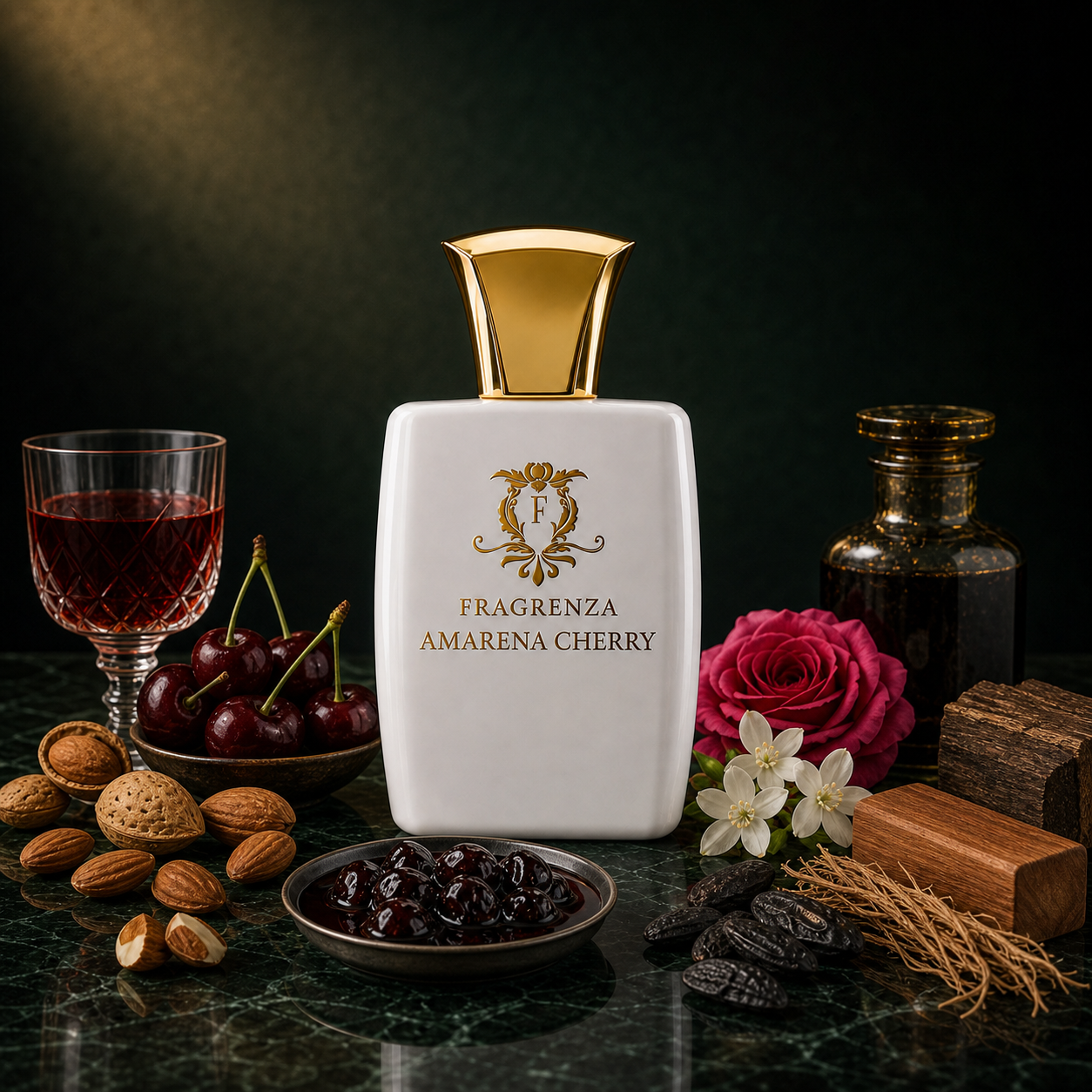
is vetiver at its most elemental. The vetiver here is raw and expressive — earthy, slightly smoky, woven through with the darker drier facets of the note. The composition evokes a landscape: open space, smoke on the air, damp earth underfoot. It is the vetiver pick for cool-weather wear and for anyone who wants the note in its most uncompromising form.
The urban vetiver-leather register
takes the note into the city, pairing it with a dry leather accord for a fragrance of cool urban sophistication. Vetiver’s smoky earthiness bridges between the cooler top notes and the leather at the composition’s center. It reads as completely contemporary — the vetiver pick for the modern wearer who appreciates depth without ostentation.
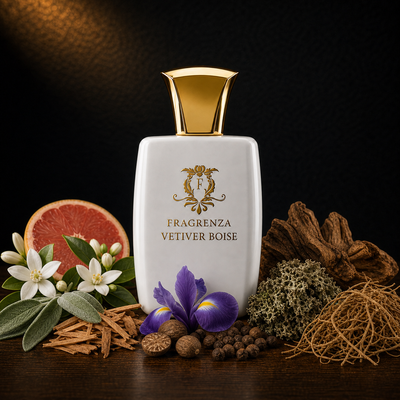
The clean woody register
is the cleanest of the line’s vetiver expressions — transparent, woody, with the cool freshness of vetiver foregrounded and the smokier facets restrained. It is the vetiver pick that wears beautifully across more contexts than the others, from daytime professional to summer evening, and the easiest entry point for anyone new to the category.
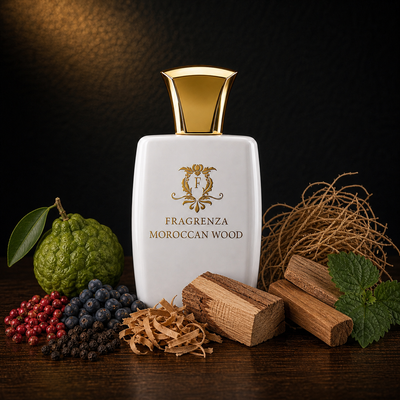
The warm exotic register
uses vetiver as one component of a richly spiced woody composition that evokes the warmth of North African perfumery. The vetiver here is drier and more woody than in the headline-vetiver picks, integrating with warm resins and spices to produce a meditative composition built for unhurried wear.
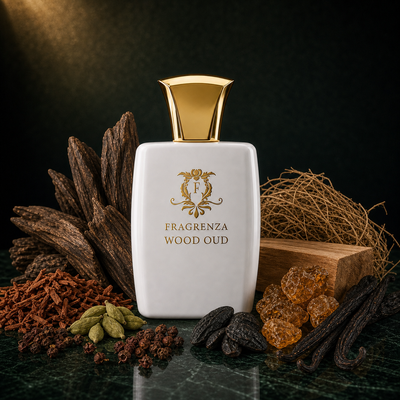
The vetiver-as-foundation register
places vetiver structurally rather than as headline. The note provides a cool, slightly smoky foundation that gives the oud and sandalwood above it a more complex, interesting character. It is vetiver in supporting role — well-blended, understated, contributing the structural depth that makes the composition luxurious rather than merely warm.
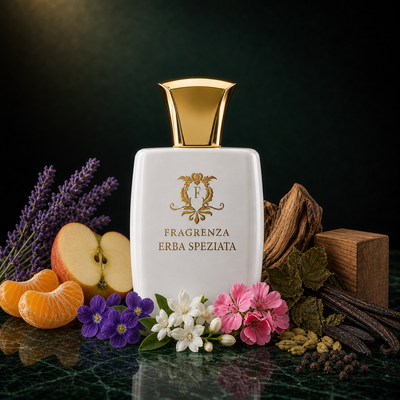
The aromatic-vetiver register
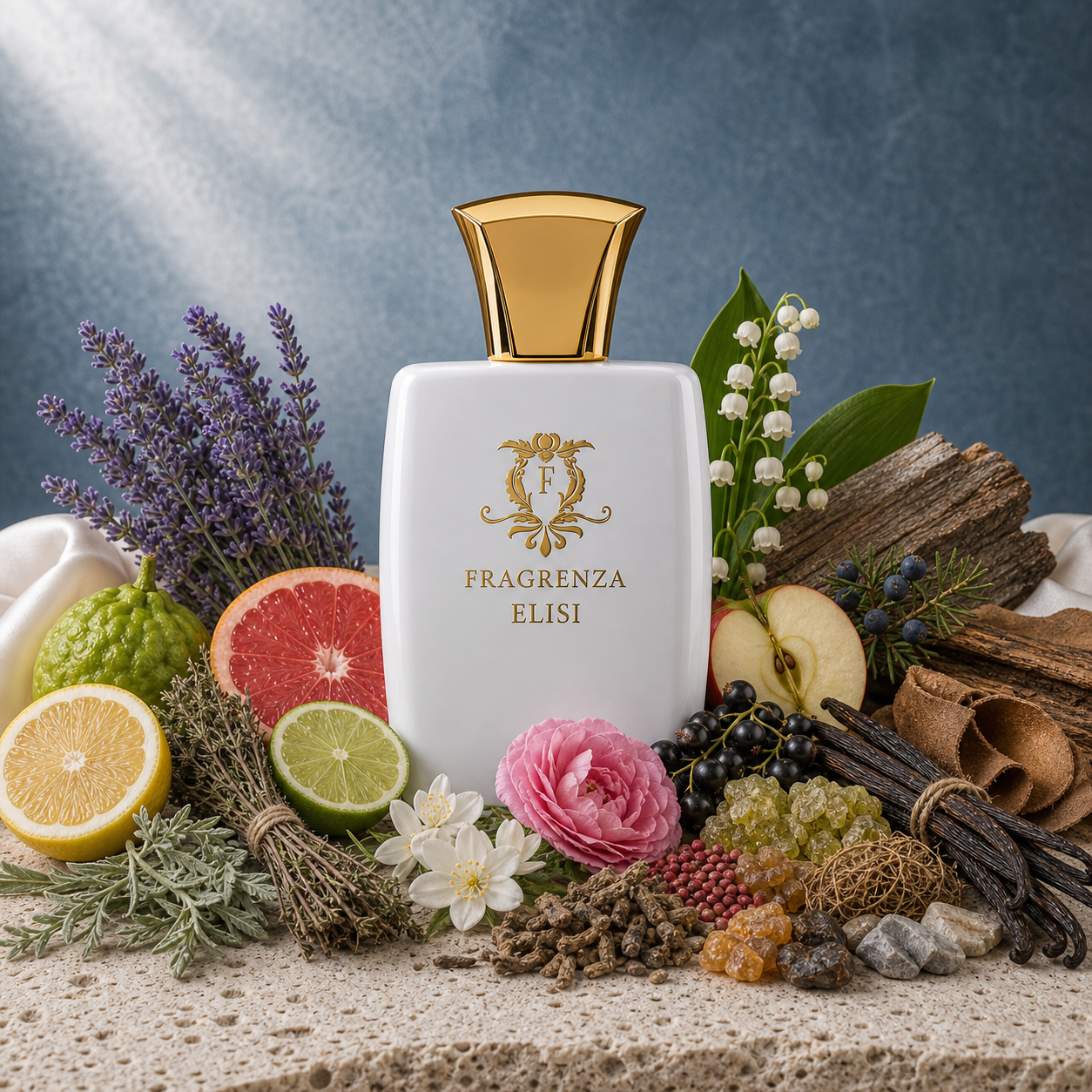
uses vetiver as a structural base under a vivid aromatic composition built on lavender, apple, and warm spice. The vetiver provides the cool, slightly earthy depth that prevents the aromatic structure from feeling light or insubstantial, and it does much of the work that gives this fragrance its remarkable longevity.
How vetiver interacts with other notes
Vetiver is one of perfumery’s great structural notes. Its compositional value comes from how reliably it pairs with materials across the spectrum.
With citrus and aromatics, vetiver creates the classical chypre and fougere structures — bright top notes contrasting dramatically with the dry-earthy base, connected by florals, herbs, or aromatic woods. This is one of the most enduring compositional patterns in fine perfumery.
With sandalwood, vetiver’s cool earthiness is softened by sandalwood’s creamy warmth, producing a woody base that is complex without being austere. The pairing anchors many of the great unisex woody compositions.
With oud, vetiver’s mineral-cool character cuts through oud’s warm density, giving the wood structural definition that the oud alone would not have. The combination produces some of the most refined modern oriental compositions.
With leather, vetiver’s smokier facets reinforce the leather’s structural depth. The pairing is the foundation of the urban-vetiver tradition that includes both Manhattan Leather and many of the great masculine chypres.
With clean musks and Iso E Super, vetiver gains skin-integrated wear and softer projection — the modern unisex vetiver that has dominated the last decade. Our Iso E Super pillar and musk pillar cover the structural partners that vetiver works with most often in contemporary perfumery.
Vetiver in the modern wardrobe
Vetiver’s defining wardrobe value is range. The note works across more contexts than almost any other base material: daytime professional (clean vetiver-citrus), evening sophistication (vetiver-leather), warm-weather wear (the cool freshness of vetiver makes it one of the few base notes that works in summer), and cool-weather depth (smoky-vetiver compositions belong to autumn and winter). A single well-built vetiver composition handles more situations than most other base notes can handle.
The category also pairs unusually well with the smellmaxxing wave that has put characterful unisex compositions back in the conversation. For the broader picture, our smellmaxxing piece places vetiver-forward compositions in the wider men’s-fragrance landscape. For the architectural framework on how vetiver fits a wardrobe alongside other base-note categories, our complete guide to building a fragrance wardrobe in 2026 is the practical companion. For the mood register vetiver occupies — polished, grounded, quietly confident — our mood pillar covers the territory in detail.
Frequently asked questions
What does vetiver smell like?
Earthy, smoky, woody, slightly cool, with a mineral undertone and a faint grassy freshness. The character varies by origin: Haitian vetiver is smoky and leathery; Indian (khus) is greener and more medicinal; Java/Indonesian is cleaner and woodier; Réunion runs softer and slightly floral. The unifying quality across origins is the dry, deep earthiness that makes vetiver one of the most distinctive base materials in fine perfumery.
Why is vetiver in so many fragrances?
Three reasons. First, the note is one of perfumery’s most powerful natural fixatives — even small percentages extend the wear of more volatile materials by hours. Second, its character is structural rather than gendered or seasonal, which makes it usable across almost any composition. Third, its cool freshness allows it to anchor compositions that would otherwise feel too light or unstable. Most modern fragrances use vetiver in some form, often invisibly, as the structural backbone behind more vivid heart and top notes.
Is vetiver masculine or unisex?
Genuinely unisex, despite a twentieth-century convention that coded it masculine. The original mid-century French vetiver compositions were marketed to men, but the note itself has no inherent gender coding — what surrounds it does. Modern unisex vetiver compositions (Sycomore, Encre Noire, the Fragrenza picks above) treat the note as a neutral structural element that wears equally well across the gender spectrum. The masculine convention is fading.
Are Haitian and Indian vetiver really different?
Yes, meaningfully. Different climates, soils, and root maturation patterns produce different ratios of aromatic compounds in the finished oil. Haitian vetiver is smoother, smokier, more leather-adjacent; Indian vetiver (khus) is greener, earthier, more medicinal. A trained nose can usually identify origin within the first ten minutes of wear. Most perfumers specify origin as deliberately as they specify the note itself.
Is vetiver long-lasting on skin?
Among the most long-lasting base notes available. Vetiver’s heavy aromatic compounds evaporate slowly from skin, often outlasting most of the composition that sits above them. A vetiver-forward fragrance can persist for ten to fourteen hours, with traces detectable on fabric the following day. This is part of why vetiver is treated as a fixative material: it anchors the entire wear and keeps the composition coherent over time.
What is the best season to wear vetiver?
All four. Vetiver is unusual among base notes for the breadth of its seasonal range. Lighter Java-style or vetiver-citrus compositions wear beautifully in spring and summer because of the note’s cool freshness; heavier Haitian-vetiver-and-leather compositions belong to autumn and winter where the smoky depth has room to develop. The category as a whole is one of the most year-round wearable in fine perfumery.
What perfumes layer well with vetiver?
Citrus is the classical partner (the chypre and fougere structures). Sandalwood softens vetiver’s coolness into a creamy-woody base. Oud cuts through vetiver’s mineral character to produce refined oriental compositions. Leather reinforces vetiver’s smoky facets. Clean musks and Iso E Super give vetiver skin-integrated wear. Avoid layering vetiver with sharp aquatic-marine notes — the contrast between earthy depth and cool transparency tends to feel inharmonious rather than complementary.
The bigger picture
Vetiver is the structural backbone of more fine fragrance than any other base material with the exception of musk. It has been a fixture of perfumery for a century and a half, it has outlasted every trend that tried to displace it, and the modern compositions built around it (Sycomore, Encre Noire, Terre d’Hermès, the contemporary unisex wave) demonstrate that the note is still expanding its range rather than contracting. A serious fragrance wardrobe needs at least one vetiver, and the right one rewards extended wear with depth that few other materials match.