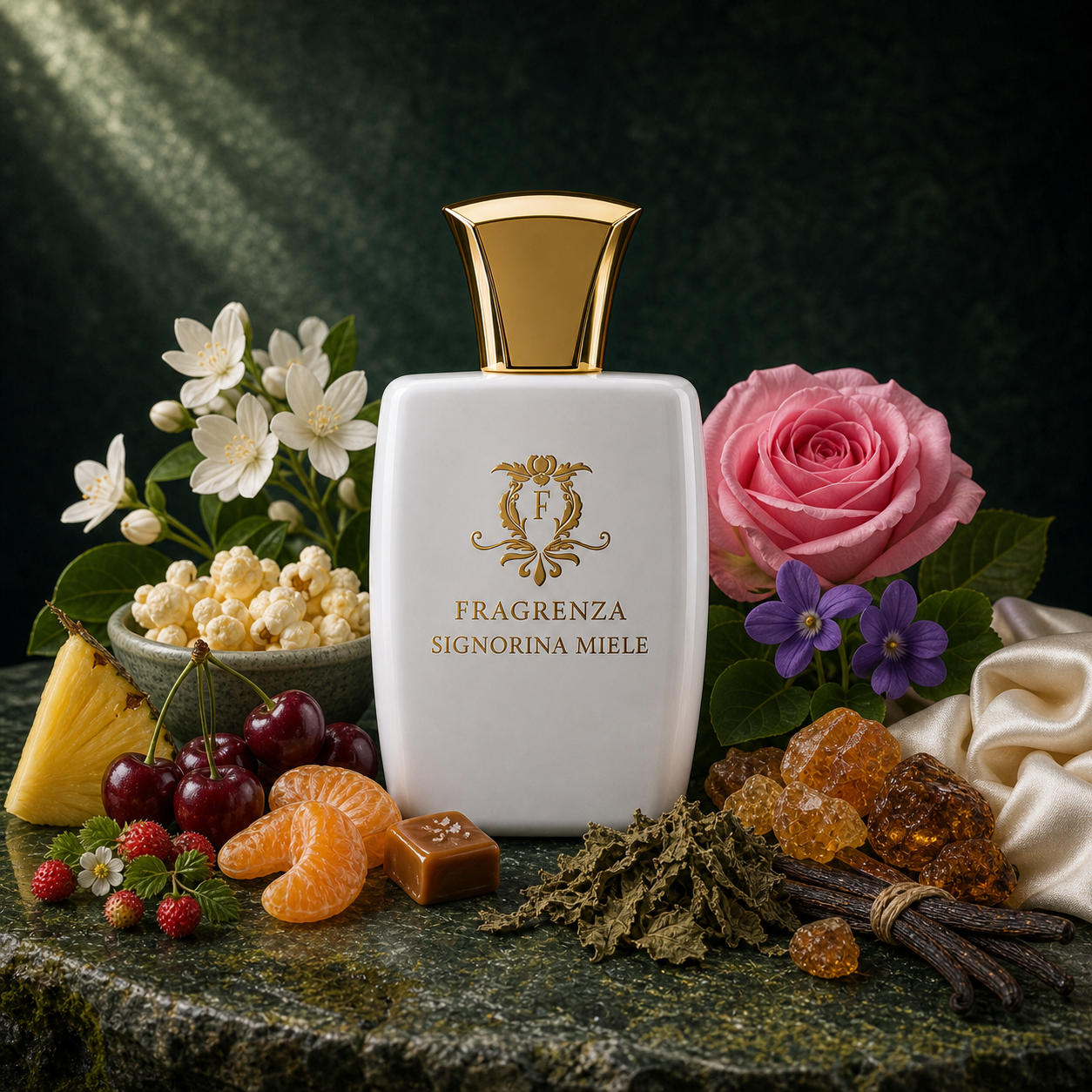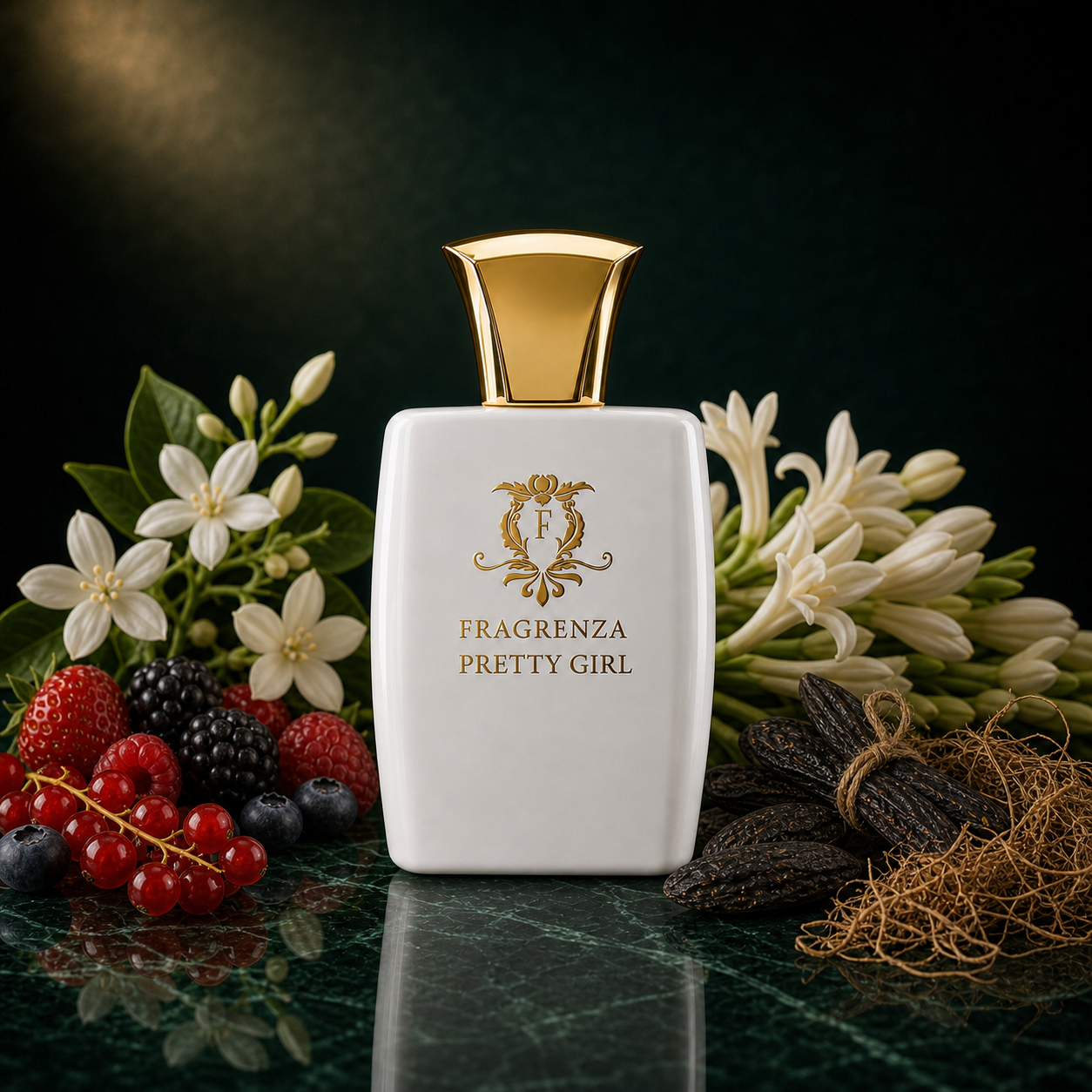


The Best Jasmine Fragrances: Heady, Floral, and Intoxicatingly Beautiful
Grandiflorum from Grasse or Egypt, sambac from Tamil Nadu; the indole that gives jasmine its sensual depth is also why a kilogram of absolute takes thousands of pounds of hand-picked blossoms.
By Julia MorettiFragrenza makes several of the alternatives featured in our guides — here’s how we test.
12 min read
Jasmine is the queen of flowers in fine perfumery. More than any other floral material — including rose, which has the louder reputation but arguably the lesser influence — jasmine appears in an astonishing percentage of the great fragrances of the last two hundred years. Often it is the headline; more often it is the structural heart that gives a composition its diffusion, its sensuality, its ability to bloom outward from skin and fill a room. Jasmine is the most quietly indispensable note in classical and contemporary fine fragrance, and learning to recognize it is the first step to reading the floral canon accurately.
This is the guide. What jasmine actually is and what it actually smells like, the chemistry that gives it its character, the cultural geography of jasmine cultivation, the famous fragrances that demonstrate its full range, and six Fragrenza picks distributed across the registers the note plays in. Read in order or skip to the register you want to dress for.
What jasmine actually is
Jasmine in perfumery comes from two species, and the difference between them is significant. Jasminum grandiflorum — sometimes called Spanish or French jasmine — is the species cultivated in Grasse, Egypt, Morocco, and other Mediterranean climates. Its flower yields an absolute that is sweet, slightly green, complex, and refined: the jasmine that defines classical French perfumery. Jasminum sambac, native to South and Southeast Asia and known as Arabian jasmine, sambac jasmine, or motia, yields a different absolute — richer, headier, more pronouncedly indolic, with a slightly fruity-tea quality that grandiflorum does not have. Most fine fragrances use one or the other; the more compositionally ambitious ones use both.
The flowers must be picked at exactly the right moment. Jasmine releases its scent in pulses through the night, with the highest concentration of aromatic compounds in the predawn hours and a steep falloff once the sun rises. Commercial jasmine harvesting therefore happens between roughly 3 a.m. and 7 a.m., by hand, by workers who pick the small white blossoms one at a time before they begin to wilt. The blossoms are then immediately processed by solvent extraction (the standard contemporary method) or, in a few traditional houses, by enfleurage — the historical method of layering jasmine flowers on fat-coated glass plates and letting the fat absorb the scent over weeks.
The labor intensity of all this is what makes jasmine absolute one of the most expensive natural materials in fine fragrance. A kilogram of jasmine absolute typically requires six to eight thousand pounds of hand-picked flowers. The price reflects the picking, not the chemistry.
What jasmine actually smells like
Jasmine is rich, sweet, white-floral on the surface, with a deeper warmth and a slightly carnal quality underneath that gives the note its characteristic narcotic intensity. The character is built from a small set of dominant aromatic molecules whose interaction produces the contradictions that define jasmine’s appeal.
Indole is the most distinctive compound in the jasmine profile. At low concentrations it reads as warm, slightly animalic, and richly floral; at higher concentrations it can read as fecal-adjacent, which is part of why raw jasmine absolute can feel almost overwhelming in the bottle. The same molecule appears in human body chemistry, which is part of what gives jasmine its skin-warm sensual quality on wear. Cis-jasmone contributes the characteristic sweet-floral facet that most people immediately recognize as jasmine. Linalool adds a softer, slightly woody floral dimension. Benzyl acetate contributes a clean, fruity-floral character that brings the topnotes their freshness.
The interplay of the clean facets and the indolic-animalic facets is what gives jasmine its compelling double character — simultaneously innocent and sensual, fresh and warm, daytime-bright and evening-deep. Modern fragrance chemistry has produced a number of synthetic materials that capture or amplify specific facets of this profile (Hedione, in particular, is the most important synthetic in the jasmine family and gives the note its diffusive lift in countless contemporary compositions), but the natural absolute remains the structural reference.
Cultural geography of jasmine
The geography of jasmine cultivation tells the story of the note’s commercial development. Grasse, in southern France, was the historical center of jasmine production for European fine perfumery and remains a small-scale producer of the highest-quality grandiflorum absolute. The cost of Grasse jasmine is now astronomical — production has shrunk to a few specialist farms supplying flagship compositions for houses like Chanel and Dior — but the prestige remains.
Egypt is the world’s largest producer of grandiflorum jasmine, supplying the bulk of the absolute used in commercial fine fragrance. Egyptian jasmine is generally less refined than Grasse but still excellent, and most modern fragrance compositions specify Egyptian or Egyptian-blended absolute for their jasmine accord.
India is the historical center of sambac production, particularly in Tamil Nadu, where the flower has been cultivated for fragrance, religious ceremony, and personal adornment for at least two thousand years. Indian sambac absolute has a distinctively different profile from grandiflorum — richer, more indolic, slightly tea-like — and is increasingly used in contemporary niche compositions seeking depth and intensity.
Morocco and a handful of other producers (China, Indonesia, Iran) supply additional grandiflorum and sambac material to the market, with quality varying by producer and growing conditions.
Famous jasmine fragrances
Jasmine appears in too many great fragrances to enumerate, but a handful of compositions place the note at the structural center and demonstrate its full range. Joy by Patou (1930) was the most famous jasmine-rose composition of the twentieth century — built around what was, at launch, the world’s most expensive fragrance formula. Chanel’s No. 5 (1921) uses jasmine as a structural heart note, contributing the warm-floral diffusion that has anchored the composition for over a century. Modern sambac-forward compositions like Serge Lutens’ A La Nuit (2000) demonstrate the intensity of Arabian jasmine handled at near-soliflore concentration. The contemporary niche tradition includes Frederic Malle’s Carnal Flower (2005, jasmine-tuberose-narcissus), Roja Parfums’ Diaghilev (jasmine-leather chypre), and a number of Maison Francis Kurkdjian compositions that use jasmine in skin-scent contexts.
Several of these structural traditions have direct expressions in the Fragrenza catalog, covered below.
Six Fragrenza jasmine picks
Six compositions in the Fragrenza catalog place jasmine at the heart of the wear. Picking among them is a question of which jasmine register you want to occupy.
The full-bodied sensual register
is the line’s direct expression of jasmine at its most heady and voluptuous. The flower is rendered in full sambac-style intensity — rich, warm, slightly animalic, with the characteristic indolic depth that gives jasmine its narcotic quality fully expressed. It is not a sheer or transparent jasmine; it is jasmine for those who want the note to be the room. Wear it for evening, for occasions where presence matters, for the days when you want the fragrance to be the impression people remember.
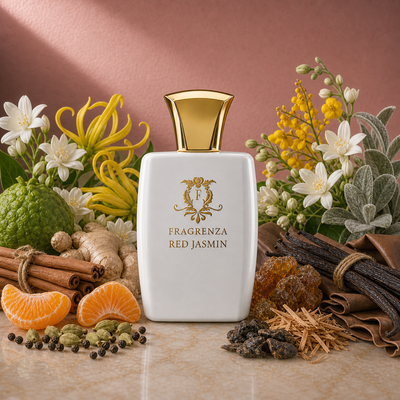
The cashmeran-warm register
places jasmine inside one of the most distinctive composition structures in modern perfumery: a warm cashmeran accord that smells simultaneously woody, musk-like, and skin-warm. The jasmine here is enhanced and transformed by the cashmeran into something genuinely otherworldly — intimate, slightly strange, undeniably compelling. It is the jasmine pick for anyone who wants the floral note in a register that no other composition quite achieves.
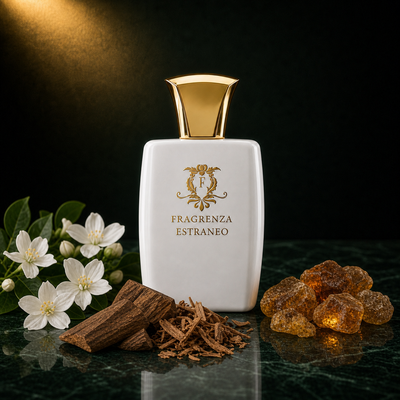
The luminous celebratory register
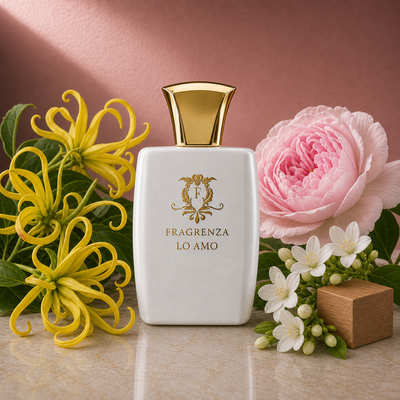
is jasmine in full, joyful bloom — bright, luminous, supported by ylang-ylang, rose, and magnolia in a composition of extraordinary femininity. The jasmine here is fresher and more dewy than in red-jasmin, and the overall wear feels celebratory rather than sensual. It is the jasmine pick for daytime, for happy occasions, for the wear where the fragrance should carry a sense of light rather than depth.
The rose-jasmine elegance register
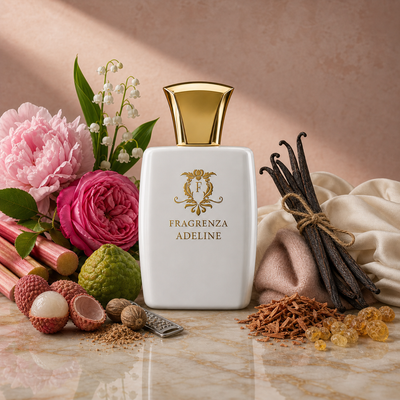
uses jasmine as a supporting but essential element in a rose-centred feminine composition. The jasmine’s richness and warmth provide a counterpoint to the fresher, more transparent rose-lychee at the composition’s heart, contributing depth and sensuality without dominating. It is the jasmine pick for anyone who wants the note as part of a refined, layered floral wear rather than as the headline material. For more on the rose-jasmine pairing, see our rose pillar.
The white-floral luminous register

The opulent jasmine-rich register
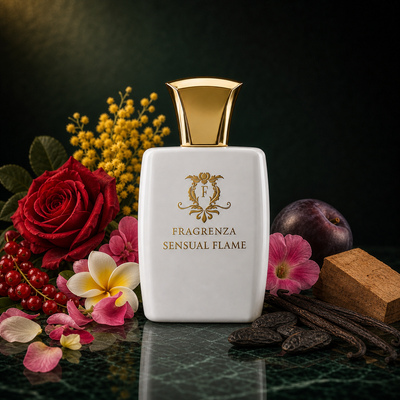
is the line’s creamy, opulent jasmine pick — a jasmine-forward composition that pushes the note into rich, almost dessert-warm territory. Where red-jasmin foregrounds jasmine’s sensuality and jadore foregrounds its luminosity, cassili foregrounds its opulence. It is the jasmine pick for evening occasions where you want the floral note in its most luxurious register. For the broader white-florals context, our 2026 white florals piece places jasmine alongside the wider trend.
How jasmine interacts with other notes
Jasmine is one of perfumery’s great structural florals because it harmonizes with almost every other category. Its compositional value comes from the way the note’s warm-floral character bridges between brighter top notes and deeper base notes, giving compositions diffusion and bloom that other materials cannot quite achieve.
With rose, jasmine produces the classical floral heart that defines so many of the great twentieth-century feminines. The two flowers complement each other: jasmine’s warmth and indolic richness against rose’s bright, slightly green character. Joy by Patou and No. 5 by Chanel are both built around variants of this pairing.
With oud, jasmine produces the “jasmine-oud” accord that has been a fixture of Middle Eastern perfumery for centuries and a contemporary niche-luxury staple since the 2000s. The oud’s warm density gives jasmine a darkness and weight that pure floral compositions lack. Our oud note pillar covers the wood that frequently rides shotgun with jasmine here.
With white florals (tuberose, gardenia, ylang-ylang), jasmine creates the heady white-floral register that defines a meaningful share of luxury feminine compositions. The flowers reinforce each other’s richness; the result is a composition with extraordinary projection and complexity.
With sandalwood and musk, jasmine gains skin-integrated wear — the modern, more contemporary jasmine that wears closer to the body and reads as personal rather than projected. This is the structural pattern of many of the great modern niche jasmines.
With citrus and aromatics, jasmine forms the floral heart of the classical chypre and modern eau de cologne traditions. The contrast between bright top notes and warm jasmine middle is one of the most enduring compositional patterns in fine fragrance.
Jasmine in the modern wardrobe
Jasmine’s wardrobe value is its bridge between daytime and evening, light and sensual. Lighter jasmine compositions (Lo amo / jadore-style, white-floral jasmine like Chloris Gardenia) wear comfortably in spring and summer daytime; richer compositions (Red Jasmin, Cassili, the sambac-forward niche tradition) belong to evening and cooler weather. The category as a whole spans more contexts than most florals can handle.
The note also rewards confident wearers. Jasmine is generous — over-application can push the wear into oppressive territory, particularly with the more indolic compositions, but well-judged application produces fragrance that draws compliments through the day. Two sprays for the lighter compositions, one for the heavier ones, is the right default.
For the architectural framework on how jasmine-forward compositions fit a wardrobe, our complete guide to building a fragrance wardrobe in 2026 places jasmine alongside other floral and oriental categories. For the mood register jasmine occupies — sensual, celebratory, confident — our guide to choosing perfume by mood covers the territory.
Frequently asked questions
What does jasmine smell like?
Sweet, white-floral, warm, with a slightly animalic depth and a narcotic intensity at higher concentrations. The character is built from indole (warm-animalic), cis-jasmone (sweet-floral), linalool (soft-woody-floral), and benzyl acetate (clean fruity-floral). The interplay of the clean facets and the indolic-animalic facets gives jasmine its characteristic double character: simultaneously innocent and sensual, daytime-bright and evening-deep.
What is the difference between sambac and grandiflorum jasmine?
Two different species with meaningfully different profiles. Jasminum grandiflorum (Spanish/French/Egyptian jasmine) is sweet, slightly green, refined — the jasmine of classical French perfumery. Jasminum sambac (Arabian, sambac, motia) is richer, headier, more indolic, with a slightly tea-like fruity quality. Most modern luxury jasmine compositions use Egyptian grandiflorum; many niche compositions specify Indian sambac for its more intense character.
Why is jasmine so expensive in perfumery?
Labor. A kilogram of jasmine absolute typically requires six to eight thousand pounds of hand-picked flowers, harvested in the predawn hours when the aromatic compounds are at peak concentration. The labor intensity of the picking, combined with the limited window each morning, is what drives the price. Synthetic materials replicate specific facets of jasmine and reduce the cost burden in commercial fragrance, but premium compositions still depend on the natural absolute for the signature warmth and depth.
Can men wear jasmine fragrances?
Yes — despite a Western convention that has coded jasmine as feminine, the note has no inherent gender. The traditional Indian sambac tradition is unisex; modern niche jasmine compositions (Carnal Flower, Diaghilev, several MFK works) read as fully unisex; and the men’s-fragrance audience has increasingly embraced jasmine as a characterful note in the broader smellmaxxing wave. Jasmine-oud and jasmine-leather compositions in particular wear beautifully on men.
What does indole smell like?
At low concentrations, indole reads as warm, slightly animalic, richly floral — the deep sensual quality that gives jasmine its characteristic warmth. At higher concentrations it can read as fecal-adjacent, which is why raw jasmine absolute can feel almost overwhelming in the bottle. The same molecule appears in human body chemistry, which is part of why jasmine reads as skin-warm rather than as a fragrance applied. It is also one of the molecules that perfumers use to give white-floral compositions their full, narcotic character.
Are jasmine perfumes long-lasting?
Jasmine itself is a heart note rather than a base, which means it does not have the same substantivity as oud or sandalwood — but jasmine compositions are typically built on warm bases (musk, sandalwood, amber) that extend the wear considerably. A well-built jasmine fragrance persists for six to ten hours; the heaviest sambac-and-musk niche compositions can wear well past twelve. Apply to warm pulse points and avoid heavy spraying on fabric for the longest, most skin-integrated wear.
What perfumes layer well with jasmine?
Rose is the classical partner (the floral heart accord). Oud creates the jasmine-oud niche-luxury pairing. White florals (tuberose, gardenia, ylang-ylang) reinforce jasmine’s richness. Sandalwood and musk produce skin-integrated modern jasmine. Citrus and aromatic top notes form the classical chypre structure. Avoid layering jasmine with sharp aquatic-marine notes — the contrast between warm-floral and cool-aquatic tends to read as awkward rather than complementary.
The bigger picture
Jasmine is the structural heart of a remarkable share of the great fragrances of the last two hundred years — often invisibly, doing the work that makes a composition bloom rather than sit still on skin. The note’s contradictions (clean and carnal, daytime and evening, innocent and sensual) are exactly what make it so widely useful and so consistently rewarding. Whether you wear jasmine for its luminous celebratory register, its full-bodied sensuality, its rose-floral elegance, or its niche-luxury depth, the note belongs in any serious floral wardrobe. Learning to recognize it on yourself and on others is most of what reading the floral canon requires.