

The Best Neroli Fragrances: Delicate, Citrusy, and Hauntingly Refined
The 1670s Princess of Nerola scented her bathwater with the steam-distilled bitter orange blossom and gave the material its name; methyl anthranilate gives it the faint grape facet.
By Julia MorettiFragrenza makes several of the alternatives featured in our guides — here’s how we test.
13 min read
Neroli is one of perfumery’s most quietly beautiful ingredients — bright, slightly bitter, faintly honeyed, sitting somewhere between a citrus and a floral in a way that no other material in the perfumer’s palette quite achieves. Distilled from the blossoms of the bitter orange tree, neroli has anchored fine fragrance for nearly 350 years and remains as widely loved today as it was in seventeenth-century France. Named, according to popular legend, after Anne Marie Orsini, Princess of Nerola, who used the oil to scent her gloves and bathwater in 1670s Italy, the note carries a lineage of refined elegance that few other ingredients can match.
This is the guide. What neroli actually is and how it differs from its close relatives orange blossom absolute and petitgrain, the chemistry that gives neroli its character, the cultural history that made it a fixture of European perfumery, the famous neroli compositions worth knowing, and seven Fragrenza picks distributed across the registers the note plays in. Read in order or skip to the section you need.
What neroli actually is
Neroli is the steam-distilled essential oil of the blossoms of Citrus aurantium, the bitter orange tree. The same tree provides three distinct perfumery materials, each with a meaningfully different character: neroli (from the blossoms by steam distillation), orange blossom absolute (also from the blossoms but solvent-extracted), and petitgrain (from the leaves and twigs). Understanding the distinction between the three is most of what reading neroli compositions accurately requires.
Neroli is the lightest and brightest of the three. Steam distillation captures the volatile aromatic molecules but leaves behind some of the heavier waxy material the flowers produce. The result is a transparent, fresh-floral-citrus oil with a slightly green-honeyed character. Compared to orange blossom absolute, neroli reads as cleaner, cooler, and more immediately wearable.
Orange blossom absolute is richer, headier, and more pronouncedly indolic. Solvent extraction captures the heavier compounds that distillation does not, including the indole that gives the absolute its slightly animalic, narcotic-floral depth. Where neroli is daytime, orange blossom absolute is evening; where neroli is fresh, orange blossom is sensual.
Petitgrain is the third sibling: distilled from the leaves and twigs of the bitter orange tree rather than the flowers. Petitgrain smells green, herbal, slightly woody, with a bitter-citrus edge that some perfumers describe as “orange leaf in a dry summer afternoon.” It is the most aromatic and least floral of the three; it appears in classical eau de cologne and in modern aromatic compositions where the perfumer wants the citrus-tree character without the floral richness.
The geography matters too. Neroli production is concentrated in Tunisia (the world’s largest producer for fine fragrance), Morocco, Egypt, and a small but historically important production in Grasse, France, where some of the highest-grade neroli still comes from. Italian neroli (from Calabria, Sicily) carries the Mediterranean character that has inspired so many neroli-driven Italian perfumery traditions.
What neroli actually smells like
Neroli is bright on opening, with a clean citrus character that bridges into a soft floral as the wear develops. The dominant compounds in neroli oil — linalool, linalyl acetate, limonene, and small amounts of methyl anthranilate — produce a profile that combines citrus brightness with floral sweetness and a faint green-grape facet. Methyl anthranilate is the molecule that gives neroli its slightly grape-like, faintly sweet character; without it, the oil would read as more straightforwardly citrus.
The dry-down is where neroli reveals its sophistication. As the brighter top notes burn off, the oil settles into a soft, slightly powdery, faintly honeyed warmth that reads as almost skin-like. This is what makes neroli so structurally useful: it can serve as a top note (where its bright citrus character does the work of bergamot or lemon), a heart note (where the floral character bridges to other florals), or a structural lift inside a heavier composition (where its diffusion qualities give the wear movement and sparkle).
The character is genuinely versatile. Some compositions use neroli as the headline (Eau de Cologne, Acqua di Parma Colonia, the contemporary clean-citrus tradition). Others use it as a structural element that lifts and refines without drawing attention to itself. The note has remarkable range across both registers.
The cultural history of neroli
Neroli’s entry into European perfumery dates to the late seventeenth century. Anne Marie Orsini, Princess of Nerola, became the most famous user of neroli oil in 1670s Italy, scenting her gloves, bathwater, and personal effects with the new material. Her court became the center of neroli’s commercial development, and the oil — named after her principality — spread quickly across European royal courts as a luxury fragrance material.
The Eau de Cologne tradition, founded by Italian perfumer Giovanni Maria Farina in 1709 in Cologne, Germany, placed neroli at the structural center of what would become one of the most influential fragrance categories in history. Farina’s formula — bergamot, lemon, neroli, lavender, and a handful of aromatic herbs — remained the structural reference for citrus-aromatic perfumery for the next three centuries. The Eau de Cologne tradition continues today through houses like 4711 (founded 1792) and Acqua di Parma (Colonia, 1916).
Through the twentieth century, neroli appeared as a structural element in countless great fragrances rather than as the headline material. Chanel No. 5 (1921) uses neroli alongside its more famous aldehydes and florals; Dior’s Eau Sauvage (1966) uses neroli as a key bright element of its hesperidic structure. The contemporary niche tradition has revived neroli as a featured material in compositions like Tom Ford Neroli Portofino (2006) and several Maison Francis Kurkdjian works, which place the note in the spotlight rather than treating it as a structural support.
Famous neroli fragrances
Several compositions deserve study because they show what neroli can do at the headline. Acqua di Parma Colonia is the canonical contemporary expression of the Italian neroli-citrus tradition — bright, refined, deeply Mediterranean. Tom Ford Neroli Portofino brought the note into contemporary luxury context. The Atelier Cologne neroli compositions (Mandarine Glaciale, Orange Sanguine and several others) demonstrate neroli’s range in the modern eau de cologne register. 4711 Kölnisch Wasser remains in production after 233 years and is still the cleanest expression of the original Farina formula. Among contemporary niche, the Maison Francis Kurkdjian neroli compositions and Diptyque’s Eau de Neroli have reinforced the note’s position at the center of refined modern perfumery.
Several of these structural traditions have direct or adjacent expressions in the Fragrenza catalog, covered below.
Seven Fragrenza neroli picks
Seven compositions in the Fragrenza catalog use neroli as a featured or load-bearing structural element, each in a distinct register.
The clean modern register
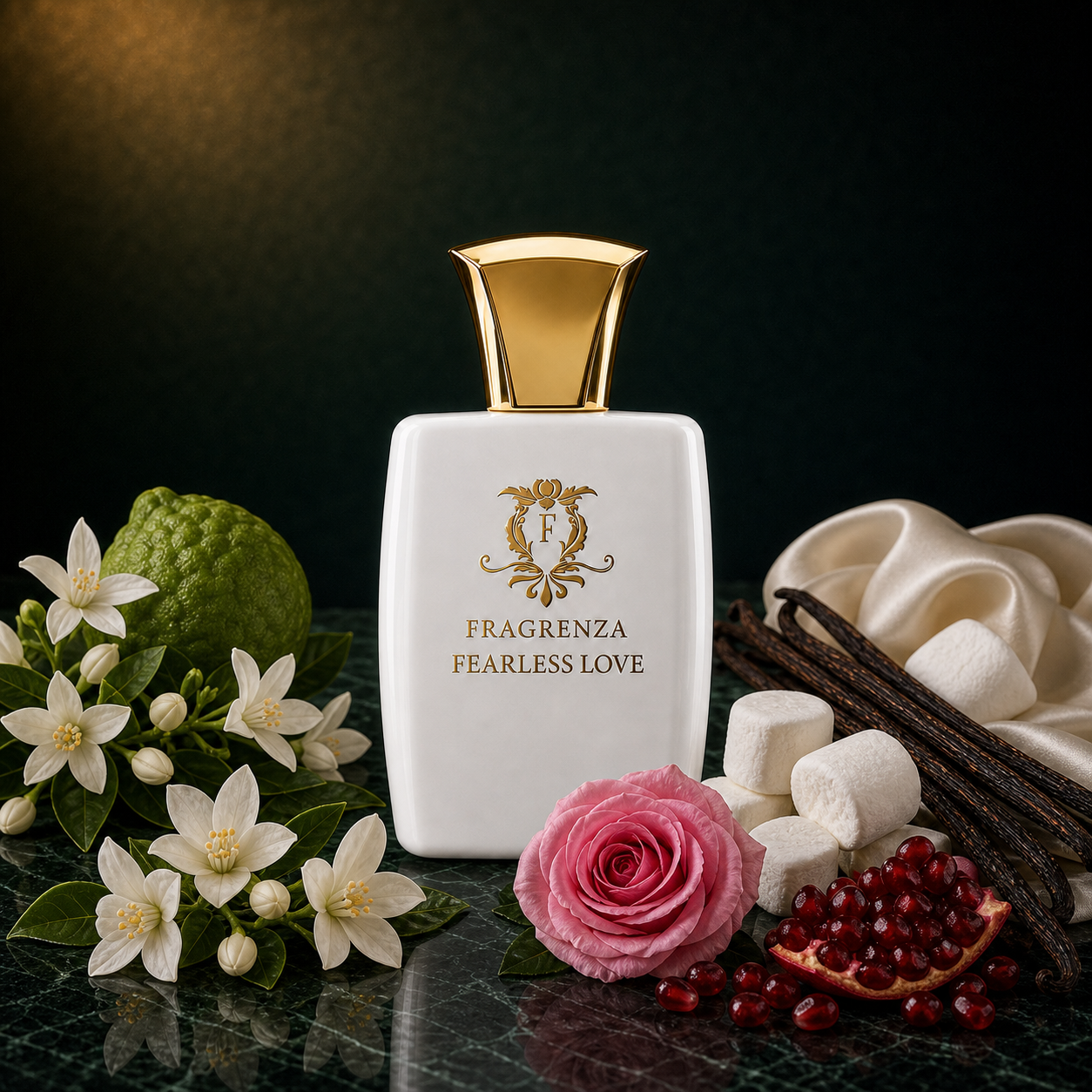
is the line’s most direct expression of neroli at its cleanest and most contemporary. The neroli-bright opening creates an immediate impression of cleanliness and luminosity that sets the tone for the entire wear, gradually giving way to soft musks and gentle woods. The transition feels completely natural — this is what neroli does at its most approachable and universally wearable.
The Mediterranean Italian register

The skin-musk neroli register
uses neroli as a bright, transparent accent over a clean musk core. The neroli here is light and airy, contributing freshness without sharpness, sitting beautifully alongside the musk to create a fragrance that smells like freshly clean skin with the faintest suggestion of orange blossom warmth. It is the neroli pick for the modern skin-scent register.
The Mediterranean-warmth register
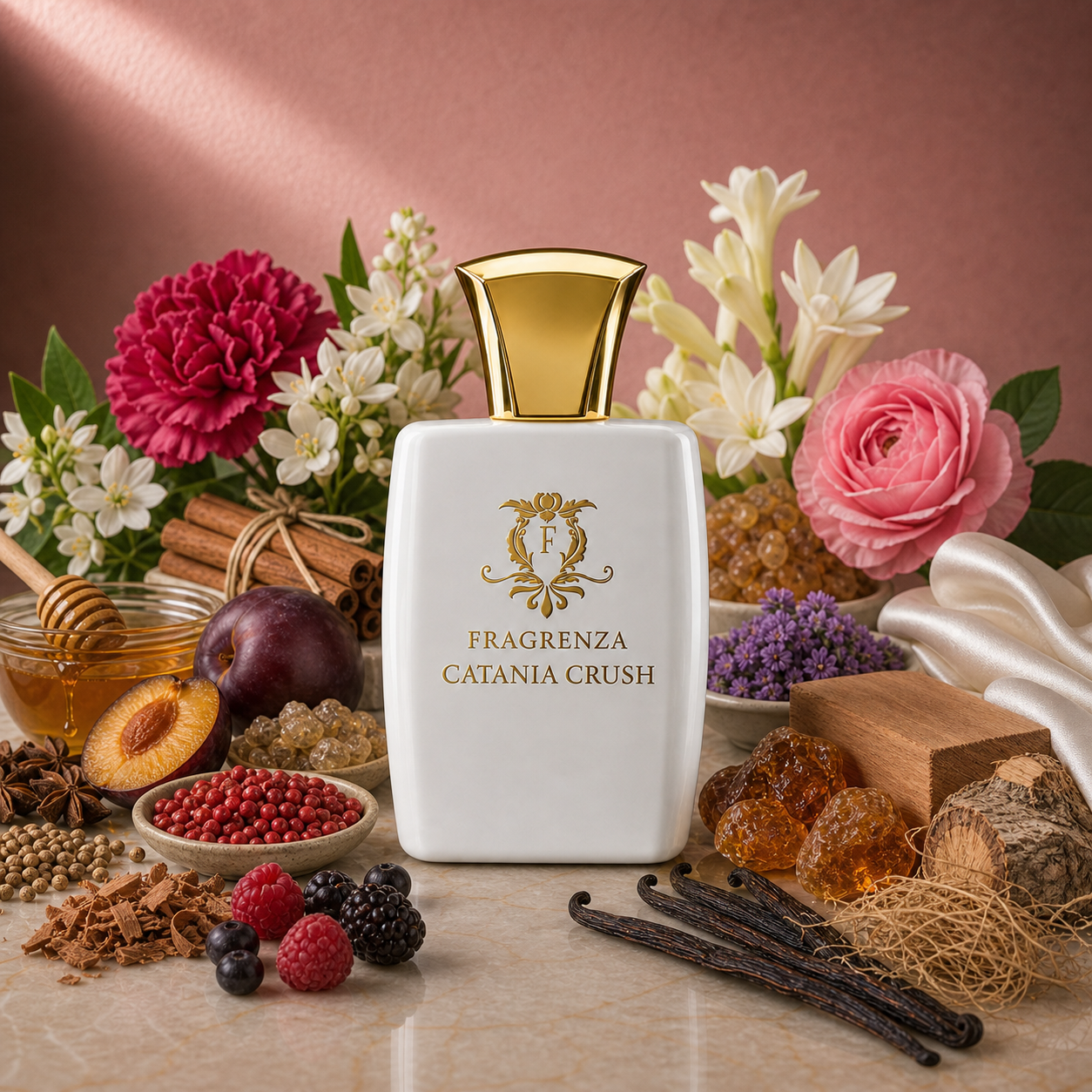
places neroli inside a Mediterranean composition with citrus relatives and warm-resinous undertones. The neroli has enough body to anchor the citrus structure and enough brightness to carry the wear into warm-weather contexts. It is the neroli pick that sits between the cleaner modern compositions and the heavier oriental-citrus traditions.
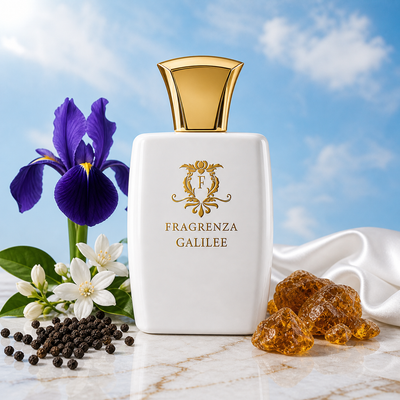
The white-floral register
uses neroli-bright citrus as the opening illumination of a delicate white-floral composition. The freshness in the opening evokes the clean, airy quality of neroli beautifully and prevents the floral heart from feeling heavy or cloying. It is the neroli pick for those who want the note as part of a refined feminine composition rather than as the structural headline.
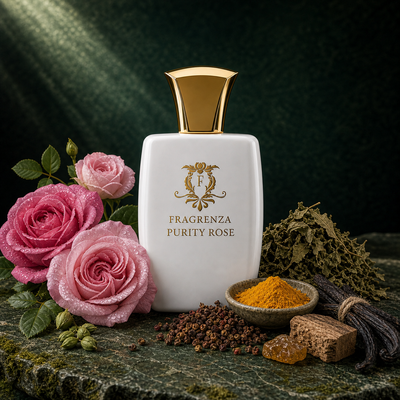
The Mediterranean luminous register
(Sicily Aqua) takes neroli into a sun-drenched Mediterranean composition with bright citrus and slightly honeyed floral character. The wear feels genuinely radiant and slightly festive — this is neroli as liquid sunshine, the kind of fragrance that captures the feeling of warm light on fresh flower petals. It is the neroli pick for the luminous-feminine register.
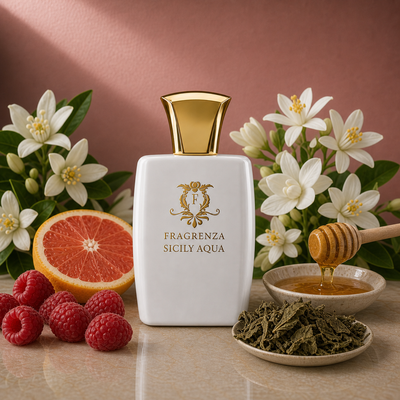
The luminous floral register
(Lo amo) features neroli-adjacent brightness in its opening, contributing to the overall impression of joyful, golden femininity. The citrus floral quality here lifts the ylang-ylang and jasmine heart notes above it and creates an opening that is as inviting as it is beautiful. It is the neroli pick for those who want the note inside a fully-developed white-floral composition.
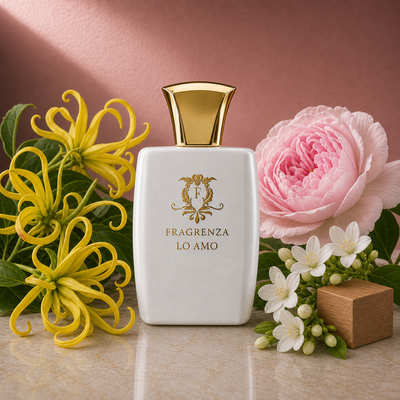
How neroli interacts with other notes
Neroli is one of perfumery’s most universally compatible materials. Its compositional value comes from the way it bridges between disparate elements.
With bergamot and citrus, neroli forms the classical eau de cologne structure that has been the backbone of citrus-aromatic perfumery for over three centuries. Bright top, clean refined heart, light aromatic base.
With jasmine, neroli creates the luminous white-floral register that defines so many modern feminine compositions. The citrus-floral character bridges naturally to the indolic richness of jasmine.
With clean musks, neroli produces the modern skin-scent register — bright top notes settling into musk warmth that integrates with skin. This is the structural pattern of contemporary unisex perfumery.
With petitgrain, neroli reinforces the bitter-orange-tree character and produces aromatic compositions of considerable depth. The pair is the structural foundation of the modern eau de cologne tradition.
With orange blossom absolute, neroli amplifies the bitter-orange-tree theme and produces compositions of remarkable floral depth. The two materials are complementary rather than competing — neroli for the brightness, orange blossom for the warmth.
With aromatic herbs (lavender, rosemary, thyme), neroli forms the herbal-citrus structure that anchors many of the great Mediterranean compositions. The contrast between bright citrus and dry herbal is one of the most elegant in fine perfumery. Our lavender pillar covers the herb that frequently rides shotgun with neroli in the classical eau de cologne structure.
With warm woods and amber, neroli freshens compositions that would otherwise feel heavy and gives them a bright, energetic opening. Many contemporary oriental compositions use neroli in the topnote phase for exactly this purpose.
Neroli in the modern wardrobe
Neroli’s wardrobe value is its bridge between citrus and floral, between daytime and evening, between fresh and refined. Neroli compositions wear as comfortably to a morning meeting as to a summer dinner; they work in essentially every season and every occasion. There is no fragrance category in which a well-built neroli composition feels wrong.
The note rewards generous application. Neroli, like all citrus-derived materials, is volatile and evaporates quickly from skin — the brightness is at its peak in the first thirty to forty-five minutes of wear and tapers from there. This is not a defect; it is what citrus-floral materials do. Apply liberally to pulse points, particularly in warm weather, and enjoy the brightness while it lasts. The base notes that follow (musk, soft woods, faint amber) carry the wear forward in a different register.
For the architectural framework on how neroli-forward compositions fit a wardrobe, our complete guide to building a fragrance wardrobe in 2026 places neroli alongside the broader citrus and floral categories. For the mood register neroli occupies — fresh, energizing, refined — our guide to choosing perfume by mood covers the territory in detail.
Frequently asked questions
What does neroli smell like?
Bright, slightly bitter, faintly honeyed, with a clean citrus opening that bridges into a soft floral character. The dominant aromatic compounds are linalool, linalyl acetate, limonene, and methyl anthranilate, which combine to produce a profile that sits between citrus brightness and white-floral sweetness. There is a faint green-grape facet from the methyl anthranilate, and the dry-down has a slightly powdery, almost skin-like warmth. Neroli is the freshest and most transparent of the orange-blossom-tree materials.
What is the difference between neroli and orange blossom?
Both come from the blossoms of the bitter orange tree, but the extraction methods produce different materials. Neroli is steam-distilled, which captures the volatile aromatic molecules and produces a lighter, brighter, more transparent oil. Orange blossom absolute is solvent-extracted, which captures the heavier compounds (including indole) and produces a richer, headier, more pronouncedly floral material. Neroli is daytime-fresh; orange blossom absolute is evening-sensual. Most modern compositions use both materials together for full bitter-orange-tree character.
What is petitgrain and how does it differ from neroli?
Petitgrain comes from the leaves and twigs of the bitter orange tree rather than the flowers. It smells green, herbal, slightly woody, with a bitter-citrus edge. Petitgrain is the most aromatic and least floral of the bitter-orange-tree materials, and it is widely used in modern aromatic compositions where the perfumer wants citrus-tree character without floral richness. Neroli, orange blossom absolute, and petitgrain are the three materials from the same tree, each with its own structural role.
Why is neroli so widely used in perfumery?
Three reasons. First, the note’s combined citrus-floral character makes it useful in compositions across both citrus and floral families — it is one of the most versatile materials in the perfumer’s palette. Second, the cultural prestige of neroli (Princess of Nerola, eau de cologne tradition, Mediterranean luxury) gives it a refined character that simpler citrus oils cannot match. Third, neroli has remarkable diffusive qualities that give compositions movement and sparkle without overwhelming the wearer. These properties together explain why neroli appears in such a wide range of fine fragrances.
Are neroli fragrances long-lasting?
The neroli character itself is moderate-lasting — brighter and more volatile than base notes, but more substantive than citrus oils like lemon or grapefruit. A neroli-forward composition typically wears for five to seven hours on skin, with the character moving from the bright citrus opening through the floral heart and into a soft skin-musk dry-down. Compositions built on warm bases (musk, sandalwood, amber) extend the wear meaningfully past what neroli alone would deliver.
What is the connection between neroli and Eau de Cologne?
The original Eau de Cologne formula, created by Giovanni Maria Farina in 1709, placed neroli at the structural center of a citrus-aromatic composition with bergamot, lemon, lavender, and herbs. The category became one of the most influential in fine perfumery, with countless variants and refinements over three centuries. The contemporary eau de cologne tradition (Acqua di Parma Colonia, 4711, Atelier Cologne, Diptyque Eau de Neroli) continues this lineage. If you have ever worn or smelled an eau de cologne, you have experienced neroli at the heart of the composition.
Is neroli unisex?
Genuinely. Neroli is among the most thoroughly unisex materials in modern perfumery — it appears as the opening of a clean masculine fougere as readily as the heart of a luminous feminine floral, and contemporary compositions treat it as a neutral structural element. The Italian and French eau de cologne traditions are explicitly unisex, and the modern niche neroli wave has reinforced the note’s gender-neutral character.
The bigger picture
Neroli is the most quietly elegant citrus-floral in fine perfumery. It does not announce itself; it simply elevates whatever it sits inside. Whether you wear neroli for the clean modern register, the Mediterranean Italian, the sun-drenched luminous, the eau de cologne tradition, or the contemporary niche, the note belongs in any wardrobe that values brightness, refinement, and the particular kind of luxury that comes from understatement. Learning to recognize neroli — the way it bridges citrus and floral, the way it lifts a composition without dominating it — is one of the most useful skills any fragrance lover can develop.