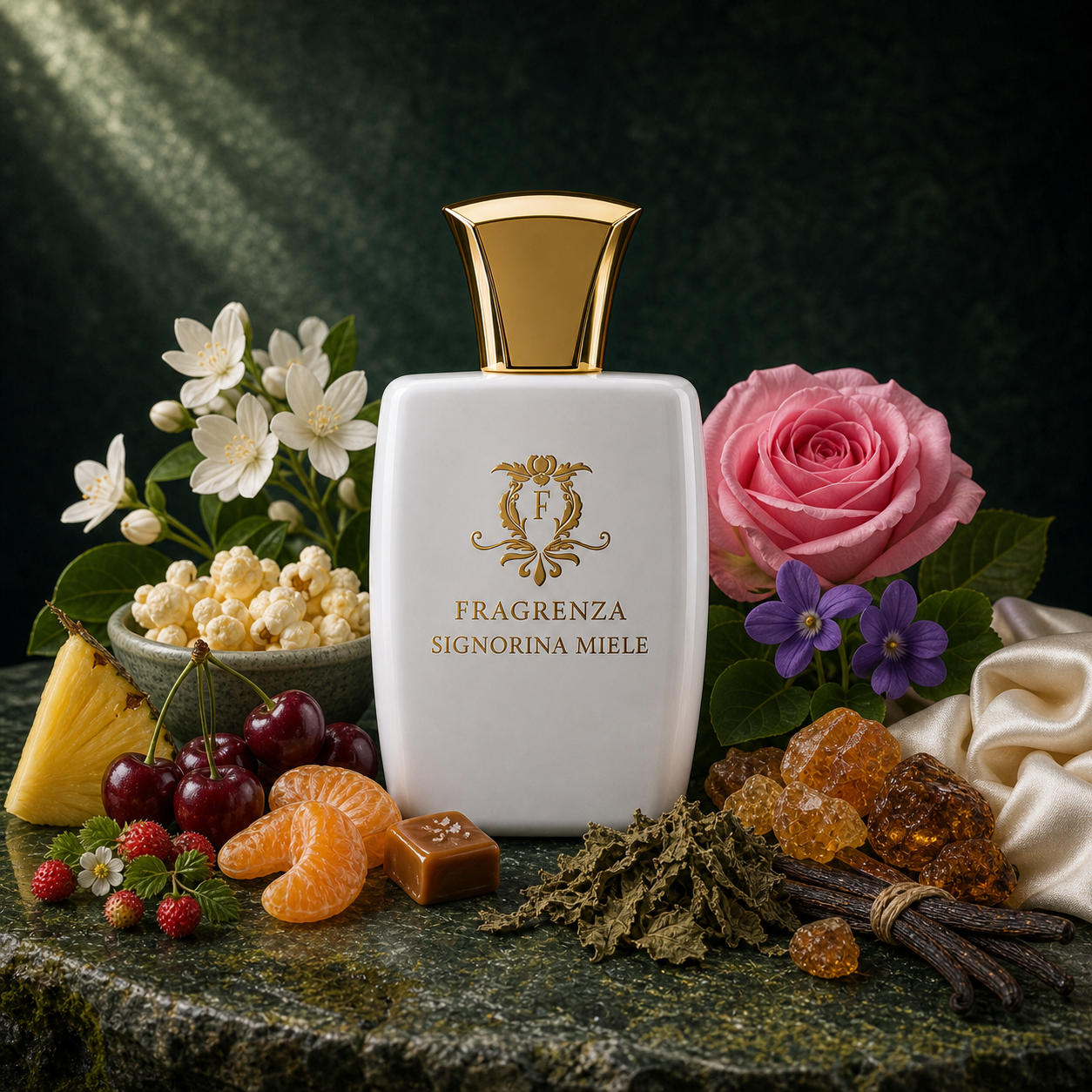


Best Patchouli Fragrances 2026: The Five Archetypes from Black Orchid to Coco Mademoiselle
Pogostemon cablin leaves are fermented and aged like tobacco before distillation, and vintage aged oil remains the gold standard for the most architectural compositions.
By Julia MorettiFragrenza makes several of the alternatives featured in our guides — here’s how we test.
13 min read
Patchouli is one of the most architecturally important materials in fine perfumery. Once associated almost exclusively with 1970s counterculture, patchouli has undergone one of the most thorough rehabilitations of any single note — emerging across the 2000s and 2010s as a structural fixture of contemporary perfumery from mass-market commercial through niche-prestige tiers. The note appears in some form in roughly a third of all major commercial launches and is the dominant base material that anchors more modern compositions than any material except musk. This is the commercial buyer's edit organized around the five archetypal directions patchouli perfumery has settled into.
For the conceptual deep-dive on patchouli as a perfumery material, our Patchouli in Perfumery educational pillar covers the chemistry and the cultural history in depth. This article is the dedicated patchouli buyer's edit.
What patchouli actually is in fine perfumery
Patchouli oil comes from Pogostemon cablin, a flowering perennial in the mint family native to tropical Asia and now cultivated principally in Indonesia, Malaysia, and India. The aromatic complexity of patchouli is in its leaves — fermented and aged before distillation in a process that more closely resembles tobacco curing than typical essential-oil extraction. Vintage aged patchouli oil is considered the gold standard of the category; commercial patchouli typically ages for 6-24 months minimum before fine-fragrance use.
Three chemical compounds carry most of patchouli's character. Patchoulol (patchouli alcohol) is the dominant aromatic compound — woody, slightly sweet, deeply earthy, with a long-lasting projection that gives patchouli its remarkable fixative power. Norpatchoulenol contributes the characteristic earthy-camphoraceous facet that distinguishes patchouli from simpler woody materials. Alpha-bulnesene adds the slightly herbal, slightly bitter complexity that prevents patchouli from reading as one-dimensional. The ratio between these three determines whether a patchouli material reads as classical-dark (high patchoulol), aromatic-camphoraceous (high norpatchoulenol), or modern-clean (more synthetic Clearwood / Akigalawood support).
Patchouli is fundamentally a base note with exceptional longevity. The dominant patchouli compounds have very low volatility, which means they persist on skin and fabric for days. This is why patchouli appears in so many commercial base structures — it extends the wear of more volatile materials by hours and provides architectural depth that few other base materials match.
The cultural arc — from counterculture to canonical material
Patchouli has one of the most dramatic cultural arcs of any single fragrance material.
1960s-1970s: counterculture stigma. Patchouli entered Western popular culture through the 1960s-70s counterculture, where it was used heavily as a body oil and incense material — often in low-quality, unaged forms. The association with that subcultural moment dominated patchouli's reputation for two decades and effectively excluded it from mainstream perfumery commerce through the 1980s.
1992: Thierry Mugler Angel. Olivier Cresp's groundbreaking composition paired patchouli with chocolate, vanilla, and a vivid fruit accord to create the gourmand category that has dominated mainstream feminine perfumery ever since. Angel rehabilitated patchouli — demonstrating that the material could carry serious commercial compositions and shape entire fragrance categories. Every subsequent chocolate-patchouli gourmand traces its lineage to Angel.
2001: Chanel Coco Mademoiselle. Jacques Polge's composition demonstrated patchouli in a modern chypre-feminine register, pairing it with orange, jasmine, rose, and ylang-ylang. Coco Mademoiselle became one of the best-selling feminine fragrances of the 21st century and made patchouli a structural fixture of contemporary commercial perfumery.
2006: Tom Ford Black Orchid. The composition that established patchouli's prestige-tier credibility for the modern era. Black orchid, dark chocolate, vanilla, patchouli, and incense produced one of the most architecturally dense feminine compositions of the 2000s and demonstrated that patchouli could carry niche-prestige work at the highest level.
2014-2026: Akigalawood and the synthetic-patchouli era. Givaudan's Akigalawood (a patchouli-derived molecule with woody-floral character) has expanded the perfumer's patchouli palette substantially. Contemporary compositions often blend traditional aged patchouli with Akigalawood for a cleaner, more architecturally flexible character — the modern patchouli that dominates contemporary unisex perfumery is less the counterculture-era heavy oil and more this refined synthetic-natural blend.
Famous patchouli fragrances worth knowing
Several compositions deserve study because they show what patchouli can do at the headline or structurally. Thierry Mugler Angel (1992) is the genre-defining chocolate-patchouli reference. Chanel Coco Mademoiselle (2001) is the modern chypre-patchouli benchmark and one of the most influential feminine compositions of the 21st century. Tom Ford Black Orchid (2006) is the niche-prestige reference for floral-chocolate-patchouli. Maison Francis Kurkdjian Aqua Universalis demonstrates patchouli in an unexpectedly clean citrus-aromatic register. Frédéric Malle Musc Ravageur uses patchouli as a structural backbone behind cinnamon and vanilla in one of the great gourmand-oriental compositions. Le Labo Patchouli 24 is the niche-extreme reference — patchouli pushed to its smokiest, most polarizing expression. The Fragrenza catalog interpretations span five contemporary patchouli directions covered below.
Five archetypal patchouli directions in 2026
Each direction has its own typical use case, its own seasonal register, and its own Fragrenza pick distributed inline. All five picks have Patchouli explicitly tagged in their official Shopify product descriptions — §16.2 compliance is direct rather than via disclaimer.
1. Floral-chocolate patchouli (the Black Orchid prestige register)
The niche-prestige archetype. Patchouli paired with dark chocolate, exotic florals, and a deep oriental-resinous base — the niche-luxury direction that Tom Ford Black Orchid defined in 2006. Reads as theatrical, evening-only, slightly transgressive. Best for evening wear, cool weather, and anyone drawn to the most architecturally complex patchouli direction. The closest Fragrenza match:
(Chocolat Orchid) — a Tom Ford Black Orchid-inspired composition with bergamot, mandarin, lemon, and blackcurrant opening; gardenia, jasmine, lotus, and rare orchid at the heart; chocolate, patchouli, sandalwood, vetiver, incense, vanilla, and amber at the base. Among the most architecturally complex patchouli compositions in the Fragrenza catalog.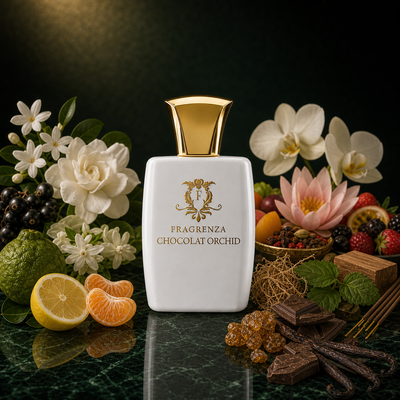
2. Coffee-cacao patchouli gourmand (the Black Opium register)
The contemporary gourmand archetype. Patchouli paired with coffee, cacao, jasmine sambac, and vanilla — the gourmand-oriental direction that YSL Black Opium defined in 2014 and that has shaped contemporary feminine commercial perfumery. Reads as confident, evening-leaning, intensely magnetic. Best for evening wear and anyone drawn to the dark-coffee-gourmand register. The closest Fragrenza match:
(Addict Noir) — a YSL Black Opium-inspired composition with roasted coffee and cacao opening; jasmine sambac and orange blossom at the heart; bourbon vanilla, patchouli, and warm spice at the base. The most commercially recognizable patchouli-gourmand composition in the catalog.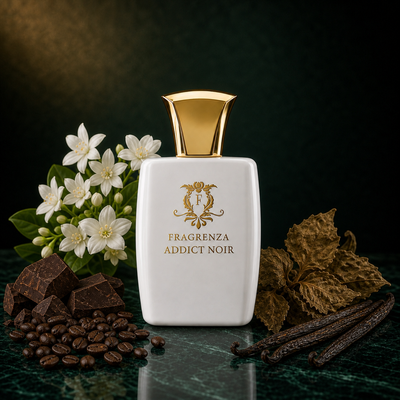
3. Smoky-resinous patchouli (the Hawaii Wood register)
The contemporary smoky-incense archetype. Patchouli paired with labdanum, opoponax, incense, and oud — the dark-resinous oriental register that contemporary niche perfumery has refined. Reads as opulent, evening-only, mystical. Best for evening wear, cool weather, and anyone drawn to the smoky-incense register. The closest Fragrenza match:
— bergamot, oregano, and pepper opening; crystallized sugar, honeyed labdanum, opoponax, and incense at the heart; patchouli, sandalwood, vanilla, oud, and supple leather at the base. The patchouli sits structurally rather than as headline — it grounds the smoky-resinous architecture and gives the composition its distinctive depth.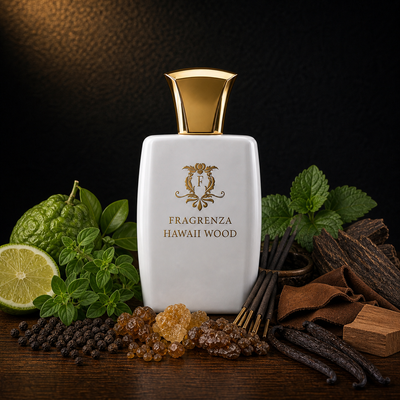
4. Tobacco-patchouli savory (the Saffron Tobacco register)
The savory-spice archetype. Patchouli paired with red tobacco, saffron, cinnamon, oud, and a vanilla-amber base — the savory-gourmand crossover that the C2 cluster covers in depth. Reads as warm, evening-only, sophisticated. Best for cool-weather evening wear and anyone who wants patchouli in a tobacco-anchored savory composition. The closest Fragrenza match:
— saffron, cinnamon, incense, nutmeg, pear, apple, and oud opening; patchouli and jasmine at the heart; red tobacco wrapped around amber, vetiver, vanilla, and white musk at the base. The patchouli at the heart bridges the spicy opening into the tobacco-amber base.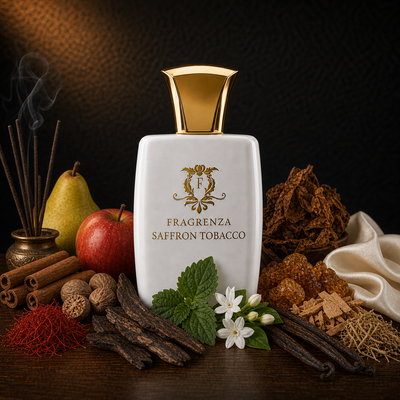
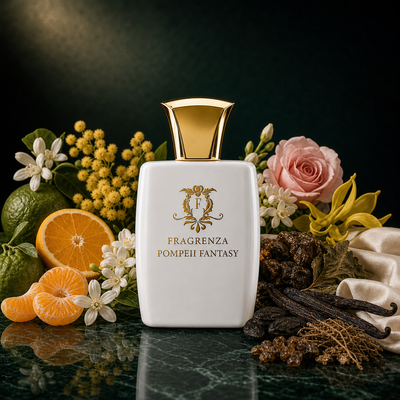
5. Floral-chypre patchouli (the Coco Mademoiselle register)
The modern-chypre archetype. Patchouli paired with citrus, jasmine, rose, ylang-ylang, and a vanilla-tonka-vetiver base — the contemporary feminine chypre direction that Chanel Coco Mademoiselle defined in 2001 and that has shaped commercial feminine perfumery for two decades. Reads as polished, daytime-evening flexible, classically feminine. Best for daily wear and anyone drawn to the most universally-wearable patchouli register. The closest Fragrenza match:
How patchouli fragrances wear on skin
Patchouli compositions wear specifically. Three patterns worth knowing.
The dry-down is the wear. Patchouli is fundamentally a base material with very low volatility — its character peaks in the second-and-third hour of wear and persists for 8-14 hours on skin and longer on fabric. The opening of a patchouli composition reads as whatever sits above it (citrus, florals, spices); the patchouli character emerges as the top notes fade and the base materials develop. Give patchouli compositions at least 90 minutes on skin before judging.
Aging matters. Vintage aged patchouli oil reads smoother, sweeter, and deeper than fresh patchouli; the counterculture-era reputation came partly from low-quality unaged material. Quality contemporary patchouli compositions specify aged Indonesian or Sumatran patchouli; the character is meaningfully different from cheap unaged extract. The Fragrenza picks above all use quality-aged patchouli per their composition profiles.
Skin chemistry shapes the wear. The patchoulol-norpatchoulenol-alpha-bulnesene ratio interacts variably with skin pH and natural fatty acids. Warmer or oilier skin amplifies the sweet-earthy facets; cooler or drier skin amplifies the camphoraceous-aromatic facets. The same patchouli composition can read as warm-resinous on one wearer and dry-aromatic on another. See the skin chemistry deep-dive for the full mechanism.
When and how to wear patchouli
The patchouli register is broadly seasonal-flexible but concentrates in cool weather and evening contexts. The floral-chocolate prestige (Chocolat Orchid register), coffee-cacao gourmand (Addict Noir register), smoky-resinous (Hawaii Wood register), and tobacco-savory (Saffron Tobacco register) are emphatically autumn-winter evening territory. The floral-chypre (Pompeii Fantasy register) is the year-round daytime-flexible exception — Coco Mademoiselle has been worn in every climate and every context since 2001 because the patchouli sits structurally rather than as foregrounded character.
For application, patchouli rewards restraint. The note carries on skin without requiring volume; one to two sprays is sufficient for most patchouli compositions. For the broader wardrobe framework, our wardrobe pillar covers how patchouli fits alongside other base-note categories.
How to layer patchouli fragrances
Three reliable layering patterns work within the patchouli register.
Pattern 1: patchouli over a clean musk base. Spray a clean musk on pulse points first, then apply the patchouli composition over it. The musk softens the projection of the densest patchouli compositions and lifts the dry-down without competing — particularly useful for the floral-chocolate prestige and coffee-cacao gourmand archetypes when daytime wear is required.
Pattern 2: patchouli + rose pulse points. Apply the patchouli composition to chest and wrists, then a small amount of pure rose to inner elbows. The rose-patchouli pairing (the natural chemistry connection through damascones and rose ketones) produces one of the most architecturally rewarding layered wears in contemporary perfumery. Particularly effective for the floral-chypre and floral-chocolate archetypes.
Pattern 3: patchouli + oud for the dark direction. For the smoky-resinous archetype, layering with a separate oud composition deepens the resinous character and produces a dark-luxury wear that bridges patchouli into the broader oriental register.
Anti-pattern: do not layer patchouli under aquatic or sharply fresh-floral compositions. The dense base would push the lighter materials away rather than complement them. For the broader layering framework, our layering pillar covers the principles.
Building a patchouli rotation
A two-bottle patchouli setup covers most use cases — one floral-chypre daytime pick (Pompeii Fantasy is the universally-wearable entry point) and one evening pick (Chocolat Orchid for the niche-prestige floral-chocolate register, or Addict Noir for the coffee-cacao gourmand register). A three-bottle rotation adds the smoky-resinous (Hawaii Wood) for evening variety. A five-bottle rotation covers all five archetypes including the savory-tobacco (Saffron Tobacco).
The patchouli register pairs naturally with the iter-30 Best Lavender Fragrances for Men (vetiver-patchouli and lavender-patchouli are both canonical fougère-adjacent pairings), the Best Vetiver Fragrances (vetiver and patchouli are the two great earthy base materials), and the Savory Gourmand pillar for the broader cultural context.
Who each pick is for
If you want the niche-prestige floral-chocolate Black Orchid register: Chocolat Orchid.
If you want the contemporary coffee-cacao gourmand Black Opium register: Addict Noir.
If you want smoky-resinous patchouli with incense and oud: Hawaii Wood.
If you want patchouli in a savory tobacco-spice composition: Saffron Tobacco.
If you want the universally-wearable floral-chypre Coco Mademoiselle register: Pompeii Fantasy.
If you're not sure where you sit: The Fragrenza sample pack covers the full range — three-day testing on skin is the only way to discover which patchouli register your chemistry amplifies.
Frequently asked questions
What does patchouli smell like in modern perfume?
Deep, earthy, slightly sweet, slightly camphoraceous, with a woody undertow that anchors the wear for hours. Contemporary fine-fragrance patchouli is meaningfully different from the counterculture-era heavy oil — quality aged patchouli reads smoother, sweeter, and more refined; supported by Akigalawood and Clearwood synthetics in modern compositions, patchouli can read as clean-aromatic or dark-resinous depending on how it's blended. The character peaks in the second-and-third hour of wear, not in the opening.
Why did patchouli have a bad reputation?
The 1960s-70s counterculture used patchouli heavily as a cheap body oil and incense material — often in low-quality unaged forms that smelled aggressive and one-dimensional. The cultural association with that subcultural moment dominated patchouli's reputation through the 1980s and excluded it from mainstream commerce. Angel (1992) and Coco Mademoiselle (2001) rehabilitated the note for contemporary perfumery; the modern patchouli that dominates 2026 commercial perfumery is structurally and aromatically very different from the 1970s body oil.
Is patchouli feminine or masculine?
Fully genre-fluid. Patchouli appears in masculine fougères (vetiver-patchouli pairings), feminine chypres (Coco Mademoiselle), gourmands (Angel, Black Opium), orientals (Black Orchid), unisex contemporary compositions, and niche-extreme works (Patchouli 24). The note has no inherent gender coding — what surrounds it does. Treat patchouli gender marketing as a starting point rather than a constraint.
How long do patchouli fragrances last on skin?
Ten to fourteen hours is typical for full patchouli compositions on average skin. The dense base materials (patchoulol, plus supporting vanilla, sandalwood, amber, soft musks, woody anchors) carry the wear, and patchouli is among the longest-lasting base materials in fine perfumery. Patchouli compositions can be detectable on fabric the following day. The floral-chypre archetype wears slightly shorter (8-10 hours) because the base is less dense than the floral-chocolate and smoky-resinous registers.
Can patchouli fragrances be worn in summer?
The floral-chypre archetype (Pompeii Fantasy / Coco Mademoiselle register) handles warm-weather contexts well — Coco Mademoiselle has been a year-round commercial bestseller for two decades. The floral-chocolate prestige, coffee-cacao gourmand, smoky-resinous, and tobacco-savory archetypes are cool-weather compositions; the dense base materials project too aggressively in heat. Save those four for autumn, winter, and cool spring evenings.
What perfumes layer well with patchouli?
Three reliable directions: clean musk (softens projection of dense patchouli compositions), rose (the natural damascone chemistry connecting rose and patchouli produces some of the most rewarding layered wears), and oud (deepens the resinous character for the smoky direction). Avoid layering patchouli under aquatic or sharp citrus compositions — the dense base would bury the lighter materials.
What is the best patchouli fragrance for beginners?
The floral-chypre archetype (Pompeii Fantasy / Coco Mademoiselle register) is the most universally-wearable entry point because the patchouli sits structurally rather than as a foregrounded character, the citrus-floral-vanilla architecture stays luminous throughout the wear, and the composition handles a wider range of contexts than any other patchouli direction. Start there, learn how your skin amplifies the patchoulol over a season, and decide whether to explore the niche-prestige Chocolat Orchid direction, the coffee-cacao Addict Noir gourmand, the smoky-resinous Hawaii Wood register, or the savory-tobacco Saffron Tobacco crossover.
The bottom line
Patchouli is one of the most structurally important materials in fine perfumery and one of the most rewarding to learn deeply. The five archetypes give you the full contemporary commercial landscape — floral-chocolate prestige, coffee-cacao gourmand, smoky-resinous oriental, tobacco-savory crossover, and floral-chypre classical — and the Fragrenza picks within each give you concrete starting points across the range. All five picks contain verified patchouli materials per their official product descriptions; §16.2 compliance is direct rather than via disclaimer.
Whether you want the architectural complexity of Chocolat Orchid, the contemporary coffee-cacao register of Addict Noir, the smoky-resinous depth of Hawaii Wood, the savory-tobacco crossover of Saffron Tobacco, or the universally-wearable Coco Mademoiselle-era chypre of Pompeii Fantasy, the contemporary patchouli family has the depth to reward years of exploration. Three-day skin testing on your own chemistry reveals which archetype your skin amplifies and which becomes a long-term part of your rotation.