

Cassie in Perfumery
By The Fragrenza Team 7 min read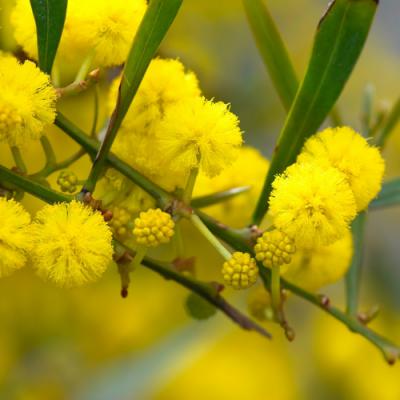
The Rare Floral: Cassie in Perfumery
Cassie absolute is one of the most extraordinary floral materials in the entire perfumer's palette — an ingredient of such rarity, complexity, and beauty that it has captivated perfumers for centuries while remaining almost entirely unknown to the general public. Derived from the tiny yellow pom-pom flowers of Acacia farnesiana — a thorny shrub native to tropical America but now cultivated extensively in the south of France, particularly around Grasse — cassie carries a scent that is simultaneously floral, spicy, powdery, anisic, and deeply warm. It is, by any measure, one of the most sophisticated and multi-dimensional natural materials available to fine fragrance.
The smell of cassie is not immediately legible in the way that rose or jasmine might be. It requires attention and patience. The first impression is floral but unusual — there is a violet-like quality, powdery and slightly candy-sweet, but also an anisic, almost medicinal edge that gives it a complexity beyond simple florality. Deeper investigation reveals a warm, balsamic undertone, reminiscent of benzoin or vanilla in its sweet resinous quality, and a faint spiciness that calls to mind carnation or clove in their gentler moments. The overall effect is intoxicating: rich without being heavy, floral without being obvious, sweet without being cloying.
The Chemistry of Cassie: Anisic Acid and Beyond
Cassie absolute is extracted from the flowers of Acacia farnesiana using solvent extraction, a process that captures the full complexity of the flower's aromatic composition in a way that steam distillation cannot achieve. The absolute is a dark, viscous material with enormous tenacity — even a single drop can perfume a room, and its longevity on skin and fabric is exceptional.
The characteristic anisic facet of cassie derives largely from anisic alcohol (methoxybenzyl alcohol) and anisaldehyde, molecules that appear widely in floral materials and are also responsible for the anisic character of mimosa, another Acacia-family flower closely related to cassie. Benzyl alcohol and benzyl benzoate contribute to the warm, balsamic base of the absolute, while various terpene compounds add freshness and complexity to the top. Farnesol, a sesquiterpene alcohol found in many floral absolutes including rose and neroli, contributes a soft, floral-waxy quality and is named after the species — farnesiana — itself. The presence of methyl eugenol adds a spicy, slightly clove-like quality that reinforces cassie's carnation-family connection.
History and Cultivation: Cassie and the Grasse Tradition
The cultivation and use of cassie in Grasse, the perfume capital of the world, has a history stretching back at least to the seventeenth century. The south of France's sunny, sheltered coastal climate proved ideal for the cultivation of Acacia farnesiana, and the harvesting of cassie flowers became an important part of the Grassois perfume industry alongside rose de mai, jasmine, and tuberose. The absolute produced in Grasse was prized above all others for its quality, and cassie from Grasse was considered among the finest natural materials available to European perfumers for over two centuries.
The twentieth century was less kind to cassie. The development of synthetic alternatives for some of its key aromatic components, combined with the rising cost of hand-picking the tiny flowers (which must be collected at dawn before the heat of the day dissipates their fragrance), made cassie increasingly expensive to produce. Many perfume houses substituted synthetic or semi-synthetic alternatives, and true cassie absolute gradually became a rarer and more costly material. The contemporary revival of interest in natural and raw ingredients in niche perfumery has brought cassie back into focus, and a number of houses are once again using the genuine Grasse absolute in their formulations.
Famous Fragrances Featuring Cassie
Cassie has appeared in some of the most celebrated and sophisticated fragrances of the past century. Chanel's Coco (1984) is perhaps the most famous composition to feature cassie as a significant contributor, its warm, spicy floral character providing part of the exotic, opulent character that made the fragrance such a landmark oriental. The cassie in Coco works in tandem with rose, jasmine, and a warm oriental base to create a fragrance of remarkable depth and longevity.
In broader terms, cassie appears in many classic oriental and powdery floral compositions where its violet-anisic warmth reinforces the overall character of the fragrance. Fragrances in the floral fragrances collection that aspire to the richer, more complex end of florality — opulent orientals and powdery florals rather than light, transparent bouquets — are the most likely to feature cassie either as a named note or as an underlying modifier. Coco Mademoiselle exemplifies the sophisticated floral-oriental tradition that cassie has helped define. The relationship between cassie and other unusual florals is explored further in the guides to ylang-ylang in perfumery and tuberose in perfumery.
Note Interactions: Cassie in Composition
Cassie's unusual combination of floral, spicy, anisic, and balsamic qualities makes it both a challenging and rewarding material to work with in composition. Its violet-like facets align it naturally with iris and violet, the three together creating powdery, sophisticated floral accords of great elegance. Rose works beautifully with cassie — the warm, honeyed quality of rose absolute blending seamlessly with cassie's spicy-anisic complexity to create accords that feel both classical and surprising. The guide to rose in perfumery is essential reading for understanding this relationship.
In the base, cassie's balsamic warmth aligns it with amber materials — labdanum, benzoin, styrax — which extend its longevity and deepen its warm, resinous quality. Sandalwood provides a particularly beautiful base for cassie, its smooth creaminess amplifying the softer facets of the absolute while providing a stable, long-lasting foundation. Musk notes at very low concentrations can add a skin-like warmth that allows cassie to feel deeply personal and intimate on the skin. Carnation and spice materials — clove, cinnamon — reinforce cassie's own spicy facets, creating compositions with a warm, exotic, almost vintage quality that references the great oriental tradition without feeling retrograde.
Wardrobe Context: The Cassie Aesthetic
Cassie-forward fragrances tend to have a character that is simultaneously exotic and intimate — they project less than many heavy florals, preferring to reveal their complexity gradually and at close range. This intimacy makes them excellent choices for personal occasions, evenings with close friends, or moments when you want to smell genuinely beautiful rather than merely noticeable. The anisic, slightly spicy quality of cassie also makes it more suitable for cooler temperatures, where the warm, balsamic facets of the absolute have more room to breathe and develop.
In terms of aesthetic positioning, cassie fragrances tend to sit at the sophisticated, artisanal end of the perfume spectrum — they are ingredients' fragrances, beloved by those who understand and appreciate the complexity of natural materials. For wearers building a collection that includes at least one genuinely unusual, high-quality floral, cassie represents an extraordinary opportunity to encounter one of perfumery's most beautiful and underappreciated ingredients. Exploring the niche fragrances collection is the best way to discover how contemporary perfumers are working with this exceptional material today.
Cassie and the Future of Rare Florals
The story of cassie in contemporary perfumery is closely tied to broader questions about the sustainability and availability of rare natural materials. As labour costs in Grasse have risen and the production of certain natural absolutes has become increasingly economically challenging, materials like cassie have become scarcer and more expensive. This scarcity has pushed some perfumers toward synthetic alternatives, while others have embraced the expense of the genuine article as a mark of quality and commitment to authentic materials.
For the fragrance enthusiast, cassie's rarity is part of its appeal — knowing that the absolute in a composition is genuine, painstakingly harvested, and authentically complex adds a dimension of appreciation that purely synthetic materials cannot provide. The movement toward transparency in fragrance formulation, which has been growing in the niche market, has helped cassie find new appreciation among consumers who want to understand and engage with the materials in their fragrances rather than treating the bottle as a mysterious black box. As this movement continues, rare florals like cassie, along with kindred materials like gardenia and champaca, are likely to receive increasing recognition as the extraordinary aromatic materials they genuinely are. The floral fragrances collection represents the best opportunity to discover these materials in finished compositions.
Cassie and Mimosa: A Closely Related Pair
Cassie and mimosa are closely related materials that are occasionally confused or used interchangeably, though they are distinct. Mimosa absolute, derived from Acacia dealbata (the silver wattle), has a slightly lighter, more powdery, and more violet-like character than cassie, with less of the anisic and spicy complexity that distinguishes the latter. Both materials share the characteristic warm, soft floral quality of the Acacia family and both are cultivated in the south of France, but experienced noses can distinguish them readily. Cassie tends to be richer, warmer, and more complex; mimosa is lighter and more immediately accessible. In composition, the two can be used together to create layered Acacia-family accords of great beauty, or separately to achieve different effects within the warm, powdery floral spectrum. For those who appreciate this family of soft, warm florals, exploring both materials provides a masterclass in how closely related plants can produce aromatic materials of subtly but meaningfully different character.