

Fruit Notes in Perfumery 2026: How Synthetic Fruits Transformed Modern Fragrance
Fruit basket is one of modern perfumery's most expressive fruity notes, a note every fragrance lover should learn to recognise on skin.
By The Fragrenza Team 7 min read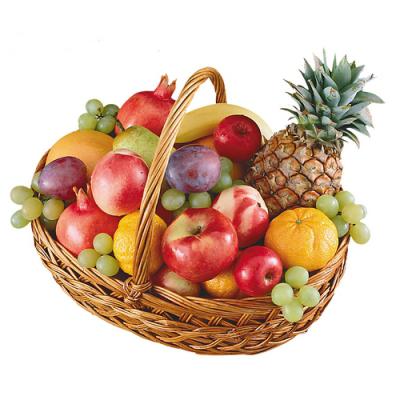
Why Fruit Notes Reshaped Modern Perfumery
Fruit notes are one of the most actively-developed categories in contemporary perfumery. The post-2000 fragrance landscape has been transformed by synthetic fruit materials that allow perfumers to use specific fruit characters — apple, pear, peach, raspberry, blackcurrant, lychee, plum, fig, mango, cherry — as structural elements rather than as occasional accent notes. The fruity-floral, fruity-gourmand, and fresh-fruity-masculine architectural families that dominate 2026 luxury and quality alternative perfumery would not exist without these synthetic-accord developments.
The key technological shift happened in the late 20th century. Until the 1980s, perfumery relied on either real fruit-derived materials (mostly limited to citrus oils and a handful of berry tinctures) or generic-fruity accords that lacked specific character. The development of specific fruit-character molecules — gamma-undecalactone for peach, methyl jasmonate for apple, allyl heptanoate for pineapple, ethyl maltol for strawberry-and-cotton-candy — made specific-fruit perfumery genuinely possible at industrial scale. The post-1990 commercial perfumery wave was largely a fruit-perfumery wave.
Pome Fruits: Apple, Pear, Quince
Pome fruits (members of the rose family with seed-bearing core structures) include apple, pear, and quince. The perfumery accords for these fruits are largely synthetic.
Apple is built around damascones (the molecules that produce the apple character), methyl jasmonate, and various synthetic apple-character molecules. Apple appears as opening lift in fresh-aromatic compositions (Eternal Zeus uses apple in the opening), as character note in fruity-floral feminine compositions (DKNY Be Delicious is the canonical mainstream apple feminine), and as supporting material in countless modern releases.
Pear is built around helional and synthetic pear-character materials. Pear appears prominently in modern luxury feminine (Givenchy Irresistible uses pear-blossom in the opening), as supporting material in dewy-rose niche compositions (Parfums de Marly Delina), and as bridge material in clean-modern feminine compositions.
Quince is a less common fruit material but appears in some niche compositions (notably DSH Perfumes Quince and various artisan releases).
Stone Fruits: Peach, Apricot, Plum, Cherry
Stone fruits (single-seed fruits) include peach, apricot, plum, and cherry. The perfumery accords use lactonic molecules that produce the characteristic velvety-creamy fruit character.
Peach is built around gamma-undecalactone (the dominant peach-character molecule, also called "peach aldehyde" historically). The molecule was synthesised in the early 20th century and revolutionised feminine perfumery — Mitsouko (Guerlain 1919) was the first major composition to use lactonic peach character at significant concentration. Modern peach compositions include numerous luxury feminine releases and the wider Fragrenza warm-vanilla quintet (which uses peach-character lactones in supporting positions).
Apricot uses similar lactonic molecules but with brighter and more apricot-specific character. The note is less common as primary feature but appears widely as supporting material.
Plum uses prunol and related plum-character molecules. The canonical plum-led composition is Mugler Angel (1992), which built the dark-fruity-gourmand category around plum-and-praline architecture. Modern compositions in the same family include various luxury feminine releases.
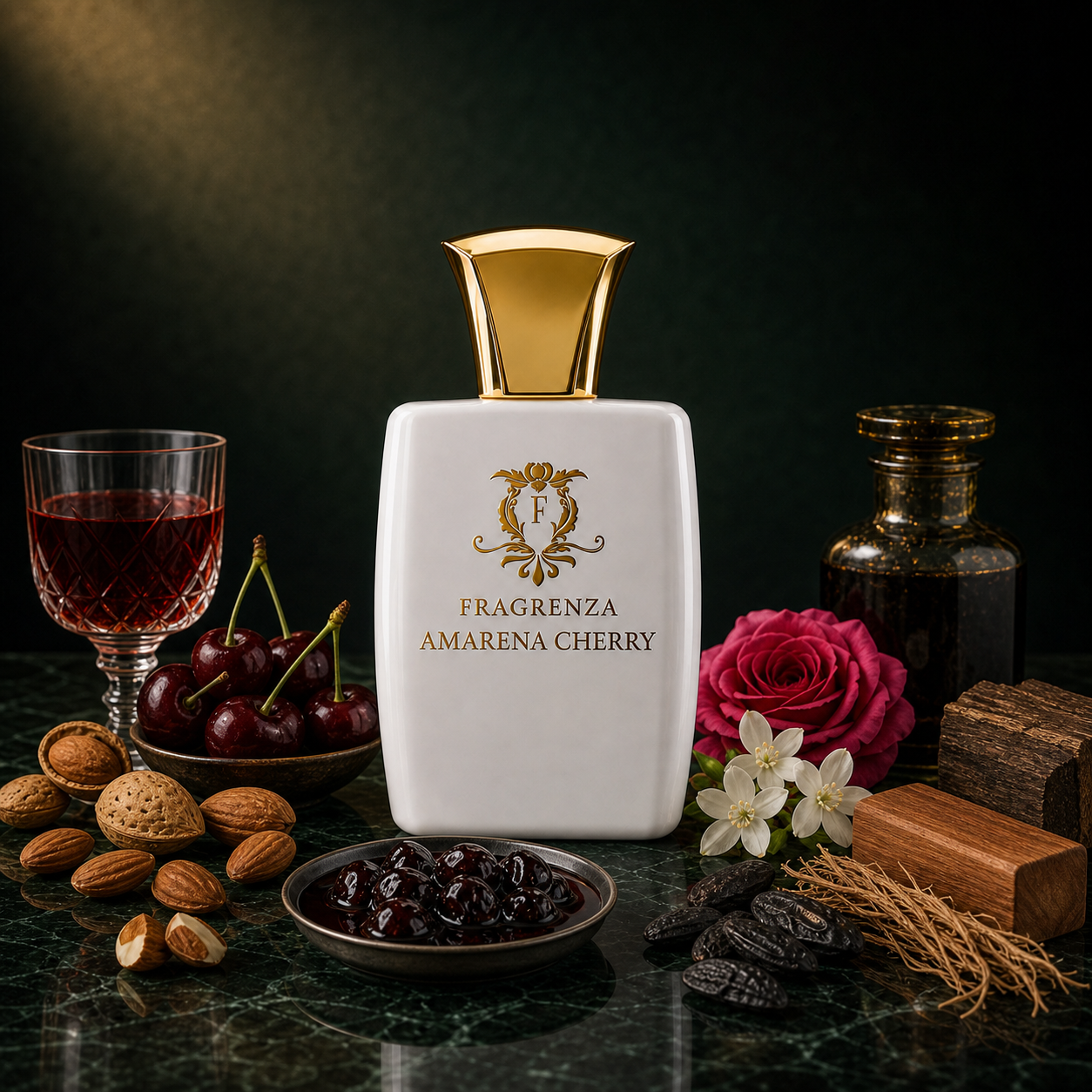
Cherry uses synthetic materials that reproduce maraschino-cherry-liqueur character (Lost Cherry tradition) or sparkling-cherry character (lighter feminine releases). The dark-cherry post-2018 wave (Tom Ford Lost Cherry, La Petite Robe Noire adjacents, Amarena Cherry) has made cherry one of the most actively-developed fruit categories.
Berries: Raspberry, Blackcurrant, Strawberry, Blueberry
Berry materials are typically synthetic with strong individual character.
Raspberry uses methyl ionone and synthetic raspberry-ketone materials. The note appears widely in modern feminine and unisex compositions (Red Jasmin uses raspberry-character to support the jasmine heart; numerous luxury feminine releases use raspberry in opening positions).
Blackcurrant (cassis) uses sulfurous synthetic materials that produce the slightly-cat-pee character of natural blackcurrant. This is one of the more divisive fruit materials — wearers either find the sulfurous facet thrilling or find it challenging. Notable compositions include Christian Dior Poison and numerous niche blackcurrant releases.
Strawberry uses ethyl maltol and lactonic materials that produce strawberry-and-cotton-candy character. The category overlaps significantly with gourmand perfumery; Prada Candy uses strawberry-character molecules in supporting positions.
Blueberry, gooseberry, and other berry materials appear in niche compositions but have less commercial penetration than the major berries.
Tropical Fruits: Mango, Lychee, Pineapple, Coconut, Passion Fruit
Tropical fruits use synthetic lactonic materials and specific-fruit-character molecules.
Mango uses synthetic lactonic materials. The note appears in summer-feminine releases and in Mediterranean-tropical compositions.
Lychee uses rose-and-tropical-floral combinations that produce the characteristic lychee character. The canonical lychee composition is Parfums de Marly Delina (2017), which built the dewy-rose niche category around lychee-rhubarb-rose architecture.
Pineapple uses allyl heptanoate and synthetic pineapple-character molecules. The canonical pineapple-led composition is Creed Aventus (2010), which made pineapple a luxury masculine signature. The Fragrenza Immortal Zeus uses pineapple-character molecules in the Aventus-tradition architecture.
Coconut uses synthetic lactonic materials that produce coconut-cream character. The note has had a major resurgence in post-2020 luxury (Mugler Alien Goddess uses coconut prominently; numerous summer luxury releases use coconut as character note).
Passion fruit and other tropical fruits use specific synthetic-character molecules. The category is most active in Caribbean-influenced and summer-tropical compositions.
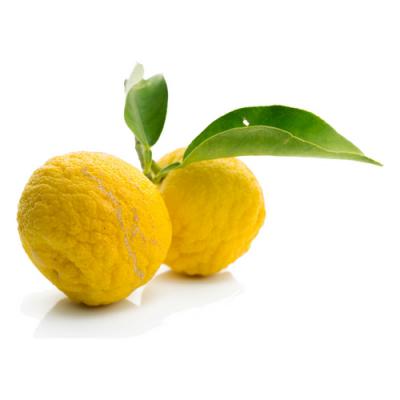
Citrus Fruits: Lemon, Bergamot, Grapefruit, Mandarin, Lime, Clementine, Yuzu
Citrus is the largest fruit category in perfumery, with extensive coverage in the dedicated Lemon in Perfumery and Bergamot in Perfumery articles. The major distinction from other fruit categories is that citrus uses primarily natural essential oils (cold-pressed from peels) rather than synthetic accords. Citrus chemistry is dominated by limonene, citral, and related terpenes.
Dried Fruits and Compote Notes
Dried fruit notes (raisin, fig, date, plum-as-prune) appear in oriental and gourmand compositions. The notes are typically synthetic accords built from lactonic materials, fruity aldehydes, and oriental-spice molecules.
Fig is the most actively-developed dried-fruit-adjacent material. The canonical fig composition is Diptyque Philosykos (1996), which established the modern fig-leaf-and-fruit Mediterranean-niche tradition.
Plum and prune notes appear in oriental compositions (Tom Ford Tobacco Vanille uses dried-fruit character in the heart; Mugler Angel uses prune notes in the supporting structure).
Fruit-Driven Architectural Families in 2026
Several major modern fragrance families depend on fruit notes as structural anchors.
Fruity-floral feminine (Versace Bright Crystal, J'adore, Mon Paris, Coco Mademoiselle adjacents). Built around fruit-and-floral combinations. The Fragrenza Rose Choral, Sensual Flame, and Red Jasmin quintet covers this register.
Dewy-rose niche feminine (Delina, Adeline). Built around lychee-rhubarb-rose architecture. The Fragrenza Adeline covers this register directly.
Dark-cherry gourmand (Lost Cherry, La Petite Robe Noire adjacents, Amarena Cherry). Built around cherry-and-almond architecture. The Fragrenza Amarena Cherry is the canonical alternative.
Modern aromatic-fresh masculine (Eternal Zeus, modern Aventus adjacents). Built around bergamot-pineapple-apple fresh-fruity openings. The Fragrenza fresh-masculine quintet (Eternal Zeus, Immortal Zeus) anchors this category.
Tropical-summer compositions (Costa Azzurra, Felce Marina adjacents). Built around tropical fruit and aquatic combinations. The Fragrenza Felce Marina and Rivelare cover the warm-weather register.
Fruity-oriental gourmand (Angel, La Vie Est Belle adjacents). Built around fruit-and-vanilla-and-resin architecture. The Fragrenza warm-vanilla quintet covers this register.
Quality vs Cheap Fruit Compositions
Quality fruit compositions use refined synthetic-fruit materials calibrated to produce realistic, well-integrated fruit character. The materials cost significantly more per kilo than generic fruit-character molecules, which is part of why luxury fragrance pricing exists.
Cheap fruit compositions use thin, candy-adjacent fruit-character molecules that fade quickly and read as artificial. The simplest quality test is the 30-minute mark. Quality fruit notes integrate into a coherent wear arc with floral and base support; cheap fruit notes fade entirely within 30 minutes, leaving the rest of the composition without architectural fruit anchoring.
The quality alternatives tier (Fragrenza and similar houses) uses quality synthetic-fruit materials calibrated to match luxury composition standards. This is why Fragrenza fruity-floral compositions hit comparable longevity and projection to luxury feminine releases at sustainable prices.
Related Reads
- Lemon in Perfumery — the citrus family
- Bergamot in Perfumery — the most-used citrus material
- Clementine in Perfumery — the sweet-citrus adjacent
- Best Cherry Fragrances 2026 — the dark-cherry register
- Best Delina Alternatives 2026 — the dewy-rose-lychee architecture
- Best Tom Ford Lost Cherry Dupes 2026 — the dark-cherry architectural family
- The Savory Gourmand Movement — the wider gourmand category
Frequently Asked Questions
Are fruit notes in perfumery real fruit?
Mostly synthetic. Most fruit-character molecules are constructed accords built from synthetic materials. Citrus is the main exception — lemon, bergamot, grapefruit, mandarin essential oils are largely natural.
Why are fruit notes synthetic?
Real fruit oils are typically unstable, structurally challenging at perfumery quality, or commercially unavailable. Synthetic materials produce more stable and more consistent fruit character.
What's the most influential fruit material in modern perfumery?
Gamma-undecalactone (the peach-character molecule) has been transformative across multiple feminine and gourmand categories since its early-20th-century synthesis. Allyl heptanoate (pineapple) is the second most influential, driving the modern aromatic-fresh-masculine register through Aventus and its successors.
Are fruit fragrances only feminine?
No — modern masculine fragrance uses fruit notes heavily (Aventus tradition, modern fresh-masculine quintet, smellmaxxing-era fruity-fresh masculines).
What season suits fruit compositions?
Depends on the fruit. Tropical fruits suit summer; dark cherry and dried fruit suit autumn-winter; fresh apple-pear-bergamot fragrances are year-round.
Are cheap fruit fragrances obviously different from quality ones?
Yes — the 30-minute fade test distinguishes them reliably. Quality fruit notes integrate into a coherent wear arc; cheap fruit notes fade entirely within 30 minutes.
What's the most cited synthetic fruit molecule?
Ethyl maltol (the strawberry-cotton-candy molecule). It anchors most modern gourmand compositions and is responsible for the sweet-pink character that dominates 2010s and 2020s feminine fragrance.
The Bottom Line
Fruit notes have transformed modern perfumery through synthetic-accord innovation across the past century. Quality fruit compositions use refined synthetic materials that produce realistic, well-integrated fruit character. The architectural-family pattern includes multiple fruit-driven categories — dewy-rose, dark-cherry, fruity-floral, fresh-fruity-masculine, tropical-summer, fruity-oriental gourmand — that the Fragrenza catalog covers through clean handles at sustainable prices.