

Oakmoss in Perfumery: The Soul of the Classic Chypre
Evernia prunastri, scraped from oak trees in the forests of Yugoslavia and France, built the chypre pillar of Chypre by Coty in 1917, Mitsouko, Femme by Rochas and Miss Dior in 1947.
By Julia Moretti 6 min read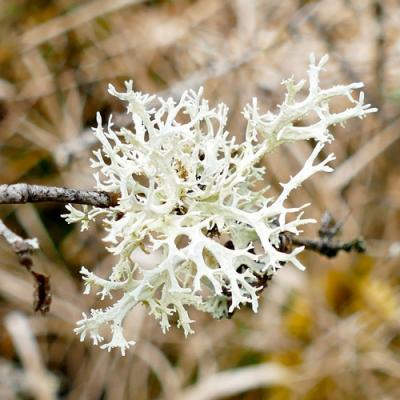
What Is Oakmoss and How Does It Smell?
No other ingredient in the perfumer's palette carries quite the same weight of history, controversy, and irreplaceable aromatic character as oakmoss. Derived from Evernia prunastri, a lichen that grows predominantly on oak trees across Europe, North Africa, and parts of North America, oakmoss absolute is one of the most complex and singular natural materials in perfumery. Its smell has been described variously as earthy, green, marine, slightly metallic, woody, and damp — but none of these adjectives individually, nor all of them together, fully captures the quality of genuine oakmoss absolute on skin.
The immediate impression of oakmoss is of deep, green earthiness with a distinctive cool, slightly watery facet that has been compared to marine environments and damp forest floors. There is something almost mineral about oakmoss — a quality of wet stone or rain-soaked bark that gives it a naturalistic authenticity that few synthetic materials can fully reproduce. Beneath this initial freshness lies increasing warmth and resinous depth: the dry-down of oakmoss absolute reveals a balsamic, slightly animalic character that is deeply tenacious and that contributes the extraordinary staying power for which classic chypre fragrances are celebrated. The overall effect is of the forest distilled to its essence — all the complex, living, slightly fermented, thoroughly organic character of a deciduous woodland concentrated into a single drop of amber-green liquid.
History of Oakmoss in Perfumery
Oakmoss has been used in aromatic preparations for millennia. Ancient Egyptian aromatic preparations called kyphi — complex incense formulations used in religious ceremonies — may have incorporated lichen-derived materials. Greek and Roman writers including Dioscorides and Pliny describe aromatic uses of tree-dwelling lichens. In medieval and early modern European perfumery, powdered oakmoss was a common ingredient in sachets, pomanders, and dry perfumes, prized both for its own smell and for its exceptional fixative properties.
The pivotal moment in oakmoss's perfumery history came in 1917, when François Coty created Chypre, the fragrance that gave its name to an entire family and established oakmoss as a defining material of high perfumery. Coty's genius was to combine bergamot's bright citric freshness with oakmoss and labdanum's deep earthy warmth, with a rose and jasmine heart providing the floral bridge between these extremes. The resulting structure — which became known as the chypre accord — generated what many perfumers and critics consider the most sophisticated and beautiful fragrance family ever created.
The decades following Coty's Chypre saw the creation of some of perfumery's greatest masterpieces built on the chypre foundation. Guerlain's Mitsouko (1919), Chanel No. 19 (1970), Estee Lauder's Knowing (1988), and dozens of other celebrated compositions relied on oakmoss as their structural bedrock. The material's extraordinary tenacity — it could still be detected on fabric after multiple washes — made it invaluable for creating fragrances of genuine longevity. Our full dedicated guide to oakmoss provides even deeper historical coverage.
The IFRA Controversy and Regulatory Restrictions
The second half of the twentieth century brought a profound challenge to oakmoss's dominance. Scientific research identified atranol and chloroatranol — two constituent compounds of oakmoss absolute — as among the most potent skin sensitizers known. Contact dermatitis caused by exposure to oakmoss was documented with increasing frequency, and the International Fragrance Association (IFRA), the industry's self-regulatory body, responded with progressively stricter limits on oakmoss in leave-on products.
The current IFRA restrictions effectively prohibit the use of oakmoss absolute at concentrations that would provide its characteristic olfactory impact in mainstream fine fragrance. This has created one of the most significant creative crises in the history of modern perfumery: the chypre family, as it existed from Coty's original creation through the great mid-century masterpieces, cannot be faithfully recreated under current restrictions. Perfumers have responded with a combination of reformulations using reduced oakmoss concentrations, synthetic moss substitutes, and creative redesigns of the chypre structure that attempt to capture its essence through alternative means.
Extraction and Key Molecules
Oakmoss absolute is produced by solvent extraction of dried Evernia prunastri lichen. The process yields a dark, viscous material of extraordinary complexity. Key aromatic compounds include evernic acid and its derivatives, which contribute the characteristic earthy-mossy core character; methyl beta-orcinol carboxylate (methyl haematommate), which provides the slightly sweet, slightly chemical quality sometimes described as "ink"; and various phenolic and chlorinated phenolic compounds including the sensitizing atranol and chloroatranol. The combination of these materials creates a profile of remarkable complexity and tenacity.
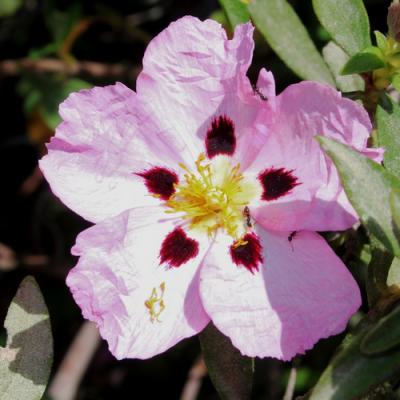
Synthetic oakmoss replacements have been developed to work around regulatory restrictions. The most successful include evernyl methyl ether (methyl atranorate), which provides an oakmoss-like quality without the sensitizing compounds; various combinations of orcinol and methyl orcinol derivatives; and constructed "moss accords" that use multiple synthetic molecules to approximate different facets of the natural material. While no single substitute fully replicates oakmoss absolute, modern synthetic reconstructions have become increasingly sophisticated and allow skilled perfumers to create compositions that honor the chypre tradition. For related earthy materials, see our guides on labdanum and cistus.
Famous Fragrances and Oakmoss's Legacy
The roster of fragrances built on oakmoss is essentially a catalog of perfumery's greatest achievements. Beyond the already-mentioned classics, the oakmoss-based masculine fougere tradition produced such celebrated compositions as Guerlain's Habit Rouge, Yves Saint Laurent's Pour Homme, and numerous Caron masculines that defined what a sophisticated men's fragrance could smell like. In the feminine chypre category, fragrances such as Rochas Femme, Lanvin Arpege, and various Guerlain compositions demonstrated the family's capacity for extraordinary emotional depth and sensory richness.
Contemporary niche perfumery has responded to the oakmoss situation in various ways. Some houses, including certain producers in the niche market, continue to use oakmoss at restricted concentrations in compositions that accept the resulting lower intensity. Others have invested heavily in synthetic reconstruction, with mixed but sometimes impressive results. Several contemporary niche fragrances have explicitly addressed the post-IFRA chypre problem, creating compositions that acknowledge their historical context while finding new solutions. The broader family of woody and earthy fragrances inherits much of the chypre aesthetic.
Note Interactions: Oakmoss's Aromatic Architecture
Oakmoss is perhaps most important for understanding as a structural foundation rather than a standalone note. Its classic function is as the base anchor of the chypre accord, where it combines with labdanum to create the deep, earthy-balsamic base that makes the chypre structure so tenacious and complex. The bergamot-oakmoss pairing — where the citrus's bright bitterness contrasts with the moss's deep earthiness — is one of perfumery's most fundamental structural relationships.
In the fougere family, oakmoss anchors the base alongside coumarin and provides the earthy richness that prevents these compositions from feeling too light or one-dimensional. With vetiver, oakmoss creates a particularly complex earthy base. With patchouli, it contributes to dense, powerful earthiness. With rose and jasmine as heart notes, oakmoss provides the naturalistic, earthy context that prevents these flowers from smelling merely decorative.
Experiencing the Oakmoss Tradition
For the contemporary fragrance enthusiast, understanding oakmoss means engaging with the history of a material that shaped an entire century of fine perfumery. Seeking out vintage reformulations of classic chypres — even in limited quantities — provides an irreplaceable education in what oakmoss actually contributes to a composition. Contemporary synthetic reconstructions, while imperfect, demonstrate how the industry continues to grapple creatively with the loss of this foundational material. The chypre family, even in its post-restriction form, remains one of perfumery's most sophisticated and rewarding territories, and oakmoss — natural or synthetic — remains at its heart.