

Tolu Balsam in Perfumery: The Warm, Spiced Resin Behind Classic Orientals
Tolu balm is a warm, balsamic raw material with deep history, a note every fragrance lover should learn to recognise on skin.
By Julia Moretti 5 min read
Tolu Balsam: An Ancient Resin With Enduring Fragrance Importance
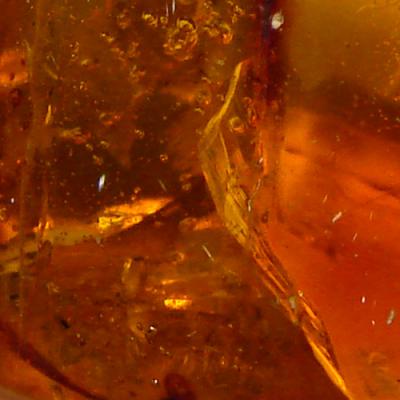
Of all the balsamic resins used in perfumery, Tolu balsam is perhaps the most consistently underappreciated despite being one of the most important. Derived from Myroxylon toluifera (now reclassified within Myroxylon balsamum), a tree native to the lowland forests of Colombia, Venezuela and Peru, Tolu balsam is a semi-solid to viscous resin with an extraordinary smell: warm, sweet and spicy, with clear vanilla-cinnamon character, a slight smokiness and a floral underpinning that distinguishes it from its close botanical relative, Peruvian balsam. If Peruvian balsam is the bolder, more medicinal of the two, Tolu is the more refined, more sweetly elegant, with a clarity of character that makes it easier to use at higher concentrations in complex compositions.
The name comes from the city of Tolu in Colombia, through which the resin was historically traded. Indigenous peoples of the Magdalena river valley used it medicinally as a wound dressing and for respiratory conditions long before European encounter. Spanish colonisers began exporting it to Europe in the early seventeenth century, where it rapidly became one of the most prized materials in both pharmacy and perfumery. Tolu balsam appears in historical pharmacopoeias as an ingredient in cough syrups and chest preparations — a medical heritage that explains the slightly medicinal quality some still perceive in it — and in luxury fragrance preparations including sachets, pomanders and perfumed powders.
Smell Profile: Vanilla, Cinnamon, Incense and Floral Warmth
Describing Tolu balsam's smell is an exercise in appreciating subtle complexity. The opening impression is sweet: a warmth that suggests vanilla and cinnamon simultaneously, but lighter and more airy than either in isolation. As it develops, the floral facet becomes more apparent: there is something almost hyacinth-like in the heart, a slight greenish-floral quality that floats above the warm, spiced base. The resinous, slightly smoky depth in the drydown is reminiscent of certain incense materials and of benzoin, though less powerfully sweet than the latter.
The overall character is of a warm, luminous, gently spiced sweetness that works in fragrance at a slightly elevated register compared to heavier balsamic materials: Tolu balsam has enough lightness to function effectively in floral-oriental compositions without overwhelming the floral heart, which is not always true of the heavier balsamic and resinous materials in the perfumer's palette. This makes it particularly valuable in compositions that want balsamic depth without balsamic heaviness — a distinction that is practically significant in formulation.
Chemistry: Cinnamic Acid, Benzyl Benzoate and Vanillin
Tolu balsam's chemical profile is similar in broad outline to that of Peruvian balsam, reflecting their botanical kinship, but with significant differences in the relative proportions of key components that account for the distinct olfactory character. Free cinnamic acid and its esters, particularly benzyl cinnamate and cinnamein (a mixture of benzyl cinnamate and benzyl benzoate), are the most significant aroma-contributing components. Vanillin is present in meaningful quantities, contributing the sweet, vanilla-like facet. Benzyl benzoate is present but in lower proportions than in Peruvian balsam, which partly explains why Tolu reads as less medicinal and more sweetly aromatic. Various other phenylpropanoid compounds, terpenes and esters contribute to the complexity of the whole material.
Like Peruvian balsam, Tolu contains benzyl benzoate at levels that require declaration under EU cosmetic regulations and that are subject to IFRA guidance. Contemporary perfumers often work with the specific isolated components — particularly with cinnamic alcohol and its esters — rather than the whole resin, allowing them greater precision in formulation and easier compliance with regulatory requirements. The synthetic equivalent of Tolu's characteristic character can also be approached through combinations of synthetic benzyl cinnamate, eugenol, vanillin and cinnamic aldehyde, though the complexity and naturalness of the whole resin is difficult to fully replicate.
History in the Perfume Canon: Guerlain and the Oriental Tradition
Tolu balsam has been a standard ingredient in fine European perfumery since the early eighteenth century. Its appearance in historical French and Italian perfume formularies is extensive: it was a component of many of the great balsamic and floral-oriental compositions of the eighteenth and nineteenth centuries, appreciated both for its own aromatic character and for its extraordinary fixative properties. In Guerlain's formulations, particularly those of the golden age under Jacques Guerlain in the first half of the twentieth century, balsamic resins including Tolu played a fundamental structural role. The Guerlainade — the house's characteristic base accord of vanilla, iris, benzaldehyde, tonka and balsamic materials — was in many formulations partly built on the combination of Tolu and related balsams.
The great oriental fragrances of the mid-twentieth century — many of which remain benchmarks for the entire category — used balsamic materials including Tolu to create the characteristic warm, rich, persistent base that distinguishes the oriental family from all others. In contemporary reformulations, where original ingredients may be restricted or unavailable, perfumers face the challenge of recreating this balsamic depth using available alternatives. Among oriental fragrances in the modern market, compositions that successfully capture the warmth and richness of the historical balsamic base are among the most prized by connoisseurs.
Note Interactions
Tolu balsam's warm, spiced-sweet character gives it affinities across a broad range of fragrance families. With vanilla, it creates a balsamic-sweet base of greater complexity than vanilla alone: the cinnamic warmth of Tolu adds a spiced depth that elevates the combination above simple sweetness. With labdanum, it contributes to the warm, amber-inflected base structures of chypre and oriental compositions, adding sweetness and lightness to labdanum's darker, more resinous character. With rose and other florals, Tolu provides an unusually compatible balsamic base that deepens and extends the floral without overwhelming it.
With spices — particularly cinnamon, cardamom and clove — Tolu reinforces and enriches the spice accord while its slightly floral-sweet quality prevents it from becoming too harsh or abrasive. With dark woods like oud and sandalwood, Tolu creates a warm, balsamic-woody base of great richness and longevity. For those building a collection of oriental fragrances, understanding Tolu balsam as a foundational material is essential for appreciating why certain compositions achieve the particular quality of deep, warm, enduring richness that defines the genre at its finest.
Wearing Tolu Balsam: Wardrobe Context
Fragrances featuring Tolu balsam prominently belong to the oriental and heavy floral-oriental families: richly warm, persistent, projecting with authority and best suited to cooler weather, formal occasions and evening wear. Their characteristic quality is one of sustained warmth — a fragrance that begins its development on the skin and continues to reward attention for hours, revealing new facets as it progresses through its drydown. For the serious fragrance enthusiast, Tolu balsam represents one of the great historical ingredients: a connection to centuries of perfumery practice and to the warm, balsamic tradition that produced some of the most celebrated fragrances ever made.