

Water Lily in Perfumery: Aquatic Grace in Every Drop
The living Nymphaea bloom has almost no measurable aroma, and the water lily that defines a generation of fragrance is a poetic synthetic accord built around clean-aqueous calone-adjacent materials.
By Julia Moretti 6 min read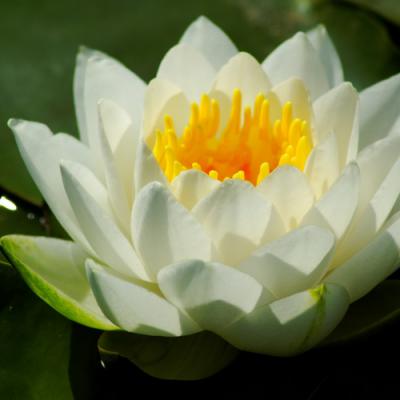
The Bloom That Perfumery Invented
Water lily occupies a peculiar and fascinating position in the world of fragrance: it is simultaneously one of perfumery's most evocative and most technically synthetic notes. The living flower, floating on still ponds and slow rivers throughout the temperate world, actually has very little discernible natural fragrance in the way that rose or jasmine do. Yet in perfumery, water lily has become one of the defining notes of a generation — a shorthand for a particular quality of cool, clean, aqueous freshness that evokes calm water surfaces, summer afternoons, and a certain luminous, unhurried elegance.
This apparent paradox — that one of perfumery's most successful "natural" flowers is primarily a synthetic creation — is actually a testament to the creative intelligence of contemporary perfumers and the remarkable expressive capacity of modern aroma chemistry. Water lily as a perfumery note is less a faithful recreation of a specific flower's scent than it is a poetic interpretation of everything a water lily represents: coolness, stillness, natural grace, the particular quality of light and air above a still body of water on a warm day.
Scent Profile: Cool, Dewy, Aquatic-Floral
The perfumery note of water lily is typically clean, slightly aqueous, and gently floral. It sits at the intersection of the aquatic and floral families, sharing qualities with both without being fully absorbed by either. The aquatic dimension gives it a cool, transparent, slightly watery quality — evoking damp air above a lake, the smell of clean standing water, or the particular freshness of a green stem broken underwater. The floral dimension adds a soft, delicate sweetness that prevents the note from reading as purely abstract or unpleasantly sharp.
In practice, water lily notes in fragrance vary considerably in their specific character depending on the molecules used and the skill of the perfumer. Some versions lean heavily aquatic — cool, almost ozonic, with a transparent, barely-there quality that makes them ideal for light, airy compositions. Others are more floral — slightly warmer, with a soft, powdery sweetness that brings them closer to white flowers like lily or gardenia. The best versions balance both dimensions, creating a note that is simultaneously refreshing and quietly beautiful.
The Synthetic Architecture of an Aquatic Note
Because water lily lacks significant natural aromatic compounds suitable for extraction, perfumers rely on a repertoire of synthetic molecules to construct the note. The most important family of materials here is the calone group, and particularly calone 1951 (also known simply as calone or watermelon ketone), a molecule discovered in the 1950s and first deployed in fine fragrance in the late 1980s and early 1990s. Calone has an intensely aquatic, slightly metallic, watermelon-adjacent character that immediately evokes the smell of cool water and marine air. Used judiciously, it creates the foundation of almost all convincing aquatic and water lily accords.
Alongside calone, perfumers building water lily accords typically use dihydromyrcenol, which provides a fresh, slightly citrus-aquatic brightness; various aldehyde compounds that add a clean, almost laundered quality; and floral materials such as hydroxycitronellal — a compound with a powerful, gentle lily-of-the-valley character — and hedione, which contributes a diffusive, jasmine-like freshness that lifts and clarifies the composition. The result of carefully balancing these elements is a convincing, multi-dimensional water lily note that can read as surprisingly naturalistic despite being entirely synthetic in construction.
Historical Context: The Aquatic Revolution
To understand water lily's place in contemporary fragrance, it is essential to understand the seismic shift in perfumery that occurred in the early 1990s with the emergence of the aquatic genre. Prior to this period, the dominant registers in fine fragrance were floral, oriental, chypre, and fougère — all built on established botanical or animalic materials with centuries of tradition behind them. The aquatic revolution, triggered largely by the release of Issey Miyake L'Eau d'Issey in 1992 and driven by the newly available calone molecule, created an entirely new olfactory language: clean, transparent, airy, and deeply modern.
Water lily became one of the signature notes of this new aesthetic, serving as the floral anchor for what might otherwise have been purely abstract aquatic compositions. Where calone alone can read as slightly cold or even metallic, the addition of a soft floral character — the dreamed water lily — humanises the aquatic accord and gives it warmth and accessibility. This pairing of cool aquatic freshness with gentle, dewy florality proved enormously popular and spawned an entire genre of fragrances that remains commercially vital today.
Note Interactions: Where Water Lily Excels
Water lily's most important interactions in fragrance are with other fresh and clean materials. With citrus top notes — bergamot, lemon, grapefruit — water lily creates an opening of remarkable freshness and luminosity, extending the clean brightness of the citrus phase into the heart of the composition and preventing a jarring transition to heavier base materials.
With floral hearts, water lily functions as a green, dewy modifier. Paired with rose, it creates a thoroughly modern, outdoor rose — cooler, fresher, and more airy than a traditional rose soliflore. With jasmine, the water lily note tempers the indolic warmth of the jasmine, creating a cleaner, more immediately accessible version of the floral heart. With iris, water lily and the powdery-cool root note create a sophisticated, contemporary pairing that has become something of a signature of niche floral compositions seeking restrained elegance.
In bases, water lily transitions most gracefully into clean white musks, light woods, and gentle ambers. The combination of water lily's aquatic-floral character with a warm white musk base creates the characteristic sillage of many successful contemporary fresh florals — a scent that begins cool and transparent and closes with intimate, skin-warm softness.
Famous Fragrances and the Water Lily Aesthetic
Water lily appears, in various forms, across a remarkably broad range of contemporary fragrances. Paco Rabanne Olympea uses aquatic-floral accords in its opening that share qualities with the water lily aesthetic — a clean, goddess-like freshness that frames the composition's warmer vanillic and amber core. The transparency and luminosity of the opening is a direct legacy of the aquatic revolution that water lily helped to define.
Chanel Chance deploys a similar combination of fresh, aqueous florality with a clean modern heart, and the water lily aesthetic — even when not explicitly listed as an ingredient — is perceptible in the composition's luminous, airy character. This is the nature of water lily's contribution to contemporary perfumery: it is everywhere and nowhere simultaneously, a quality of freshness and light that has become so foundational to the modern fragrance language that it can be difficult to identify as a specific ingredient even when its influence is unmistakable.
For those exploring the full range of fresh and aquatic-inspired compositions, the floral fragrance and women's fragrance collections offer the broadest range of water lily-influenced compositions, from the lightest and most transparent summer scents to more structured florals where the aquatic note provides a cooling, modern counterpoint to warmer heart materials.
Water Lily in the Fragrance Wardrobe
Water lily is one of the most seasonally specific of all fragrance notes. Its cool, fresh, aquatic-floral character is perfectly aligned with the warmth and light of late spring and summer, and it performs at its best when the ambient temperature amplifies its volatility and the natural context — sun, gardens, outdoor spaces — echoes its associations. In cold weather, the very qualities that make water lily so appealing in summer can feel slightly thin or incongruous, and the note's limited longevity on cold skin means that its beauty is brief.
This seasonal specificity is not a weakness but a characteristic: water lily fragrances are among the most genuinely pleasure-focused in perfumery — compositions designed for enjoyment in the moment rather than for philosophical reflection. They are the olfactory equivalent of a perfectly chilled glass of water on a hot day — not complex or challenging, but so exactly right in their context that they achieve a kind of perfection. For the fragrance lover who wants a summer wardrobe note that is simultaneously refined and effortlessly wearable, water lily remains, decades after its introduction, one of the most intelligent choices available.