
Best Pink Pepper Fragrances 2026: The Five Archetypes from Spicebomb to Leather Urban
The pink pepper in fine fragrance comes from the Peruvian pepper tree, an Anacardiaceae closer to cashews than to Piper nigrum; damascones inside the oil give it the rose-fruit undertow.
By Julia MorettiFragrenza makes several of the alternatives featured in our guides — here’s how we test.
13 min read
Pink pepper is the spice that rewrote contemporary perfumery's spice register. Where black pepper reads as dry, sharp, and assertive — closer to the kitchen than to a fine fragrance — pink pepper reads as bright, slightly fruity, simultaneously cool and warm, with a clean spicy radiance that catches the attention without demanding it. The note appeared in commercial perfumery around 2001 and within fifteen years had become one of the most widely used top-note spices in fine fragrance. This is the commercial buyer's edit organized around the five archetypal directions pink pepper perfumery has settled into.
For the broader spice context, our Black Pepper in Perfumery educational pillar covers the underlying chemistry. For the related savory gourmand register that pink pepper often bridges into, our Savory Gourmand pillar is the cultural-context companion. This article is the dedicated pink pepper buyer's edit.
What pink pepper actually is in fine perfumery
Pink pepper is a botanical mislabel that became a perfumery category. The "pink pepper" used in fine fragrance does not come from Piper nigrum (the true pepper plant that produces black, white, and green pepper) but from Schinus molle — the Peruvian pepper tree, a member of the Anacardiaceae family that is actually botanically closer to cashews and mangoes than to true pepper. The pink-red berries produce an essential oil that smells spicy-warm but with a distinctive fruity-rosy character that no true pepper material delivers.
Three aromatic facets define pink pepper's character in fine fragrance. The first is the fruity-rosy facet — pink pepper oil naturally contains damascones and other rose ketones, which gives the spice its characteristic warm-rose-fruit undertow. This is what distinguishes pink pepper from any true pepper material. The second is the cool-aromatic facet — pinene, limonene, and other terpenes contribute a fresh, slightly minty-cool quality that prevents pink pepper from reading as heavy or oppressive. The third is the spicy-warm facet — moderate-volatility spicy compounds that bridge the cool top into the warmer heart of a composition.
Pink pepper is fundamentally a top-and-early-heart material — its character peaks in the first 30-60 minutes and fades as the composition's deeper materials emerge. This wearing pattern is the most important distinction between pink pepper and black pepper (which carries through to the base) or cardamom (which integrates into the heart and persists longer). Quality pink pepper perfumery uses the note as the opening-character-setter rather than as a structural anchor.
The cultural arc — from niche curiosity to commercial staple
Pink pepper is one of the youngest commercially established materials in fine fragrance. The note appeared occasionally in twentieth-century compositions but did not become a recognizable perfumery category until the 2000s.
2001: Aedes de Venustas Aedes de Venustas. Bertrand Duchaufour's composition for the eponymous Aedes de Venustas niche house was one of the first commercial perfumes to use pink pepper as a featured material. The composition demonstrated that pink pepper could carry serious niche-level work and helped establish the note's commercial credibility.
2005-2015: the designer wave. Pink pepper migrated from niche to mass-market through compositions like Burberry The Beat (2008), Dior Addict, and dozens of designer launches that adopted the note for its bright spicy-fruity opening. By 2015, pink pepper had become one of the most widely-used top-note spices in fine fragrance.
2015: Dior Sauvage. François Demachy's enormously commercially-successful composition opened with pink pepper and Calabrian bergamot, anchored by ambroxan. Sauvage became the best-selling masculine fragrance of the decade and made pink pepper a structural fixture of contemporary masculine perfumery. Every subsequent commercial masculine launch with a pink pepper opening traces its lineage to Sauvage.
2017-2026: contemporary diversification. Hermès Twilly d'Hermès (2017) used pink pepper alongside ginger and tuberose to demonstrate the note in a feminine-floral register. Maison Margiela By the Fireplace folded pink pepper into a gourmand-smoky composition. Tom Ford Bitter Peach (2023) opened with cardamom-pink-pepper layers as part of the dark-boozy peach register the iter-23 Best Peach pillar covers. The 2020s landscape uses pink pepper across every fragrance family with the exception of pure aquatic and pure citrus compositions.
Famous pink pepper fragrances worth knowing
Several compositions deserve study because they show what pink pepper can do at the headline. Aedes de Venustas Aedes de Venustas (2001) remains the niche benchmark for the note's first commercial era. Dior Sauvage (2015) is the masculine cultural reference and the composition that defined contemporary commercial pink pepper. Hermès Twilly d'Hermès (2017) demonstrated pink pepper in a feminine-floral register. Maison Margiela Replica By the Fireplace (2015) folded pink pepper into a gourmand-smoky context. Le Labo Bergamote 22 used pink pepper in a citrus-aromatic register where the note's cool freshness complemented the bergamot beautifully. The Fragrenza catalog interpretations span five contemporary pink pepper directions through four clean handles and one §6.2 flagged composition where the cultural reference point is Viktor & Rolf Spicebomb.
Five archetypal pink pepper directions in 2026
Each direction has its own typical use case, its own seasonal register, and its own Fragrenza pick distributed inline. All five picks have Pink Pepper explicitly tagged in their official Shopify product descriptions — §16.2 compliance is direct rather than via disclaimer.
1. Pepper-bomb fougere (the Spicebomb register)
The most architecturally explosive of the five archetypes. Pink pepper paired with cinnamon, saffron, tobacco, and leather — the spice-fougere direction that Viktor & Rolf Spicebomb defined and that has carried through the contemporary masculine wave. Reads as confident, evening-friendly, intensely spiced. Best for evening wear, cool weather, and anyone drawn to the most maximalist pink pepper direction. The closest Fragrenza match:
(Bomba Di Spezie) — bergamot, grapefruit, and pink pepper opening; saffron, cinnamon, and chili at the heart; tobacco, leather, and vetiver at the base. The most pink-pepper-forward composition in the Fragrenza catalog — pink pepper is the structural opening note that the composition is built around.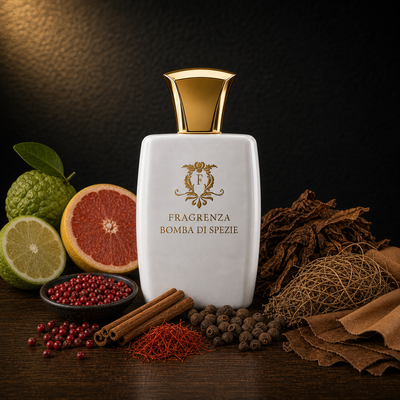
2. Pepper-aromatic woody (the Mediterranean register)
The contemporary unisex archetype. Pink pepper paired with juniper, bergamot, and a cedar-and-vetiver base — the dry-aromatic register that contemporary niche masculine perfumery has refined. Reads as polished, daytime-flexible, sophisticated. Best for daily wear, autumn-winter contexts, and anyone who wants pink pepper in a restrained-aromatic register rather than a maximalist spice-bomb. The closest Fragrenza match:
— pink pepper, juniper, bergamot, and black pepper opening; thuya and Atlas cedarwood at the heart; sandalwood, patchouli, and vetiver at the base. The pink pepper opening defines the composition's character; the wear is meditative and slow-evolving.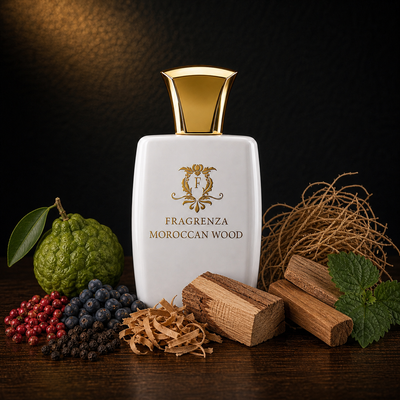
3. Pepper-fruity-floral (the bright commercial register)
The accessible-modern archetype. Pink pepper paired with apple blossom, nectarine, tuberose, and a tonka-vanilla-musk base — the bright fruity-floral direction that contemporary commercial perfumery has refined. Reads as luminous, daytime-friendly, broadly wearable. Best for daily wear, spring, and anyone who wants pink pepper softened by fruity-floral lightness rather than fougère intensity. The closest Fragrenza match:
— apple blossom and bergamot lifted by pink pepper and red pepper opening; cyclamen, nectarine, ylang-ylang, and tuberose at the heart; tonka bean, vanilla, musk, patchouli, and benzoin at the base. The double-pepper opening (pink + red) gives the composition a vivid spiciness that prevents the floral heart from reading as merely pretty.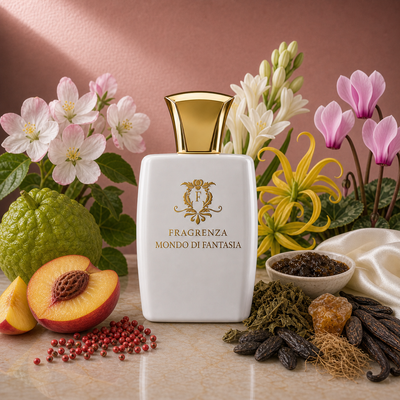
4. Pepper-caramel gourmand (the sweet-spice crossover register)
The lactonic-gourmand crossover archetype. Pink pepper paired with caramel, oud, milky notes, and a vanilla base — a modern sweet-spice direction that bridges the savory gourmand and lactonic registers. Reads as indulgent, evening-warm, slightly transgressive. Best for cool-weather evening wear and anyone drawn to compositions that pair pink pepper with explicit gourmand sweetness. The closest Fragrenza match:
— pink pepper and bergamot opening; jasmine, tuberose, lily of the valley, honey, and paradisone at the heart; caramel, oud, vanilla, and milky notes at the base. The pink pepper opening sparks the composition into life before the gourmand base takes over; the crossover into the iter-22 lactonic register makes this a versatile cross-cluster pick.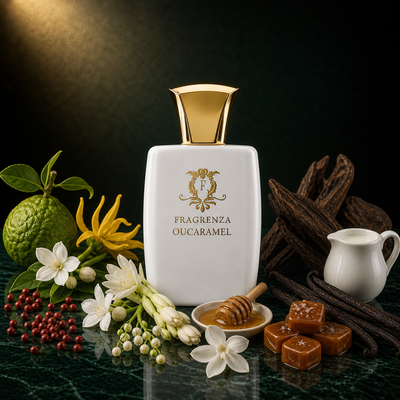
5. Pepper-leather urban (the sophisticated unisex register)
The contemporary urban-luxury archetype. Pink pepper paired with petitgrain, blackcurrant, galbanum, and a leather-tomato-leaf-iris architecture — the Mediterranean-leather unisex direction that contemporary niche houses have explored. Reads as cool, sophisticated, evening-leaning. Best for autumn-winter evening wear and anyone drawn to architecturally complex leather compositions where pink pepper provides the cool-spiced opening. The closest Fragrenza match:
— pink pepper, petitgrain, blackcurrant, and cistus opening; galbanum, clary sage, tomato leaf, and iris at the heart; leather, vanilla, sandalwood, tolu balsam, opoponax, myrrh, benzoin, and musk at the base. The pink pepper opening sets up the leather composition's cool-warm tension; the wear is genuinely architectural rather than commercial.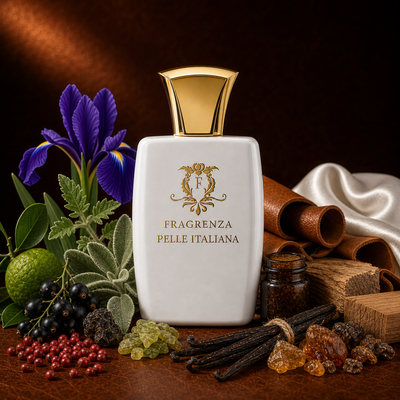
How pink pepper fragrances wear on skin
Pink pepper compositions wear specifically. Three patterns worth knowing.
Pink pepper is a top-note material. Unlike vanilla (which builds across the wear) or oud (which projects across the entire composition), pink pepper peaks in the first 30-60 minutes and fades as the composition's heart and base emerge. The wear after hour two is determined by what sits underneath the pink pepper, not by the pepper itself. This is the most important wearing distinction between pink pepper and structural-anchor materials.
Skin chemistry shapes the opening. Pink pepper's damascone-rose chemistry interacts variably with skin pH. Warmer or oilier skin amplifies the fruity-rosy facet; cooler or drier skin amplifies the cool-aromatic facet. The same composition can read as warm-fruity-spice on one wearer and cool-fresh-spice on another for the first hour.
Application volume matters more than for most spices. Pink pepper opens loud — two sprays gives strong projection that may feel too much in office contexts. One spray is sufficient for daily wear; two for confident-projection contexts; never three. The note carries enough on skin that volume escalates quickly. For the broader skin chemistry framework, see our skin chemistry deep-dive.
When and how to wear pink pepper
The pink pepper register is broadly seasonal-flexible. The pepper-bomb fougere archetype (Bomba Di Spezie register) is emphatically cool-weather evening territory. The pepper-aromatic woody (Moroccan Wood register) handles autumn-winter daytime and evening. The pepper-fruity-floral (Mondo di Fantasia register) is spring and summer daytime friendly. The pepper-caramel gourmand (Oucaramel register) is autumn-winter evening. The pepper-leather urban (Pelle Italiana register) is cool-weather evening.
For application, pink pepper rewards restraint as noted above. For the broader wardrobe framework, our wardrobe pillar covers how pink pepper fits alongside other spice families.
How to layer pink pepper fragrances
Three reliable layering patterns work within the pink pepper register.
Pattern 1: pink pepper over a clean musk base. Spray a clean musk on pulse points first, then apply the pink pepper composition over it. The musk extends the dry-down past the pink pepper top-note fade and produces a layered wear that retains spicy character into hour three and beyond.
Pattern 2: pink pepper + leather pulse points. For the Pelle Italiana-register archetype, layering with a separate leather composition deepens the architectural character. Apply leather composition to chest first, then pink pepper composition over.
Pattern 3: pink pepper + vanilla for the sweet-spice register. For the Oucaramel-register archetype, layering with a separate vanilla composition amplifies the sweet-spice crossover into the lactonic register.
Anti-pattern: do not layer pink pepper under aquatic or sharp citrus compositions. The pink pepper's fruity-warm character clashes with cool-aquatic sharpness rather than complementing it. For the broader layering framework, our layering pillar covers the principles.
Building a pink pepper rotation
A two-bottle pink pepper setup covers most use cases — one architecturally maximal pick for evening (Bomba Di Spezie for the spice-bomb register, or Pelle Italiana for the leather-urban register) and one daytime-flexible pick (Moroccan Wood for the dry-aromatic register, or Mondo di Fantasia for the fruity-floral register). A three-bottle rotation adds the gourmand crossover (Oucaramel) for cool-weather evening variety. A five-bottle rotation covers all five archetypes.
The pink pepper register pairs naturally with the Savory Gourmand pillar (the spice-and-tobacco family pink pepper often bridges into), the iter-22 Best Lactonic Fragrances pillar (the sweet-spice crossover that Oucaramel demonstrates), and the broader Best Cardamom Fragrances for the adjacent spice category. A well-built spice wardrobe typically includes one pink pepper pick alongside one cardamom pick.
Who each pick is for
If you want the most architecturally explosive Spicebomb-style pink pepper register: Bomba Di Spezie.
If you want pink pepper in a dry-aromatic Mediterranean woody register: Moroccan Wood.
If you want pink pepper softened by bright fruity-floral lightness: Mondo di Fantasia.
If you want pink pepper in a sweet-spice caramel-gourmand crossover: Oucaramel.
If you want pink pepper opening a sophisticated leather-urban composition: Pelle Italiana.
If you're not sure where you sit: The Fragrenza sample pack covers the full range — three-day testing on skin is the only way to discover which pink pepper register your chemistry amplifies.
Frequently asked questions
What does pink pepper smell like in perfume?
Simultaneously spicy, fruity, slightly rosy, and cool-aromatic — pink pepper is unusual among spices for carrying multiple registers at once. The fruity-rose character comes from damascones (rose ketones) naturally present in Schinus molle oil; the cool-aromatic character comes from terpenes; the spicy warmth comes from moderate-volatility spice compounds. Quality pink pepper compositions capture all three facets in the opening; weak compositions reduce the note to a single dimension and lose what makes it distinctive.
What is the difference between pink pepper and black pepper in perfumery?
Botanically different plants entirely. Pink pepper comes from Schinus molle (Peruvian pepper tree); black pepper from Piper nigrum. Pink pepper has a fruity-rosy facet from damascones that true pepper materials lack; black pepper is drier, sharper, more aggressive. Pink pepper is a top-and-early-heart note; black pepper carries through to the base. Many compositions use both materials together for layered spice complexity, but the substitutional pattern is rare.
Are pink pepper fragrances feminine or masculine?
Fully unisex despite Dior Sauvage's masculine cultural association. Pink pepper has no inherent gender coding — what surrounds it does. The pepper-bomb fougere archetype skews masculine in cultural associations; the pepper-fruity-floral archetype skews feminine; the pepper-aromatic woody, pepper-caramel gourmand, and pepper-leather urban archetypes are essentially unisex. Treat pink pepper gender marketing as a starting point rather than a constraint.
How long do pink pepper fragrances last on skin?
The pink pepper character itself wears 30-60 minutes; the composition's longevity depends on what sits underneath. Most contemporary pink pepper compositions wear 6-10 hours on average skin because the base materials (vanilla, leather, oud, sandalwood, soft musks) carry the wear past the pink pepper fade. The pepper-bomb fougere and pepper-leather urban archetypes wear longest (8-12 hours); the pepper-fruity-floral archetype wears shortest (5-7 hours).
Can pink pepper fragrances be worn in summer?
The pepper-fruity-floral (Mondo di Fantasia register) is the most summer-flexible. The pepper-aromatic woody (Moroccan Wood register) and pepper-leather urban (Pelle Italiana register) handle warm-weather evening contexts well because their base materials don't project aggressively in heat. The pepper-bomb fougere and pepper-caramel gourmand archetypes are cool-weather compositions; the dense base materials project too aggressively in heat.
What perfumes layer well with pink pepper?
Three reliable directions: clean musk (extends the dry-down past the pink pepper top-note fade), leather (deepens the architectural character for the Pelle Italiana register), and vanilla (amplifies the sweet-spice crossover for the Oucaramel register). Avoid layering pink pepper with aquatic or sharp citrus compositions — the fruity-warm character of pink pepper clashes with cool-aquatic sharpness.
What is the best pink pepper fragrance for beginners?
The pepper-aromatic woody archetype (Moroccan Wood register) is the most universally-wearable entry point. The pink pepper opening defines the composition's character but the dry-cedar-pepper architecture stays restrained throughout the wear; the composition is sophisticated without being intimidating and handles a wider range of contexts than the maximalist Bomba Di Spezie register. Start there, learn how your skin amplifies the damascone-rose chemistry over a season, and decide whether to explore the spice-bomb direction (Bomba Di Spezie), the fruity-floral lightness (Mondo di Fantasia), the gourmand crossover (Oucaramel), or the leather-urban register (Pelle Italiana).
The bottom line
Pink pepper is one of the most architecturally distinctive contemporary spice notes in fine perfumery and one of the most rewarding to learn deeply. The five archetypes give you the full commercial landscape — spice-bomb fougere, dry-aromatic woody, fruity-floral, sweet-spice gourmand, and leather-urban — and the Fragrenza picks within each give you concrete starting points across the range. All five picks contain verified pink pepper materials per their official product descriptions; §16.2 compliance is direct rather than via disclaimer.
Whether you want the maximalist Spicebomb-style intensity of Bomba Di Spezie, the dry-aromatic Mediterranean polish of Moroccan Wood, the bright fruity-floral accessibility of Mondo di Fantasia, the sweet-spice crossover of Oucaramel, or the leather-urban sophistication of Pelle Italiana, the contemporary pink pepper family has the depth to reward years of exploration. Three-day skin testing on your own chemistry reveals which archetype your skin amplifies and which becomes a long-term part of your rotation.