Best Vanilla Fragrances 2026: The Five Vanilla Archetypes
Madagascar absolute carries the full chemical complexity, vanillin is the dominant aroma molecule, and ethyl vanillin runs three times as strong.
By Julia MorettiFragrenza makes several of the alternatives featured in our guides — here’s how we test.
14 min read
Vanilla is the most universally beloved note in fine perfumery. It transcends culture, gender, age, and occasion: a warmth that registers as instinctively comforting on every wearer who encounters it, a sweetness that is deeply familiar, a creaminess that is sensuous without being aggressive. Vanilla does not need to justify itself or acquire an acquired taste. It is the fragrance equivalent of something nearly everyone already loves before they encounter it for the first time.
And yet vanilla in perfumery is far more complex than its easy universality suggests. The note can be deployed as soft powdery warmth in a floral oriental, as the rich caramelized centerpiece of a gourmand, as a sweet backdrop that softens woody compositions, or as the primary character of a fragrance that unfolds slowly into something deeply intimate. Understanding the range of vanilla in perfumery is understanding one of the note's most rewarding paradoxes: it is simultaneously the most accessible and the most nuanced ingredient a perfumer can work with.
This is the complete commercial guide to the best vanilla fragrances in the Fragrenza line, organized by the five vanilla archetypes that define the contemporary landscape. For the broader register, see the bright gourmand 2026 pillar.
What vanilla actually is in fine perfumery
Vanilla in fragrance comes from three primary sources. Vanilla absolute is the natural extraction from vanilla pods (Vanilla planifolia), with the most prestigious materials sourced from Madagascar (rich and complex), Tahiti (lighter and more floral), or Comoros (deeper and slightly smoky). The absolute captures the full chemical complexity of the cured beans, including vanillin alongside dozens of other aromatic compounds that give real vanilla its depth.
Synthetic vanillin has been isolated and produced industrially since 1858, when Ferdinand Tiemann and Wilhelm Haarmann first synthesized the compound from coniferin. Vanillin alone is sweet, slightly creamy, and the dominant aroma molecule in any vanilla composition. Ethyl vanillin, a more potent synthetic variant developed in the late 19th century, has three times the aromatic strength of vanillin and a slightly more piercing character; it appears in compositions where the vanilla character should project strongly.
The contemporary perfumer almost always uses these materials in combination. A composition with only vanillin reads thin and slightly artificial; one with only vanilla absolute can be prohibitively expensive and may lack the projection that synthetic materials provide. The blend produces the depth and longevity that define the best vanilla compositions.
Vanilla's most natural companion in perfumery is tonka bean, which shares chemistry with vanilla (both rich in coumarin and its derivatives) and contributes an almond-hay-vanilla warmth that supports vanilla in nearly every gourmand composition. Benzoin, labdanum, and coumarin itself all pair naturally with vanilla to build the warm resinous bases that define the contemporary gourmand register.
Vanilla in modern perfumery
Vanilla has been used in fine fragrance for over a century. Shalimar (1925), the Guerlain oriental that paired bergamot opening with a vanilla-balsamic base, established vanilla as a serious perfumery material at the prestige tier and remains a cultural reference point a century after its release. Through the mid-20th century, vanilla appeared as a supporting note in dozens of well-known orientals but rarely as the foregrounded character.
The category's modern breakthrough came with Thierry Mugler Angel (1992), which paired chocolate and caramel with vanilla on a patchouli base in a composition that established gourmand fragrance as a viable commercial direction. Angel made vanilla fashionable at the prestige tier and inspired a generation of vanilla-forward releases through the 2000s and 2010s. Tom Ford Tobacco Vanille (2007) extended vanilla into the savory direction; Lancome La Vie Est Belle (2012) codified the praline-vanilla floral-gourmand archetype that has dominated mainstream feminine perfumery since.
The contemporary moment (2024 through 2026) has seen vanilla split across registers. The bright vanilla wing (covered in this guide) refines the comfort-and-warmth direction; the savory vanilla wing (covered in the savory gourmand pillar) pulls vanilla into smokier, more characterful territory. Vanilla remains the single most commercially important material in fine fragrance and one of the most widely worn notes across every fragrance tier.
The five vanilla archetypes
1. Vanilla-suede comfort (the foundational archetype)
The most accessible vanilla register and the natural starting point for wearers exploring the note. Vanilla used as the dominant anchor on a soft suede, mahogany, or warm woody base, often with saffron, myrrh, or coffee accents that add structural depth without crossing into the savory direction. The wear is intimate, polished, and emotionally welcoming.
The Fragrenza pick:
2. Vanilla-tonka fruity-floral (the universal comfort register)
An archetype where vanilla and tonka share the base with fruit and white florals to produce a wear that reads as warm, welcoming, and universally appropriate. The composition style sits between pure vanilla and fruity-gourmand; the vanilla character anchors the wear while the fruit and floral materials carry the brighter character through the top and heart. The natural choice for wearers who want vanilla's warmth without the projection commitment of denser compositions.
The Fragrenza pick:
opens with the velvety sweetness of ripe peach, luminous mandarin and orange, and the aromatic warmth of cardamom; the heart unfolds white flowers and rose petals laced with cinnamon and clove; the base resolves on velvety sandalwood, powdery tonka bean, and cashmere musks. The wear demonstrates how vanilla-tonka can carry florals and fruit without tipping into either category; the composition remains squarely vanilla-tonka comfort in its emotional center while presenting as more luminous than the pure vanilla register.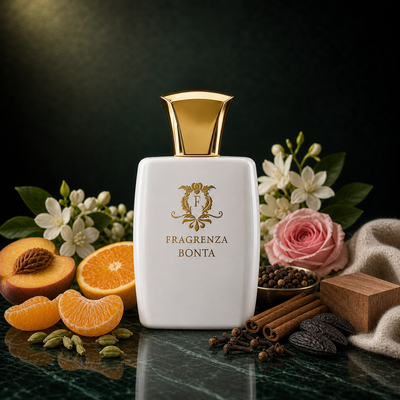
3. Caramel-vanilla-honey (the indulgent floral register)
An archetype where vanilla shares the base with caramel and honey alongside narcotic florals on an oud or milky-musk anchor. The wear is unmistakably indulgent (caramel and honey carry sweet centers) but the floral and oud materials prevent the composition from reading as one-note dessert. Among the most distinctive directions in contemporary vanilla perfumery, sitting between pure bright gourmand and the savory caramel-oud territory.
The Fragrenza pick:
opens with bergamot and pink pepper, builds through ylang-ylang, jasmine, tuberose, lily of the valley, honey, and paradisone, and resolves on a base of smoky oud, luscious caramel, creamy vanilla, and milky notes. The vanilla character is most prominent in the dry-down, where it integrates with caramel and milky materials to produce the archetype's distinctive wear.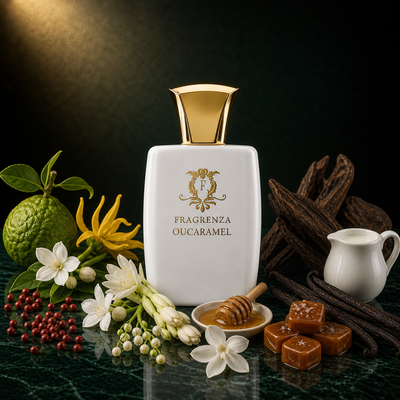
4. Praline-vanilla floral (the second-wave commercial benchmark)
The archetype that defined 2010s feminine perfumery and remains one of the most commercially successful directions in vanilla perfumery. Praline (almond-caramelized-nutty) paired with iris, jasmine, orange blossom, vanilla, tonka, and patchouli. The wear is universally legible, deeply comforting, and culturally familiar; the cultural reference point for modern feminine gourmand-floral perfumery.
The Fragrenza pick:

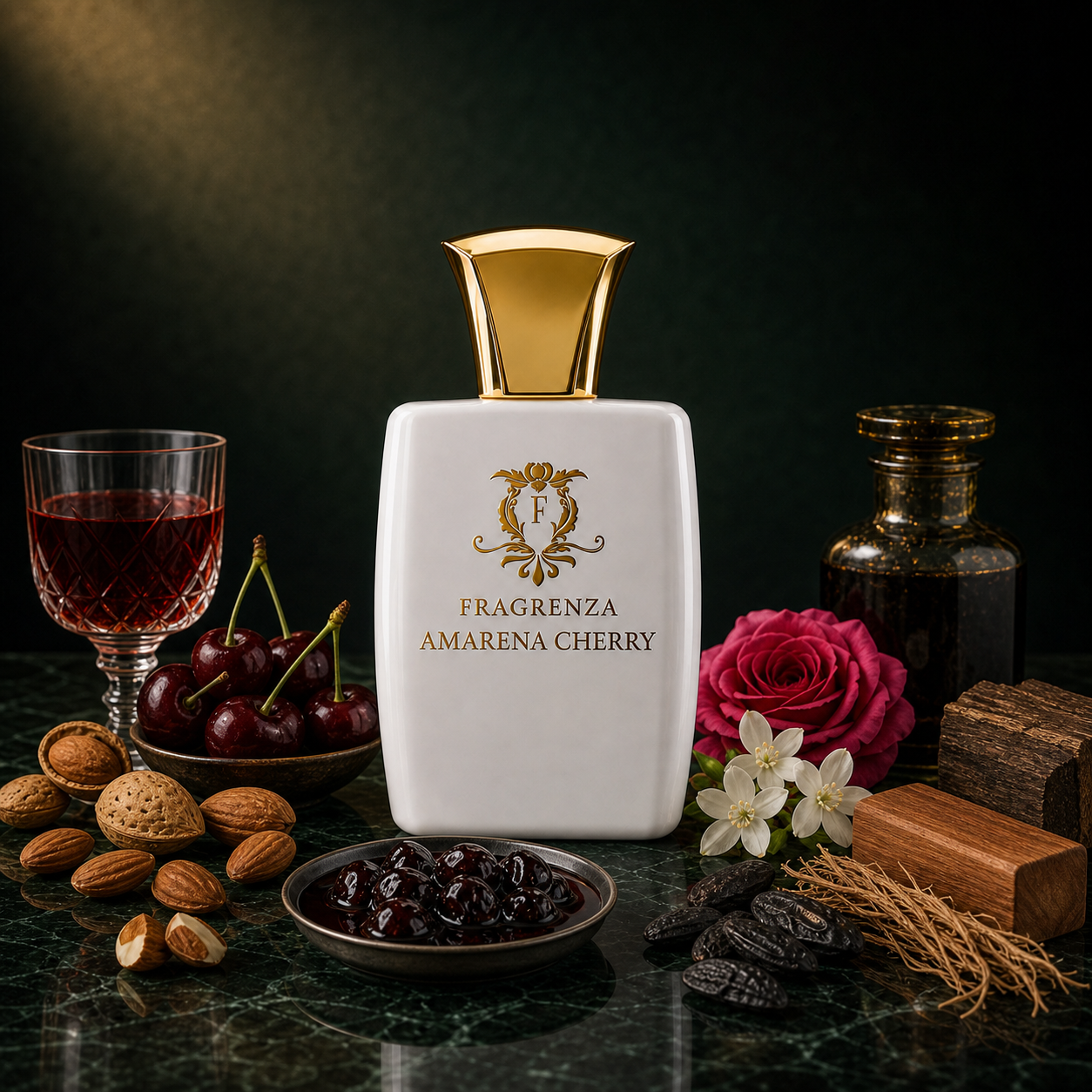
5. Cherry-almond-vanilla (the indulgent niche register)
The most contemporary of the five vanilla archetypes, anchored in dark cherry and bitter almond paired with vanilla, tonka, sandalwood, and a balsamic base. The composition reads as cherry-forward in the opening but the vanilla character emerges progressively through the heart and base, producing a wear that is unmistakably cherry-almond at the top and unmistakably vanilla-gourmand at the dry-down.
The Fragrenza pick:
opens with black cherry, cherry liqueur, and bitter almond; the heart unfolds griotte syrup, Turkish rose, and jasmine sambac; the base resolves on Peru balsam, tonka bean, sandalwood, vetiver, and cedar. The wear demonstrates the cherry-almond-vanilla register at its prestige-niche-tier polish. For more on the cherry archetypes in particular, see the cherry fragrances 2026 spoke.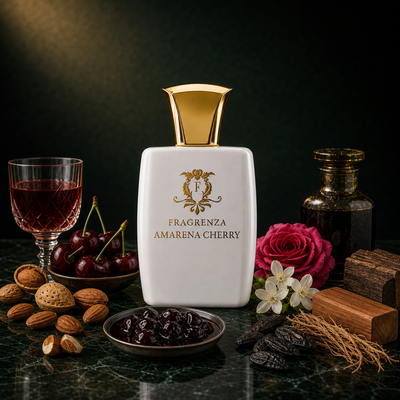
How vanilla fragrances wear on skin
The wear pattern of the vanilla family is specific.
Vanilla emerges progressively. Unlike top-note materials that declare themselves in the opening, vanilla typically becomes most prominent in the heart-to-base transition, around the one-to-two-hour mark. The opening of most vanilla compositions reads as fruit, citrus, spice, or floral; the vanilla character builds over time as the warmer materials integrate into the wear.
Skin chemistry amplifies sweet facets. Warmer or oilier skin amplifies the sweet-honeyed vanilla materials and pulls the wear toward classical-dessert territory. Cooler or drier skin amplifies the woodier vanilla facets and pulls the wear toward orientel-warm territory. The same vanilla composition can read substantially different across two wearers. See the skin chemistry deep-dive.
Projection is moderate to high; longevity is consistently high. Vanilla compositions typically project at a moderate-to-strong level for the first two to three hours and then settle into a close-skin wear pattern for the remainder of the day. The dense base materials (vanilla absolute, tonka, patchouli, soft musks) are tenacious; eight to twelve hours is typical on most skin. Apply with restraint; one to two sprays is enough for most vanilla compositions.
When to wear vanilla fragrances
The vanilla family is the most occasion-flexible in contemporary perfumery. The register works in daytime social occasions, evening informal events, intimate domestic contexts, and the entire range of casual cool-weather wear. The natural seasonal home is fall and winter, with the cooler shoulder weeks of spring also supportive; the register's emotional warmth pairs naturally with seasons where physical warmth is welcome.
Hot weather is the harder context for the vanilla family generally. The dense materials project more aggressively in heat, and the sweet character can read as cloying. The exception is the lighter end of the family (vanilla-tonka fruity-floral compositions like Bontà), which can work in warm-weather evening contexts. For peak-summer outdoor wear, switch to lighter contemporary registers (skin scents, white florals, light citrus-aromatic) and save vanilla for the cooler months.
Formal professional environments often read vanilla as too casual or comfort-coded for shared workspaces; the praline-vanilla archetype particularly carries youth-coded cultural associations. The vanilla-suede and vanilla-tonka archetypes can work in less formal professional contexts when applied with restraint.
How to layer vanilla fragrances
Vanilla layers well with most other fragrance families. Three patterns work consistently.
Vanilla over a clean musk skin scent. Apply a transparent clean musk broadly; add a single spray of vanilla to one pulse point. The combination extends vanilla's wear into intimate range without projection commitment. Particularly useful for daytime wear of evening-coded vanilla compositions.
Vanilla paired with a single bright top. Apply vanilla broadly and add a single spray of bergamot, neroli, or orange-blossom cologne to one pulse point. The bright top reads in the opening and fades over the first hour; the vanilla carries the wear through the rest of the day. The technique extends evening-coded vanilla into daytime appropriateness.
Vanilla on top of a soft woody base. A sandalwood or soft amber composition broadly across the body, with a single spray of vanilla to a pulse point, produces a layered effect that adds vanilla as a focal voice on a more sophisticated base. The technique works particularly well with the vanilla-suede and praline-vanilla archetypes. For the broader theory, see the layering pillar.
Vanilla in a fragrance wardrobe
Vanilla is one of the few materials that earns a permanent position in nearly every well-built fragrance wardrobe. The note's universality, emotional warmth, and occasion-flexibility make it the natural everyday-anchor for cool-weather wear and one of the most-worn registers across the year. A minimum viable vanilla presence needs one well-chosen pick from the archetype most aligned with your wearing patterns; two picks from contrasting archetypes (one polished-suede and one fruity-floral, or one praline-floral and one cherry-almond) cover essentially every context where vanilla is welcome.
Most wearers find their vanilla rotation stays small (one to three pieces) but is worn frequently. The register's appeal is durable rather than exciting; the same vanilla composition often becomes the daily-default fragrance for years, picked up because it works reliably across contexts and produces the comforting emotional wear that nothing else fully replicates.
Related reads
- Bright Gourmand: The 2026 Pillar
- Best Cherry Fragrances 2026
- Why Vanilla Fragrances Will Never Go Out of Style
- Amber vs Vanilla: Warm Base Notes Compared
- Vanilla in Perfumery (Educational Pillar)
- How to Layer Skin Scents With Vanilla, Oud, or Florals
- How to Build a Fragrance Wardrobe
FAQ
What is the difference between vanilla absolute, vanillin, and ethyl vanillin?
Vanilla absolute is the natural extraction from cured vanilla pods, containing vanillin alongside dozens of other aromatic compounds that give real vanilla its depth and complexity. Vanillin is the dominant single aroma molecule in vanilla, isolated and produced industrially since 1858; it reads as sweet and slightly creamy on its own. Ethyl vanillin is a more potent synthetic variant developed in the late 19th century with three times the aromatic strength of vanillin and a slightly more piercing character. Most contemporary perfumes use a blend of all three to produce the depth and longevity that any single material cannot deliver alone.
Are vanilla fragrances only for women?
No. The marketing of mainstream vanilla feminines (Angel, La Vie Est Belle, and successors) skewed feminine, but the register itself is genre-fluid. The vanilla-suede and vanilla-tonka comfort archetypes are essentially unisex; classical orientals from Shalimar to Habit Rouge use vanilla extensively as a masculine register; the savory vanilla compositions in the C2 cluster work on any wearer. Men who like vanilla do not need to ignore the marketing; they need to recognize that the comfort-coded emotional center the register delivers has no inherent gender.
How long do vanilla fragrances last on skin?
Eight to twelve hours is typical for well-built vanilla compositions on most skin. The dense base materials (vanilla absolute, tonka, patchouli, soft musks) are tenacious. The vanilla character itself emerges progressively over the first one to two hours, peaks through the heart, and remains as a textural anchor through the dry-down. Vanilla applied to fabric continues to release scent for many hours after application.
Can vanilla fragrances be worn in summer?
The lighter end of the family (vanilla-tonka fruity-floral compositions) can work in warm-weather evening contexts. The richer archetypes (vanilla-suede, caramel-vanilla, praline-vanilla, cherry-almond-vanilla) are generally happier in cooler weather; the dense materials project too aggressively in heat. For outdoor summer wear, switch to lighter contemporary registers; for indoor air-conditioned summer occasions, the lighter vanilla compositions remain wearable.
Why does my vanilla fragrance smell different on me than in the bottle?
Two reasons. First, the bottle aroma is dominated by alcohol and the most volatile materials, neither of which represents the actual skin wear; the vanilla character emerges in the heart, around the one-hour mark on skin, not in the bottle. Second, vanilla materials interact with body warmth, sebum, and individual skin chemistry; the same composition can read warm-jammy on one wearer and crisp-powdery on another. Test for at least four hours on your skin before deciding whether a vanilla composition suits your chemistry.
Is vanilla too sweet for everyday wear?
Not necessarily, with the right archetype. The vanilla-suede comfort and vanilla-tonka fruity-floral registers are emotionally welcoming without being saccharine; both work as everyday fragrances in cool weather. The praline-vanilla and caramel-vanilla-honey archetypes are denser and read sweeter; they suit evening or casual-weekend contexts better than weekday professional wear. Pick the archetype that fits your context.
What is the easiest vanilla fragrance to start with?
For most wearers, the vanilla-tonka comfort archetype (Bontà register) is the most accessible entry point. The wear is warm and welcoming without being declarative, the projection is moderate, and the composition works across the widest range of contexts. Wear it through a season, learn how your skin amplifies the vanilla and tonka materials, and decide whether to explore deeper into vanilla-suede, caramel-vanilla, praline-vanilla, or cherry-almond-vanilla territory from there.
The bottom line
Vanilla is the most universally beloved note in contemporary fine fragrance and one of the most rewarding registers in the bright gourmand family. The five archetypes give you the full commercial landscape; the Fragrenza picks within each give you concrete starting points; the wearing patterns and layering techniques give you the technical vocabulary to wear the register well.
Whether you want the polished vanilla-suede comfort of Vanilla Delight, the fruity-floral universal warmth of Bontà, the indulgent caramel-vanilla-honey of Oucaramel, the second-wave praline-floral benchmark of Belle di Verona, or the cherry-almond niche register of Amarena Cherry, the contemporary vanilla family has the depth to reward years of exploration. Vanilla is the comfort food of fine fragrance and the single most reliable note in any wardrobe; the four-hour wear test on your own skin tells you which archetype your chemistry amplifies and which to make a long-term part of your rotation.