How to Layer Fragrances Like a Perfumer: The 2026 Guide
Gulf perfume traditions paired oud chips, rose water and attar long before any Paris house called it layering; the rule has always been structural roles.
By Julia MorettiFragrenza makes several of the alternatives featured in our guides — here’s how we test.
14 min read
Layering isn't a Western invention. In the perfume traditions of the Gulf — long before any house in Paris had an idea about it — applying multiple scented elements to skin and hair was just how a fragrance was built. Oud chips smoked over charcoal to perfume the clothes. Rose water on the wrists. An attar pressed into the inside of the elbow. The result was always personal, always complex, and never reproducible from a single bottle.
What we now call "fragrance layering" is the same instinct, ported into a wardrobe of finished perfumes. You take two — sometimes three — and combine them on the skin so they behave as one composition. Done well, it produces a scent no one else in the world is wearing. Done badly, it produces a fragrance you wash off in the elevator. The difference is structure.
This guide walks through the structure perfumers actually use: the two roles a fragrance can play in a layered combination, the three patterns of pairing that reliably work, the mechanics of order and zone, and a handful of Fragrenza combinations you can try tonight.
What layering actually does
Skin is not a neutral surface. It is warm, faintly acidic, and alive with its own chemistry. When you put one fragrance on skin, the molecules diffuse, react, and evolve over hours. When you put two, they don't sit politely beside each other — they share the same heat, the same oil, the same air. The result isn't a sum, it's a new composition.
That composition can be richer than either fragrance alone. Or it can be a mess. The variable is whether the two perfumes have a structural relationship to each other or are just two assertive things shouting at the same time.
A useful image: layering is the difference between a chord and two melodies played at once. A chord has a root note holding the harmony together. Two melodies in the same register collide.
The two structural roles: anchor and statement
In any layered combination, one fragrance plays the anchor and the other plays the statement.
The anchor sits beneath. It carries the longevity, holds the dry-down, and gives the combination weight. Anchors are usually base-rich: clean musk, soft sandalwood, vanilla, amber, oud, a quiet woody base.
The statement sits on top. It carries the opening impression, the character, the thing a stranger notices in the first thirty seconds. Statements are usually brighter, more distinctive: a citrus, a green floral, a spice, a sharp fresh note.
A useful test: if you wore the anchor alone, it would read as comforting and slightly anonymous. If you wore the statement alone, it would read as expressive but might fade quickly. Together, the anchor extends the statement's life and the statement gives the anchor a face.
The most common mistake is layering two statements. Two assertive perfumes in the same register fight each other in the first hour and leave a tired, muddied dry-down. Almost all good combinations are one assertive + one quiet.
Three patterns of pairing that work
1. Shared DNA — pair fragrances that share an ingredient or accord
This is the most reliable pattern, and the one to start with. If both perfumes contain the same note — a sandalwood, a musk, a vetiver — they have a built-in handshake. The shared note acts as a bridge between the two opening characters and the dry-down resolves cleanly.
A vetiver-forward composition layered with a smoky incense finds common ground in the earthy register they share. A bright neroli paired with a soft white musk works because both sit in the clean, luminous territory of the spectrum.
2. Complementary — same family, different angles
Pair two perfumes from the same family (both florals, both gourmands, both woods) but with different facets. The family tie holds them together; the differing angles add dimension.
Two florals layered together — say, a creamy white floral over a sharper green floral — read as a more complex, multi-petalled bouquet than either alone. A vanilla gourmand with a praline gourmand reads as a dessert with depth instead of a dessert with sugar.
3. Contrasting — opposite families, deliberate tension
The advanced move. Pair fragrances from clearly different families and let the contrast itself become the character. A clean citrus over a dark oriental base produces a tension that reads as expensive and unexpected. A sweet gourmand combined with a dry leather creates complexity that feels deliberate, not accidental.
Contrasting layering only works when one of the two perfumes is clearly the anchor and one is clearly the statement. Two contrasting statements — a powerhouse oriental on top of a powerhouse aquatic — is just chaos.
The mechanics
Order
Heaviest first. Always. The denser, base-rich fragrance goes on the skin first because it needs the surface contact to develop and persist. The lighter, brighter fragrance goes on top, where its volatility serves it well — that's where the opening impression lives anyway.
Reverse the order and you smother the bright notes against the skin and let the heavy base diffuse into the air, where it will fade faster.
Timing
Allow the anchor to settle for two to three minutes before applying the statement. This isn't superstition — it's chemistry. The anchor needs time to bind to the skin's warmth and start its evaporation. Spray the statement immediately on top and the two fragrances mix as a wet film and behave like one slightly overdosed perfume rather than a structured combination.
Application zones
Two strategies, two outcomes.
Same zone (both on the wrists, both on the chest): the fragrances blend completely. You smell one combined scent. Use this when you want a fully integrated composition and you've chosen a pairing with shared DNA.
Different zones (anchor on the chest, statement on the wrists): the fragrances stay slightly separate. The statement projects from the wrists when you gesture; the anchor surrounds you closer to the body. Use this when the statement is a distinctive note you want people to actually notice.
The pulse points — wrists, sides of the neck, behind the ears — concentrate fragrance because they run warm. The sternum and the inside of the elbow are excellent secondary zones, especially for the anchor. Hair holds molecules cooler and slower than skin, which is why hair mists project top notes for hours longer than the same composition sprayed on the wrist.
Dosage
Total spray count for a layered combination should be lighter than the same person's solo wear, not heavier. Two fragrances at full dosage become overwhelming, not complex. The rule of thumb: cut your usual spray count by about a third and split it across the two perfumes. If you normally do six sprays of one perfume, do two sprays of the anchor and two of the statement.
Concentration
Higher concentrations make better anchors. Eau de parfum and extrait have more base material and persist longer, so they hold the combination together. A light eau de toilette on top of an extrait anchor is a combination that often works better than the reverse — the lighter fragrance gets to be expressive while the deeper one carries the structure. (For the full breakdown, read our guide on extrait vs eau de parfum.)
Body care as the silent layer
The third layer in any combination is the one most people forget: what's already on your skin.
A heavily scented body lotion or shower gel is a third fragrance whether you intended it to be or not. If it clashes with what you spray on top, the combination fails before you've started. The fix is to use unscented body care underneath any layered combination — a clean cream and a fragrance-free body wash. This gives your perfumes a neutral surface to react with.
The exception is when the body product is itself part of the composition. A lightly vanilla-scented body oil on the décolleté, a clean musk lotion on the arms, then a fragrance over the top — this is a three-tier layered composition, deliberately built. It can work beautifully, but it requires that all three notes share DNA.
Hair is a fourth surface worth considering. A light spritz of fragrance on hair (or a dedicated hair mist if you have one) gives the combination a halo that travels with you and projects top notes for far longer than skin alone. (If you're trying to stretch any fragrance further, our guide on how to make your perfume last covers the full set of tricks.)
Layering by family — the pairings that always work
These are the families that pair reliably, with the structural reason they work.
Vanilla + oud
Sweet over dark. The vanilla softens the medicinal edge of the oud; the oud gives the vanilla a smoke and depth it can't generate alone. This is the most universally wearable layering combination in modern perfumery. (For more on why oud sits at the centre of so many great combinations, see our piece on why oud is one of perfumery's most important notes.)
Caramel + oud
Heavier than vanilla + oud, with a more sensual evening direction. The caramel reads as molten and slightly burnt against the oud's animalic darkness. A combination that earns evening events.
Dark fruit + oud
Plum, cherry, fig, or raspberry layered over oud reads as concentrated, expensive, and slightly gothic. Best for autumn and winter wear.
Soft floral + warm base
Iris, peony, or pear-floral compositions can read as thin in cold weather. Layered over a vanilla, amber, or sandalwood base, they gain weight without losing their delicacy. This is how you make a spring fragrance work in November.
Smoky woods + vanilla
The counterbalance for anyone who finds vanilla too sweet alone. A smoky cedar, vetiver, or incense-driven wood pulls the vanilla into something darker and more architectural. A masculine-leaning combination that flatters every skin chemistry.
Citrus + musk
Citrus alone fades fast. Anchored on a clean white musk, it lasts three to four times longer and gains a soft skin-warmth. The simplest functional layering combination; nearly impossible to get wrong.
White floral + sandalwood
Jasmine, gardenia, or tuberose layered over a creamy sandalwood is one of the oldest combinations in perfumery for a reason. The sandalwood holds the floral's sharp opening and lets it bloom into a soft, milky dry-down.
Aquatic + woody
Marine freshness layered over a vetiver or driftwood base evokes salt-air and open horizons. A summer combination, but a more interesting one than another bright aquatic alone.
Three Fragrenza combinations to start with
If you're building your first layered composition, start with one of these. All three use Fragrenza scents you can sample before committing to full bottles.
Warmth and Freshness
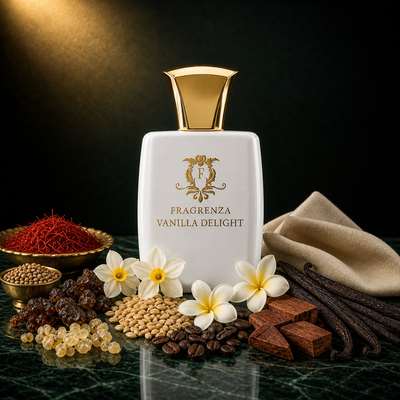
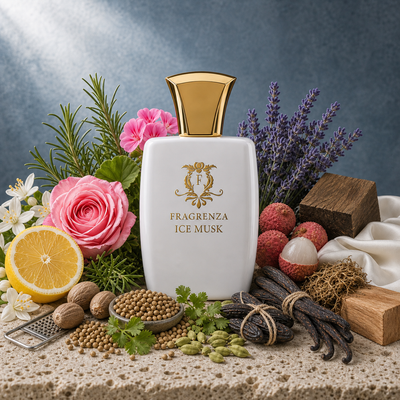
Floral Depth
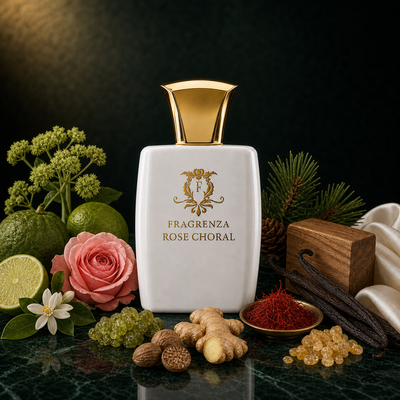
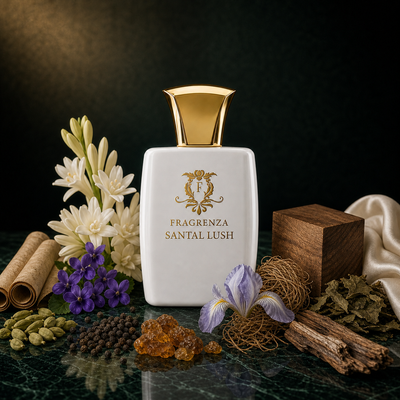
layered with . Rose and sandalwood is one of the most enduring combinations in perfumery — the floral's bright freshness resting on the warm, milky wood creates something classically beautiful and genuinely long-lasting on skin.
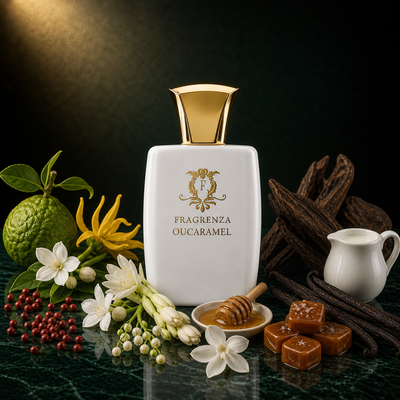
Sweet-Dark Evening
as the anchor,

For more advanced experiments, work systematically through the Fragrenza sample pack — treat it as a perfumer treats a raw material library, take notes on what you try, and build a personal vocabulary of combinations that work on your skin.
Common layering mistakes
1. Two statements, no anchor. The most common failure. Two assertive perfumes from different families competing in the opening hour produce something muddier than either fragrance alone. One should always be the quieter one.
2. Overspraying. Layering doubles the load on your skin. Total dosage should be lighter than your usual solo wear, not heavier. Two sprays of each is plenty for most combinations.
3. Pairing by visual or popularity logic. Two trendy perfumes don't necessarily layer well. The combination has to make sense structurally — shared DNA, same family, or a deliberate anchor + statement contrast — not because both bottles look good on a shelf.
4. Scented body care underneath an unintended layer. A vanilla body lotion under a citrus-and-musk combination can sabotage the whole structure. Use unscented body care under any deliberate layering, or build the body product into the composition on purpose.
5. Judging too early. Layered combinations need at least an hour to settle into themselves. The first ten minutes is rarely the truth of the composition. Apply, walk away, come back, then decide.
Fragrenza Picks: bottles that layer well
Some perfumes are built to anchor. Others are built to express. These are the Fragrenza scents that earn a permanent place in a layering wardrobe.
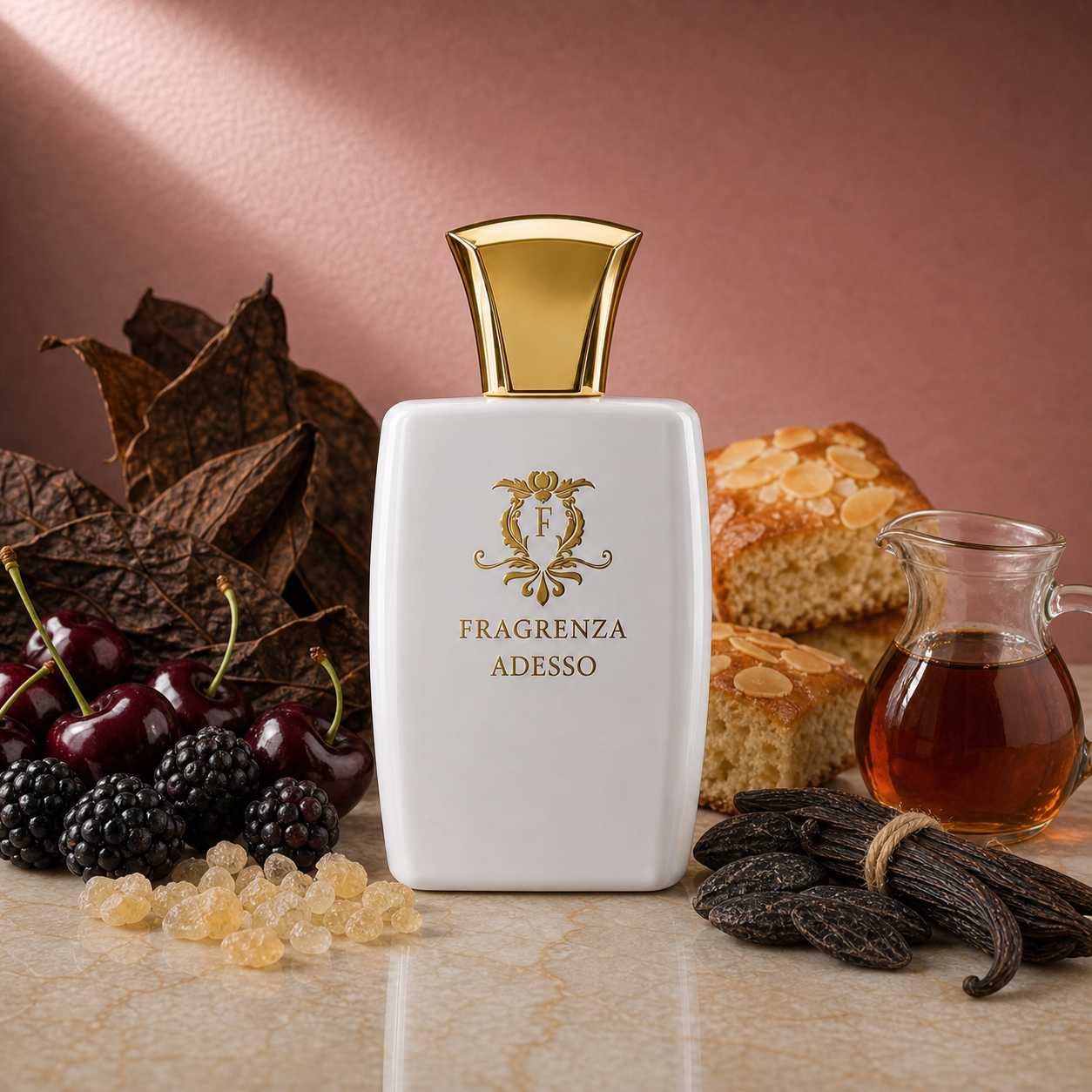
— caramel and oud with a milky undercurrent. A heavier anchor for evening combinations.
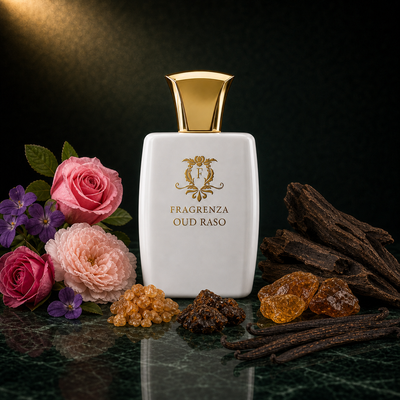
— rose-oud with dark glamour weight. The anchor for any combination that needs to feel formal.
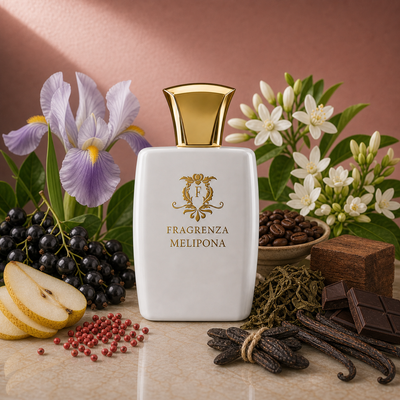
— soft iris, pear, and pink pepper. A delicate statement that needs a warm base under it; transformative when layered with vanilla or sandalwood.
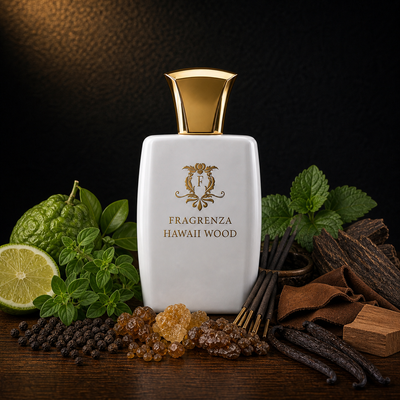
— smoky woods, incense, and oud. A counterweight for anyone who finds the gourmand layers too sweet alone.
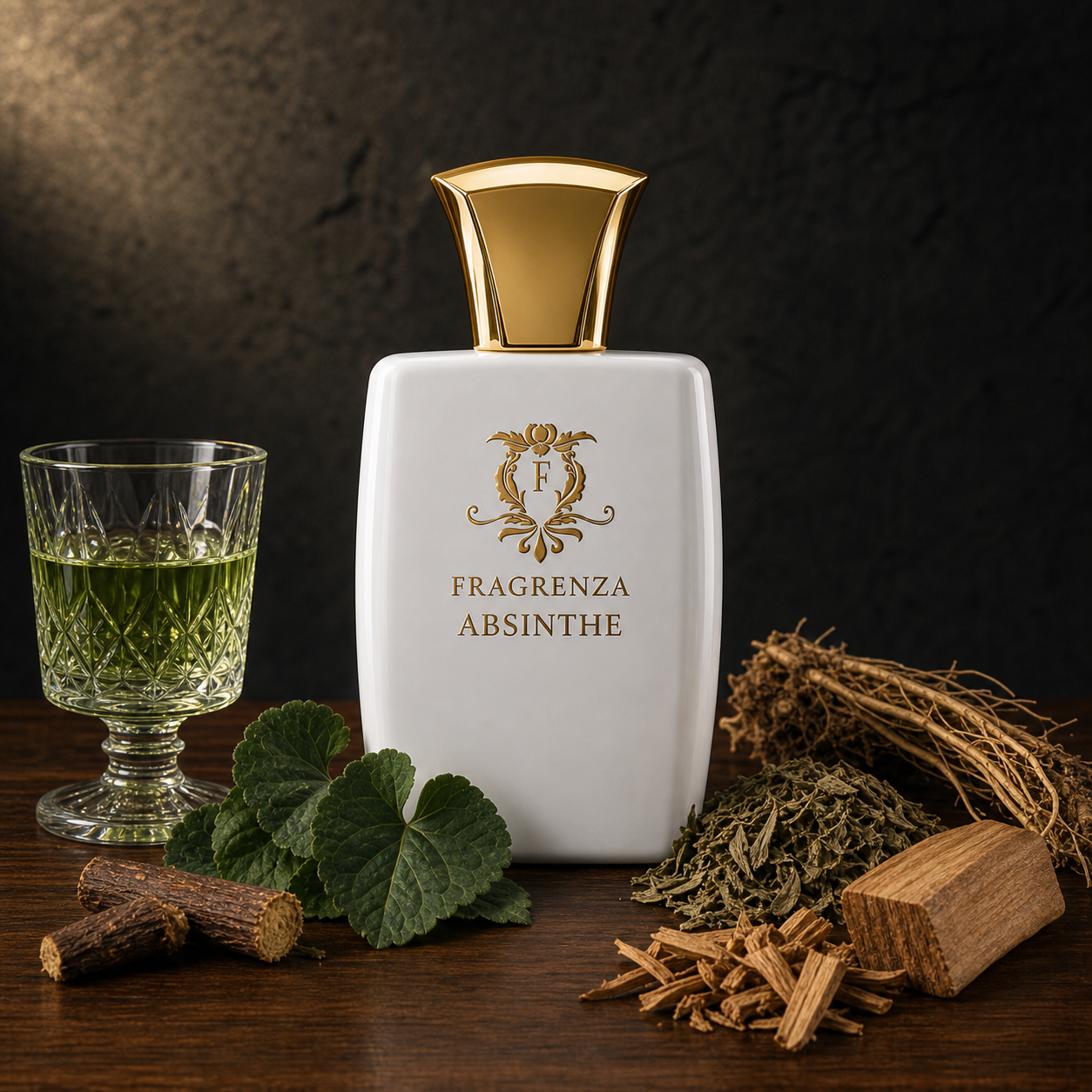
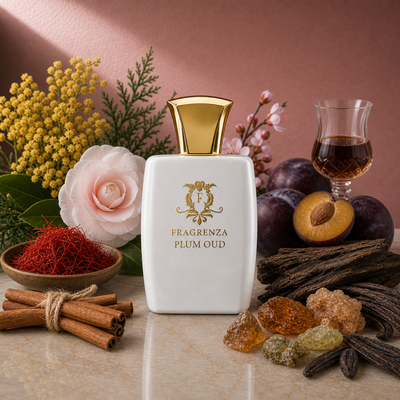
— dark fruit and oud, built for autumn and winter wear. Layers dramatically with vanilla or amber bases.
Building a wardrobe that supports layering takes time. Our guide on how to build a fragrance wardrobe walks through how to plan the bottles you actually need.
Frequently asked questions
How do you layer two perfumes for the first time?
Pick two perfumes that share at least one note — both contain vanilla, both contain musk, both contain a similar wood. Apply the heavier one first, on the chest or wrists. Wait two to three minutes. Apply the lighter one on top. Use about two-thirds of your usual total spray count, split between the two. Wait an hour before judging the result.
What perfumes layer well with vanilla?
Vanilla layers well with almost anything because it's a structural anchor. The most reliable pairings are vanilla with oud (sweet-dark contrast), vanilla with smoky woods (counterbalances the sweetness), vanilla with citrus or fresh musk (lifts and lightens), and vanilla with rose (romantic and gourmand). Vanilla rarely fails as the anchor; it more often fails when used as the statement on top of something heavier.
How long should you wait between sprays when layering?
Two to three minutes. The anchor needs time to bind to the skin's warmth and begin its evaporation curve. Spray the statement immediately on top and the two fragrances behave like one wet film instead of a structured combination.
Can you layer three fragrances?
Yes, but it requires more discipline than two. Three perfumes only work if they share clear structural relationships — typically a base, a heart, and a top, with each fragrance dominating one register. Most layered combinations work better as two. Three is for established layering practitioners, not first attempts.
Does layering make perfume last longer?
Often, yes. A light fragrance anchored on a base-rich one can persist three to four times longer than the light fragrance alone. The base material in the anchor gives the lighter perfume's molecules something to bind to, slowing the evaporation rate.
Should you layer the same concentration or mix them?
Mixing concentrations often works better. A light eau de toilette as the statement on top of an eau de parfum or extrait anchor is a combination that frequently outperforms two perfumes of the same concentration. The deeper fragrance carries the structure; the lighter one gets to be expressive.
Is it okay to use scented body lotion under layered fragrances?
Only if the lotion is part of the composition you've designed. An unrelated scented body product becomes an accidental third fragrance that can clash with what you spray on top. The safer default is unscented body care under any layered combination, then build up from there.
A final thought
Your nose is the only authority. Every principle in this guide is a starting point, not a rule. Two perfumes that shouldn't work on paper can work beautifully on your skin; two perfumes that look like an obvious pairing can fail completely. Layering is an experimental practice, not a recipe. The combinations that earn a permanent place in your wardrobe will be the ones you discovered by trying.