What Makes a Perfume Smell Expensive: 5 Quality Tells
Expensive-reading compositions invert the cheap front-load by putting their best material into sandalwood, oud, ambergris and vanilla absolutes that take quality raw stock to build.
By Julia MorettiFragrenza makes several of the alternatives featured in our guides — here’s how we test.
8 min read
The most expensive-smelling perfumes of 2026 are not the loudest. They're the quietest. The ones that read as luxurious aren't shouting from across a room — they sit close, evolve slowly, and reveal themselves gradually as the day goes on. Once you know what to listen for, you can hear the difference in the first ten minutes.
"Smelling expensive" is not a price tag. It is a set of construction choices a perfumer makes — choices that show up as restraint, depth, evolution, and the kind of base notes that take quality raw materials to build. This is the guide to recognizing them.
The five qualities that read as expensive
Strip it down to fundamentals. A perfume reads as expensive when it does five things well: it has weight in the base, it evolves over time, it shows restraint, it has a refined sillage, and it uses high-quality materials. None of these alone is enough. Together, they are the difference between a fragrance that smells like a fragrance and a fragrance that smells like wealth.
Weight in the base
Cheap perfumes front-load. Their best material is in the top notes — bright citrus, sugary fruits, sharp synthetic florals — and the bottom of the composition is filled out with thin, fast-fading musks and synthetic woods. After an hour, what's left smells generic.
Expensive-smelling perfumes invert that. The top notes are pleasant and brief. The middle has structure. And the base does the actual work — sandalwood, oud, ambergris, deep amber, vanilla absolutes, smoky woods, real benzoin. These are the materials that take quality to source and time to develop in the bottle. They are also the reason the perfume still smells good four hours later.
Evolution over time
A luxurious fragrance moves. The first hour smells different from the third hour, which smells different from the dry-down at hour six. Each phase reveals new facets, and each phase smells intentional rather than like the perfume falling apart.
A flat fragrance — one that smells more or less the same from spray to skin death — is almost always a budget composition. The flatness is what synthetic-heavy compositions deliver because they are built from a small number of robust, long-lasting molecules without the complexity that creates evolution. If you can describe a perfume's whole arc in a single sentence, it is almost certainly not in luxury territory.
Restraint
The most expensive-smelling fragrances commit. They pick a direction and execute it precisely. A great oud composition is unmistakably oud. A great vanilla is unmistakably vanilla. The restraint is not minimalism — these are often dense compositions — it is editing. Every note in the formula has a job. Nothing is there as filler.
Cheap perfumery tends to do the opposite. It tries to please everyone by stuffing the formula with whatever is currently popular: a little fruit, a little floral, a little vanilla, a little oud, a little fresh musk. The result is a scent that smells like nothing in particular, smells busy, and rarely smells like the product on the bottle.
A refined sillage shape
Sillage is the trail a perfume leaves. The cheap version is loud, cloud-like, and reaches across a room within a minute. The expensive version is close, structured, and noticeable to people standing within arm's length. The trail is shorter, but the impression is sharper and lingers longer in memory.
This is one of the bigger shifts in luxury perfumery in the past decade. The 1990s ideal — sillage you could smell down a hallway — is over. The new prestige cue is presence at close range, which is why skin scents 2.0 have become the quiet flex of 2026.
Quality of materials
Some materials simply smell expensive because they are. Real sandalwood, oud, ambergris, iris butter, jasmine absolute, rose Centifolia, vanilla absolute Bourbon — these cost meaningful money per kilogram and contribute textures and depths that synthetics cannot fully replicate. Compositions built around them carry an unmistakable quality even when used in small percentages.
You don't need an entire bottle of naturals to read as expensive. A well-judged use of a high-quality natural base inside a smart synthetic structure can outperform a fragrance that uses cheaper materials throughout. The signature of luxury is often a single resonant note that anchors the rest of the composition.
The cheap signals to learn to spot
The flip side of "what smells expensive" is "what smells cheap." Five tells worth recognizing.
Aggressive top notes. Sharp, screaming citrus, very sweet sugar accords, or a candy-like opening that fades fast. Often a sign the rest of the composition will not be able to carry the weight.
Generic clean musk. The synthetic musk that smells like fabric softener — used in volume — is one of the strongest cheap signals. Soft, refined musks (Helvetolide, Habanolide, ambroxan in small amounts) read as expensive. Detergent musk does not.
Flat dry-down. If the perfume smells the same at 30 minutes and at 4 hours, the base is doing too little work. A flat dry-down is the single biggest tell of a budget composition.
Loud and one-dimensional projection. A perfume that fills a small room within minutes and stays there is rarely expensive-smelling. The loud-and-stays-loud profile is a budget formula trying to compensate for thin construction.
Synthetic floral over-tone. A floral that smells slightly plastic, slightly chemical, slightly bathroom-cleaner — usually a heavy hand on linalool, lily of the valley synthetics, or muguet accords without enough natural support.
How to choose a perfume that reads as expensive
Three practical disciplines.
Wait the dry-down. Do not buy a perfume based on the first ten minutes on a paper strip. Apply it to skin and wear it for at least four to six hours. The expensive ones improve. The budget ones flatten or fade. This single discipline solves most fragrance regret.
Think in concentrations. Higher concentrations — extrait de parfum and parfum — typically use richer, denser base materials than eau de toilettes built for spray-and-go performance. Extrait isn't always the right choice, but it is one of the easiest paths to a perfume that smells expensive on skin. We've covered the format in detail in extrait vs EDP.
Look at the note pyramid. Compositions built on sandalwood, oud, amber, real vanilla, smoky woods, ambergris-style materials, iris, and high-quality musks almost always carry that quality forward. Compositions built mainly on cheap fruity notes, generic woods, and detergent musk usually do not — regardless of what's on the marketing copy.
Fragrenza Picks
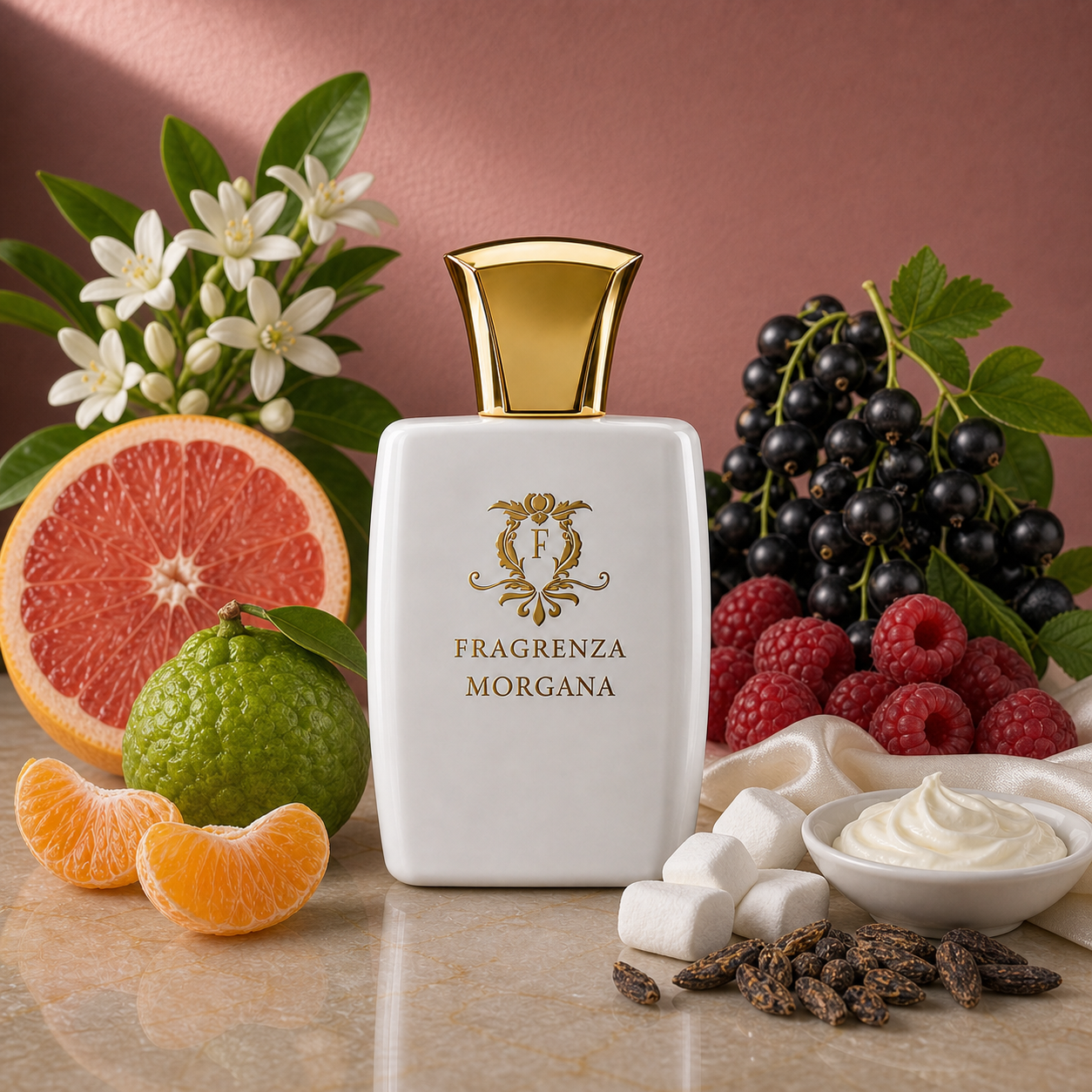
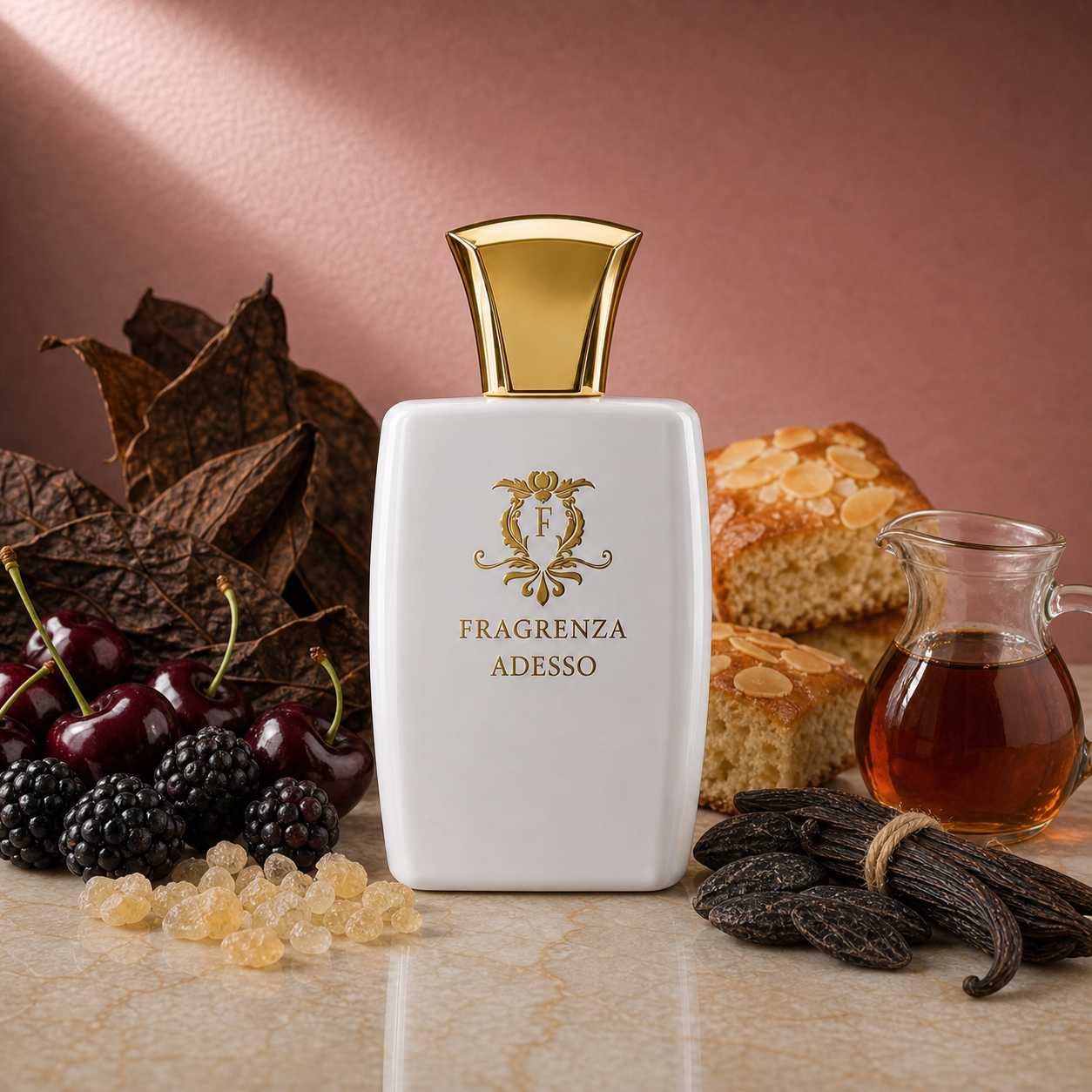
Four scents in the line that build on the construction principles above. Each one leans on a quality base note, evolves through its dry-down, and is engineered to read close-and-refined rather than loud-and-fading.
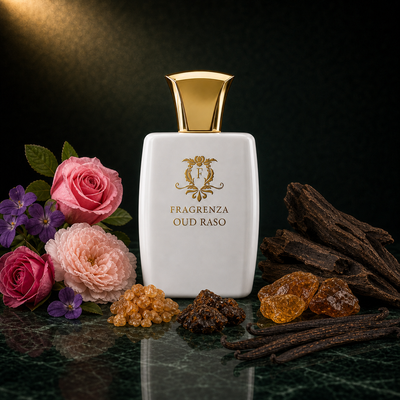
The oud-and-amber direction
is the most overtly luxurious in the line. Rose-oud built on a deep, satiny base — slow evolution, real sillage shape, and a dry-down that gets better the longer you wear it. The going-out scent.
The deep gourmand direction
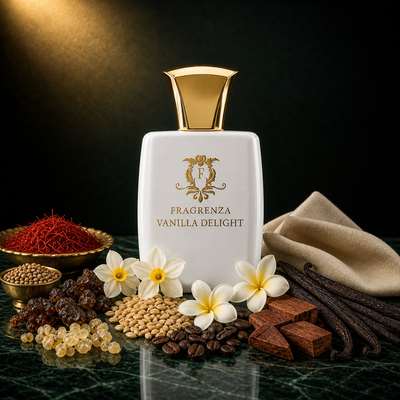
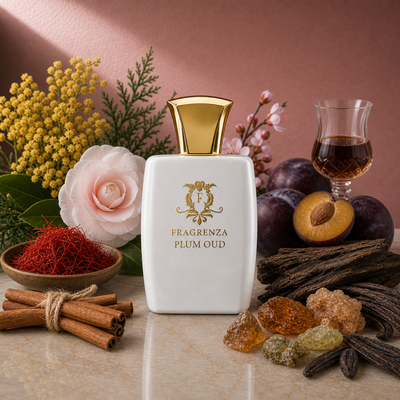
The dark fruit direction
pairs a dark fruit accord with oud and woods. Less sweet than gourmand, more sensual than woody, with an evening-leaning sillage and a base that lasts well into the next morning if applied generously.
The modern oud direction

Related reads
- Why extrait de parfum is suddenly everywhere
- Extrait vs EDP: the real difference
- How to make your perfume last all day
- Skin scents 2.0
- The biggest perfume trends of 2026
FAQ
What makes a perfume smell expensive?
Five qualities together: a base built on quality long-lasting materials, evolution over the day rather than a flat profile, restraint and clarity in the composition's direction, a sillage that reads close and refined rather than loud, and the use of high-quality naturals or refined synthetics. None of these alone is enough — they read as luxury when they show up together in the same fragrance.
Do expensive perfumes always last longer?
Not always, but usually. Higher-quality bases — sandalwood, oud, amber, real vanilla, ambergris-style materials — tend to last longer on skin than cheap synthetic woods and budget musks. Format also matters: extrait and parfum concentrations generally hold up longer than eau de toilettes. Longevity alone doesn't equal luxury, but luxury rarely smells gone after two hours.
Can a budget perfume smell expensive?
Yes. The most reliable path is buying a brand that invests in quality bases and lets the formula breathe — typically inspired or niche-style perfumery rather than mass-market designer drugstore lines. Look for compositions built around oud, real vanilla, sandalwood, amber, or smoky woods, and avoid loud fruity or aggressive aquatic openings. Concentration matters more than brand prestige.
Why does my perfume smell cheap on me?
Three common reasons. Skin chemistry can amplify the harshest synthetics in a composition, especially generic clean musk. Application on top of dry skin causes the top notes to burn off too fast and leave the thinner base exposed. Or the perfume itself is front-loaded and the base genuinely is thin. Moisturized skin and a wear test through the dry-down usually surface which one is happening.
What notes are typically found in expensive-smelling perfumes?
Real sandalwood, oud, ambergris-style materials, iris butter, vanilla absolute, smoky woods, refined ambers, jasmine and rose absolutes, soft civet-style musks, and high-end synthetic woods like Iso E Super. The pattern is consistent: deep, slow-moving base materials that evolve over hours, paired with restrained top notes that don't try to compete for attention.
Is sillage or longevity more important for smelling expensive?
Sillage shape is the more reliable luxury signal in 2026. Longevity matters, but a long-lasting fragrance with loud, room-filling projection often reads as cheap regardless of how long it lasts. A close-range sillage that holds steady for six to eight hours signals expensive perfumery far more than a fragrance that broadcasts down a hallway for twelve.
The takeaway
Smelling expensive isn't a price ceiling. It's a construction choice. Compositions that lean into deep base notes, evolve through the day, hold a refined sillage, and commit to a clear direction will read as luxurious whether they cost forty dollars or four hundred. The skill is recognizing those qualities at the wearer level — and choosing fragrances that have them rather than chasing brands that claim them.