Why Extrait de Parfum Is Suddenly Everywhere (And Whether It's Worth the Price)
Niche boutiques now lead with extrait-only lines because the 20-40% concentration tier rewards the slow, dense dry-down that EDP volatility refuses to deliver.
By Julia MorettiFragrenza makes several of the alternatives featured in our guides — here’s how we test.
7 min read
Walk into any niche fragrance boutique in 2026 and the row of new launches will be dominated by one word: extrait. The richer, denser, longer-wearing concentration tier has gone from a quiet specialist offering to the dominant format the market is reaching for. Designer houses are rebranding their old EDPs as extraits. Niche houses are launching extrait-only lines. Your favourite reformulation is probably an extrait now.
This piece is about why. What's actually changed about how extrait perfumes are being made and worn, why consumers are paying more for them, and whether — for your specific use case — they're worth the price.
What an extrait actually is
Extrait de parfum, sometimes shortened to extrait or pure parfum, is the highest standard concentration tier in commercial perfumery. Where eau de toilette carries 5–15% aromatic compounds in alcohol and eau de parfum carries 15–20%, extrait carries roughly 20–40% — sometimes higher. The rest is alcohol, water, and (in some formulations) fixative oils.
The higher concentration changes the entire wearing experience. More base material means richer dry-down, slower evaporation, longer wear time, and a different projection profile — extraits typically project less aggressively than EdPs in the first hour but persist far longer in the heart and base.
(For the full breakdown of what changes between concentrations, read our guide to extrait vs eau de parfum.)
Why extrait perfumes are suddenly everywhere
Three forces are pushing the trend.
The longevity arms race. Reformulations of classic designer fragrances over the last decade have, on average, gotten weaker — IFRA restrictions, cost cutting, and ingredient substitutions have reduced the average wear time of mass-market EdPs. Consumers noticed. The market response was extrait: a tier that's harder to weaken because the higher concentration provides margin for substitution without obvious quality loss.
The "expensive smelling" demand. Quiet luxury didn't kill the desire for fragrance to read as expensive — it just changed what "expensive" sounds like. Extraits, with their richer base development and slower projection, smell more naturally luxurious than the same juice in EdP form. The trade-off (less first-hour projection) is precisely what the quiet luxury moment wants.
The niche-mainstream blur. Niche houses have always favoured extrait. As the line between niche and designer has blurred over the last five years, the format followed. Designer houses now offer extraits to compete; niche houses lean further into them to differentiate. The result: more extrait launches than ever.
Whether an extrait is worth the price
The price premium is real — extraits typically cost 30–80% more than the EdP version of the same fragrance, sometimes more. The honest answer to "is it worth it" depends on three questions about how you actually wear fragrance.
Question 1: Do you struggle with longevity? If your EdP fades by lunch, an extrait will materially fix that. Expect 6–10 additional hours of wear, particularly in the dry-down. (For more on diagnosing longevity issues, our longevity guide covers the rest of the levers.) If your EdP already lasts you 8 hours, the extrait upgrade buys you less.
Question 2: Do you wear fragrance for projection or for personal wear? Extraits project less than EdPs in the first hour but more in hours four through ten. If you want to be noticed in the first thirty seconds of a meeting, EdP is often the better tool. If you want a fragrance that wears like a slowly unfolding composition close to skin, extrait is the upgrade.
Question 3: Are you wearing it daily or for occasions? Extraits make the most sense for fragrances you wear consciously — evening, special occasions, signature scents you wear deliberately. For a daily everyday scent, the extrait premium is often hard to justify; you'll consume the bottle faster and won't notice the upgrade as much when you're not paying attention.
Who should consider an extrait
- Anyone who feels their EdP is fading too fast despite good application technique.
- Anyone who prefers fragrance close to the skin rather than projecting outward.
- Anyone wearing their fragrance for evening or special occasions where the slower-unfolding character pays off.
- Anyone collecting a "statement piece" for the wardrobe (see our wardrobe guide) — extraits make great statement bottles.
And who probably shouldn't:
- Anyone whose daily EdP already wears 8+ hours.
- Anyone who wears fragrance primarily for projection in the first hour.
- Anyone in hot climates where heavy concentrations can feel overwhelming.
- Anyone with skin chemistry that already amplifies fragrance — extrait can be too much.
How to wear an extrait
Treat it differently from an EdP. Three rules.
Less is more. Two sprays of an extrait is often equivalent to four of an EdP in terms of total aromatic deposit. Start with one or two sprays and add only if needed.
Apply to warm zones. Extraits reward inner-elbow and chest application more than wrist-only application. The slower projection means you want fragrance somewhere it can develop close to body heat for hours.
Don't expect first-hour drama. Extraits often smell quieter than the EdP version of the same fragrance for the first thirty minutes. The richness lives in hours three through ten. Trust the dry-down.
Fragrenza picks: bottles in the extrait register
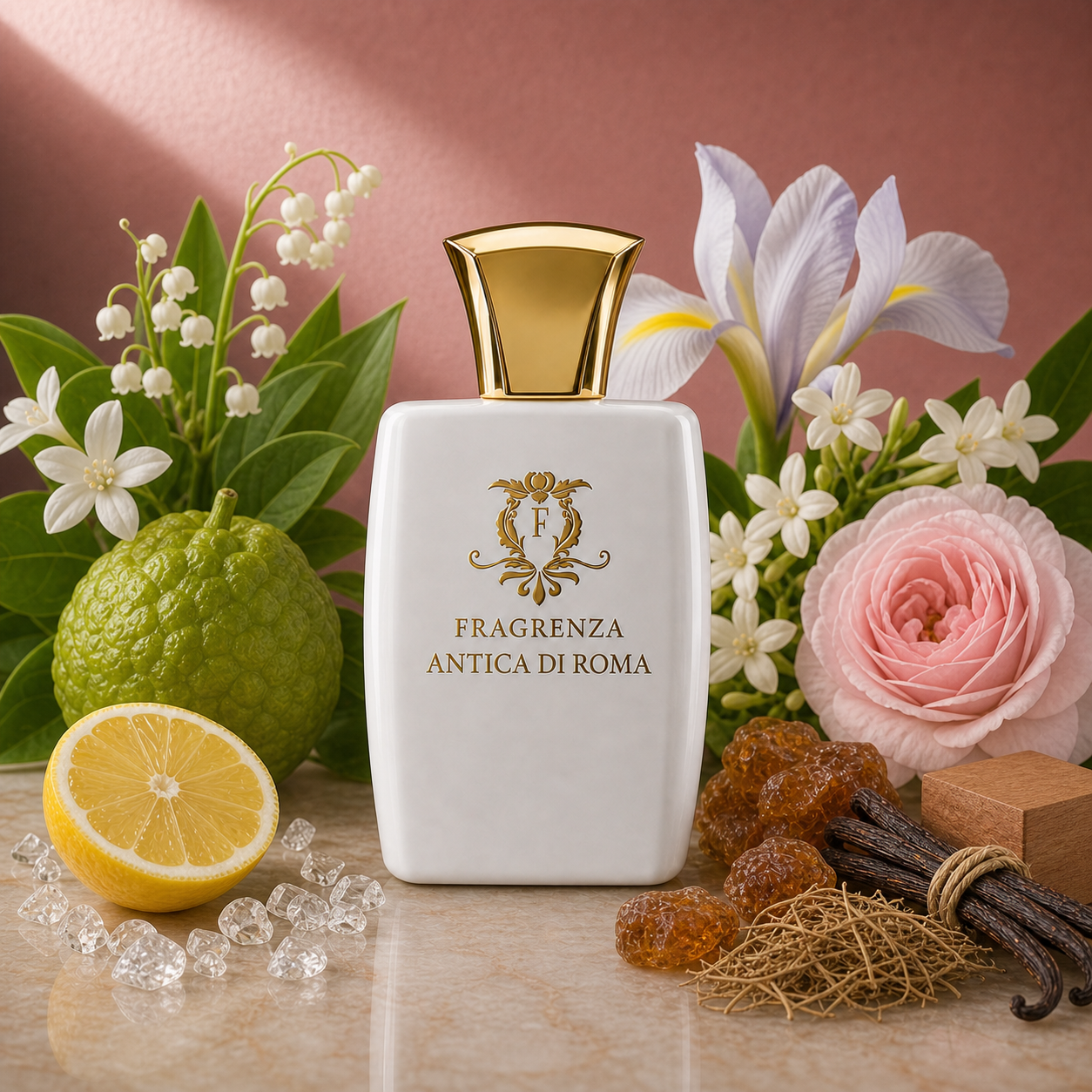
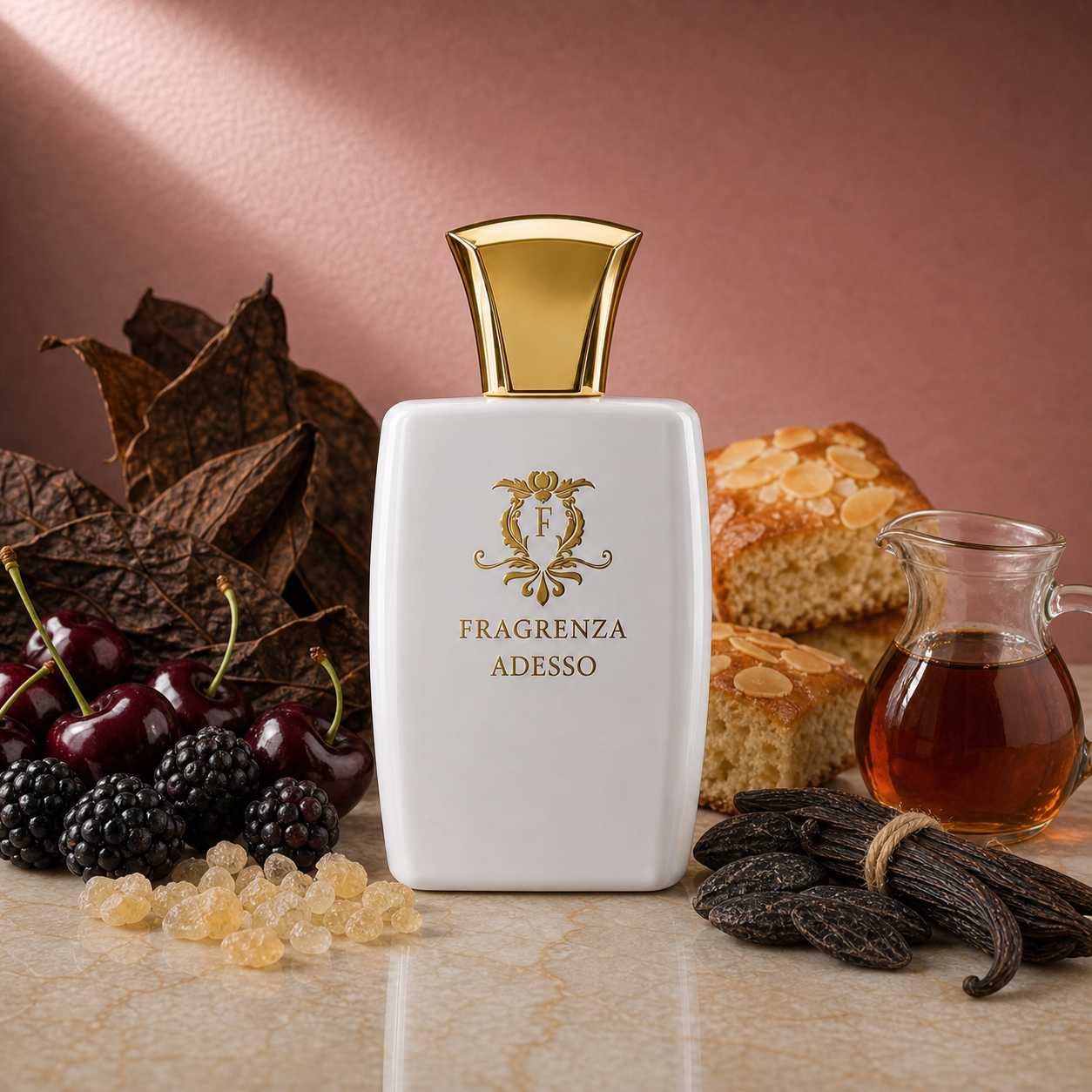
Most Fragrenza scents are formulated at richer concentrations than designer EdT — closer to the EdP/extrait register where the dense base compositions actually shine. These are the bottles in the line that wear most like a niche extrait.
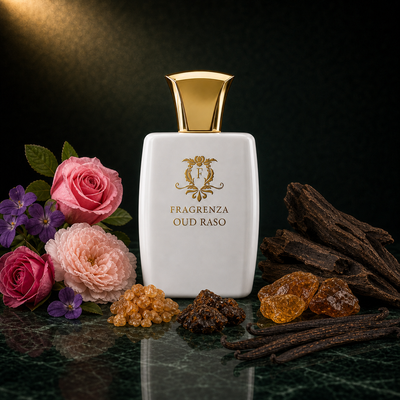
— rose-oud with dark glamour weight. Wears in the slow-unfolding, evening-luxurious register that defines a great extrait. Best Fragrenza pick if you want the full extrait-style experience.
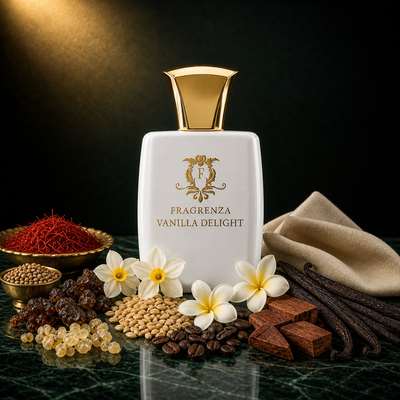
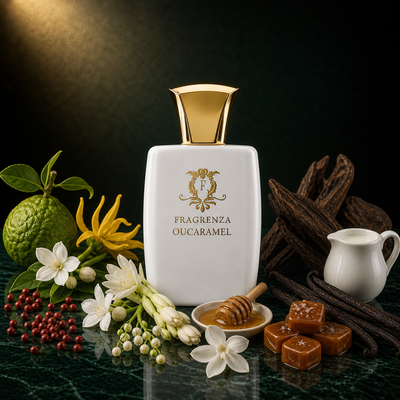
— caramel, oud, vanilla, with a milky undercurrent. Heavy throughout — exactly the kind of formula where extrait-tier wear behaviour shows up.
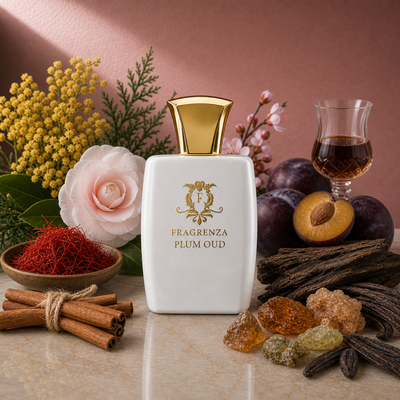
— dark fruit and oud. Built around two of the slowest-evaporating note families in perfumery; persists in the same register as a niche extrait.
The Fragrenza sample pack lets you wear each on skin for a full day before committing — which, for extrait-style fragrances, is essential because the character lives in hours four through ten.
Frequently asked questions
What is an extrait perfume?
Extrait de parfum (or pure parfum) is the highest standard concentration tier in commercial perfumery — typically 20–40% aromatic compounds, compared to 15–20% for eau de parfum and 5–15% for eau de toilette. The higher concentration produces longer wear, richer dry-down, and a more skin-close projection profile.
Why are extrait perfumes more expensive?
Higher concentration means more aromatic material per bottle, and many of the materials that earn extrait formulation (oud, ambergris, real iris, certain musks) are themselves expensive. Bottles are often smaller — 30ml or 50ml is more common than 100ml — which compounds the perceived price.
Do extraits really last longer than EdP?
On average, yes — typically an additional 2 to 4 hours of wear, sometimes more for heavy oriental compositions. The longevity gain is real but rarely dramatic. The bigger difference is character: extraits project less aggressively at first but have a denser, longer-lasting dry-down.
Should I buy the EdP or the extrait of my favourite perfume?
Buy the extrait if you wear the perfume consciously — for evening, for occasions, for a signature wardrobe slot. Buy the EdP if it's your daily everyday wear, where the projection in the first hour matters more than the dry-down twelve hours later.
Can I layer two extraits?
Carefully. Two extraits stacked can be overwhelming. If you want to layer, use one extrait as the anchor (one spray, on the chest) and a lighter EdP or EdT as the statement on top of it. The extrait carries the structure; the lighter fragrance gets to be expressive.
Are extrait perfumes worth it for daily wear?
Usually not, in pure value terms — you'll consume the bottle faster, you won't appreciate the slow-unfolding character when you're not paying attention, and the projection trade-off works against you in casual settings. Save extrait for the bottles you wear deliberately.
A final thought
The extrait trend is partly real performance, partly market positioning. The performance gains over a well-built EdP are meaningful but not transformative; the positioning gains — the perception of luxury, the feel of a denser, more deliberate composition — are larger than the chemistry alone would suggest. Both are legitimate reasons to buy. Just go in with realistic expectations: an extrait isn't a different perfume, it's the same perfume played at a slower, deeper register.