

Best Nutty Fragrances 2026: The Five Archetypes Beyond Pistachio
Pistachio dominated 2026 search volume but tonka bean is the only naturally nutty workhorse in fragrance, with hazelnut and bitter almond accords doing most of the supporting structural work.
By Julia MorettiFragrenza makes several of the alternatives featured in our guides — here’s how we test.
12 min read
Pistachio arrived in fine fragrance with the force of a phenomenon, and the trend earned its moment. The note (green, slightly creamy, with a natural sweetness that avoids the cloying excess of vanilla) suited a market hungry for gourmand warmth that stopped short of the full dessert register. But pistachio, for all its 2026 dominance, is only one member of a much larger and more historically significant family. Nuts in perfumery form a complex, varied canon - bitter almond, hazelnut, walnut, tonka bean, peanut accord - and the broader family is having one of its most sophisticated commercial moments in decades.
This is the complete commercial guide to the best nutty fragrances in the Fragrenza line, organized by the five nutty archetypes that define the contemporary landscape. For the pistachio direction specifically, see the best pistachio perfumes 2026 spoke and the pistachio boom trend hub. For the broader gourmand register that the nutty family anchors, see the bright gourmand 2026 pillar.
What "nutty" actually means in fine perfumery
Nutty notes in fine fragrance are almost always constructed from a combination of natural materials and synthetic accords. There is no widely-available natural pistachio extract used in fine perfumery; bitter almond comes from natural sources but at controlled concentrations; tonka bean is the only naturally rich-in-nutty-character material that appears in fragrance at meaningful volumes. The materials that produce the broader nutty character are calibrated blends across several chemistry families.
The chemistry that defines nutty character relies primarily on three molecular families. Benzaldehyde (the dominant compound in bitter almond and a major component of cherry) produces the almond-marzipan-cherry-pit character that anchors the almond direction. Pyrazines (the same molecular family responsible for the roasted character of coffee) produce the toasted-nutty character of hazelnut and roasted-nut accords. Coumarin (rich in tonka bean) produces the almond-hay-vanilla warmth that supports nearly every contemporary gourmand and bridges the nutty family into the broader vanilla register.
The result is a family of materials that can be calibrated across a remarkable range of effects. Bright almond-cherry accords produce the lively gourmand direction; deeper hazelnut-coffee accords produce the roasted-gourmand direction; tonka-coumarin warmth produces the comfort-gourmand direction; walnut-and-spice accords produce the more sophisticated savory-leaning direction. The five Fragrenza picks below demonstrate each direction.
The nutty family across perfume history
The nutty register has a longer history in fine fragrance than the pistachio trend's recency might suggest.
Bitter almond's relationship with perfumery is ancient. Natural bitter almond absolute contains benzaldehyde alongside a suite of deeper aromatic molecules that no synthetic substitute fully replicates. Used in small quantities, bitter almond functions less as an identifiable note and more as a structural element, providing a dry, slightly medicinal depth that prevents compositions from becoming saccharine. The great aldehydic and powdery perfumes of the early twentieth century owe more to almond-adjacent materials than is commonly acknowledged.
Hazelnut entered modern perfumery primarily through its praline associations - the combination of hazelnut and caramelized sugar that forms the gourmand backbone of many of the category's landmark compositions, from Lancome's La Vie Est Belle through countless mass-market successors. Hazelnut in isolation, supported by complementary notes rather than buried in caramel, has a different and more interesting character: slightly green, faintly toasted, with a natural nuttiness that bridges woody and edible in ways few other materials achieve.
Walnut is the most architecturally interesting of the major nut notes, and perhaps the least exploited at the commercial tier. Its aroma is earthier than hazelnut, with a slight bitterness and a quality that perfumers describe as almost leathery. Walnut pairs naturally with tobacco, vetiver, and labdanum, producing compositions that occupy the territory between gourmand and chypre.
Tonka bean is the structural backbone of the family. Functioning less as a distinct note and more as a versatile material - coumarin-rich, almond-hay-vanilla-character - tonka runs through an enormous proportion of contemporary fine fragrance. Tonka is simultaneously a nutty note, a sweet note, and a woody note, which explains its extraordinary versatility and its presence in fragrance families as apparently dissimilar as fresh fougeres and heavy orientals.
The five nutty archetypes
1. Bitter almond-cherry (the niche-prestige register)
The archetype that brought nutty perfumery into prestige niche territory in the late 2010s. Bitter almond paired with dark cherry liqueur, balsamic anchors, and woody base materials produces a wear that reads as indulgent but structurally sophisticated. Among the most culturally recognized contemporary nutty directions.
The Fragrenza pick:
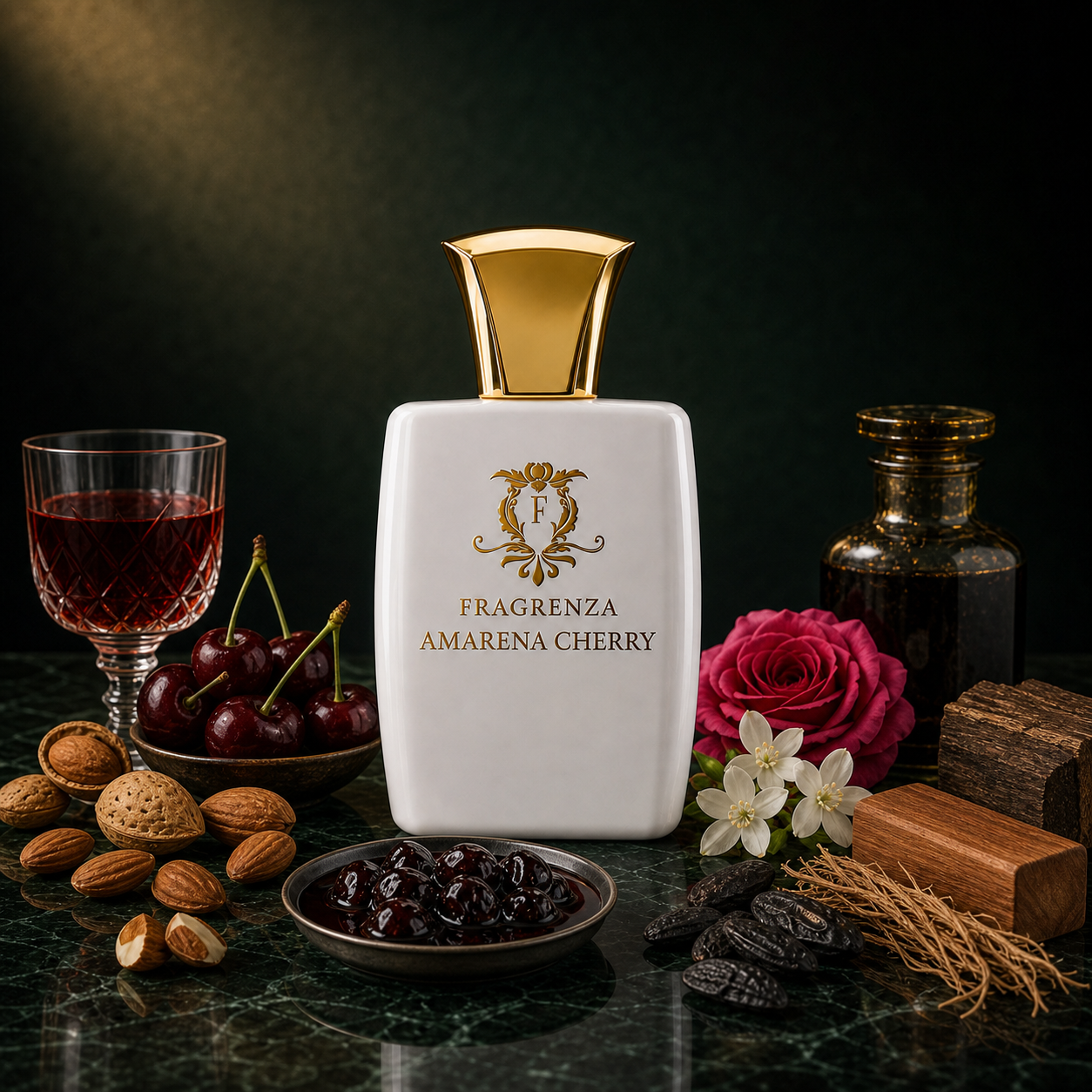
opens with black cherry, cherry liqueur, and bitter almond; the heart unfolds griotte syrup, Turkish rose, and jasmine sambac; the base resolves on Peru balsam, tonka bean, sandalwood, vetiver, and cedar. The bitter almond at the opening anchors the composition in the nutty register while the cherry character carries the wear into recognizable fruity-gourmand territory. Among the most distinctive nutty compositions in the line.
2. Praline-floral (the mainstream commercial benchmark)
The archetype that defined 2010s mainstream feminine perfumery and remains the most commercially successful nutty direction. Praline (hazelnut-and-caramelized-sugar) paired with iris, jasmine, orange blossom, vanilla, and patchouli. The wear is universally legible, deeply comforting, and culturally familiar; the natural starting point for wearers exploring the broader nutty register.
The Fragrenza pick:

3. Tonka comfort (the universal everyday register)
The most accessible nutty archetype, and the one with the broadest occasion range. Tonka used as the structural anchor alongside fruit, soft florals, and cashmere musks to produce a wear that reads as warm, welcoming, and universally appropriate. The wear sits between pure vanilla and the broader gourmand register; tonka contributes the nutty-almond-hay warmth that prevents the composition from reading as pure vanilla.
The Fragrenza pick:
opens with the velvety sweetness of ripe peach, luminous mandarin and orange, and the aromatic warmth of cardamom; the heart unfolds white flowers and rose petals laced with cinnamon and clove; the base resolves on velvety sandalwood, powdery tonka bean, and cashmere musks. The tonka character anchors the wear in the nutty register without ever declaring itself; the composition reads as comfortable warmth rather than as foregrounded nuttiness.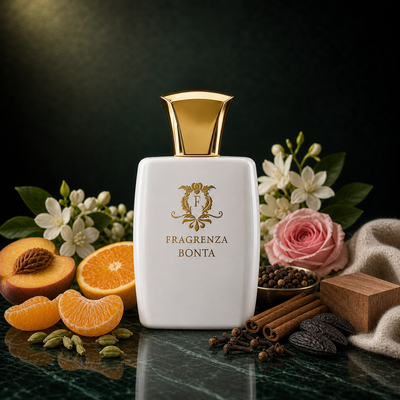
4. Roasted-nut gourmand (the contemporary niche register)
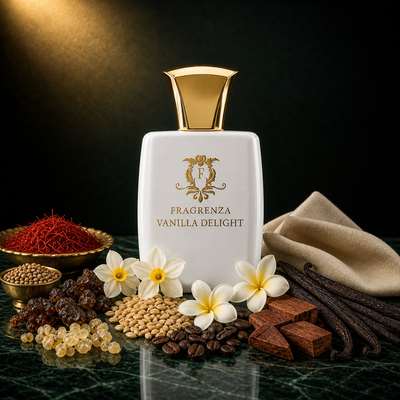
An archetype that draws on the pyrazine chemistry of roasted coffee, roasted barley, and the broader toasted-grain family. Tonka and roasted-grain materials paired with vanilla, suede, and a slightly smoky base produce a wear that reads as polished, sophisticated, and emotionally serious. The natural choice for wearers who want nutty warmth handled with structural ambition.
The Fragrenza pick:
5. Caramel-tonka indulgent (the dessert-adjacent register)
An archetype where tonka shares the base with caramel, honey, and milky notes alongside narcotic florals and an oud anchor. The composition reads as indulgent at the surface and complex at the base; the tonka contributes the nutty character that distinguishes the wear from pure caramel-vanilla territory. Among the most distinctive directions in contemporary nutty perfumery, sitting between bright gourmand and savory gourmand.
The Fragrenza pick:
opens with bergamot and pink pepper, builds through ylang-ylang, jasmine, tuberose, lily of the valley, honey, and paradisone, and resolves on a base of smoky oud, luscious caramel, creamy vanilla, and milky notes. The composition leans toward the caramel-and-honey indulgent register, but the tonka-and-milky base anchors the nutty character that distinguishes the wear from a pure dessert composition.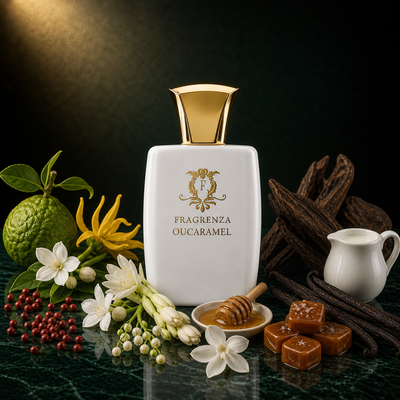
How nutty fragrances wear on skin
The wear pattern of the nutty family is specific.
Nutty character emerges progressively. Unlike top-note materials that declare themselves in the opening, nutty notes typically become most prominent in the heart-to-base transition, around the one-to-two-hour mark. The opening reads as fruit, floral, or spice; the nutty character builds as the warmer materials integrate into the wear.
Skin chemistry shapes the wear significantly. Warmer or oilier skin amplifies the sweet-honeyed nutty facets (tonka, praline, caramel); cooler or drier skin amplifies the dry-almond-bitter facets (bitter almond, walnut). The same nutty composition can read substantially different across two wearers. See the skin chemistry deep-dive for the full account.
Projection and longevity are typically high. The dense base materials (tonka, sandalwood, patchouli, soft musks, vanilla) are tenacious; eight to twelve hours is typical on most skin. The nutty character itself peaks in the heart and remains as a textural anchor through the dry-down. Apply with restraint; one to two sprays is enough for any composition in the family.
When to wear nutty fragrances
The family is more occasion-flexible than the broader savory gourmand register. Nutty fragrances work in most contexts where the wear should register as warm, welcoming, and emotionally accessible. The natural seasonal home is fall and winter; the warmth-coded materials pair naturally with cool weather.
The tonka comfort and praline-floral archetypes are universally appropriate across daytime and evening contexts. The bitter almond-cherry and caramel-tonka archetypes lean evening; the indulgent character can read as too statement-driven for daytime contexts. The roasted-nut gourmand archetype sits in the middle and works across most cool-weather contexts.
Hot weather is the harder context for the nutty family generally. The dense materials project more aggressively in heat, and the sweet nutty character can read as cloying when warm air does not let the base anchors develop. The tonka comfort and praline-floral archetypes are the most warm-weather-tolerant; the bitter almond-cherry and caramel-tonka are happier in cooler weather.
How to layer nutty fragrances
Nutty fragrances layer well with most partners. Three patterns work consistently.
Nutty fragrance over a clean musk skin scent. Apply a transparent clean musk broadly; add a single spray of the nutty fragrance to one pulse point. The combination extends the wear into intimate range without projection commitment. Particularly useful for daytime wear of evening-coded nutty compositions.
Nutty fragrance paired with a bright top. Apply the nutty composition broadly and add a single spray of bergamot, neroli, or orange-blossom cologne to one pulse point. The bright top reads in the opening and fades over the first hour; the nutty character carries the wear through the rest of the day.
Nutty fragrance layered with vanilla. Tonka and vanilla share coumarinic chemistry, so layering a nutty fragrance with a vanilla-forward composition amplifies the warmth without creating muddiness. The combination works particularly well with the tonka comfort and praline-floral archetypes. For broader layering theory, see the layering pillar.
Where to go after pistachio
For wearers who arrived at nutty perfumery via pistachio and want to explore further, the smart next step is not to seek out more pistachio but to identify what specifically you loved about it. If it was the creaminess and gentle sweetness, the tonka comfort archetype will satisfy and then some. If it was the slightly green, almost savory quality, the bitter almond-cherry direction awaits. If it was the warmth and comfort of nutty fragrance worn close to the skin on a cold day, the roasted-nut gourmand and caramel-tonka indulgent archetypes offer that experience at a different level of depth and complexity.
The nutty family in fine perfumery is older, stranger, and more rewarding than pistachio alone can suggest. Follow curiosity rather than trend; the family will reward the exploration.
Related reads
- Bright Gourmand: The 2026 Pillar
- Best Pistachio Perfumes 2026
- The Pistachio Boom: Why It Took Over 2026
- The Dubai Chocolate Perfume Trend
- Best Cherry Fragrances 2026
- Best Vanilla Fragrances 2026
- How to Build a Fragrance Wardrobe
FAQ
What is the difference between pistachio and other nutty fragrance notes?
Pistachio in perfumery typically reads as green-creamy-slightly-bitter with a distinctive Sicilian-pastry character. Bitter almond reads as marzipan-cherry-pit. Hazelnut reads as toasted-chocolate-adjacent. Walnut reads as earthy-bitter-slightly-leathery. Tonka reads as almond-hay-vanilla. Each note occupies its own register, and the broader nutty family produces wear experiences that pistachio alone cannot replicate.
Is tonka bean actually a nut?
Botanically, tonka is the seed of the Dipteryx odorata tree, which is a legume rather than a true nut. In perfumery the distinction does not matter; tonka's aroma (coumarin-rich, almond-hay-vanilla) sits firmly in the nutty register and the material is the structural backbone of nearly every contemporary gourmand. Whether tonka is "technically" a nut is a botanical question; aromatically, it is the most important nutty material in fine fragrance.
Why do nutty fragrances smell different at the dry-down?
Because the nutty character is primarily a base-and-heart phenomenon rather than a top-note one. Tonka, praline, almond-cherry-balsam, and the roasted-nut materials all develop progressively as body heat releases them; the opening of most nutty fragrances reads as fruit or floral or spice, with the nutty character emerging around the one-hour mark and dominating the dry-down. Live with the wear for four hours before deciding whether a nutty composition suits your chemistry.
Are nutty fragrances unisex?
The tonka comfort archetype is essentially unisex and works on any wearer. The praline-floral and caramel-tonka archetypes have feminine marketing histories but the wear works across gender; the bitter almond-cherry and roasted-nut archetypes lean unisex with slightly more flexibility toward masculine register depending on the supporting materials. Treat gender marketing on nutty compositions as a starting point rather than a constraint.
Can I wear nutty fragrances in summer?
The lighter end of the family (tonka comfort, certain praline-floral compositions) can work in warm-weather evening contexts. The denser archetypes (bitter almond-cherry, caramel-tonka, roasted-nut gourmand) are generally happier in cooler weather; the rich base materials project too aggressively in heat. Save the projection-forward nutty compositions for fall, winter, and cool spring weeks.
How long do nutty fragrances last on skin?
Eight to twelve hours is typical for well-built nutty compositions on most skin. The dense base materials (tonka, sandalwood, patchouli, vanilla, soft musks) are tenacious; the wear extends naturally as body heat develops over the course of the day. Nutty fragrances applied to fabric continue to release scent for many hours after application.
What is the easiest nutty fragrance to start with?
For most wearers, the tonka comfort archetype (Bontà register) is the most accessible entry point. The nutty character is present but balanced by the supporting florals and musks; the wear is universally appropriate across cool-weather contexts and emotionally welcoming rather than declarative. Wear it through a season, learn how your skin amplifies the tonka and nutty materials, and decide whether to explore deeper into praline-floral, bitter almond-cherry, roasted-nut, or caramel-tonka territory from there.
The bottom line
The nutty family in fine perfumery is older, stranger, and more rewarding than the pistachio trend alone suggests. The five archetypes give you the full landscape; the Fragrenza picks within each give you concrete starting points; the wearing patterns and layering techniques give you the technical vocabulary to wear the register well.
Whether you want the bitter-almond niche register of Amarena Cherry, the praline-floral cultural benchmark of Belle di Verona, the tonka comfort of Bontà, the roasted-nut sophistication of Vanilla Delight, or the caramel-tonka indulgence of Oucaramel, the contemporary nutty family has the depth to reward years of exploration. Pistachio may have led the way; the broader nutty register is where the most rewarding next discoveries live.