

The Best Sandalwood Fragrances: Creamy, Warm, and Timelessly Beautiful
True Santalum album from India yields a creamy, milky wood that anchors unisex compositions; supply restrictions have pushed perfumers toward Australian and synthetic alternatives.
By Julia MorettiFragrenza makes several of the alternatives featured in our guides — here’s how we test.
12 min read
Sandalwood is the most universally flattering material in fine perfumery. Where vetiver runs earthy and patchouli runs dark, sandalwood runs creamy and warm — soft, milky, slightly sweet, and skin-adjacent in a way that makes almost any wearer of any age in any context smell better. It has been part of perfume, ritual, and luxury cosmetics for at least four thousand years, and its appeal has not diminished. In 2026 it is the structural backbone of a remarkable share of the most successful unisex compositions, the warm center of countless oriental compositions, and the smooth foundation that makes “creamy wood” an instantly recognizable category.
This is the guide. What sandalwood actually smells like, the conservation crisis that reshaped how the industry uses it, the key materials in the modern sandalwood toolkit, the famous fragrances that demonstrate its full range, and six Fragrenza picks distributed across the major registers the note plays in. Read through, or skip to the register you want to dress for.
What sandalwood actually smells like
True sandalwood — particularly Mysore sandalwood from India, distilled from the heartwood of Santalum album — smells of warm, creamy wood with a milky softness, a faint sweetness, and a quietly sensual skin-like quality that has made it one of the most beloved aromatic materials in human history. The sweetness is not gourmand; it is the natural softness of the wood itself, closer to the smell of a freshly opened cedar chest filled with cream than to anything dessert-adjacent. Underneath sits a transparent, clean wood character that gives the material its structural backbone, and around it a faint balsamic warmth that anchors heavier compositions in the oriental tradition.
Different sandalwood sources produce notably different oils. Mysore sandalwood is the lushest and most prized — smooth, creamy, and unmistakably milky. Australian sandalwood (Santalum spicatum) is drier, slightly sharper, and more textured, with a woody facet more prominent and the creamy quality more reserved. Pacific sandalwood, from species growing in Hawaii, Vanuatu, and other Pacific islands, sits between the two — warmer than Australian, less creamy than Mysore, and often used in compositions that want sandalwood character without the price tag of true Mysore.
The defining quality of sandalwood across all its variants is the way it integrates with skin. Like musk and ambroxan, sandalwood does not project from the body so much as sit alongside it, warming under heat and revealing different facets through the day. The wear feels personal rather than projected, which is why sandalwood is so often described as “skin-meld” in fragrance reviews. It is the material that taught modern perfumery what skin-close warmth could be.
The Mysore crisis and the rise of synthetic sandalwood
The story of contemporary sandalwood perfumery is, for the last forty years, the story of replacing Mysore sandalwood with materials that perform a similar olfactory function. Santalum album was harvested in such quantity through the twentieth century that wild populations collapsed; by the 1990s the species was effectively endangered in its native habitat, and the Indian government tightened export restrictions and price controls. Mysore sandalwood oil, once a workhorse material in fine perfumery, became one of the most expensive natural ingredients in commercial use — comparable in cost to high-grade oud.
The industry response came in two waves. First, plantation-grown Mysore and Australian sandalwood scaled up to meet some of the demand, particularly from Australian sandalwood operations that produced consistent material at a meaningful fraction of the wild Indian price. Second — and more transformatively — chemists developed synthetic sandalwood molecules that captured specific facets of the natural oil with extraordinary fidelity.
The most important of these synthetic materials is Javanol (developed by Givaudan), which delivers a bright, creamy, milky-sandalwood character that is more transparent and more intensely creamy than the natural oil. Ebanol (from Givaudan) and Polysantol (from Firmenich) provide drier, woodier sandalwood facets that complement Javanol’s creaminess. Sandalore and Brahmanol add additional creamy and dry-woody dimensions respectively. Most contemporary “sandalwood” compositions are built around blends of these synthetics, often layered with small amounts of natural oil, producing a sandalwood character that is more consistent and often more vivid than what the natural material alone delivered.
The shift has been ethically positive (less pressure on wild Mysore populations) and aesthetically transformative (the synthetics permitted entirely new sandalwood expressions). Modern Mysore-style compositions are usually closer to a perfumer’s idea of the material than to the wild oil itself.
Famous sandalwood fragrances
Sandalwood appears in essentially every major fragrance family, but a handful of compositions treat the note as the headline material rather than the structural backbone. These are the ones to study.
Le Labo’s Santal 33, launched in 2011, is the most culturally consequential sandalwood fragrance of the last fifteen years. Its dry, slightly leathery, smoky-sandalwood architecture redefined what masculine-leaning unisex perfume could be, and it has become a generational signature in cities from New York to Berlin. Comme des Garçons’ Hinoki and Diptyque’s Tam Dao occupy the meditative-incense end of the sandalwood spectrum, leaning into the wood’s temple-and-ritual associations. Editions de Parfums’ Santal Massoia uses Mysore-adjacent creamy sandalwood paired with lactonic massoia in a register that defined a wave of soft-luxury skin scents in the late 2010s.
In the mainstream space, sandalwood does its most celebrated work as a structural element rather than a featured note. The smooth, sophisticated woody base of Bleu de Chanel relies heavily on synthetic sandalwood materials; Tom Ford’s Oud Wood pairs sandalwood with oud in one of the genre’s most influential luxury compositions. Both of these examples have direct value-luxury counterparts in the Fragrenza line, covered below.
Six Fragrenza sandalwood picks
Six compositions in the Fragrenza catalog place sandalwood at the structural center of the wear, each working in a distinct register. Picking among them is a question of which sandalwood mood you want to dress for.
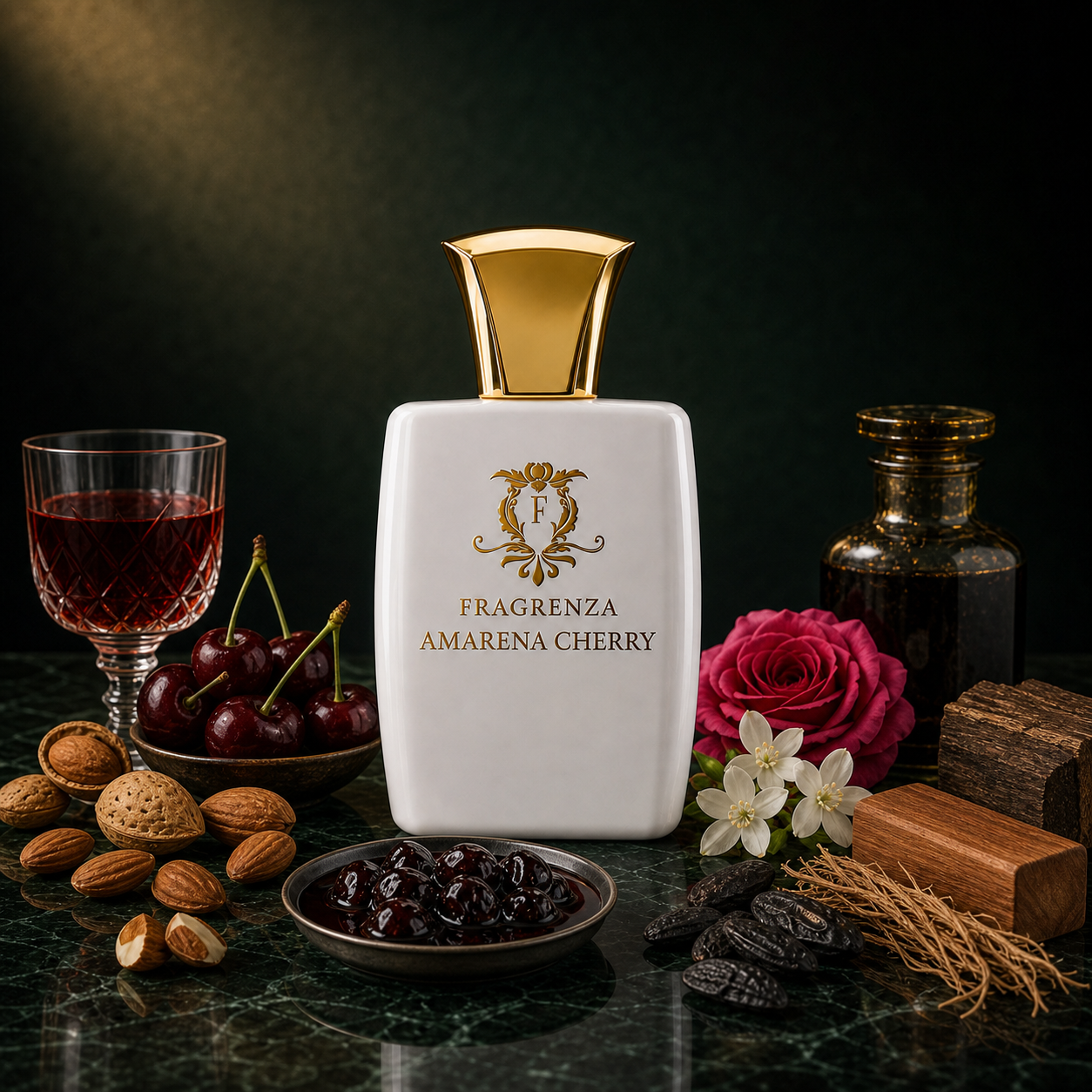
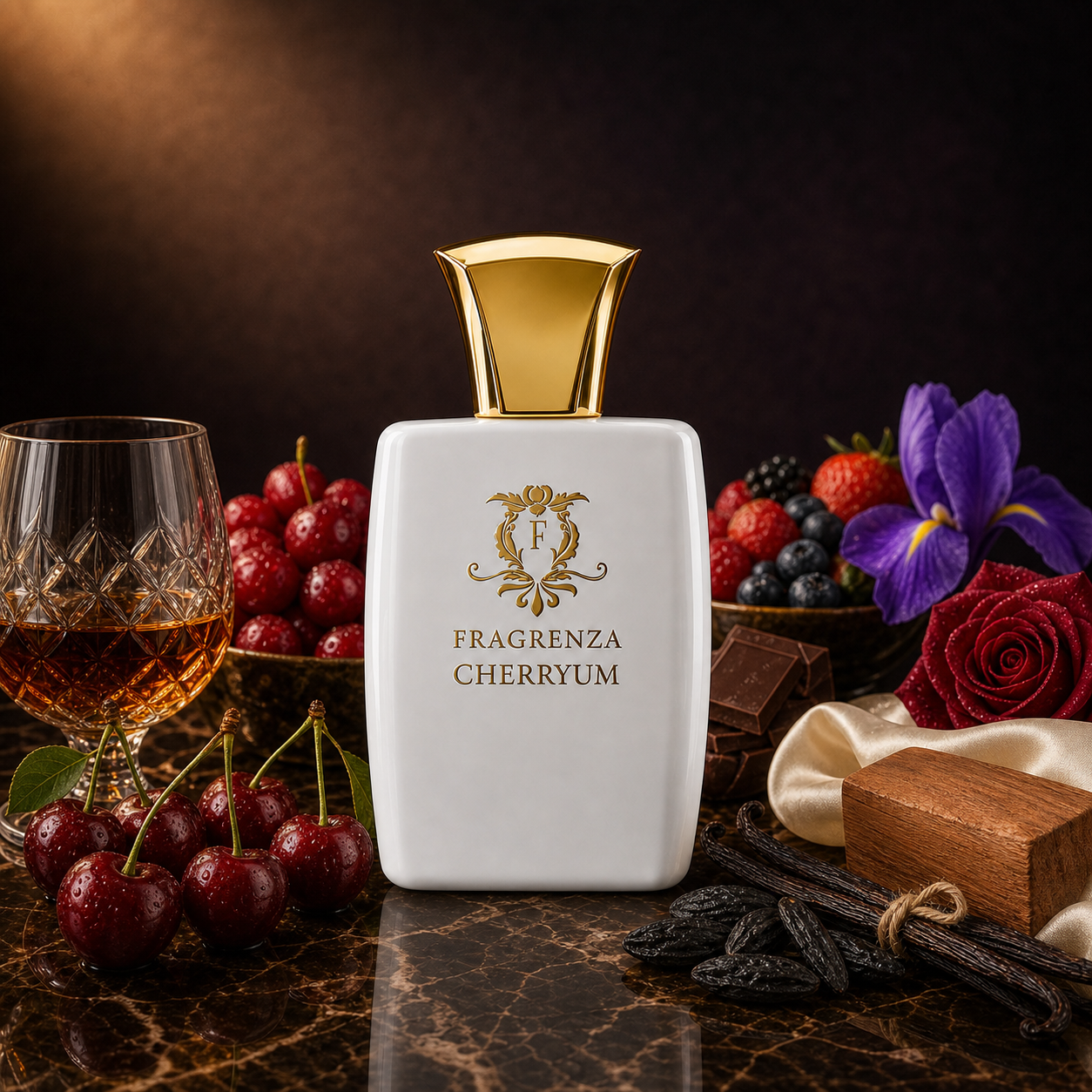
The pure creamy register
is the line’s direct expression of creamy-sandalwood at its most enveloping. The sandalwood accord is rendered with the milky softness that the Mysore tradition aims for — smooth, gently sweet, and almost dairy-like in its richness. The wear feels like wrapping yourself in something soft, and it works equally for cool-weather comfort and warm-weather skin-scent territory. This is the sandalwood pick for anyone who wants maximum creaminess and minimum complication.
The warm exotic register
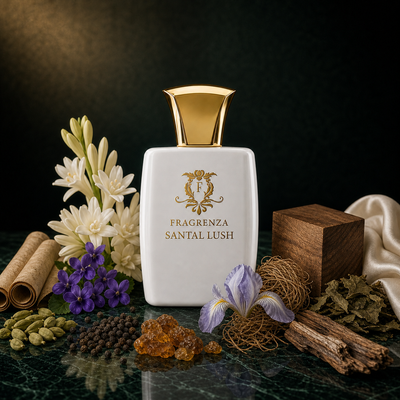
uses sandalwood as a structural foundation under warm resins, woody spices, and a faint smoky character that evokes the spice markets of Marrakech. The sandalwood here is less creamy and more architectural — providing the smooth, warm base that lets the spice and resin elements develop without falling apart. It is the meditative end of the sandalwood spectrum, built for long evenings and unhurried wear.
The tropical-warm register
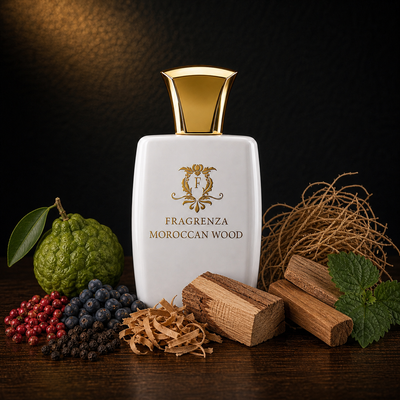
places sandalwood inside a smokier, more incense-adjacent composition with patchouli, oud, and warm woods. The sandalwood holds the creamy core while the smoke and incense provide the projection and the dramatic top register. It is the sandalwood pick for cool-weather evening wear where you want a wood-forward fragrance with depth and presence.
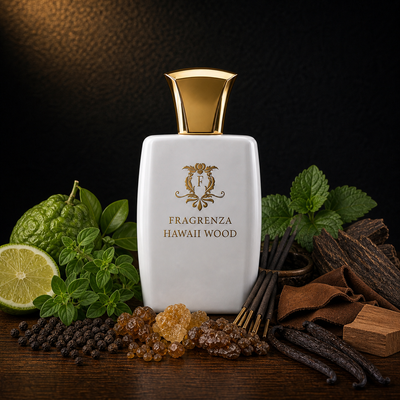
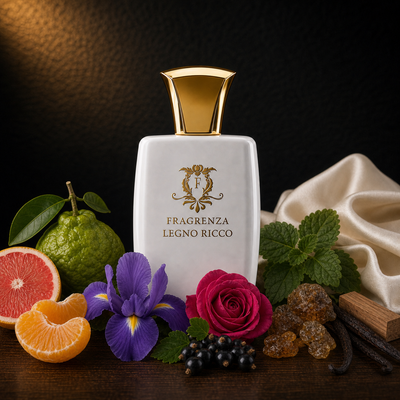
The rich-wood register
takes sandalwood into a more sophisticated, more complex woody composition. The wood layers stack — sandalwood at the creamy center, drier woods around it, soft musks underneath — producing a wear that reads as adult, refined, and deliberately constructed rather than simply pleasant. It is the polished evening register of the sandalwood family, suited to the kind of context where you want the fragrance to do quiet work.
The sandalwood-and-oud register
Sandalwood and oud share natural kinship: both are warm, resinous, and skin-integrated, and they have anchored each other in the oriental tradition for centuries. Tom Ford’s Oud Wood is the most influential luxury expression of this pairing in modern perfumery; the Fragrenza interpretation,
, holds the same architecture — sandalwood softening the oud, oud giving the sandalwood depth and weight — at the value-luxury price point. For the broader picture of where this register sits in the oud landscape, our oud note pillar covers the wood that frequently rides shotgun with sandalwood here.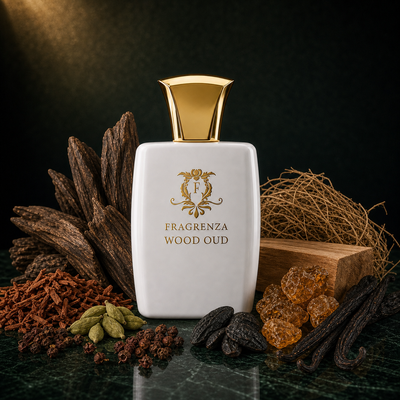
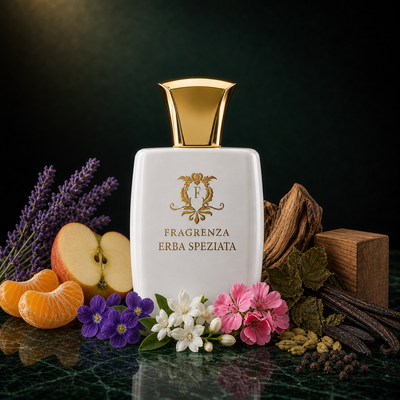
The aromatic-spiced register
uses creamy sandalwood as a canvas for a vivid aromatic composition built on lavender, apple, and warm spice — one of the most successful aromatic-fougere structures of the last decade. The sandalwood gives the whole arrangement its warmth and longevity; the aromatic top notes give it presence. It is the sandalwood pick that wears across more contexts than the others, from daytime professional to evening social.
One additional pick deserves a callout for the “clean polished masculine” register:
uses synthetic sandalwood (Javanol-style materials) to give its clean woody-aromatic structure the smooth, velvety depth that has made it a contemporary classic. It is the sandalwood pick for office wear, work travel, and any context where the impression should be quiet authority rather than fragrance-forward statement.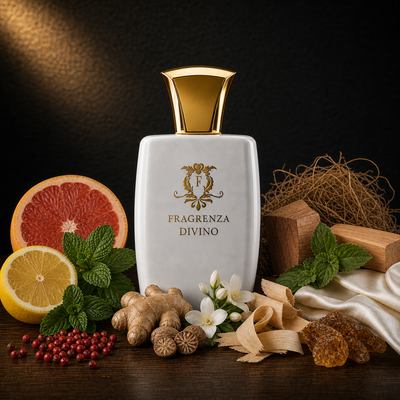
How sandalwood interacts with other notes
Sandalwood is one of perfumery’s great structural notes precisely because it harmonizes with almost everything. The pairings worth knowing are the ones that show up across the canon.
With musk, sandalwood produces the closest-to-skin warmth available in modern perfumery. Both materials share the creamy-skin-integration character; pairing them creates a base that reads as deeply personal rather than projected. This is the structural foundation of the Skin Scents 2.0 wave.
With oud, sandalwood softens the wood’s austerity into a creamy-resinous warmth that anchors many of the great oriental compositions. It is the most universal pairing in the oud category, and the one that tends to read as luxurious without being austere.
With rose, sandalwood produces the rose-sandalwood accord that has been at the heart of Indian attar perfumery for centuries and remains a fixture of the modern luxury feminine. The sandalwood prevents the rose from going flat; the rose prevents the sandalwood from going one-dimensional.
With vanilla, sandalwood creates the warm-creamy oriental base that defines so many gourmand-oriental compositions. The two materials share the creamy quality and double its impact when paired.
With citrus and aromatic top notes, sandalwood acts as the warming base that extends the wear and gives the composition body. This is the structural pattern of countless modern fougeres and clean masculines.
For the broader cluster context on the close-skin register that sandalwood occupies, our Skin Scents 2.0 pillar places sandalwood-led compositions in the wider 2026 trend.
Sandalwood in the modern wardrobe
Sandalwood is the rare base note that wears well across all four seasons. Heavy oriental compositions can feel oppressive in summer; pure floral compositions can feel insubstantial in winter. Sandalwood-forward compositions handle both registers because the note’s warmth is gentle rather than dense — it adds skin-integrated depth without thermal weight. A creamy sandalwood works as easily on a 30-degree summer afternoon as it does on a December evening.
The category also rewards moisturized skin more than most. Sandalwood’s creamy facet amplifies on hydrated skin and can feel slightly thin on dry skin. Apply unscented body lotion before spraying for the lushest version of the wear. For broader application discipline, our longevity guide covers the technique that maximizes any close-to-skin composition.
For the picture of how sandalwood-forward fragrances fit a wardrobe alongside other registers, our complete guide to building a fragrance wardrobe in 2026 places sandalwood among the major base-note categories. For the mood register sandalwood occupies — grounded, polished, intimate — our guide to choosing perfume by mood covers the territory in detail.
Frequently asked questions
What does sandalwood smell like?
Warm, creamy, slightly sweet, with a milky softness and a transparent woody backbone. The defining quality is the way the note integrates with skin — it does not project from the body so much as sit alongside it, warming under heat and revealing different facets through the wear. Mysore sandalwood is the lushest and creamiest; Australian sandalwood is drier and woodier; synthetic sandalwood compounds (Javanol, Ebanol, Polysantol) capture specific facets with often more vivid intensity than the natural oils.
Is real Mysore sandalwood still available?
Limited and expensive. Wild Santalum album populations collapsed under twentieth-century overharvesting; the Indian government has tightly regulated extraction and export for decades, and prices for genuine wild Mysore oil now rival those of high-grade oud. Plantation-grown Mysore-strain sandalwood and Australian sandalwood have replaced wild oil in most contemporary perfumery, alongside the synthetic sandalwood molecules that now do most of the structural work in modern compositions.
Are synthetic sandalwood materials as good as the natural oil?
Often better, depending on which facet you want. Javanol delivers a more intensely creamy character than most natural sandalwood oils; Ebanol and Polysantol provide cleaner, drier woody facets than the natural material; and the consistency of the synthetics is far higher than batch-to-batch variability of natural oil allows. The most successful contemporary sandalwood compositions blend small amounts of natural oil with significant percentages of synthetics to capture both the depth of the natural and the intensity of the lab-built materials.
Why is sandalwood so widely used in perfumery?
Three reasons. First, the note’s creamy-skin-integration character is universally flattering across genders, ages, and contexts. Second, it functions as an exceptional fixative — extending the longevity of more volatile materials in a composition while contributing its own aromatic signature. Third, it harmonizes with almost every other note category, making it one of the safest structural choices a perfumer can make. These three properties together explain why sandalwood appears in essentially every fine fragrance ever made.
Can men and women both wear sandalwood?
Yes — sandalwood is among the most genuinely unisex notes in modern perfumery. The traditional Indian attar tradition is unisex by default; Western interpretations have sometimes coded creamy sandalwood as feminine and dry sandalwood as masculine, but those are conventions rather than rules. Modern compositions increasingly let sandalwood play across the gender spectrum, and the most successful contemporary sandalwood fragrances (Le Labo Santal 33 chief among them) are explicitly unisex.
What is the best season to wear sandalwood?
All four. Sandalwood is unusual among base notes for working across the full seasonal spectrum — lighter creamy sandalwood compositions wear comfortably in spring and summer; richer sandalwood-and-oud compositions belong to autumn and winter. Concentration, not category, is the constraint: a heavy sandalwood-oud composition would feel oppressive on a hot summer afternoon, while a clean sandalwood-musk skin scent works beautifully in any weather.
What perfumes layer well with sandalwood?
Almost everything. Musk is the closest match (creamy-skin pairing). Oud is the most powerful (warm-resinous oriental base). Vanilla creates the gourmand-oriental double cream. Rose produces the classical Indian attar pairing. Citrus and aromatic top notes get warming depth from a sandalwood base. Avoid layering sandalwood with sharp aquatic-marine notes, where the contrast between creamy warmth and cool transparency tends to feel awkward rather than complementary.
The bigger picture
Sandalwood is the warm center of fine perfumery. It has been there for four thousand years, it is the structural backbone of the modern unisex wardrobe, and it works across more contexts and more wearers than any other base note. The conservation crisis around Mysore sandalwood was, paradoxically, the moment the category got more interesting — the synthetic revolution that followed produced sandalwood expressions the natural material alone could never have delivered. Whether you wear it for the close-skin register, the warm-oriental anchor, the rose-or-oud pairing, or simply because it makes you smell better than you otherwise would, sandalwood deserves its place in any serious fragrance wardrobe.