Fir Balsam in Perfumery: Resinous, Green, and Deeply Evocative
Fir balsam is a warm, balsamic raw material with deep history, a note every fragrance lover should learn to recognise on skin.
By Julia Moretti 6 min read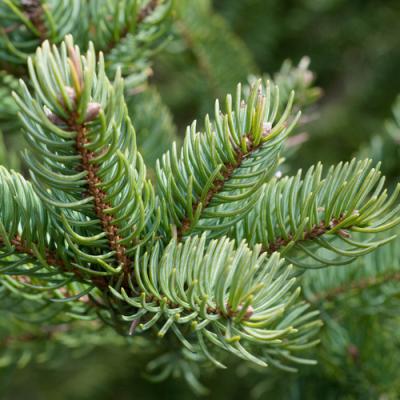
The Smell of the Forest Captured in a Bottle
Few natural materials in perfumery carry quite the evocative power of fir balsam. To encounter it is to be transported instantly and completely — to cold mountain air, to the damp earthiness of a forest floor after rain, to the sticky resin on a fir tree's bark that catches sunlight and smells simultaneously green, sweet, smoky, and clean. Fir balsam is one of those ingredients that achieves something remarkable: it smells genuinely, unambiguously natural in a way that immediately communicates a specific time and place. For a perfumer working to ground a composition in the natural world, fir balsam is an extraordinary tool.
The term encompasses several distinct aromatic materials. Fir balsam absolute is extracted from the resinous exudate and needles of fir trees, primarily Abies balsamea (the balsam fir of North America) and Abies alba (the silver fir of Europe). Fir needle oil is separately distilled from the foliage of various Abies species. Each has its own olfactory character, but the family resemblance is strong: resinous, sweet, fresh-coniferous, with varying degrees of camphoraceous sharpness and woody depth depending on the species and the part of the tree from which the material originates.
Botanical Origins and Traditional Uses
Balsam firs are medium-to-large trees of the boreal forests of North America and Northern Europe, growing at altitude in cool, moist conditions. The resin — sometimes called Canada balsam when sourced from Abies balsamea — was historically used by indigenous North American peoples as a wound dressing, a waterproofing agent, and a respiratory remedy, and was adopted by European settlers for similar medicinal purposes. Its aromatic properties were well-known long before it entered the perfumery trade.
European silver fir has a longer history in continental perfumery, its resin and needle oil used in preparations since at least the Renaissance. The Venetian and French perfumery industries of the seventeenth and eighteenth centuries incorporated fir-derived resins into their fragrant preparations, where their fresh-resinous quality complemented the more floral and citrus materials that dominated the period's aesthetic.
Today, fir balsam absolute and fir needle oil are produced in France, Eastern Europe, Canada, and Siberia. The absolute — produced by solvent extraction of the resin and needles — is a rich, dark, intensely aromatic material used in small quantities as a modifier and fixative. Fir needle oil, produced by steam-distillation of the foliage, is lighter and more specifically fresh-coniferous, closer to the character of the living tree's foliage.
Key Molecules in Fir Balsam Materials
The aromatic complexity of fir balsam materials arises from a rich mixture of terpenic and resinous compounds. Alpha-pinene and beta-pinene — the same monoterpenes central to cedarwood and many coniferous oils — dominate the fresh, woody-resinous impression. Limonene contributes citrusy brightness, while beta-phellandrene adds a slightly spicy-citrus facet. Bornyl acetate, present in significant quantities in many fir needle oils, contributes a clean, sweet, slightly floral-woody note that softens the sharpness of the terpenes and gives fir balsam its characteristic approachability.
In the absolute, heavier resinous compounds including diterpene acids contribute depth, fixation, and the sweet, almost honey-like warmth that distinguishes the absolute from the lighter needle oil. These compounds interact with the brighter terpenes to produce the multi-layered quality that makes fir balsam absolute so valuable as a base-note modifier — it bridges the gap between the fresh-coniferous top and the deep, woody-resinous base in a way that feels seamless and natural.
Camphene, myrcene, and tricyclene are present in varying amounts across different fir species and contribute the characteristic piney, slightly medicinal, and sometimes sweet-woody facets that distinguish fir from, say, vetiver or patchouli in the woody base family. The specific blend of these molecules varies significantly between species, explaining why Siberian fir needle oil smells noticeably different from Canadian balsam fir oil even though both belong to the same aromatic category.
Fir Balsam in Perfumery History
Coniferous materials have been part of human scent experience since prehistory — pine and fir resins were among the first aromatics burned as incense, their smoke carrying prayers skyward in cultures from ancient Mesopotamia to pre-Columbian America. The Egyptians imported coniferous resins from the Levant for use in religious ritual, cosmetic preparations, and embalming. This deep association between coniferous resins and the sacred gave fir balsam a gravitas in perfumery that has never entirely dissipated.
In the modern era, fir balsam found its greatest application in the woody-aromatic and aromatic fougère families that dominated the twentieth century's masculine fragrance landscape. Its ability to contribute freshness, naturalness, and resinous depth simultaneously made it invaluable in compositions seeking to evoke the outdoors without resorting to purely abstract synthetics. The great "sport" and "outdoor" fragrances of the 1990s and 2000s drew heavily on coniferous materials, with fir needle oil providing the defining note in many of their forest-fresh accords.
Niche perfumery has explored fir balsam more adventurously, using it not only as a naturalistic fresh-woody ingredient but as a way of connecting fragrance to concepts of wilderness, solitude, and the sublime. The recent growth of interest in forest-bathing (shinrin-yoku) and nature-inspired wellness aesthetics has brought fir balsam into a new cultural moment, with perfumers using it to address a widespread desire for the calming, restorative qualities of forest environments.
Famous Fragrances Featuring Fir Balsam
Chanel's Pour Monsieur, one of the great classic masculine colognes, uses woody-resinous materials including fir-adjacent notes to achieve its signature composed, intelligent freshness. YSL's Jazz and Yatagan are more direct in their deployment of coniferous materials, the latter taking fir and artemisia into genuinely challenging, almost aggressively outdoorsy territory.
In more recent perfumery, the niche house Comme des Garcons has explored forest and coniferous themes extensively, with various compositions using fir balsam and related materials to create olfactory environments of great distinctiveness. Parfums de Marly Layton achieves a masterful fresh-aromatic opening with woody depth, its coniferous elements contributing to the composition's effortlessly elegant character. Among the broader landscape of woody fragrances, those that incorporate fir balsam tend to have a naturalness and a sense of place that purely synthetic constructions cannot always match.
Note Interactions: Fir Balsam Within a Composition
Fir balsam's greatest strengths as a blending ingredient lie in its ability to bridge the gap between fresh-green and warm-resinous facets within a composition. Its interaction with labdanum is particularly valuable: the cool, fresh-coniferous quality of fir balsam provides a counterpoint to labdanum's dark, ambery warmth, and the combination produces a rich, complex accord that evokes warm pine forests in a way neither ingredient achieves independently.
With bergamot in the top notes, fir balsam achieves a luminous, outdoor-fresh opening — the citrus brightness of bergamot lifting and clarifying the resinous-green quality of the fir, creating an accord that feels simultaneously invigorating and grounded. This combination is a cornerstone of the fresh-aromatic masculine tradition.
In deeper, darker compositions, fir balsam pairs naturally with incense, where its resinous quality amplifies the smoky, spiritual character of the incense while its freshness prevents the composition from becoming oppressively heavy. The combination evokes cold stone churches and winter midnight masses — sacred, austere, and deeply beautiful. With musk, fir balsam finds a softer, more intimate register: the clean warmth of musk smoothing the resinous edges of the fir and creating a skin-close, quietly forest-like accord.
Wardrobe Context: Fir Balsam Fragrances in Everyday Life
Fir balsam fragrances are arguably at their best in cool and cold weather — the resinous, slightly sweet quality of the material feels naturally appropriate to the sensory context of autumn and winter, where warmth and comfort are what we seek from fragrance. A well-constructed fir balsam composition can feel like wearing a warm coat in the best sense — reassuring, substantial, and beautifully made.
For the fragrance lover building a complete wardrobe, a coniferous-forward composition anchored by fir balsam occupies a specific and valuable role: it is the outdoor fragrance that is not merely fresh but genuinely complex, the winter fragrance that is not merely warm but also bracing. It suits both men's and unisex wear equally well and serves as a reminder that the natural world, captured with skill and honesty, offers some of the most compelling olfactory experiences available to us.