


Ginger in Perfumery: The Spice That Bites Back With Beauty
By The Fragrenza Team 7 min read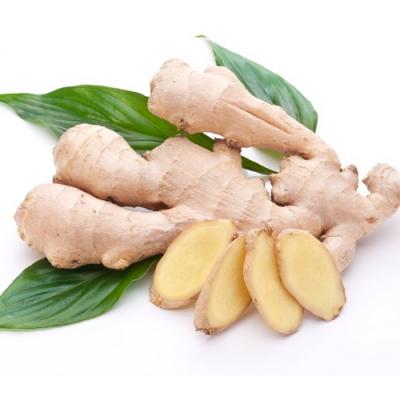
There is a moment, familiar to anyone who has ever grated fresh ginger root, when the air changes. A sharp, green, almost electric warmth rises up — citrusy at the edges, woody at the core, with a clean bite that lingers on the back of the throat. This is the essence of ginger in perfumery: a note that refuses to be merely pleasant, insisting instead on being vivid, alive, and slightly untamed.
Among the spice family of notes, ginger occupies a singular position. Unlike cinnamon, which is warm and enveloping, or cloves, which are dense and medicinal, ginger is kinetic. It sparks. It cuts through heavier compositions with the precision of a citrus note but the staying power of a spice. Perfumers have relied on this dual nature for centuries, using ginger to lift dark orientals, animate woody bases, and give fresh fougères a pulse.
The Smell Profile of Ginger
Raw ginger root delivers a complex aromatic picture. The immediate impression is bright and zesty, reminiscent of lemon or lime peel — this is the influence of citral and other aldehydic compounds present in the essential oil. Beneath that citrus flash lies a dry, peppery warmth with subtle earthiness; the kind of warmth that suggests heat without ever becoming sweet. At the very base, there is a faint woodiness, even a slight greenness, that grounds the note and prevents it from floating away entirely.
Steam-distilled ginger essential oil from Zingiber officinale — the species almost universally used in perfumery — captures this character faithfully, though the oil varies considerably depending on origin. Ginger from Cochin in India tends to be lighter and more citrusy, while Jamaican ginger is richer and more woody. Chinese ginger is notably camphorous. For perfumers, these regional differences provide genuine palette variety within a single ingredient.
In finished fragrances, ginger rarely appears as a fully recognizable spice note the way it does in cooking. More often it acts as a modifier — sharpening a citrus accord, adding bite to a wood note, or introducing a dry counterpoint to sweeter base materials like vanilla or tonka bean.
A History Steeped in Trade and Ritual
Ginger's history in human culture stretches back at least three thousand years, and its aromatic use is nearly as old. In ancient India and China, ginger was prized both as a medicine and as a ritual fragrance component, burned in temples and incorporated into unguents. When Arab traders brought ginger westward along the Silk Road in the first millennium CE, its reputation preceded it: this was a warming, clarifying substance, believed to sharpen the mind and stoke digestion in equal measure.
In medieval European perfumery — or what passed for it before the distillation techniques of the Islamic world transformed the craft — ginger appeared in pomanders, scented sachets, and the thick aromatic compositions meant to ward off disease. The association between strong scent and protection from illness was deeply embedded in pre-modern thought, and ginger, with its sharp penetrating character, fit the role perfectly.
The modern perfumery era largely inherited ginger as a supporting player. In the great oriental constructions of the late nineteenth and early twentieth centuries, it contributed depth and definition to compositions built on resins, musks, and flowers. It was not until the late twentieth century, with the explosion of fresh, clean, and sporty fragrances in the 1990s, that ginger began to appear in more prominent, feature-role positions.
Key Molecules and Extraction
Steam distillation of dried ginger rhizomes produces an essential oil whose primary aromatic components include zingiberene — the sesquiterpene most associated with the characteristic ginger smell — along with bisabolene, camphene, citral, and geraniol. The citral fraction, shared with lemongrass and other citrus-adjacent materials, is largely responsible for ginger's brightness. Zingiberene itself is relatively low in odor intensity, but its interaction with the lighter terpenes creates the full, dynamic profile that makes ginger immediately recognizable.
CO2 extraction offers an alternative to steam distillation, producing an oil that more faithfully represents the full complexity of fresh ginger root — including compounds lost to heat during steam processing. CO2-extracted ginger tends to be greener and more faceted, and it is increasingly favored in high-end niche applications where authenticity is a priority.
On the synthetic side, perfumers can access materials that replicate or exaggerate specific facets of ginger. Methyl cinnamate contributes a spicy warmth; certain woody musks echo ginger's earthy depth. These tools allow formulators to push ginger in whichever direction a composition requires, whether toward dry, almost minerally spice or toward sweet, almost confectionary warmth.
Famous Fragrances Featuring Ginger
Ginger's versatility means it appears across an enormous stylistic range of finished fragrances. In the classic men's oriental Spicebomb by Viktor & Rolf, ginger is part of an explosive spice accord that includes cinnamon, pepper, and tobacco — a composition that demonstrates how well ginger meshes with other warming notes when given equal footing. The note adds freshness and lift to what would otherwise be an overwhelmingly heavy construction.
At the other end of the spectrum, Bleu de Chanel uses ginger more subtly, as part of the aromatic citrus opening that establishes the fragrance's clean, modern masculinity before the woody base takes over. Here ginger functions almost invisibly, doing structural work rather than announcing itself.
In the niche world, ginger has inspired entire compositions built around its character. The pairing of ginger with aquatic or marine notes became almost a genre of its own in the late 1990s and 2000s, and today's niche fragrance landscape includes numerous explorations of ginger alongside incense, woods, and cool resins.
Ginger's Interactions With Other Notes
Understanding ginger in perfumery means understanding it relationally — it is not a note that stands alone well, and part of its genius is how it transforms whatever it sits alongside.
With citrus top notes — lemon, bergamot, grapefruit — ginger extends their freshness into the heart, giving citrus compositions longevity they would otherwise lack. The two share chemical territory, which makes the blend seamless and natural. With florals like jasmine or rose, ginger provides a necessary sharpening edge, preventing the composition from becoming too diffuse or saccharine. The combination of jasmine and ginger, in particular, has a long history in Indian perfumery, where the two materials were often combined in temple offerings.
With woody and earthy base notes — vetiver, cedar, sandalwood — ginger adds a sparkling animation, a sense of movement. The spice's citrusy upper register brightens the denser wood tones without contradicting them. This pairing is the backbone of many classic men's fragrances, where ginger and cedar form the primary aromatic idea.
With resins and sweet base notes — vanilla, amber, labdanum — ginger does something more interesting still: it provides what perfumers call a dry-down counterpoint, a note of clarity that prevents the sweetness from becoming cloying. Orientals built on this tension between warm sweetness and spiced dryness have a particular elegance, and ginger is often the invisible hand responsible for it.
Ginger in Your Fragrance Wardrobe
For the fragrance wearer, ginger fragrances offer a compelling middle ground between the universally approachable and the genuinely interesting. They are neither as immediately safe as pure florals nor as demanding as heavy orientals. A well-constructed ginger fragrance rewards close attention — there is always more nuance there than the first impression suggests — while remaining perfectly wearable in everyday contexts.
Ginger-forward compositions tend to perform particularly well in transitional seasons. Their warmth is real but not heavy, making them appropriate for cool spring mornings and fresh autumn days alike. They also perform well in professional contexts; the note is assertive enough to be noticed but clean enough to avoid imposing on others.
Those drawn to the spicy, aromatic end of the fragrance spectrum would do well to explore ginger alongside related notes. The cardamom family shares ginger's citrus-spice duality and combines beautifully with it. Pepper adds further crispness and definition to ginger's profile. Together, these spice notes form a vocabulary of dry, luminous warmth that is among the most sophisticated — and most underappreciated — in all of perfumery.
Ultimately, ginger is a note for people who want their fragrances to feel alive. It does not settle. It does not merely whisper from the skin. It insists on being present, on bringing that electric green warmth into every room, on making its presence felt with the clean, beautiful bite that has made it indispensable to perfumers for a thousand years.