

Cypress in Perfumery: Scent Profile + Best Cypress Fragrances 2026
Cypress is a warm, balsamic raw material with deep history, a note every fragrance lover should learn to recognise on skin.
By The Fragrenza Team 10 min read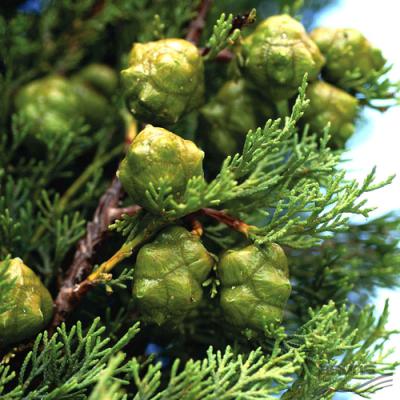
The Scent of Sun-Baked Stone and Dark Needles
Cypress is a note that conjures a specific geography. Close your eyes and breathe it in and you are somewhere in the Mediterranean — a hillside in Provence or Tuscany, the air warm and dry, dark spires of cypress trees breaking the skyline against a hard blue sky. The scent is sharp, resinous, green, and dry: qualities that are simultaneously fresh and austere, natural and almost architectural in their precision.
In perfumery, cypress occupies a particular niche in the woody-aromatic family. It is not as warm and creamy as sandalwood, not as earthy and smoky as vetiver, not as clean and linear as cedar. Cypress brings something different: a sharp, slightly bitter green freshness over a dry, resinous wood base that feels distinctly Mediterranean rather than generic. It is a note with a strong sense of place, and that quality makes it particularly valuable in compositions designed to evoke landscape, memory, or a specific corner of the natural world.
What Does Cypress Smell Like?
The primary aromatic impression of cypress is crisp, clean, and slightly resinous. The top impression — from the terpenic molecules that dominate the oil — is bright and slightly piney, with a dry, almost astringent quality rather than the roundness of pine or the softness of spruce. There is a green quality to cypress that differs from the fresh-cut grass green of geranium or the deep dark green of patchouli — it is more like the green of dark needles and hot resin baking in the sun.
Underneath the initial brightness lies a drier, more resinous quality — slightly smoky, slightly balsamic, with a quality that anchors the fresher top notes and gives the overall impression substance and persistence. This base resinousness is what makes cypress a useful heart and base note as well as an opening ingredient — it has more depth and longevity than purely terpenic materials.
There is also a slight camphoraceous, medicinal edge to cypress that some find invigorating and others find medicinal. This quality, common to many coniferous materials, contributes to cypress's association with clarity and freshness — it is a note that seems to clear the air rather than warm it, which gives it particular value in compositions designed to feel clean and bracing rather than enveloping.
Origins and Extraction
The Mediterranean cypress (Cupressus sempervirens) is the species most commonly used in perfumery, its essential oil obtained by steam distillation of the needles, twigs, and cones. Major producing regions include France, Spain, Morocco, and other Mediterranean countries. The quality of the oil can vary significantly depending on the part of the plant distilled and the time of harvest.
Needle distillation tends to produce a brighter, more terpenic oil with stronger green freshness. Cone distillation emphasizes the resinous, deeper qualities. Many commercial cypress oils are distilled from the combined material — needles, twigs, and small branches — which produces a well-rounded oil that captures both the fresh and resinous aspects of the tree's aromatic character.
Cypress is one of the more stable natural conifer oils, with reasonable longevity in formulation compared to, say, pine or fir needle oils which can oxidize quickly. This stability makes it a practical material for professional perfumery use, though like all natural materials it requires careful storage and sensible use-by practices.
Key Aroma Molecules
The dominant molecule in cypress essential oil is alpha-pinene, the same terpene that dominates pine, fir, and many other coniferous materials. Alpha-pinene's clean, slightly resinous, piney character provides the primary fresh impression of cypress. Delta-3-carene contributes a sweet, slightly citrus-like freshness. Cedrol, found in small amounts, adds a woody depth that increases in prominence as the more volatile top-note molecules evaporate.
What distinguishes cypress from other conifer oils is the particular balance of its terpenic composition and the presence of sabinene and various sesquiterpenes that contribute woody complexity. The combination of a high alpha-pinene content with supporting sesquiterpene depth creates a note that has both the initial brightness of lighter conifer materials and the underlying substance of true woody notes.
Terpinen-4-ol, which also appears in tea tree oil and lavender, contributes a slight fresh, slightly medicinal quality. Limonene adds a light citric brightness. The overall molecular picture is one of a material that sits naturally between the fresh-aromatic and dry-woody categories, which is precisely why cypress is so useful as a bridge between those two fragrance families.
Cypress in the Chypre Tradition
Cypress has a significant historical role in the chypre fragrance family, where its dry, resinous quality has contributed to the crisp, elegant freshness that defines classic chypres. The combination of bergamot top notes, floral heart, and oakmoss-labdanum base that defines the traditional chypre structure benefits greatly from coniferous elements that add green freshness and prevent the composition from feeling too dark or heavy.
This connection to the chypre tradition explains why cypress appears in a number of the classic fragrances of twentieth-century masculine perfumery — the eau de cologne and chypre styles that defined elegant masculinity for much of that century relied heavily on the clean, Mediterranean freshness that cypress provides. In this context, cypress functions as a statement of outdoor refinement — the scent of a man who moves easily between city sophistication and natural landscape.
Among men's fragrances, cypress continues to appear in compositions that want this quality of clean, natural, slightly aristocratic freshness. It pairs naturally with citrus openings, lavender hearts, and oakmoss or vetiver bases in fragrances that aim for a sense of effortless elegance.
Famous Fragrances Featuring Cypress
Cypress rarely receives prominent marketing attention — it is not a glamorous note in the way that rose or oud can be — but its influence is felt in numerous celebrated compositions. Many fragrances in the woody-aromatic family — a category that defines much of high-quality masculine perfumery — incorporate cypress as part of their green, resinous backbone.
Bleu de Chanel features dry woods and cedar alongside green, slightly resinous materials in its composition — an accord that shares aromatic territory with cypress even where the specific note is not listed. The clean, Mediterranean freshness that characterises many of the best woody fragrances relies on materials like cypress to achieve their particular quality of natural freshness over resinous depth.
In niche perfumery, cypress has received more explicit attention. Diptyque Philosykos — though primarily a fig fragrance — uses woody materials including cypress to provide the dry, sun-baked quality of a Provencal landscape. Penhaligon's Juniper Sling pairs cypress-adjacent coniferous materials with gin botanical accords to create a sharp, aromatic composition of considerable originality.
Note Interactions
Cypress's sharp, dry freshness makes it a natural companion for citrus notes, particularly bergamot and the Italian citruses. The combination of bergamot's floral citrus brightness with cypress's resinous dryness is among the most pleasantly Mediterranean-evocative pairings in perfumery — clean, warm, slightly austere, and deeply appealing.
With lavender, cypress creates a Provencal aromatic accord that is the olfactory equivalent of a landscape painting: both ingredients are distinctly regional, and together they create a composition that evokes a specific place and time with remarkable clarity. This pairing forms the backbone of numerous aromatic masculine fragrances and eau de cologne-style compositions.
Cypress is more challenging with very sweet or gourmand notes — the dry, slightly austere quality of the wood note creates an uncomfortable contrast with the warmth of vanilla or the sweetness of tonka. When such pairings are attempted, a substantial spice or resin element is needed as a bridge. With heavy, dark orientals, cypress can provide a useful sharpening element that prevents richness from becoming cloying.
Fragrenza Compositions Featuring Cypress
For wearers who want to experience cypress as a structural element in a finished composition, Fragrenza's catalogue offers several compositions where the note plays a defining role. Mediterranean Cypress, our interpretation of Tom Ford Italian Cypress, is the most explicit showcase — basil, bergamot, and cypress forming a clean, architectural Mediterranean accord that captures exactly the sun-baked-stone-and-dark-needles quality the note is most celebrated for.

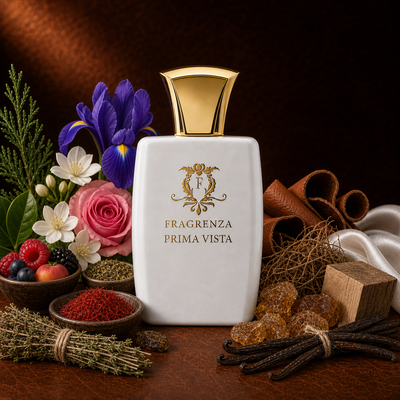
Prima Vista pairs cypress with iris, cedar, and leather in a more sophisticated, polished register — the cypress here is a structural element that gives the composition its dry, green backbone while the leather and iris add depth and refinement. An excellent example of cypress used in a chypre-adjacent, modern-masculine context.
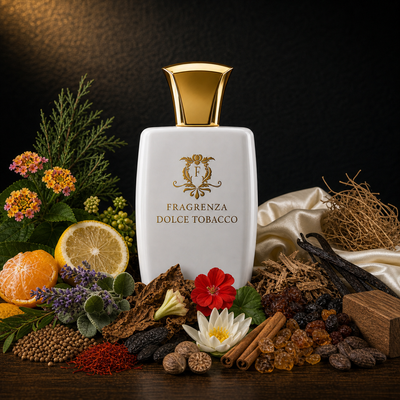
Dolce Tobacco blends cypress with bourbon geranium, clary sage, cocoa, and aromatic tobacco — a darker, warmer use of the note that demonstrates cypress's ability to lend dry green freshness even to richer, more oriental-leaning compositions.
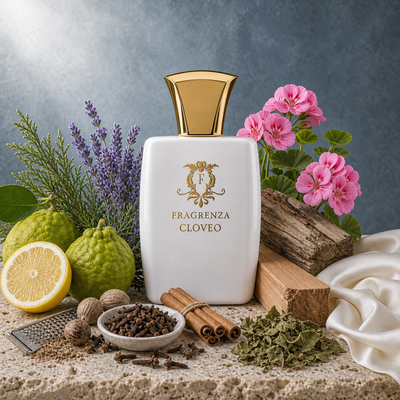
For the most pronounced coniferous-woody profile, Cloveo (a Bracken Man interpretation) brings cypress together with cedarwood, clove, lavandin, and geranium in a deeply aromatic fougère register — the cypress here amplifies the wild, outdoor, sun-warmed-forest character of the composition.
Frequently Asked Questions
What does cypress smell like in perfume?
Cypress in perfumery is sharp, resinous, dry, and green, with a slightly piney, Mediterranean character. The top impression is crisp and bright like dark needles in the sun, while the underlying resinous depth adds substance and a slightly smoky, balsamic quality. A faint camphoraceous edge gives it a clean, almost medicinal clarity. The overall effect is fresh-but-architectural, evoking sun-baked stone and coastal hillside landscapes.
What perfumes feature cypress?
Cypress appears in many woody-aromatic and chypre compositions, often listed under broader woody accords rather than named explicitly. Tom Ford Italian Cypress places the note front and centre, while Diptyque Philosykos and Penhaligon’s Juniper Sling use it for atmospheric depth. Many masculine fougeres and Mediterranean-inspired niche fragrances rely on cypress for structural green-resin freshness, especially those evoking Italian or Provencal landscapes.
Is cypress natural or synthetic in perfumery?
Cypress is most often used as a natural essential oil, steam-distilled from the needles, twigs, and cones of the Mediterranean cypress tree, Cupressus sempervirens. Synthetic captives and reconstituted accords also exist to standardise output, extend availability, or modify the natural oil’s edges. Most fine fragrance compositions combine the natural oil with supporting synthetic aroma-chemicals to balance and shape the cypress character within the final blend.
How does cypress differ from cedar and pine?
Cypress sits between cedar and pine in character. It is sharper and more resinous than cedar, which reads dry, pencil-shaving clean and less green. It is drier and less sweet than pine, which leans softer and more Christmas-tree warm. Cypress holds a distinct Mediterranean austerity, with the architectural precision of sun-baked needles rather than cedar’s clean linearity or pine’s round, resinous sweetness.
Is cypress long-lasting in fragrance?
Cypress has moderate longevity in perfumery. The brighter terpenic top notes evaporate within the first hour, but the resinous, sesquiterpene-rich heart of the oil persists into the heart and base for several hours. Performance depends on concentration and surrounding materials. In compositions built around cypress with supporting woody or musk fixatives, the note can carry through six to eight hours of wear comfortably.
Which fragrances best showcase cypress?
Tom Ford Italian Cypress is the most explicit showcase, building an entire composition around the note. Diptyque Philosykos uses cypress to support its fig accord with Mediterranean-stone depth. Many classic eau de cologne and chypre masculine compositions feature cypress as a structural green-resin element. For Fragrenza wearers, Mediterranean Cypress captures the Italian cypress-aromatic register in an accessible everyday format.
Wardrobe Context
Cypress is a note for all seasons, though it is at its most evocative in the spring and autumn months when the Mediterranean landscape it conjures is most easily imagined. Summer cypress fragrances can feel appropriately refreshing if constructed around the note's fresh, breezy qualities; winter cypress compositions, leaning into the resinous and darker aspects, can feel grounding and outdoorsy in a way that suits the season.
For fragrance enthusiasts building a wardrobe, a cypress-accented composition offers something that few other notes provide: a strong sense of place combined with genuine versatility. The note's natural elegance and connection to the chypre tradition mean that it appears in some of the most refined fragrances in both the designer and niche categories, making it a note worth seeking out for anyone interested in the full range of what fine fragrance can express.